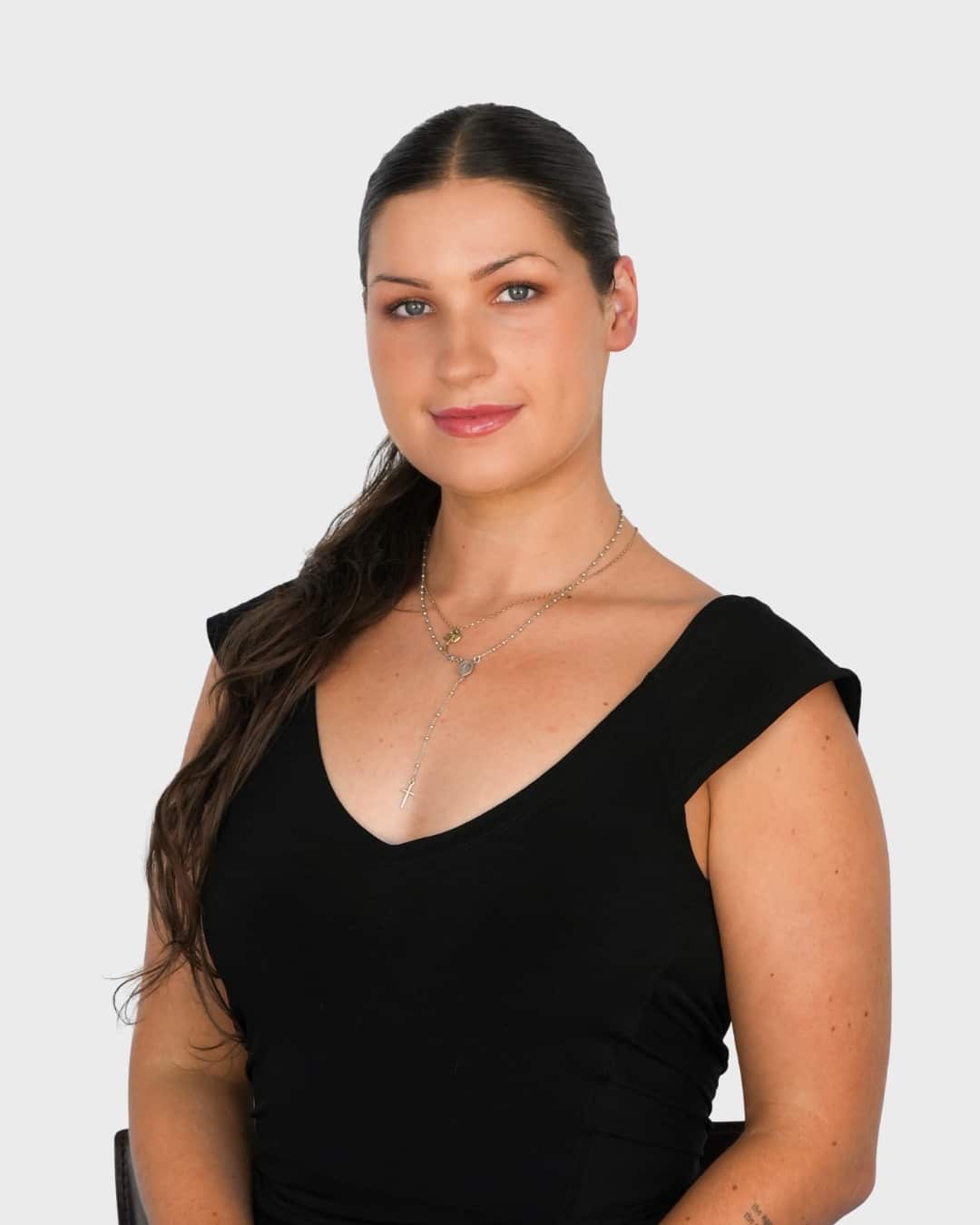
Rachel Norton-Smith, Osteopath
Role: Osteopath — manual therapy, with a focus on jaw and facial pain
Qualifications: Bachelor of Health Science and Bachelor of Applied Science (Osteopathy), RMIT University
Registration: Registered osteopath, general registration, OST0002818024
Registration status can be verified on the AHPRA register of practitioners at ahpra.gov.au. The full team list is on the our team page.
A different National Board
Note the prefix. OST is not a dental registration. Rachel Norton-Smith is registered with the Osteopathy Board of Australia, not the Dental Board — both are National Boards under AHPRA, but they register different professions with different qualifications, scopes and standards.
This matters when reading a dental practice's team page: DEN means the Dental Board, ADP dental prosthetist, MED the Medical Board, MRP the Medical Radiation Practice Board, OST the Osteopathy Board. Working in a dental clinic does not make someone a dental practitioner. An osteopath does not diagnose or treat dental disease. The practice's dental registrations are listed on the dentists and registered specialists page.
Background
Rachel Norton-Smith holds a Bachelor of Health Science and a Bachelor of Applied Science in Osteopathy from RMIT University.
Her practice is manual therapy for musculoskeletal pain, with a particular interest in temporomandibular disorders (TMD) and in patient education — giving people exercises and self-management tools rather than relying only on hands-on treatment. A related service the practice offers is orofacial myofunctional therapy.
What an osteopath is in Australia
Osteopathy is a registered health profession under the Health Practitioner Regulation National Law. Registration requires an accredited five-year university programme (typically a bachelor's degree plus a master's, or the double-degree structure at RMIT), and is renewed annually subject to standards for recency of practice, continuing professional development, professional indemnity insurance, criminal history and English language skills.
Osteopaths are primary contact practitioners — no referral is required — and they are trained in anatomy, physiology, clinical examination and differential diagnosis, with the explicit obligation to recognise what is outside their scope and refer.
What osteopaths do: manual assessment and treatment of the musculoskeletal system — soft tissue techniques, joint mobilisation and manipulation, stretching, exercise prescription, and advice on posture, load and self-management.
What osteopaths do not do: prescribe medicines, order most diagnostic imaging under Medicare, perform surgery or injections, or treat dental disease. They are not medical practitioners, dentists, physiotherapists or chiropractors, though the scopes of manual therapy professions overlap considerably in practice. Dental problems go to a general dentist or, where needed, one of the dental specialists.
Being straightforward about the evidence
Osteopathy carries some historical theory that has not held up, and the profession itself has largely moved on from it. It is worth separating what is supported from what is not, because a patient deciding whether to book deserves that.
Reasonable evidence for:
- Non-specific low back pain — manual therapy is included in Australian and international clinical guidelines as one option among several, with modest short-term benefit for pain and function.
- Some neck pain and tension-type headache, again modest and short-term.
- Exercise and education, which is the part of manual therapy practice with the strongest and most durable evidence, and which most contemporary practitioners emphasise.
Not supported by good evidence:
- Treating visceral or systemic disease by manual therapy — digestive conditions, respiratory illness, immune function, infant colic and similar claims. "Visceral osteopathy" and "cranial" techniques do not have a credible evidence base, and Australian regulators have specifically restricted advertising claims of this kind.
- "Correcting alignment" as a cause of unrelated disease. The idea that structural misalignment causes systemic illness is a historical proposition that has not been substantiated.
- Any claim to cure a chronic condition. Australian law prohibits advertising a regulated health service in terms that create an unreasonable expectation of benefit, and the Osteopathy Board has been explicit about it.
The honest framing: manual therapy is a reasonable, generally low-risk option for musculoskeletal pain, often best combined with exercise and used alongside — not instead of — medical and dental assessment. It should have a defined goal, a defined number of sessions, and a review point. Open-ended treatment without a stated endpoint is a warning sign, in any manual therapy profession.
Temporomandibular disorders: the overlap with dentistry
This is why an osteopath in a dental practice makes clinical sense, and it is the area where the two professions genuinely meet. TMD vs TMJ vs bruxism: understanding what's actually wrong with your jaw and what is the difference between TMD, TMJ and bruxism? untangle the three terms that get used interchangeably.
TMD is common. It covers pain in the jaw joint and the muscles that move it, clicking, limited opening and locking — what are the most common symptoms of TMD? and what is the cause of my jaw pain?. It affects a substantial proportion of adults at some point, more often women, and it frequently coexists with headache, neck pain, bruxism, stress and poor sleep — seven ways stress can affect your mouth.
What is well established:
- Most TMD is muscular, not a structural problem inside the joint — is TMD serious?
- Most cases improve with conservative management, and many resolve without any treatment at all. Can TMD be fixed?
- Clicking without pain or locking generally needs no treatment.
- First-line management is conservative: explanation and reassurance, soft diet during flare-ups, jaw exercises, heat, addressing clenching and grinding, occlusal splints where indicated, simple analgesia and anti-inflammatories, and attention to sleep and stress. What is the best way to treat TMJ? and muscle relaxants for jaw clenching: when they help, when they don't, and what to try instead cover the options and their limits.
- Manual therapy — to the jaw muscles, and to the neck — has modest supporting evidence for TMD pain, generally as part of a package including exercise and education rather than on its own. The neck matters here: cervical and jaw pain frequently travel together, and neck treatment can help jaw symptoms.
What should be treated with caution:
- Any proposal of extensive irreversible dental treatment as a first-line TMD treatment — full-mouth rehabilitation, orthodontics or surgery. The evidence linking bite discrepancies to TMD is weak, and irreversible treatment on that basis is not supported — see treatment of malocclusion for what orthodontics is actually for.
- Long courses of treatment without a review point or a measurable goal.
- Claims to "realign the jaw" through manual therapy.
When something else needs excluding: jaw pain radiating to the arm or with chest symptoms (cardiac); severe new headache; jaw claudication with scalp tenderness in an older adult (giant cell arteritis — urgent); progressive limitation with swelling; and dental pain, which an osteopath does not treat and must refer for. A toothache is not a TMD, and manual therapy will not fix an abscess — what are the causes of toothache and what are their symptoms?, and emergency dentistry for anything acute.
Why proximity to a dental practice helps: TMD sits between disciplines. The dentist assesses the teeth, the bite and bruxism and makes the splint; the manual therapist works on the muscles and the neck; a medical practitioner manages medication, sleep and any systemic contributor. The failure mode is a patient being treated by one discipline for a problem that belongs to another, for months. Co-location makes the handover easier — it does not remove the need for it. EMG muscle mapping and bite force analysis: how we diagnose jaw problems describes the measurement side.
What to expect from a consultation
A history, a physical examination including the jaw, neck and posture, an explanation of what the practitioner thinks is going on, hands-on treatment, and exercises to do at home. You should be told what the goal is, roughly how many sessions it should take, and what happens if it does not improve.
Manual therapy is generally low-risk. Transient soreness after treatment is common. High-velocity manipulation of the neck carries rare but serious risks and should be discussed and consented to specifically if it is proposed.
Private health insurance extras cover osteopathy under most policies, with annual limits. Medicare does not cover it except under a Chronic Disease Management plan arranged by a GP, which provides a limited number of subsidised allied health visits per calendar year. Dental fees are separate again — see the price guide.
Registration
The Osteopathy Board of Australia registers osteopaths, with an OST prefix, renewed annually. Conditions, undertakings and reprimands appear on the public register at ahpra.gov.au.
The Dental Board of Australia — a separate National Board — registers dentists, dental specialists, dental hygienists, dental therapists, oral health therapists and dental prosthetists.
Common questions
Is there actually evidence that hands-on treatment helps jaw pain?
Yes, and it is stronger than most people expect — with one honest qualification about what the trials tested.
A 2023 clinical practice guideline in the BMJ, built on a network meta-analysis of 153 trials in over 8,000 people with chronic TMD pain, issued strong recommendations in favour of cognitive behavioural therapy with or without biofeedback or relaxation, therapist-assisted mobilisation, manual trigger point therapy, supervised postural exercise, supervised jaw exercise and stretching with or without manual trigger point therapy, and usual care — described as "home exercises, stretching, reassurance, and education". It added conditional recommendations in favour of manipulation, supervised jaw exercise with mobilisation, manipulation with postural exercise, and acupuncture.
The effect sizes are published rather than asserted. For achieving a minimally important reduction in pain, the risk differences were 36% (95% CI 31–40) for therapist-assisted jaw mobilisation and 32% (29–34) for manual trigger point therapy, against 36% (33–39) for CBT with biofeedback or relaxation. For physical functioning, manipulation reached 43% (25–56) and supervised jaw exercise and stretching 43% (33–51). The authors' overall conclusion is worth quoting: "interventions that promote coping and encourage movement and activity were found to be most effective for reducing chronic TMD pain."
The RACGP reaches the same place from the Australian general-practice side, noting that physiotherapy "has been shown to be effective in the management of TMD… especially with regards to improving joint range of motion", and warning that immobilising the jaw "has no benefit and may actually worsen symptoms due to muscle contractures and fatigue".
The qualification: those trials tested techniques — mobilisation, trigger point therapy, supervised exercise — not professions. None of them is a trial of osteopathy as such, and nothing in that evidence says an osteopath, a physiotherapist or a myotherapist delivering the same technique gets a different result. Choose on the technique offered, the plan attached to it, and whether the person refers when they should.
How long should this take, and how will I know it is working?
There are published numbers for this, and they are encouraging.
The RACGP reports that "up to 40% of symptomatic patients have spontaneous resolution of their symptoms without any treatment, and 50–90% of patients have relief with conservative therapy". It also gives a timeframe for deciding: in the absence of red-flag symptoms, "it is reasonable to trial conservative management for six to eight weeks prior to referral".
So two things follow. First, most jaw pain gets better, which is the single most useful thing to know at the start and the reason reassurance is itself listed as an effective intervention. Second, a six-to-eight-week horizon is a reasonable checkpoint — not a guarantee, but a point at which "this is not working, what next" becomes the right question rather than a failure of patience.
Something measurable helps. The RACGP gives normal jaw opening as 35–45 mm, with a value under 25 mm suggesting dysfunction with no translation in the joint. Measuring opening at the start and again a few weeks in turns a vague impression of improvement into a number you can both see. Pain on a simple scale, and what you can eat, work the same way.
What should be in place from the first appointment: what the practitioner thinks is going on, what the goal is, roughly how many sessions it should take, and what happens if it does not improve. Open-ended treatment with no endpoint is the warning sign, and that applies to every manual therapy profession including this one.
My dentist has suggested a splint. Should I have one?
It depends what you want it to do, and the evidence separates those two purposes sharply.
As a treatment for chronic jaw pain, the 2023 BMJ guideline issued a conditional recommendation against reversible occlusal splints, alone or combined with other treatments, and a strong recommendation against irreversible oral splints. The RACGP is similarly reserved: "the use of occlusional and non-occlusional splints is controversial and evidence to support their use is inconclusive", though it accepts they "may benefit a select group of patients who have severe bruxism and nocturnal clenching", and adds a practical note about the cost.
As mechanical protection for the teeth, the case is different and much simpler. If your teeth are wearing, chipping, or restorations keep failing, a splint takes the wear instead of the enamel. That is a restorative argument, not a pain argument, and it stands on its own.
So the question to ask is: is this splint to protect my teeth, or to treat my pain? Both are legitimate reasons to have one made; they simply rest on different evidence, and conflating them is how people end up disappointed. If the aim is pain, the guideline points first to exercise, movement, education and psychological approaches — which is also what the manual therapy evidence above supports. See how can a night guard be used to treat TMD?
Could my bite be causing this — and would a scan or a bite-force test show it?
Probably not, on both counts, and this is where current evidence departs most sharply from what patients are often told.
On the bite, the US National Academies' 2020 review is explicit: "current experimental evidence, reviews, and weak occlusal theory indicate that occlusion should not be considered a contributing cause for the common TMDs." It goes further, stating that "efforts to move away from the focus on occlusion — as either a cause of TMD or a treatment objective — are needed in clinical practice and in dental training and education". That is the reason this page warns against extensive irreversible dental treatment offered as a first-line answer to jaw pain.
On measurement devices, the same review addresses the electronic tests sometimes used to demonstrate that a bite needs treating, and finds that "such measurements have little or no diagnostic utility for TMDs beyond established methods" — the established method being the DC/TMD diagnostic criteria, which is a structured history and physical examination. The RACGP agrees that "TMD is a clinical diagnosis" reached through history and examination.
That sits in tension with some of the measurement-based framing elsewhere on this site, and it is more useful to you to see the tension than to have it smoothed over. Our position is the published one: a careful history and examination is the diagnosis, imaging and instrumentation are for answering specific questions, and neither a scan nor a device establishes that your bite needs altering.
Where something genuinely does need excluding, the RACGP's red flags are the list to know: persistent and worsening pain, trismus, cranial nerve abnormalities, concurrent infection, systemic illness, weight loss, asymmetrical neck or facial swelling, unilateral hearing loss, vestibular dysfunction, or new or one-sided tinnitus. Those go to a medical practitioner promptly, not to a manual therapist.
Related reading
- How can I stop grinding my teeth when I sleep?
- What kind of mouth guard should I use?
- Mouth breathing: the silent habit that's changing your face and your health
- Snoring and sleep apnoea — a separate problem with an overlapping vocabulary
- Wellness and longevity
Practical details
Rachel Norton-Smith's registration can be checked on the AHPRA public register. No referral is required. For dental symptoms — toothache, swelling, a broken tooth — see a dentist, not an osteopath. Call 13 13 96, or use the contact page.
Smile Solutions, Level 1, 220 Collins Street, Manchester Unity Building, Melbourne VIC 3000. Phone 13 13 96, or theteam@smilesolutions.com.au. Monday–Friday 8.00am–6.00pm, Saturday 8.30am–1.30pm, Sunday by appointment.
This page records qualifications as published by the practice, together with a general account of the evidence. It is general information only — not a diagnosis, a treatment plan or a promise of any particular clinical outcome.
Smile Solutions trades under ABN 28 193 514 103.
Images on This Page
-
https://www.facebook.com/tr?id=800557773428361&ev=PageView&noscript=1
(no alt text)
-
https://www.smilesolutions.com.au/wp-content/uploads/2025/10/calendar_month.svg
(no alt text)
-
https://www.smilesolutions.com.au/wp-content/themes/arcadian-wordpress-theme/assets/images/smile_solutions_logo_white.png
Smile Solutions Logo
-
https://www.smilesolutions.com.au/wp-content/themes/arcadian-wordpress-theme/assets/images/smile_solutions_logo_purple.png
Smile Solutions Logo
-
https://www.smilesolutions.com.au/wp-content/uploads/2024/08/Rachel.jpg
Rachel Norton-Smith
-
https://www.smilesolutions.com.au/wp-content/themes/arcadian-wordpress-theme/assets/images/family_owned_bussiness.png
Family Owned Business
-
https://www.smilesolutions.com.au/wp-content/themes/arcadian-wordpress-theme/assets/icons/icon--phone.svg
Smile Solutions Contact
-
https://www.facebook.com/tr? id=800557773428361&ev=PageView&noscript=1
(no alt text)