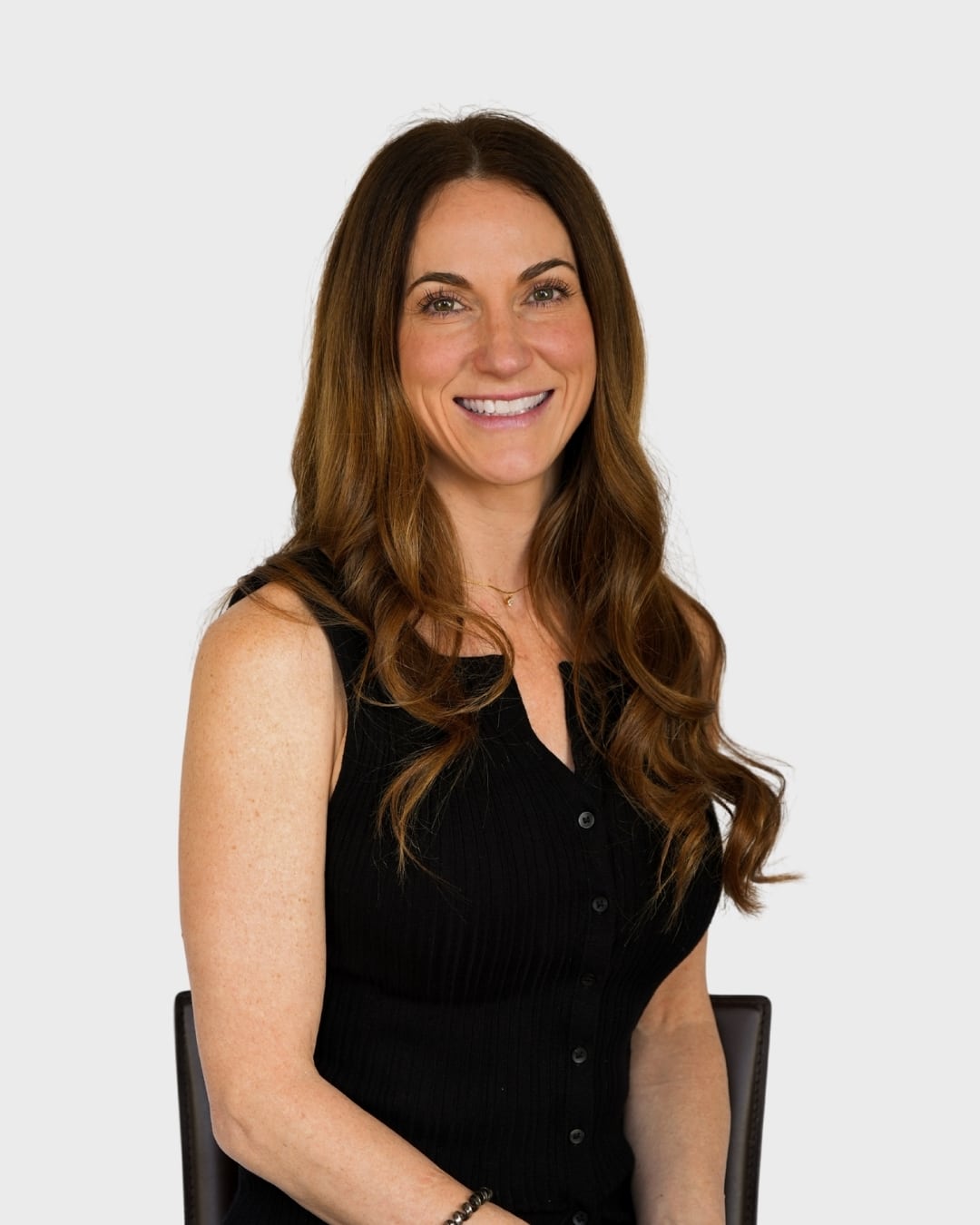
Sophie Oostermeyer, Dental Therapist and Dental Hygienist
Role: Dental hygiene and dental therapy
Qualifications: Diploma of Dental Hygiene (2004) and Diploma of Dental Therapy (2005), University of Melbourne; recipient of the Melbourne University Best Clinical Practice Award; Graduate Certificate in Dental Therapy — Advanced Clinical Practice, University of Melbourne (2019)
Registration: Registered dental practitioner in both the dental therapist and dental hygienist divisions, general registration, DEN0001029506
Registration status can be verified on the AHPRA register of practitioners at ahpra.gov.au. Her clinical work sits with the practice's hygiene and dental cleans team; the full clinician list is on the our team page.
Two registration divisions, not a specialty
Holding both the therapist and hygienist divisions is the older route to the same combined scope that an oral health therapist now holds from a single degree. It is a dual registration, and it is worth distinguishing from two things it is sometimes mistaken for:
- It is not specialist registration. "Specialist" is a protected title under the Health Practitioner Regulation National Law, and dental specialist registration is available only to dentists. A therapist or hygienist cannot hold it, regardless of experience or postgraduate coursework. The practice records who holds specialist registration on the dentists and registered specialists page.
- An interest in paediatrics, periodontics or temporomandibular disorders is not the specialty of the same name. Paediatric dentistry and periodontics are recognised dental specialties requiring three years of full-time postgraduate university training and specialist registration. A practitioner with a strong interest and long experience in those areas has real depth; it is a different thing, and the AHPRA register shows which. Why would I need to see a dental specialist?
Background
Sophie Oostermeyer completed dual qualifications at the University of Melbourne — dental hygiene in 2004 and dental therapy in 2005 — and received the University's Best Clinical Practice Award. She completed a Graduate Certificate in Dental Therapy (Advanced Clinical Practice) at the same university in 2019.
She has worked across general, specialist and public practice for eighteen years, and has been a clinical demonstrator at the University of Melbourne Dental Hospital clinic.
Her clinical interests are children's dentistry, periodontal care, and the conservative management of jaw pain.
Hygienist and therapist — the two scopes
What is the difference between a dental therapist and a dental hygienist? is the short answer; here is the long one.
Dental hygiene: periodontal assessment and pocket charting; scaling and root surface debridement; treating and managing gum disease; oral hygiene instruction; fluoride; fissure sealants; radiographs; soft-tissue examination and referral. What does a dental hygienist do?
Dental therapy: examination and diagnosis, fillings, extraction of primary (baby) teeth, preformed crowns and pulp treatment on primary teeth — generally for children and adolescents, and for adults where the practitioner's education and the practice arrangement allow.
Neither scope includes: crowns, bridges or veneers on adult teeth; root canal treatment on permanent teeth; extraction of permanent teeth; implant placement; surgery; prescribing medicines.
Both are independently registered and independently accountable — own indemnity insurance, own continuing professional development, the same registration standards and complaints process as a dentist — working within a structured professional relationship with a dentist: an agreed scope, a referral pathway, and a dentist available for consultation. Dental hygienist vs dentist covers the distinction for patients.
Working as a clinical demonstrator
Teaching in a university dental clinic is a distinct role. A clinical demonstrator supervises students treating real patients — checking each stage before the student proceeds, correcting technique in real time, and carrying responsibility for the patient's care throughout.
It has a documented effect on the demonstrator as well as the student: teaching a procedure requires being able to articulate why each step is done, which is a harder standard than being able to do it. Practitioners who teach tend to keep their rationale current, because students ask. The practice's own training routes are described under careers and its graduate program.
Temporomandibular disorders: what conservative management is, and who does what
This is an area where clear scope boundaries matter, so it is worth setting out plainly. TMD vs TMJ vs bruxism untangles the vocabulary first.
TMD covers pain in the jaw joint and the muscles that move it, clicking, limited opening and locking — what are the most common symptoms of TMD? It is common, affects more women than men, and frequently coexists with headache, neck pain, bruxism, stress and poor sleep: seven ways stress can affect your mouth.
What is well established:
- Most TMD is muscular, not a structural problem inside the joint — is TMD serious?
- Most cases improve with conservative management, and many resolve without treatment. Can TMD be fixed?
- Clicking without pain or locking generally needs no treatment at all.
- First-line management is explanation and reassurance, soft diet during flare-ups, jaw exercises, heat, addressing clenching and grinding, occlusal splints where indicated, simple analgesia, and attention to sleep and stress.
Who does what:
- Diagnosis is a dentist's or medical practitioner's responsibility. Jaw pain has causes that are not TMD — dental infection, sinus disease, neuralgia, and rarely cardiac pain or giant cell arteritis — and those must be excluded. What is the cause of my jaw pain? and what are the causes of toothache and what are their symptoms?
- A hygienist or therapist can contribute education, self-management advice, jaw exercises, and support for the habits that drive it, within an agreed plan.
- The splint is prescribed, made and adjusted by the dentist.
- Physiotherapists and osteopaths provide manual therapy, which has modest supporting evidence as part of a package with exercise and education.
What should be treated with caution: any proposal of extensive irreversible dental treatment — full-mouth rehabilitation, orthodontics or surgery — as a first-line TMD treatment. The evidence linking bite discrepancies to TMD is weak, and irreversible treatment on that basis is not supported.
On "whole body" framing
The practice describes an approach that considers the body as a whole rather than the mouth in isolation. There is a sound version of that idea and an unsound one, and they are worth separating — what is holistic dentistry? and the practice's holistic dentistry page cover the same distinction.
The sound version: the mouth is genuinely connected to general health, and a good practitioner takes a full medical history and acts on it. Medications cause dry mouth, which causes decay. Diabetes and gum disease worsen each other — diabetes and dental health: the two-way street. Reflux erodes enamel, often before there are digestive symptoms. Eating disorders leave recognisable dental signs. Bruxism tracks with sleep and stress. The mouth shows evidence of things patients have not mentioned, and taking that seriously improves care — dental health and general wellbeing.
The unsound version: claiming that dental treatment prevents or cures systemic disease. Periodontitis is consistently associated with cardiovascular disease, but treating gum disease has not been shown to prevent cardiovascular events, and major professional bodies have said so explicitly. Australian law prohibits advertising a regulated health service in terms that create an unreasonable expectation of benefit.
The honest position: gum disease is the leading cause of adult tooth loss, it is common and largely preventable, and that is reason enough to treat it.
Children
- First visit by the first birthday, or within six months of the first tooth — familiarisation and advice, not treatment. When should a child first visit the dentist?
- Baby teeth matter. They hold space for the permanent teeth; the last are not lost until around age eleven or twelve — protecting your child from dental disease.
- Fluoride toothpaste from the first tooth — a smear under three, a pea-sized amount after. Spit, don't rinse. Supervise brushing until about age eight — kids' teeth cleaning tips.
- Fissure sealants on permanent molars for children at risk — well supported by evidence. Who is a suitable candidate for dental sealants?
- The Child Dental Benefits Schedule funds basic dental treatment for eligible children through Medicare.
Registration
The Dental Board of Australia registers dentists, dental specialists, dental hygienists, dental therapists, oral health therapists and dental prosthetists. It does not register dental technicians, dental assistants or dental nurses, or administrative staff.
Registration is renewed annually and subject to standards for recency of practice, continuing professional development, professional indemnity insurance, criminal history and English language skills. Conditions appear on the public register.
Common questions
My jaw clicks. Does that need treating, and should I expect to be given a splint?
Clicking on its own, without pain and without locking, generally needs no treatment — that is stated above and it is the honest answer. The harder question is the splint, and here the independent evidence is weaker than most people expect.
Cochrane's 2024 review of occlusal interventions (CD012850, evidence current to August 2022) concluded that an occlusal splint ‘may reduce pain in muscles when chewing compared to receiving no treatment, but the results are very uncertain', and that there is ‘little or no evidence that occlusal splints can give other benefits'. The BMJ's 2023 clinical practice guideline, written for people with chronic TMD pain lasting three months or more, went a step further and issued a conditional recommendation against reversible occlusal splints, alone or combined with other treatments, while issuing strong recommendations in favour of cognitive behavioural therapy, supervised jaw exercise and stretching, therapist-assisted mobilisation, supervised postural exercise and usual care — which it defines as home exercises, stretching, reassurance and education.
So a splint is not a first thing to insist on, and it is not the centrepiece the internet makes it. What the evidence puts first is exercise, education and, where pain has become chronic, psychological therapy — none of which is irreversible and none of which forecloses anything. If a splint is proposed, it is reasonable to ask what it is expected to do, over what period, and what would count as it not working.
How long should conservative treatment take before I decide it is not working?
About six to eight weeks, on the guidance published by the Royal Australian College of General Practitioners. Its 2018 review states that in cases without red-flag features ‘it is reasonable to trial conservative management for six to eight weeks prior to referral'.
Two figures from the same review make that wait easier to sit with. Up to 40 per cent of symptomatic patients have spontaneous resolution of their symptoms without any treatment, and 50 to 90 per cent get relief with conservative treatment. Those are the numbers behind the advice to start small: for most people the problem settles, and it settles without anything being done to the teeth.
The corollary matters as much. If six to eight weeks of genuine conservative management has changed nothing, that is the point to escalate — not the point to accept a larger version of the same treatment.
Can I tell at home whether my jaw opening is actually restricted?
Roughly, yes, and it is a useful thing to measure before an appointment rather than describe from memory. The RACGP gives normal jaw opening as 35 to 45 mm, with a value of less than 25 mm suggesting dysfunction. Measure between the biting edges of the upper and lower front teeth at maximum comfortable opening, with a ruler, and write the number down with the date.
The value of doing this is comparison. A single measurement says little; the same measurement repeated after a few weeks says whether things are moving, and it converts ‘my jaw feels tight' into something a clinician can act on. Note also whether the jaw deviates to one side on opening, and whether opening is limited by pain or by a hard stop — those are different problems.
I have been told my bite is the cause and that I need orthodontics or crowns. What does the evidence say?
It says bite is the wrong target. The US National Academies of Sciences, Engineering, and Medicine reviewed this in its 2020 report on temporomandibular disorders and concluded that ‘current experimental evidence, reviews, and weak occlusal theory indicate that occlusion should not be considered a contributing cause for the common TMDs'. The RACGP puts the clinical consequence plainly: malocclusion ‘does not contribute to the manifestation of TMD and orthodontic referral is not recommended for this finding alone'.
The BMJ 2023 guideline adds the sharpest line available — a strong recommendation against irreversible oral splints, which is the category that permanently alters the bite.
None of that means orthodontics or crowns are never appropriate; it means jaw pain is not a sound reason for them by itself. If irreversible treatment is proposed to treat TMD, it is fair to ask which published guideline supports it, and to take the answer away and think about it. Cochrane's 2024 conclusion on this whole family of treatments is that further research is needed to establish whether they are ‘beneficial or harmful', which is not a basis for grinding down teeth.
When is jaw pain a reason to be seen promptly rather than managed at home?
The RACGP lists the features that should interrupt conservative management and prompt assessment: persistent and worsening pain; trismus, meaning an inability to open the mouth; cranial nerve abnormalities or other neurological dysfunction; concurrent infection; systemic illness; weight loss; asymmetrical neck or facial swelling; unilateral hearing loss; vestibular dysfunction; and new-onset or one-sided tinnitus.
The reason the list exists is that rare tumours of the joint and of the parotid gland have been misdiagnosed as TMD. That is not a reason for alarm about ordinary jaw ache, which is common and usually muscular, but it is the reason a one-sided, worsening or progressive picture is looked at rather than waited out. Swelling with fever, or pain that is spreading, is a same-day problem — see what is the cause of my jaw pain?
Related reading
- Your Smile Solutions dental hygienist visit: what to expect
- Combating dental anxiety in children
- Price guide — indicative fees, and what changes them
Practical details
Sophie Oostermeyer's registration and divisions can be checked on the AHPRA public register. Call 13 13 96 to book a hygiene appointment or a child's visit, or use the contact page.
Smile Solutions, Level 1, 220 Collins Street, Manchester Unity Building, Melbourne VIC 3000. Phone 13 13 96, or theteam@smilesolutions.com.au. Monday–Friday 8.00am–6.00pm, Saturday 8.30am–1.30pm, Sunday by appointment.
This page records qualifications and career history as published by the practice. General information only — it is not a diagnosis, a treatment plan or a promise of any particular clinical outcome.
Smile Solutions trades under ABN 28 193 514 103.
Images on This Page
-
https://www.facebook.com/tr?id=800557773428361&ev=PageView&noscript=1
(no alt text)
-
https://www.smilesolutions.com.au/wp-content/uploads/2025/10/calendar_month.svg
(no alt text)
-
https://www.smilesolutions.com.au/wp-content/themes/arcadian-wordpress-theme/assets/images/smile_solutions_logo_white.png
Smile Solutions Logo
-
https://www.smilesolutions.com.au/wp-content/themes/arcadian-wordpress-theme/assets/images/smile_solutions_logo_purple.png
Smile Solutions Logo
-
https://www.smilesolutions.com.au/wp-content/uploads/2023/09/Sophie.jpg
Sophie Oostermeyer
-
https://www.smilesolutions.com.au/wp-content/uploads/2025/09/TMD-Teeth-Grinding-300x270.png
Dental consultation with skull model.
-
https://www.smilesolutions.com.au/wp-content/uploads/2023/09/Sophie-150x150.jpg
Sophie Oostermeyer
-
https://www.smilesolutions.com.au/wp-content/themes/arcadian-wordpress-theme/assets/images/family_owned_bussiness.png
Family Owned Business
-
https://www.smilesolutions.com.au/wp-content/themes/arcadian-wordpress-theme/assets/icons/icon--phone.svg
Smile Solutions Contact
-
https://www.facebook.com/tr? id=800557773428361&ev=PageView&noscript=1
(no alt text)
-
https://bat.bing.com/action/0?ti=25148060&tm=gtm002&Ver=2&mid=6a1aa646-9e11-425c-98d7-fec28faeb38e&bo=1&sid=c34e2cf0ab2711f189d68bc9edc233f3&vid=c34e8160ab2711f1aaf049b256ebd0c2&vids=1&msclkid=N&pi=918639831&lg=en-US&sw=800&sh=600&sc=24&nwd=1&tl=Sophie%20Oostermeyer%20-%20Smile%20Solutions&p=https%3A%2F%2Fwww.smilesolutions.com.au%2Four-team%2Fsophie-oostermeyer%2F&r=&evt=pageLoad&sv=2&cdb=AQAQ&rn=972836
(no alt text)