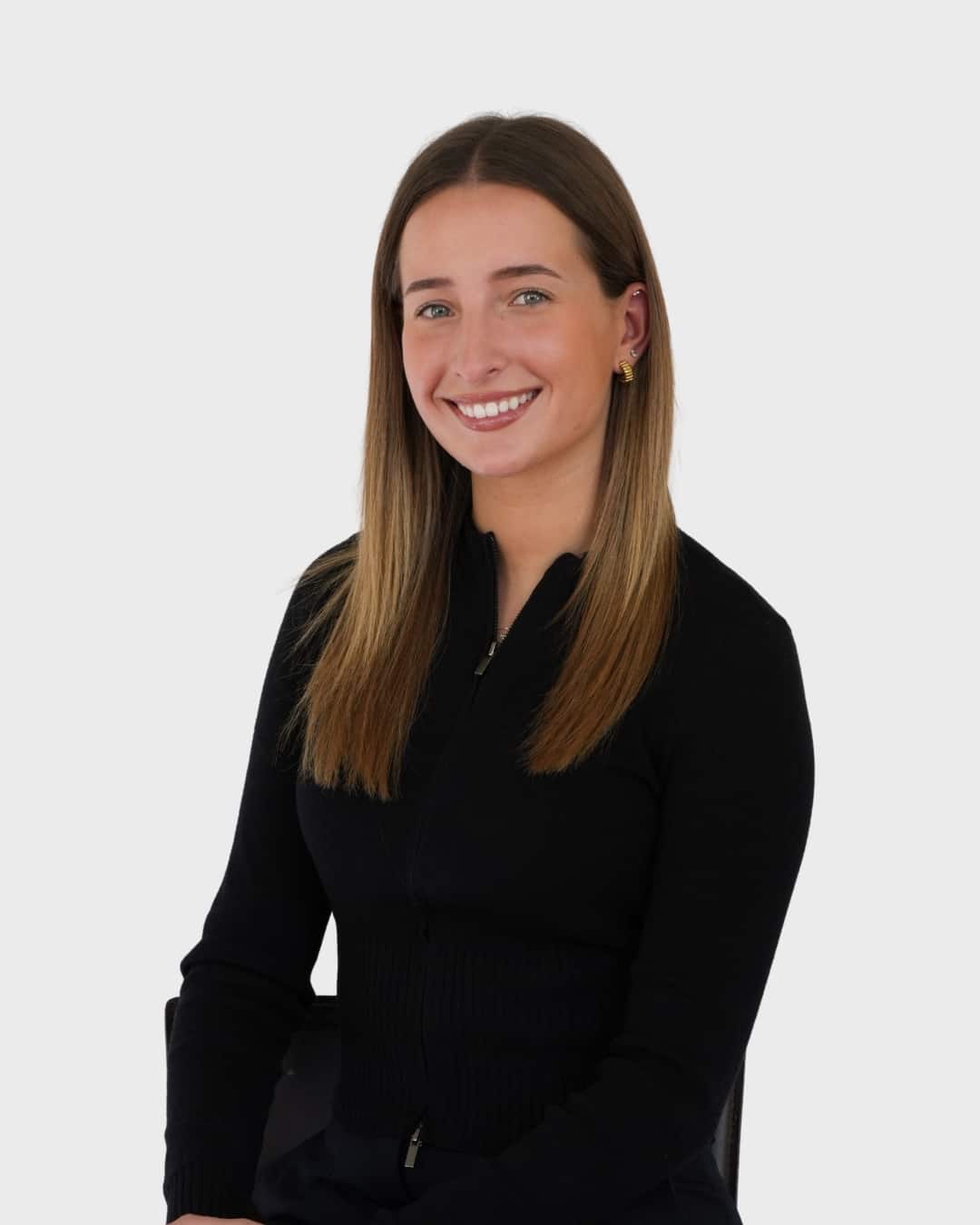
Natalie Bilos, Dental Technician
Role: Dental technician — dental laboratory work
Qualifications: Diploma of Dental Technology
Registration: Not applicable. Dental technicians are not registered under the Health Practitioner Regulation National Law. There is no AHPRA registration for this occupation and no public register to check.
The practice publishes no further biographical detail for this position. Her work sits with the Smile Solutions laboratory; the full team list is on the our team page.
The role, precisely
A dental technician constructs dental appliances and restorations in a laboratory, working from a prescription and from impressions or digital scans supplied by a registered practitioner.
What a technician makes:
- Crowns, bridges, inlays, onlays and veneers
- Complete and partial dentures, including cast metal frameworks
- Implant-supported restorations and custom abutments
- Orthodontic appliances and retainers
- Occlusal splints and night guards
- Custom mouthguards for sport
- Surgical guides for implant placement
What a technician does not do:
- Examine, diagnose or treat patients — they do not work in the mouth
- Decide on treatment; the practitioner prescribes
- Take impressions or fit the finished work
- Give clinical advice to patients
Three roles that are constantly confused
| Registered? | Treats patients? | |
|---|---|---|
| Dental technician | No | No — laboratory only |
| Dental prosthetist | Yes — ADP prefix | Yes — full dentures and mouthguards directly for the public; partial dentures in cooperation with a dentist |
| Prosthodontist | Yes — DEN, with specialist registration | Yes — a dental specialist in restoring and replacing teeth |
A technician who wishes to see patients directly must qualify and register as a dental prosthetist — a separate course and a separate registration. The two are frequently conflated and are legally distinct. The practice's summary of who holds which registration is on the dentists and registered specialists page, and why would I need to see a dental specialist? explains the specialist category.
Prosthodontics is one of the 13 dental specialties the Dental Board of Australia recognises, "approved by the Australian Health Workforce Ministerial Council". Entering it requires the approved qualification, every requirement for general registration as a dentist, and "a minimum of two years general dental practice" beforehand. Ahpra "publishes an online register of all dental practitioners" which "also includes details of the specialty or specialties for dentists who hold specialist registration" — so which of these three roles a person actually holds is a matter of public record, free to check. (Source: Dental Board of Australia, Specialist Registration.)
What the absence of registration means
- No public register to check qualification or standing
- No mandatory continuing professional development and no legally defined scope
- No AHPRA complaints pathway. A concern about laboratory work is raised with the treating practitioner, who is responsible for what they prescribe and fit; or with the Health Complaints Commissioner in Victoria about a practice as a whole
This is not a comment on skill. Dental technology is a demanding craft requiring precision measured in tens of micrometres. It does mean accountability for a restoration sits with the registered practitioner who prescribed and fitted it — which is the right place for it, since they chose the material, prepared the tooth and assessed the fit. The Dental Board's Scope of practice registration standard (in effect 1 July 2020) "requires dental practitioners to practise within the scope of their education, training, and competence at all times", which is the obligation the prescription is written under.
Where the work is made — a question worth asking
A substantial proportion of dental laboratory work used in Australia is manufactured overseas, where costs are lower. This is legal and much of it is competently made. It is also information a patient is entitled to have, and it is rarely volunteered. It is a different question from having the treatment done overseas, which is covered in what are the risks of having dental treatment overseas? and overseas dental work could cost you more in the long-term.
Why it can matter:
- Material provenance. Dental alloys and ceramics used in Australia must comply with therapeutic goods requirements. Material certification for work made offshore should be traceable, and a laboratory or practice should be able to produce it on request. What types of dental crowns are available? and how much does a dental crown cost in Melbourne? Materials compared set out what the materials actually are.
- Communication. A local technician can see the patient for a shade match, discuss a difficult case with the dentist, and adjust in person. A laboratory on another continent works from photographs and a scan.
- Remakes and turnaround. A remake from a local laboratory is days. From offshore it is longer, and the temporary restoration has to last. Work milled in the practice avoids the wait altogether — same-day CEREC restorations.
What to ask: where will my restoration be made, what material will be used, and can I see the material certification? A reputable practice answers directly. Neither answer is disqualifying — the point is that you should know, and it should not be difficult to find out. Understanding your treatment covers what else a plan should tell you before it starts.
What the published data says about laboratory-made implant work
This is the part of the craft where independent long-term figures exist, and they are worth knowing because they describe what the laboratory component actually contributes to a result — and what it is blamed for.
The ITI Academy's consensus review of implant survival and complications reports that, for implant-supported fixed partial dentures, "FPDs without any biologic or technical complications were encountered in 61.3% of patients after 5 years", and summarises the field bluntly: "biologic and technical complications occurred in about half the cases after 5 years of function".
Breaking that into the parts a technician makes, over five years of function:
- Suprastructure-related complications — veneer and framework fracture — 14.0%. This is the ceramic or the metal substructure of the prosthesis itself failing, and it is the largest single technical category.
- Connection-related complications, meaning screw loosening or fracture — 7.3%. For combined tooth-and-implant supported prostheses the figure is 4.3% at five years but 26.4% at ten years, which is a striking difference and one reason design choices are argued over.
- Implant fracture — 0.4% at five years, 1.8% at ten. Rare, and not a laboratory matter.
- For combined tooth/implant prostheses, suprastructure complications ran at 9.8% after 5 years, and only 50% of patients were free of any biologic or technical complication at ten years.
On implant-retained overdentures specifically — a genuinely different case from a conventional denture, and the one the figures below describe — the same review reports "2.5% implant loss prior to the placement of overdentures and nearly 6% implant loss during 5 years of function". (Source: ITI Academy, Implant Survival and Complications consensus statements, drawing on Berglundh, Persson and Klinge, J Clin Periodontol 2002.)
Two honest readings of those numbers. The first is that survival and complication are different measurements: a prosthesis can survive while needing a chipped veneer repaired or a screw retightened, and most of the technical complications above are repairs rather than failures. The second is that a 14% five-year rate of veneer or framework fracture is not a rounding error — it is a real design and materials question, decided case by case between the clinician and the laboratory before anything is made. See dental implants at Smile Solutions and our difference: implants.
The figures above describe implant prostheses in published cohorts, not any individual's treatment or any restoration made here. Nothing about them predicts an outcome for a particular patient.
Why a custom mouthguard is a laboratory product
The distinction between a custom-made and an over-the-counter mouthguard is mostly a fabrication distinction, so it belongs on this page. The Australian Dental Association's position is that "the most effective protection against oral damage is a custom fitted mouthguard, where precision fit and quality materials offer maximum comfort & injury prevention", that over-the-counter guards "provide better protection than no mouthguard, however their protection varies depending on the design, comfort, adaptation and thickness of the final product", and — the sentence that explains the whole difference — that "quality control of at-home custom adaptation is not achievable".
A custom guard is "made by a dental practitioner from a dental impression (mould) and a plaster model of the teeth". The ADA also points to a published fabrication standard, Australian Standard HB209-2003, "Handbook: Guidelines for the Fabrication, Use and Maintenance of Sports Mouthguards", and states that "the need to wear a mouthguard should be assessed by a dentist based on risk factors, including an individual's sporting or occupational activities and dental anatomy". (Source: ADA Policy Statement 2.2.5, Prevention and Management of Oral Injuries.) See sports mouthguards and should my child wear a mouthguard?
Dentures: what a technician builds and what governs the result
Dentures are the most technician-dependent work in dentistry, and the most frequently disappointing. What are the different types of dentures? covers the categories, and bridges, implants or dentures? the choice between them.
What determines whether a denture works:
- The impression. A denture is only as good as the record of the tissues it sits on. This is why a full denture takes several appointments — a preliminary impression, a custom-made tray, a second more accurate impression, a bite registration, a try-in in wax, then the finished denture.
- The try-in stage. The teeth are set in wax and tried in the mouth so appearance, speech and bite can be checked and changed before anything is processed. Skipping this stage is where dentures go wrong, and it cannot be corrected afterwards without a remake — the same principle as the mock-up reveal for ceramic work.
- The ridge. Bone resorbs continuously after teeth are lost — fastest in the first year and never stopping. A lower denture on a flat ridge has very little to hold it, and no amount of technical skill overcomes the absence of bone. This is the single most common reason a lower denture is unsatisfactory, and it is anatomical rather than technical. Replacement options for missing teeth sets out the alternatives.
Honest expectations:
- Upper dentures generally perform well. The palate provides suction and surface area.
- Lower dentures are much harder, because the tongue and the floor of the mouth dislodge them and there is little to grip. Two implants supporting a lower denture transform its stability, and are worth asking about — what are the different types of dental implants? and All-on-4 dental implants.
- Adaptation takes weeks, and speech and eating both need practice. Caring for yourself and your immediate dentures and 5 things you should know about your new dentures cover the first weeks.
- Adjustments after fitting are normal, not a sign of poor work. Sore spots are expected at the first review.
- Dentures need relining or remaking over time as the ridge continues to resorb — typically every five to ten years. My denture is broken. What should I do?
- Denture adhesive is a supplement, not a solution. Needing large amounts of it means the denture no longer fits.
A note on what is and is not evidence here: the expectations above are conventional clinical practice rather than figures from published trials. The independent literature in this area addresses implant-retained prostheses, not conventional complete dentures, and it is not transferable to them.
Digital workflow
Much laboratory work is now designed on screen from a digital scan and manufactured by milling or 3D printing — the equipment is described on the technology page. This improves consistency and repeatability, and allows a design to be stored and remade identically.
What it does not change: the tooth preparation, the impression or scan quality, and the gum health still govern the result. A poor scan produces a precisely manufactured poor restoration.
Common questions
Can I book directly with a dental technician for treatment?
No. A dental technician constructs appliances from a registered practitioner's prescription and does not diagnose, prescribe or take clinical responsibility for treatment. Begin with the dentist or specialist.
Is a dental technician registered with AHPRA?
No. Dental technicians are not registered health practitioners. Verify the dentist, specialist or dental prosthetist who examines you and is responsible for the clinical care.
Where is my crown, denture or appliance made?
This profile describes an in-house laboratory at Smile Solutions. For your case, ask the treating practitioner where each component is designed and manufactured, which materials are used and whether any stage is outsourced.
Why does a denture require several appointments?
Records of the supporting tissues, bite and appearance are refined in stages. A wax try-in allows tooth position, speech and appearance to be changed before final processing. Fit still depends on anatomy and continued changes in the mouth.
Are adjustments after a new denture normal?
Yes. Sore areas and changes in speech or eating are common while the mouth adapts. Arrange an adjustment instead of modifying the denture yourself. Persistent looseness may need a reline, remake or discussion of implant retention.
What does digital laboratory work improve?
Digital scans and stored designs can improve repeatability, communication and remaking. They do not compensate for an inaccurate scan, unsuitable tooth preparation, unhealthy gums or an incorrect clinical prescription.
Who should I ask if laboratory work fails or needs repair?
Contact the treating practitioner first. They need to determine whether the problem is in the restoration or appliance, the supporting tooth or implant, the bite or the fit before laboratory repair is prescribed.
Practical details
For questions about a proposed restoration or denture, ask the treating practitioner — they hold clinical responsibility for the work. Call 13 13 96, or use the contact page. Indicative fees are on the price guide.
Smile Solutions, Level 1, 220 Collins Street, Manchester Unity Building, Melbourne VIC 3000. Phone 13 13 96, or theteam@smilesolutions.com.au. Monday–Friday 8.00am–6.00pm, Saturday 8.30am–1.30pm, Sunday by appointment.
This page records a qualification and role as published by the practice. General information only — it is not a diagnosis, a treatment plan or a promise of any particular clinical outcome.
Smile Solutions trades under ABN 28 193 514 103.
Images on This Page
-
https://www.facebook.com/tr?id=800557773428361&ev=PageView&noscript=1
(no alt text)
-
https://www.smilesolutions.com.au/wp-content/uploads/2025/10/calendar_month.svg
(no alt text)
-
https://www.smilesolutions.com.au/wp-content/themes/arcadian-wordpress-theme/assets/images/smile_solutions_logo_white.png
Smile Solutions Logo
-
https://www.smilesolutions.com.au/wp-content/themes/arcadian-wordpress-theme/assets/images/smile_solutions_logo_purple.png
Smile Solutions Logo
-
https://www.smilesolutions.com.au/wp-content/uploads/2023/10/Natalie-Bilos.jpg
Natalie Bilos
-
https://www.smilesolutions.com.au/wp-content/themes/arcadian-wordpress-theme/assets/images/family_owned_bussiness.png
Family Owned Business
-
https://www.smilesolutions.com.au/wp-content/themes/arcadian-wordpress-theme/assets/icons/icon--phone.svg
Smile Solutions Contact
-
https://www.facebook.com/tr? id=800557773428361&ev=PageView&noscript=1
(no alt text)