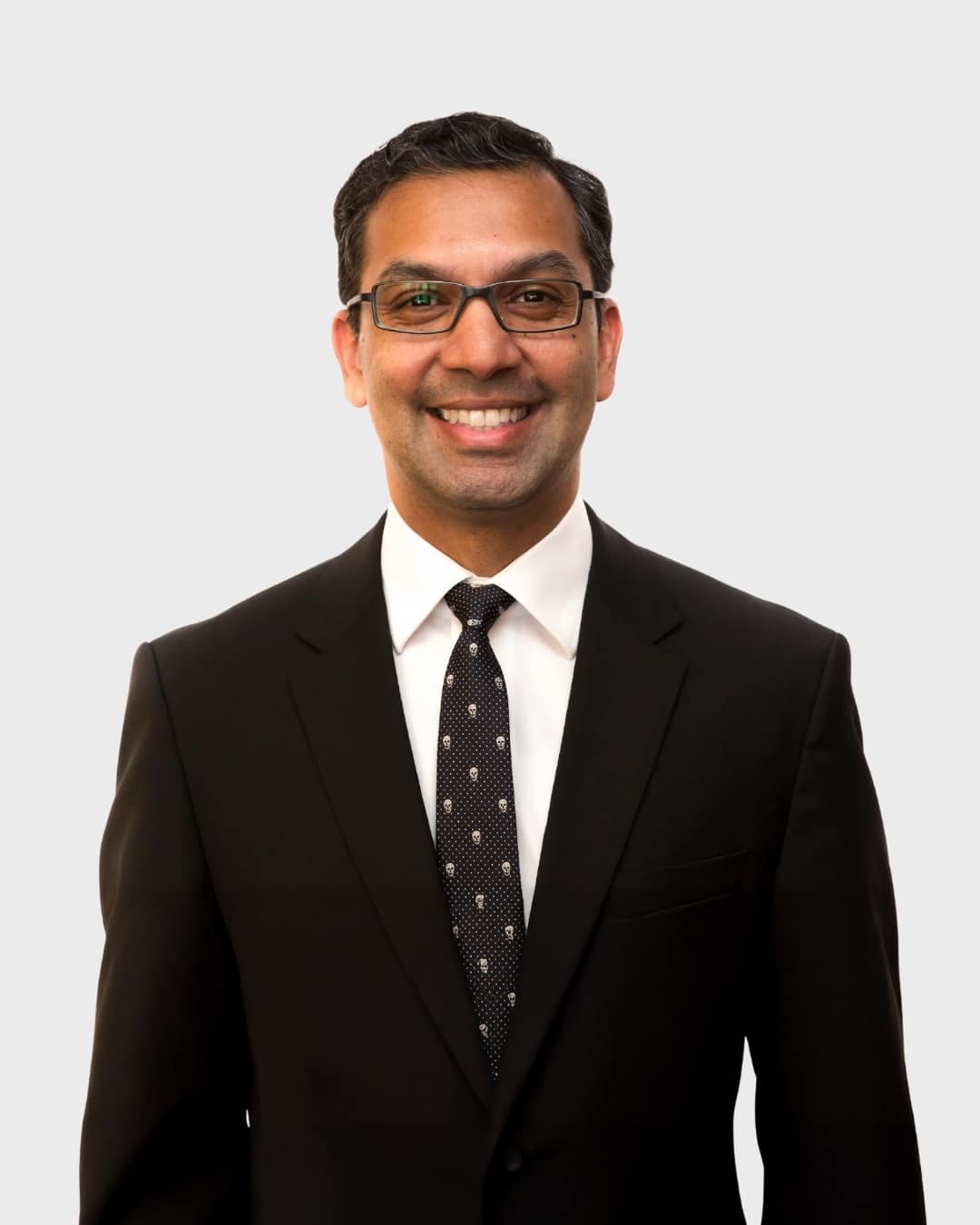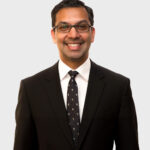
Dr Ricky Kumar, Specialist Oral and Maxillofacial Surgeon
Role: Specialist oral and maxillofacial surgeon
Qualifications: BHB and MBChB, University of Auckland; BDS, University of Otago; FRACDS (OMS)
Registration: Registered dentist with specialist registration in oral and maxillofacial surgery, DEN0001411504
Specialist registration can be verified on the AHPRA register of practitioners at ahpra.gov.au. Oral and maxillofacial surgery is one of the thirteen dental specialties recognised by the Dental Board of Australia, and the title is protected. The specialty page is Specialist Oral and Maxillofacial Surgeons; the other specialists here are listed on Dentists and Registered Specialists and under Specialist Care.
Background
Dr Ricky Kumar holds degrees in both medicine and dentistry — a Bachelor of Human Biology and Bachelor of Medicine and Bachelor of Surgery from the University of Auckland, and a Bachelor of Dental Surgery from the University of Otago. During his studies he was named Otago's most outstanding student in the dental degree, and received the F.G. Christensen medal for the Part I examinations in his surgical training.
He completed oral and maxillofacial surgical training in Adelaide, passing the Part II examinations with the Royal Australasian College of Dental Surgeons and being awarded the FRACDS (OMS) fellowship.
He then undertook a further twelve months of sub-specialty fellowship training in paediatric maxillofacial surgery and corrective jaw surgery at the Royal Children's Hospital in Melbourne, followed by another twelve months as a clinical fellow at Oxford University Hospitals in the United Kingdom, where he trained further in paediatric maxillofacial and temporomandibular joint surgery.
He holds consultant surgeon appointments at the Royal Melbourne Hospital, the Royal Dental Hospital of Melbourne and Monash Health (Clayton and Dandenong), and is an honorary consultant at the Royal Children's Hospital. He is involved in training surgeons and dentists through those appointments.
He has been chief organiser of annual charity oral and maxillofacial surgical missions to Fiji since 2012, and is currently secretary of the Victorian branch of ANZAOMS. See Supporting Charities.
He practises the full scope of oral and maxillofacial surgery — dentoalveolar surgery, implantology, oral pathology and facial trauma — with sub-specialty interests in paediatric maxillofacial surgery, corrective jaw surgery and temporomandibular joint surgery.
He has written the practice's overview of the specialty: What does oral and maxillofacial surgery involve?
What an oral and maxillofacial surgeon is
Oral and maxillofacial surgery is the surgical specialty of the mouth, jaws and face. The Australian pathway is the longest of the dental specialties:
- A dental degree.
- General practice experience and the RACDS primary examinations.
- A medical degree — required for the Australian training programme, so practitioners typically hold both dental and medical qualifications.
- Four years of accredited hospital-based surgical training through the RACDS.
- Fellowship examinations, then specialist registration with the Dental Board of Australia.
From starting dentistry, the sequence commonly takes fifteen years or more, which is why Australia has only a few hundred registered oral and maxillofacial surgeons. On when a referral is warranted, see Why would I need to see a dental specialist?
Note on the title "Mr": surgeons in the British and Australasian tradition often revert from "Dr" to "Mr" or "Ms" on gaining fellowship. It is a professional convention indicating surgical fellowship, not a lesser qualification, and it confuses a great many patients.
Scope
- Impacted wisdom teeth and other complex or surgical extractions. See How long does it take to recover from wisdom teeth surgery?, What costs are involved with wisdom teeth removal? and How Much Does Wisdom Teeth Removal Cost in Melbourne?
- Dental implants, bone grafting, sinus lifts and jaw reconstruction. See What do I need to know about dental implants? and Who should I see for dental and teeth implants, and are these costly?
- Orthognathic (corrective jaw) surgery — see What is orthognathic surgery?
- Facial trauma — fractures of the jaw, cheekbone, eye socket and nose. See Emergency Dentistry and What is considered a dental emergency?
- Cleft and craniofacial conditions, generally within a hospital team
- Oral pathology — biopsy and surgical management of cysts, tumours and oral cancer. See Oral cancer: Signs, risk factors and how your dentist can help and The cause of mouth ulcers and their usual treatments
- Temporomandibular joint surgery — see TMD and Teeth Grinding
- Salivary gland surgery
On recovery from any of it, see I've just had oral surgery. What can I expect during recovery?
What it is not
An oral and maxillofacial surgeon does not move teeth, make crowns or dentures, or perform general cosmetic surgery. Complex cases are shared: the orthodontist moves teeth, the surgeon moves bone, the restorative dentist rebuilds teeth. See Complex Dentistry and Complex Dental Cases: What Happens When Multiple Specialists Need to Collaborate.
Paediatric maxillofacial surgery
Children are not small adults surgically. Distinguishing features:
- Growth. Operating on a growing face has consequences the operation itself does not reveal for years. Timing is often the hardest decision, and some procedures are deliberately deferred until growth is complete. See When should I take my child to see an orthodontist?
- Different injury patterns. Children's bones are more flexible; greenstick fractures are common, and condylar (jaw joint) fractures in children are frequently managed conservatively because of the risk of growth disturbance. See Children's Dental Emergencies and My child has a knocked out baby tooth: What do I do?
- Developing dentition. Unerupted permanent teeth sit in the path of many procedures. See Order and appearance of baby teeth
- Anaesthetic and behavioural considerations that generally mean hospital treatment under general anaesthetic. See Children's Dentistry, Specialist Paediatric Dentists and Sleep Dentistry
- Congenital conditions — cleft lip and palate, craniofacial syndromes — managed by a multidisciplinary team over many years, not by a single operation.
Prevention is worth more than any of it for the commonest childhood facial injury: see Sports Mouthguards and Should my child wear a mouthguard?
Orthognathic surgery
Corrective jaw surgery repositions the upper jaw, the lower jaw or both, to correct a skeletal discrepancy that cannot be fixed by moving teeth.
The honest position: braces and aligners move teeth through bone. They do not move jaws in someone who has finished growing. In an adult, the options are surgery or orthodontic camouflage — tilting teeth to compensate within the existing jaws — which works for mild discrepancies and poorly for large ones. See Orthodontics, What is malocclusion of the teeth? and Treatment of malocclusion.
The pathway:
- Joint assessment by an orthodontist and surgeon, with radiographs, CT and models. See How safe are dental x-rays and Our Technology.
- Pre-surgical orthodontics, often 12–18 months. The bite frequently looks worse before surgery, because the teeth are being decompensated. See How long does it take to have orthodontic treatment?
- Surgery under general anaesthetic in hospital, one to several nights' stay. Bones cut, repositioned, fixed with titanium plates and screws.
- Recovery: marked swelling for two to three weeks, soft or liquid diet for around six weeks, two to six weeks away from work or study. See What can I eat and drink following jaw surgery?
- Post-surgical orthodontics, another six to twelve months.
- Retention, indefinitely — see Will my teeth need retainers after I've had braces?
Risks that must be discussed: altered or permanently numb sensation in the lip, chin or tongue (common temporarily after lower jaw surgery, occasionally permanent); bleeding; infection; relapse; unfavourable fracture; temporomandibular joint problems; and the risks of general anaesthesia.
This is functional surgery with an aesthetic consequence, not cosmetic surgery. Where medically indicated, some hospital costs may attract Medicare and health fund benefits — determined case by case, and worth confirming in writing before committing. See Understanding Your Treatment and the Price Guide.
Temporomandibular joint disorders
TMJ problems are common; TMJ surgery is not, and the gap between the two matters. See What are the most common symptoms of TMD? and What is the difference between TMD, TMJ and bruxism?
Most temporomandibular disorders are managed without surgery and improve with conservative care: reassurance and explanation, soft diet during flare-ups, jaw exercises and physiotherapy, addressing clenching and grinding, occlusal splints, and treatment of the anxiety and sleep problems that often accompany them. Simple analgesia and anti-inflammatories have a role. Most people improve. See Can TMD be fixed?, What is the best way to treat TMJ?, How can a night guard be used to treat TMD? and What is bruxism and how is it managed?
Clicking without pain or locking generally needs no treatment at all. On whether it is ever serious, see Is TMD serious? and What causes TMJ pain and how is it treated?
Surgery is considered where there is persistent pain or mechanical locking that has not responded to adequate conservative treatment, or where there is identifiable structural disease — degenerative joint disease, ankylosis, tumour, or the consequences of trauma. Options range from arthrocentesis (joint lavage) and arthroscopy through to open surgery and, in a small number of cases, joint replacement. Each step up carries greater risk, including facial nerve injury.
Be cautious of any practitioner who proposes extensive irreversible dental treatment — full-mouth rehabilitation, orthodontics or surgery — as a first-line treatment for jaw joint pain. The evidence linking bite discrepancies to TMJ disorders is weak, and irreversible treatment on that basis is not supported. If you have been offered something on that basis, see Second Opinions and Corrective Dentistry.
Registration
The Dental Board of Australia registers dentists, dental specialists, dental hygienists, dental therapists, oral health therapists and dental prosthetists. Specialist registration is a distinct category shown on the public register alongside the specialty held. A practitioner who also holds a medical degree will have a separate registration with the Medical Board of Australia.
Registration is renewed annually, subject to standards for recency of practice, continuing professional development, professional indemnity insurance, criminal history and English language skills.
Common questions
My jaw clicks and aches. How do I know whether this needs a surgeon at all?
Most of the time it does not, and the published figures are reassuring enough to be worth stating plainly. The Royal Australian College of General Practitioners' review of temporomandibular dysfunction records that ‘up to 40% of symptomatic patients have spontaneous resolution of their symptoms without any treatment, and 50–90% of patients have relief with conservative therapy', and concludes that ‘for the majority of patients, a conservative approach to TMD management should be adopted'. The same paper gives the measurement used in the clinic: ‘normal jaw opening values are 35–45 mm; a value less than 25 mm suggests dysfunction'.
So the honest sequence is a proper examination, a conservative trial of adequate length, and reassessment — with surgery reserved for persistent pain or genuine mechanical locking that has not responded, or for identifiable structural disease.
One thing to be sceptical about along the way: instrumented ‘bite analysis'. The United States National Academies' 2020 review of temporomandibular disorders examined devices that measure muscle activity, track jaw movement or record joint vibrations and found that ‘the evidence demonstrates that such measurements have little or no diagnostic utility for TMDs beyond established methods'. It also notes what those tests are commonly used for: ‘as proxies for demonstrating the need for treating the occlusion as a purported cause of TMD'. See Is TMD serious?
Someone has told me my bite is causing it and suggested adjusting my teeth or braces. Should I?
Not on that reasoning. The National Academies' review is direct: ‘current experimental evidence, reviews, and weak occlusal theory indicate that occlusion should not be considered a contributing cause for the common TMDs'.
The treatment evidence points the same way. A 2023 clinical practice guideline in the BMJ for chronic temporomandibular disorders carries a strong recommendation against irreversible oral splints. And the 2024 Cochrane review of occlusal interventions — which covers both splints and occlusal adjustment, that is, grinding teeth to change the bite — concluded that a splint ‘may reduce pain in muscles when chewing compared to receiving no treatment, but the results are very uncertain', that there is ‘little or no evidence that occlusal splints can give other benefits', and that further research is needed to establish whether occlusal adjustments ‘are beneficial or harmful' (Cochrane Oral Health, CD012850, 2024).
Reversible measures first, then. Anything that permanently alters teeth — grinding the bite in, crowning multiple teeth, orthodontics undertaken specifically to treat jaw pain — should not be started on the strength of a bite theory. See Second Opinions and Corrective Dentistry.
My child has knocked out a tooth. What do I do in the first few minutes?
First, establish whether it is a baby tooth or an adult tooth. A baby tooth is never put back in — the International Association of Dental Traumatology is explicit that ‘primary teeth should not be replanted', because doing so risks damaging the developing permanent tooth underneath. Take the child to be seen, but leave the tooth out. See My child has a knocked out baby tooth: What do I do?
For a permanent tooth, the variable that matters is extra-oral dry time — how long the root surface has been allowed to dry — not simply how long has passed. If the tooth is dirty, rinse it briefly in milk, saline or the child's own saliva, hold it by the crown rather than the root, and put it back in the socket straight away if you can, then hold it in place and go to be seen. If replanting on the spot is not possible, keep it wet: the IADT's descending order of preference is milk, HBSS (a tooth-preservation solution), saliva, then saline. Water is a poor medium, but ‘it is better than leaving the tooth to air-dry'.
If a lot of time has already passed, take the tooth anyway. The IADT's position is that ‘the decision to replant a permanent tooth is almost always the correct decision even if the extra-oral dry time is more than 60 minutes', because replanting ‘will keep future treatment options open' — the tooth can still be removed later if it fails. Go to a dentist, a hospital emergency department or the Royal Dental Hospital, and take the tooth with you in the storage medium. See Children's Dental Emergencies and What is considered a dental emergency?
My child needs surgery under a general anaesthetic. What should I be asking?
Ask for the alternatives to be named, including the option of not operating yet. A paediatric best-practice document sets out the factors that should be considered and documented before any approach to a child's treatment is chosen: ‘medical history, temperament, informed consent (including risks, benefits, and alternatives), pain assessment, acuity of treatment needs, previous behavior during treatment, previous behavior guidance techniques used, and any alternative treatment options including no treatment or deferred care' (American Academy of Pediatric Dentistry, Behavior Guidance for the Pediatric Dental Patient, revised 2024 — a United States document; Australian regulation governs who may provide sedation here).
Beyond that, the questions worth asking are practical: where the procedure will be done and who will give the anaesthetic; whether the timing is being chosen around your child's facial growth, and what is gained or lost by waiting; what will be done at the same visit so that a second anaesthetic is not needed; what the recovery looks like day by day and how long off school; what the plan is if something does not heal as expected; and what each of the hospital, the anaesthetist and the surgeon will charge, in writing, before the date is booked. See Children's Dentistry and Understanding Your Treatment.
Practical details
Dr Kumar's specialist registration can be verified on the AHPRA public register at ahpra.gov.au. Surgical consultation is normally by referral from a dentist, orthodontist or medical practitioner. For questions about consultation or referral, see Contact Us. The full clinical team is on Our Team.
Smile Solutions, Level 1, 220 Collins Street, Manchester Unity Building, Melbourne VIC 3000. Phone 13 13 96, or theteam@smilesolutions.com.au. Monday–Friday 8.00am–6.00pm, Saturday 8.30am–1.30pm, Sunday by appointment. Location and directions.
Sources for the externally verifiable statements in the questions above
- Royal Australian College of General Practitioners, Temporomandibular dysfunction, Australian Journal of General Practice 2018;47(4).
- National Academies of Sciences, Engineering, and Medicine, Temporomandibular Disorders: Priorities for Research and Care (2020).
- BMJ clinical practice guideline on chronic temporomandibular disorders (2023); Cochrane Oral Health, Occlusal interventions for managing temporomandibular disorders (CD012850, 2024).
- International Association of Dental Traumatology, Guidelines for the management of traumatic dental injuries: 2. Avulsion of permanent teeth, Dental Traumatology 2020;36(4):331-342.
- American Academy of Pediatric Dentistry, Behavior Guidance for the Pediatric Dental Patient (latest revision 2024).
This page records qualifications, appointments and career history as published by the practice. General information only — it is not a diagnosis, a treatment plan or a promise of any particular surgical outcome. Suitability for any procedure can only be determined by consultation, examination and imaging.
Smile Solutions trades under ABN 28 193 514 103.
Images on This Page
-
https://www.facebook.com/tr?id=800557773428361&ev=PageView&noscript=1
(no alt text)
-
https://www.smilesolutions.com.au/wp-content/uploads/2025/10/calendar_month.svg
(no alt text)
-
https://www.smilesolutions.com.au/wp-content/themes/arcadian-wordpress-theme/assets/images/smile_solutions_logo_white.png
Smile Solutions Logo
-
https://www.smilesolutions.com.au/wp-content/themes/arcadian-wordpress-theme/assets/images/smile_solutions_logo_purple.png
Smile Solutions Logo
-
https://www.smilesolutions.com.au/wp-content/uploads/2016/05/Ricky.jpg
Dr Ricky Kumar
-
https://www.smilesolutions.com.au/wp-content/uploads/2025/09/TMD-Teeth-Grinding-300x270.png
Dental consultation with skull model.
-
https://www.smilesolutions.com.au/wp-content/uploads/2016/05/Ricky-150x150.jpg
Dr Ricky Kumar
-
https://www.smilesolutions.com.au/wp-content/themes/arcadian-wordpress-theme/assets/images/family_owned_bussiness.png
Family Owned Business
-
https://www.smilesolutions.com.au/wp-content/themes/arcadian-wordpress-theme/assets/icons/icon--phone.svg
Smile Solutions Contact
-
https://www.facebook.com/tr? id=800557773428361&ev=PageView&noscript=1
(no alt text)