What are the most common symptoms of TMD?
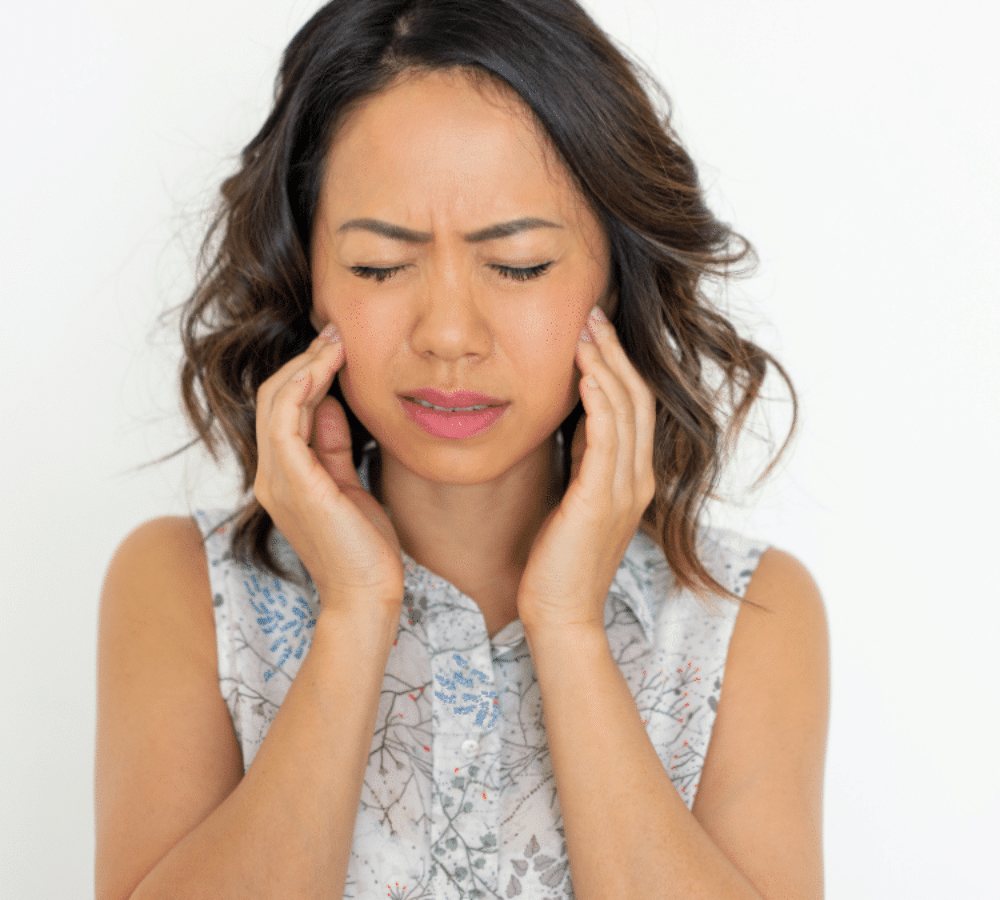
The most frequently reported are jaw pain or tenderness, headaches, clicking or popping, limited jaw movement, and pain that radiates to the ear, temple, neck and shoulders. Jaw pain is typically worst in the morning, and worst when chewing.
That ordering is close to what the pooled data show. A 2025 systematic review and meta-analysis of global TMD prevalence, published in the Journal of Oral & Facial Pain and Headache, found that "the most frequently reported signs and symptoms of TMDs are myalgia (37.2%), clicking/joint sounds (29.8%), and arthralgia (16.8%), with limited mouth opening/locking being the least prevalent (8.1%)". Myalgia is muscle pain and arthralgia is joint pain, so the single commonest presentation is muscular rather than a problem inside the joint itself. Read those percentages as a ranking of what turns up in the studies reviewed — many of them clinic or student samples rather than population samples — not as your own odds.
That morning pattern is diagnostically useful. Pain that is at its peak on waking usually points to something happening overnight — clenching or grinding during sleep — rather than to something you are doing during the day. Night time tooth grinding and clenching and what is bruxism and how is it managed? cover that habit; TMD and teeth grinding is the service page.
What the joint is
The temporomandibular joints (TMJ) are the hinging joints connecting each side of the lower jaw to the temporal bones of the skull. You can feel them by placing your fingers just in front of your ears and opening your mouth.
These joints, together with several muscles, allow the mandible to move up and down, side to side, and forward and back. When the jaw and joints are properly aligned, smooth actions such as chewing, talking, yawning and swallowing take place without you noticing them at all.
A point of terminology worth getting right: TMJ is the joint. TMD is the disorder. “I have TMJ” is like saying “I have knees”. What is the difference between TMD, TMJ and bruxism? and TMD vs TMJ vs bruxism take that distinction further.
What TMD is
Temporomandibular disorders (TMD) are disorders of the jaw muscles, the temporomandibular joints, and the nerves associated with chronic facial pain. Any problem preventing that complex system of muscles, bones and joints from working together may result in TMD.
It is not a single condition. The US National Academies of Sciences, Engineering, and Medicine, in its 2020 report Temporomandibular Disorders: Priorities for Research and Care, describes TMDs as "a set of more than 30 health disorders" — which is why one person's TMD can look very little like another's.
It can be genuinely difficult to live with. It affects sleep quality and daily function, and there is little worse than waking with a headache after a poor night's sleep and feeling depleted all day. Is TMD serious? deals with that question directly.
TMD is classified into three broad groups:
| Type | What it is |
|---|---|
| Myofascial pain | Discomfort or pain in the muscles controlling jaw, neck and shoulder function. The most common category |
| Internal derangement of the joint | Dislocation of the jaw, a displaced disc, or injury to the condyle |
| Degenerative joint disease | Osteoarthritis or rheumatoid arthritis affecting the jaw joint |
Those three call for quite different treatment, which is why an accurate diagnosis matters more than a generic appliance. EMG muscle mapping and bite force analysis describes how a muscular problem is distinguished from a joint one, and what is the best way to treat TMJ? sets out what follows from each.
How common are these symptoms?
Published prevalence figures for TMD differ by a factor of ten, and the reason is that they are not counting the same thing. Showing the spread is more honest than picking one number:
- The Royal Australian College of General Practitioners, writing in Australian Journal of General Practice in 2018, says "TMD is a common condition, signs of which appear in up to 60–70% of the population" — but that "prevalence of symptomatic disease requiring treatment occurs in only 5% to 12%".
- The BMJ's 2023 clinical practice guideline puts it differently again: TMD are "the second most common musculoskeletal chronic pain disorder after low back pain, affecting 6-9% of adults globally". That figure is for chronic pain associated with TMD, not for any TMD sign.
- The 2025 meta-analysis cited above estimates that "nearly a third of the global population (29.5%) suffers from" TMD, and reports the condition affecting "females at a significantly higher rate compared to males (36.7% versus 26.7%)". An earlier and widely cited meta-analysis (Valesan et al., 2021) put temporomandibular joint disorders at "approximately 31% for adults/elderly and 11% for children/adolescents".
So: examination signs are near-universal, a diagnosable disorder is common, and disease that genuinely needs treating is much less common than either. A clicking joint found on examination is not the same finding as pain that has lasted three months.
The true cause of TMD is unclear. It is understood to involve a combination of clinical, psychological, sensory, genetic and nervous-system factors that may place a person at higher risk of developing chronic TMD. Anyone offering a single simple cause is overstating what is known — can TMD be fixed? is the honest version of that answer.
That applies squarely to the bite. The National Academies report concluded that "occlusion should not be considered a contributing cause for the common TMDs", and the RACGP is equally direct: "Malocclusion of the teeth should be noted if present; however, this does not contribute to the manifestation of TMD and orthodontic referral is not recommended for this finding alone." Worth flagging that the sources are not unanimous — healthdirect's consumer page still lists "an uneven bite" among the causes of TMJ dysfunction, and also notes that "You might have TMJ dysfunction without any obvious cause." This is a real disagreement between reputable sources rather than a settled question, and it is the reason we do not treat a straightening plan as a treatment for jaw pain. What is malocclusion of the teeth? covers the bite itself.
The symptoms in full
- Facial muscle pain or tenderness
- Jaw pain or discomfort — most prevalent in the mornings; see what is the cause of my jaw pain? and what causes TMJ pain and how is it treated?
- Headaches
- Jaw locking — open or closed
- Jaw clicking or popping
- Limited jaw movement
- Radiating pain behind the eyes, across the face, and into the shoulders, neck or back
- Earache or ringing in the ear
- Clenching or grinding of teeth — see how can I stop grinding my teeth when I sleep?
- Fatigue
No two people with TMD experience the same symptoms, and intensity varies from mild to severe. Pain is typically most intense when chewing or on waking, is felt as jaw discomfort, and can radiate to the head, neck and shoulders, in some cases producing migraine-like headaches.
The BMJ guideline's own symptom list is close to the one above: TMD "may present with headaches, earache, clicking, popping, or crackling sounds in the temporomandibular joint, and impaired mandibular function". Healthdirect adds "an uncomfortable or uneven bite" and "hearing problems, such as tinnitus" as symptoms — which is a different claim from an uneven bite being a cause, and a much better supported one.
A note on the ear symptoms, because they cause a lot of wasted appointments: earache with no infection, and ringing in the ear, are common presentations of TMD. The joint sits directly in front of the ear canal, and referred pain from the chewing muscles frequently lands there. People often see a doctor for a suspected ear infection first — the same wrong turn described in I have a toothache. Should I see my GP for antibiotics?. Similarly, TMD pain can mimic toothache in the upper back teeth: what are the causes of toothache and what are their symptoms? and tooth pain and ache cover the pain that really is coming from a tooth.
One reassurance worth stating: clicking on its own, without pain or restriction, is common and often needs no treatment at all. Painless clicking is monitored, not treated. It is pain, locking or restriction that changes the picture.
Where grinding is part of the picture, there is a slower symptom that does not hurt at all: tooth wear. Enamel does not grow back, grinding wear is not the same thing as acid erosion, and grinding is the single largest patient-side variable in how long any restoration survives — see how long do dental fillings last?, what types of dental crowns are available? and teeth and aging.
When to seek assessment sooner
- The jaw locks and will not open or close fully
- Pain is severe, or is disturbing sleep
- You cannot eat normally
- Symptoms follow a trauma to the jaw or head — see emergency dentistry and what is considered a dental emergency?
- There is swelling, fever, or a change in how your teeth meet
What the assessment involves
If you present with signs of TMD:
- A thorough medical and dental history is taken
- Your jaw, facial muscles, soft tissues and teeth are examined clinically to determine an accurate diagnosis
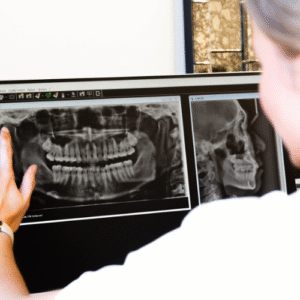
- Radiographs may be taken of the jaws, joints and teeth, to rule out other problems — how safe are dental x-rays, and our technology
A careful clinical examination is worth more than it is often given credit for. The internationally used Diagnostic Criteria for Temporomandibular Disorders (DC/TMD), published in the Journal of Oral & Facial Pain and Headache in 2014, reports that its examination protocol reaches "sensitivity ≥ 0.86, specificity ≥ 0.98" for the most common pain-related TMD, and that inter-examiner reliability for the clinical assessment "is excellent (kappa ≥ 0.85)". For one intra-articular disorder it reports "sensitivity of 0.80 and specificity of 0.97". Several other joint diagnoses, though, cannot be made reliably by examination alone: for two of them the DC/TMD reports sensitivity of only 0.34 and 0.38 without imaging, which is precisely why imaging is sometimes needed rather than routine.
That last point matters. A significant part of the assessment is excluding other causes — a cracked tooth, an abscess, sinus disease, ear pathology, or a neurological cause of facial pain can all mimic TMD. See why does a cracked tooth hurt so much?, chipped or cracked teeth, and what is a tooth abscess?.
Depending on the complexity of the case, your dentist may refer you to a specialist for further care — why would I need to see a dental specialist?, specialist care, and oral and maxillofacial surgeons.
What can help in the meantime
Most TMD is self-limiting or responds to conservative measures, and there is published support for that. The RACGP reports that "Up to 40% of symptomatic patients have spontaneous resolution of their symptoms without any treatment" and that "50–90% of patients have relief with conservative treatment". In cases without warning symptoms, it considers it "reasonable to trial conservative management for six to eight weeks prior to referral". Before anything invasive:
- Soft diet for a period; avoid chewing gum and hard or chewy foods
- Heat packs on the muscles, and gentle jaw exercises — and, where tongue posture and breathing are part of the pattern, orofacial myofunctional therapy
- Avoid extreme opening — support your chin when yawning
- Notice daytime clenching. Teeth should be apart at rest; lips together, teeth apart
- Manage stress and sleep, both of which contribute — seven ways stress can affect your mouth, and snoring and sleep apnoea if breathing is interrupted overnight
- Over-the-counter anti-inflammatories where they suit you, per the packet
For pain that has already lasted three months or more, the BMJ's 2023 guideline panel issued "strong recommendations IN FAVOUR of" cognitive behavioural therapy with or without biofeedback or relaxation therapy, therapist-assisted mobilisation, manual trigger point therapy, supervised postural exercise, supervised jaw exercise and stretching, "and usual care (such as home exercises, stretching, reassurance, and education)". Education and exercise are at the top of the evidence, not at the bottom of it.
Where a guard is indicated, how can a night guard be used to treat TMD? explains the designs, and a trip to the chemist or the dentist? explains why the shop-bought version is not equivalent. A night guard is not a sports mouthguard: different appliance, different job, not interchangeable in either direction — the sports version is covered in what kind of mouthguard should I use?. Note that the same BMJ panel placed reversible occlusal splints among its "conditional recommendations AGAINST" for chronic TMD pain, so a splint is a considered option rather than an automatic one.
More invasive options are considered only after conservative management, and after a specific diagnosis. Irreversible treatments — permanently altering the bite, or surgery — should never be a first step for TMD, and that is the guideline position as well: the BMJ panel issued "strong recommendations AGAINST irreversible oral splints, discectomy, and NSAIDS with opioids". Second opinions and corrective dentistry if something permanent has already been proposed to you.
If you believe you have any of these symptoms, consult your dentist so an appropriate diagnosis and management plan can be tailored to your individual needs. Understanding your treatment explains how a plan and a written quotation are put together, and published fees are in the price guide.
Common questions
I was told I have TMD. Is that actually a diagnosis?
Strictly, no — and this is worth knowing before you agree to treatment. The National Academies' 2020 report is unusually blunt about it: ‘TMD' should not be used as a diagnostic term. TMD is the name of a family of more than 30 disorders, and the treatment that suits one of them can be wrong for another.
The DC/TMD, which the same report calls the most thorough and accurate criteria available, names the specific conditions instead — myalgia, arthralgia, headache attributed to TMD, disc displacement with reduction, disc displacement without reduction (with or without limited opening), degenerative joint disease, subluxation.
So the useful question to ask at your appointment is not ‘do I have TMD?' but ‘which one, and what is the evidence for that in my case?' A clinician who can name the specific disorder and say what they examined to reach it is telling you something. ‘TMD' on its own is a category, not an answer.
How far should my jaw actually open? Mine feels tight.
There are published numbers, and they are easy to check at home with a ruler. The RACGP gives ‘Normal jaw opening values are 35–45 mm', and says ‘a value less than 25 mm suggests dysfunction with no translation occurring within the joint' — in plain words, the joint is hinging but not sliding.
The DC/TMD uses a different threshold for a different purpose: where the disc has displaced and is not going back, the criterion for the version that limits opening is ‘Maximum assisted opening (passive stretch) movement including vertical incisal overlap < 40 mm'.
Measure from the edge of an upper front tooth to the edge of the lower one, opening as wide as is comfortable — not as wide as you can force. Do not stretch into pain to make the number better. A figure well under 35 mm, or a number that has been falling, is worth reporting; so is a jaw that catches on the way open. A single measurement in isolation diagnoses nothing.
Several people have implied this is stress, or that it is in my head. Is it?
Stress and sleep genuinely influence it, and that is not the same thing as it being imaginary. The distinction matters enough that the National Academies addressed it directly, observing that individuals with TMDs ‘often feel stigmatized and invalidated in their experiences by their family, friends, and, often, the health care community'.
What the evidence actually supports is a biopsychosocial model — the report states that ‘only the biopsychosocial approach has both strong evidence and strong theory relating clinical findings to symptoms'. That means physical, psychological and social factors all bear on a real pain problem in a real joint and real muscles.
The practical consequence is the opposite of dismissive. The BMJ's 2023 panel placed cognitive behavioural therapy among its strong recommendations in favour for chronic TMD pain — a stronger grade than it gave any splint, injection or drug. Being offered CBT for jaw pain is not being told the pain is invented; it is being offered the intervention with the best evidence behind it.
My partner says I grind my teeth. Does that mean TMD is coming?
Not necessarily, and the international position on grinding changed recently enough that most published advice has not caught up. An international consensus reported in the Journal of Oral Rehabilitation in 2025 concluded that ‘Bruxism is a motor behaviour rather than a disorder', and that it ‘can be a risk factor, protective factor or neutral factor'.
Where it is a risk factor, TMD pain and mechanical tooth wear are the two outcomes most often named. But the same consensus notes that bruxism ‘may also act as a protective factor, the most often suggested example is in people with obstructive sleep apnea, where the activity may contribute to maintaining the patency of the upper airway, thus preventing collapse'. That is a real reason not to treat grinding as automatically bad and not to suppress it without asking why it is happening.
The consensus also says the goal is to assess bruxism ‘to determine its presence in conjunction with its possible consequences, rather than to diagnose it as a disorder'. Practically: if you grind and you have no pain, no wear and no restriction, that is a finding to record and watch. If you grind and you also snore or stop breathing at night, say so — that changes which problem is being treated first.
I have been offered a jaw-muscle scan or a bite-force measurement. Will it tell us anything?
Be clear about what you are being told it will do, because the strongest independent review of this question is not encouraging. The National Academies assessed devices that measure muscle activity, track jaw movement magnetically or optically, or measure vibrations from the joint, and concluded that ‘the evidence demonstrates that such measurements have little or no diagnostic utility for TMDs beyond established methods defined by, for example, the DC/TMD'.
The report is also explicit about the use these devices are often put to: they ‘are often used as proxies for demonstrating the need for treating the occlusion as a purported cause of TMD' — a purpose the same report rejects, concluding that ‘treatment of the occlusion for TMDs also has no supporting evidence'.
That is not a reason to refuse every measurement. Recording something before and after treatment can be reasonable. It is a reason to ask one question before you consent: which decision will change depending on the result? If the answer is that the plan is the same either way, you are paying for a record, not a diagnosis.
Do I need a scan, and which one?
Usually not, and which one depends entirely on what is being ruled out. The RACGP's position is that TMD is ‘largely a clinical diagnosis' and that imaging is useful ‘particularly when history and examination findings are unclear'.
Its ranking is specific. A panoramic radiograph ‘is a simple and useful screening tool that should be used early in the diagnostic workup to exclude common odontogenic causes of facial pain as well as assess for joint pathology' — that is, first rule out a tooth. Ultrasound ‘is not sensitive for the diagnosis of intra-articular osteoarthritis, but may be useful in assessment of disc position'. MRI ‘is currently the gold standard for investigation of TMD', but ‘Given the high cost of MRI, it is predominantly used in the setting of severe, treatment-resistant TMD, as well as for pre-operative planning purposes'.
Where imaging genuinely earns its place is in the disc and degenerative diagnoses, because clinical signs are weak for those: the DC/TMD puts clinical sensitivity at 0.34 for disc displacement with reduction and 0.55 for degenerative joint disease, with imaging as the reference standard in both. Every radiograph still has to be justified individually — how safe are dental x-rays?
Related reading
- TMD and teeth grinding — the service page
- Is TMD serious?
- Can TMD be fixed?
- What is the best way to treat TMJ?
- Muscle relaxants for jaw clenching
- What is malocclusion of the teeth?
- General dentistry
Practical details
Specialist registration can be verified on the AHPRA register, or by calling 1300 419 495. The practice’s registered specialists and the full team are listed by name.
Smile Solutions, Level 1, 220 Collins Street, Manchester Unity Building, Melbourne VIC 3000 — getting here. Phone 13 13 96, contact us, or theteam@smilesolutions.com.au. Monday–Friday 8.00am–6.00pm, Saturday 8.30am–1.30pm, Sunday by appointment.
Published 24 March 2023, by Dr Florina Besim. General information only; it does not replace advice from your treating practitioner, and it is not a diagnostic tool.
Smile Solutions trades under ABN 28 193 514 103.
Images on This Page
-
https://www.facebook.com/tr?id=800557773428361&ev=PageView&noscript=1
(no alt text)
-
https://www.smilesolutions.com.au/wp-content/uploads/2025/10/calendar_month.svg
(no alt text)
-
https://www.smilesolutions.com.au/wp-content/themes/arcadian-wordpress-theme/assets/images/smile_solutions_logo_white.png
Smile Solutions Logo
-
https://www.smilesolutions.com.au/wp-content/themes/arcadian-wordpress-theme/assets/images/smile_solutions_logo_purple.png
Smile Solutions Logo
-
https://www.smilesolutions.com.au/wp-content/uploads/2023/01/Florina-150x150.jpg
Dr Florina Besim
-
https://www.smilesolutions.com.au/wp-content/uploads/2025/11/TMD-Teeth-Grinding-Smile-Solutions.png
Woman holding her face, looking concerned.
-
https://www.smilesolutions.com.au/wp-content/uploads/2025/09/TMD-Teeth-Grinding-300x270.png
Dental consultation with skull model.
-
https://www.smilesolutions.com.au/wp-content/uploads/2025/09/Root-Canal-2-300x217.jpg
Root Canal
-
https://www.smilesolutions.com.au/wp-content/uploads/2023/11/SS-Tooth-1-1-150x150.png
Smile Solutions
-
https://www.smilesolutions.com.au/wp-content/uploads/2025/09/Wisdom-Teeth-Smile-Solutions-300x300.png
Smile Solutions Dentist Melbourne
-
https://www.smilesolutions.com.au/wp-content/uploads/2025/11/Kia-150x150.jpg
Dr Kia Pajouhesh
-
https://www.smilesolutions.com.au/wp-content/themes/arcadian-wordpress-theme/assets/images/family_owned_bussiness.png
Family Owned Business
-
https://www.smilesolutions.com.au/wp-content/themes/arcadian-wordpress-theme/assets/icons/icon--phone.svg
Smile Solutions Contact
-
https://www.facebook.com/tr? id=800557773428361&ev=PageView&noscript=1
(no alt text)
-
https://bat.bing.com/action/0?ti=25148060&tm=gtm002&Ver=2&mid=827ba433-d515-4f06-8f35-9f8b73d66f4b&bo=1&sid=0524a2d0ab2711f1a638dd67932d9b38&vid=0524e0e0ab2711f1b9d20d6ba99c573e&vids=1&msclkid=N&pi=918639831&lg=en-US&sw=800&sh=600&sc=24&nwd=1&tl=What%20are%20the%20most%20common%20symptoms%20of%20TMD%3F%20-%20Smile%20Solutions&p=https%3A%2F%2Fwww.smilesolutions.com.au%2Fdental-articles%2Farticle%2Fwhat-are-the-most-common-symptoms-of-tmd%2F&r=<=2287&evt=pageLoad&sv=2&cdb=AQAQ&rn=223293
(no alt text)