I have a toothache. Should I see my GP for antibiotics?
See a dentist, not a GP, and expect treatment rather than a prescription. Antibiotics do not fix the cause of a toothache. At best they settle the symptoms temporarily while the underlying problem — decay reaching the nerve, an infected root, a periodontal pocket — carries on. At worst they delay the treatment that would actually resolve it, and contribute to antibiotic resistance.
This is not a matter of professional territory. It is that a GP cannot open a tooth, drain an abscess, or remove the source of the infection, and those are the treatments that work.
Why antibiotics do not work on a toothache
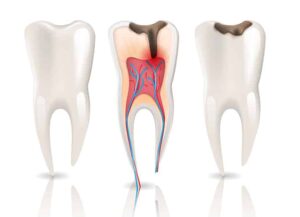
A dental infection typically sits inside the tooth or in a walled-off collection of pus. Both are spaces with poor or no blood supply — which is precisely why the body's immune system has not cleared them, and why an antibiotic circulating in the bloodstream reaches them badly. Why are dental abscesses so painful? explains that anatomy.
The endodontic literature is specific about what is actually in there. A review of endodontic outcomes published in the British Dental Journal describes how a periapical lesion forms: it forms in the presence of bacterial contamination of the root canal space, and the intra-radicular biofilm within the anatomical complexities is challenging to remove. A biofilm inside a dead root canal is not a target a systemic drug can reach — that is why the treatment is mechanical, and why it has to be done by someone who can get inside the tooth.
The definitive treatment is removing or draining the source:
| Cause of the pain | What actually fixes it |
|---|---|
| Deep decay into the nerve | Root canal treatment, or extraction |
| Periapical abscess | Root canal treatment with drainage, or extraction |
| Periodontal abscess | Drainage and cleaning of the pocket |
| Cracked tooth | Restoration, crown, or extraction depending on the crack |
| Failing filling or crown | Replacement |
| Wisdom tooth pericoronitis | Cleaning under the gum flap; often removal |
| Sensitivity, not infection | Desensitising treatment — antibiotics are irrelevant |
None of these is an antibiotic.
Working out which row you are in is the job of an examination — see What could be causing my toothache? and Tooth Pain and Ache. Where root canal treatment is needed and the case is difficult, a specialist endodontist does it; where the problem is in the gum rather than the tooth, a periodontist does.
What the delay costs, in numbers
The argument against “antibiotics now, dentist later” is usually made as a matter of principle. It can be made as a matter of measurement instead, and the published outcome data is more persuasive than the principle.
The size of the lesion at the time of treatment predicts the result. The same British Dental Journal review states that the absence of a periapical lesion is a positive prognostic factor, and that the presence of one has a significant negative effect on healing outcome — the larger the lesion, the more complex the infection, and the less favourable the outcome. It quotes a prospective study by Ng and colleagues (2011) which concluded that “the odds of success of treatment were found to decrease by 14% for every 1 mm increase in diameter of the preoperative lesion”.
A lesion does not stay the same size while you wait. That is the whole point of the sentence.
It also predicts whether the tooth survives at all. A long-term cohort study of primary root canal treatment published in PMC found that the pre-operative presence of periapical radiolucency was significantly associated with tooth extraction (odds ratio 1.87; 95% CI 1.07–3.28). Older German work summarised in the endodontic literature points the same way: teeth with a periapical lesion were less likely to survive than teeth without one, and in a Danish general-population study baseline apical periodontitis was a predictive factor for extraction.
And treated properly and in time, the odds are good. In that same long-term study, overall success rates for endodontically treated teeth were 87.8% (95% CI 84–90%) at tooth level and 80.8% (95% CI 75–86%) at patient level, with cumulative success of 93%, 85%, 81% and 81% at 10, 20, 30 and 37 years, and a probability of tooth survival of 97% at 10 years and 81% at 20 years.
Two cautions about reading those figures. They describe root canal treatment, not antibiotics — no antibiotic has any claim on them. And they are averages from research cohorts; your tooth, your anatomy and the state it is in when it is opened decide your own result, which is a conversation for your practitioner. What the figures do establish is the direction of travel: the treatment works well, and it works less well the longer the lesion has to grow. Everything you need to know about root canal treatment and understanding your treatment go further.
The professional position
In December 2014 the National Prescribing Service (NPS) ran Antibiotics Awareness Week, part of a global effort to raise awareness of antibiotic resistance and promote responsible prescribing. The Australian Dental Association called on health professionals and patients to take a pledge to exercise care in prescribing antibiotics.
Dr Peter Alldritt, then Chair of the ADA's Oral Health Committee, noted that Australia has one of the highest rates of antibiotic use in the world, and cited an NPS survey finding that nearly 60 per cent of GPs said they would prescribe antibiotics to meet patient demands or expectations, even where it might not be strictly medically appropriate.
On dental pain specifically, his position was direct: many patients present to GPs looking for antibiotics for problems such as toothache, and the right advice is to see a dentist. Health professionals have a responsibility to follow the correct referral pathways, and, in his words, antibiotics “should never be the default response”.
He also made the point about cost: inappropriate antibiotic use both delays treatment of the dental problem and makes bacterial infections harder to treat in future — a double cost, borne once by the patient and once by everyone.
The World Health Organization has described antibiotic resistance as one of the biggest threats to human health.
When antibiotics genuinely are warranted
They have a real place, and it is worth being clear about it. A dentist may prescribe antibiotics where there are signs the infection has spread beyond the tooth:
- Fever
- Facial or neck swelling that is spreading
- Tender or swollen lymph nodes
- Feeling generally unwell
- Where the patient is immunocompromised
- Where definitive treatment must be delayed
Even then, antibiotics are an adjunct to drainage, not a replacement for it. The tooth still needs treating afterwards.
A point that catches people out: an abscess that settles on antibiotics has not been cured. If the tooth is then left alone, it comes back — usually worse, and often at a less convenient moment. Can a dental abscess affect your general health? sets out what is at stake if it keeps recurring.
Tell your dentist about any medicines you take and any medical conditions you have, including heart valve problems, joint replacements, immune suppression and diabetes. Those can change both the prescribing decision and the treatment plan, and a dentist can only account for what they know about.
When to skip the appointment queue entirely
Go to a hospital emergency department — or call 000 — immediately if you have:
- Difficulty breathing or swallowing
- Swelling spreading to the eye, under the jaw, or into the neck
- High fever with rapidly worsening swelling
- Inability to open your mouth
Dental infections can spread through the tissue spaces of the head and neck. This is uncommon, but it can progress within hours. See What is considered a dental emergency?, and Emergency Dentistry for how urgent dental appointments are arranged.
What to do in the meantime
While waiting for a dental appointment:
- Over-the-counter pain relief taken according to the packet directions. For dental pain, an anti-inflammatory is often more effective than paracetamol alone, provided it suits you — check with your pharmacist.
- Rinse with warm salty water
- Keep the area clean; keep brushing gently
- Avoid very hot and very cold food and drink
- Sleep propped up if it throbs
- Do not place aspirin against the gum — it burns the tissue
- Do not apply heat to a facial swelling
How can I relieve a toothache? covers this in more detail, including what does not help.
How you can help with resistance
The ADA's practical asks, which apply well beyond dentistry:
- Do not expect antibiotics for colds and flu — these are viral, and antibiotics have no effect on viruses
- Take antibiotics as directed if they are prescribed, and finish the course
- Practise good hygiene to help stop infections spreading
And for dental pain specifically: book the dentist, not the pharmacy.
The version of this that prevents the whole problem is finding decay before it reaches the nerve, which is what a check-up and a clean with a hygienist are for. Decay is painless until late; by the time antibiotics are being considered, the cheap option has usually already passed. The price guide shows how far apart those options sit.
Common questions
I genuinely cannot get a dental appointment until next week and my GP has offered a script. Is taking it wrong?
No — that is one of the situations in which a prescription is appropriate, and it is worth knowing where the line sits rather than treating all antibiotic use as a failure.
Australian Family Physician (RACGP) gives medical practitioners this instruction for a patient who is not sick enough to need admission: refer them for prompt dental evaluation, and "if the patient cannot attend the dentist that day, it is advisable to commence antibiotics and ensure the referral is completed as soon as possible." The NSW Health Emergency Care Institute lists the indications in the same spirit — systemic signs of infection such as fever, malaise, swollen lymph nodes or trismus, compromised immunity, risk of rapid spread, or a delay to more definitive treatment.
What is not optional is the second half of the sentence. The same paper is blunt about the misunderstanding that follows: "Many patients and clinicians assume that antibiotics alone are definitive treatment. This is not the case. Definitive treatment can be administered only by the dental practitioner." So take the prescription if it is offered on that basis — and keep the appointment, including if the pain has gone by then.
How much difference do antibiotics actually make to the pain?
Less than almost anyone expects, and this is measured rather than asserted. A Cochrane review updated in 2024 looked specifically at systemic antibiotics for symptomatic apical periodontitis and acute apical abscess in adults, and found three trials with 134 participants in total.
Where a single pre-operative dose was given alongside root canal treatment, it "results in little to no difference in participant-reported pain or swelling at any of the time points" — median pain was 3 out of 10 in both the antibiotic and the placebo groups at 24 hours, and zero in both groups by 72 hours, on low-certainty evidence. For a seven-day post-operative course the evidence was very uncertain, with the confidence intervals crossing zero at every time point.
The finding that matters most is an absence. The reviewers "found no studies which compared the effects of systemic antibiotics with a matched placebo delivered without a surgical intervention" — that is, nobody has run the trial that would test the thing people actually want to do, which is take the tablets instead of having the treatment. Their closing note is that antibiotic use "is recognised as a major contributor to antimicrobial resistance".
Against that, an anti-inflammatory taken according to the packet, where it suits you, has a far better claim on your toothache than an antibiotic does.
Is this really just a GP problem? Do dentists over-prescribe too?
They do, and the Australian evidence on that is uncomfortable enough to be worth quoting. A survey of general dentists in Victoria and Queensland, published in BMC Oral Health in 2019, put written clinical scenarios to practitioners and found "55% of overprescribing of antibiotics was detected, with a range of 13–88% on a routine or occasional basis depending on the scenario" — the worst case being a localised swelling, where 88% of respondents said they would prescribe, routinely or occasionally, in a situation the guidelines do not support.
Two honest caveats. This was a survey of stated intentions against written scenarios, not an audit of what was actually prescribed; and it drew 382 responses from 1,468 invitations across two states in 2018, so it does not claim to represent the country. It is evidence of a widespread habit, not a national prescribing rate.
The authors are candid about why it happens, and none of the reasons are clinical: "limited clinical time, fulfilling patients' expectations, inability to come to a diagnosis and avoiding litigation risk", plus "a strong desire by dentists to give distressed patients who were in pain the impression that the dentist was doing everything possible to resolve their symptoms". They also correct one specific piece of folklore directly — the idea that antibiotics will shrink a local swelling and make the anaesthetic work better, which they say "should be rectified, as it is established that treatment of an acute odontogenic infection with antibiotics alone can be deleterious because of the risk of worsening infection".
Encouragingly, recent graduates scored better than more experienced colleagues on antibiotic prescribing. The direction of travel is the right one.
I go to the GP because that visit is bulk-billed and the dentist is not. What are my options?
That is the real reason a great many people arrive at a GP with a toothache, and it deserves a straight answer rather than a lecture. Australian Family Physician states the structural problem in one line: "Unfortunately, for many patients, Medicare does not cover dental services unless the patient holds a healthcare card."
A few things are worth knowing:
- For children, the Child Dental Benefits Schedule may cover a substantial part of basic dental treatment for eligible families. Eligibility and the current cap are set by Services Australia and are explained on the Child Dental Benefit Schedule page.
- Ask what an emergency examination costs before you book, and ask what it includes. It is a smaller and much more predictable figure than the treatment, and it is what turns "a toothache" into a diagnosis and a plan with a price on it. Our published fees are on the price guide.
- Ask about staging. Relieving the pain and stabilising the tooth is not always the same appointment as the definitive restoration, and separating them changes what has to be found this week. Payment plans are available, with terms and eligibility set out on that page.
- A prescription is not a cheaper version of treatment. It is a delay with a cost attached, and the endodontic outcome figures earlier on this page put a number on what the delay does to the tooth.
How do I get seen sooner? What should I actually say when I phone?
Lead with the findings, not the adjectives. "It is really bad" does not triage; the following do:
- Whether there is swelling, and where it is — inside the mouth only, in the cheek, below the jawline, or up towards the eye
- Whether you can open your mouth normally, swallow normally, and manage your own saliva
- Whether you have a fever, or feel unwell in yourself
- How long it has been going on, and whether this has happened before with the same tooth
- What makes it worse — hot, cold, biting, lying down at night
- Any medical conditions or medicines, particularly anything affecting your immune system, and diabetes
If the answer to the first two is swelling that is spreading, or difficulty opening, swallowing or breathing, do not ring for an appointment at all — that is a hospital emergency department, and the guidance in the literature is to stay sitting upright rather than lying flat. Everything else is a phone call worth making early in the day rather than late.
Where to go next
- Working out what is causing the pain — What could be causing my toothache?
- Relief while you wait — How can I relieve a toothache?
- If there is swelling — What is considered a dental emergency? and Common dental emergencies and what to do
- If it needs root canal treatment — Root Canal Treatment, Everything you need to know about root canal treatment and Endodontists
- If the gums are the problem — Bleeding Gums and Periodontists
Practical details
This article summarises Australian Dental Association and National Prescribing Service public-health messaging from December 2014, including comments made at the time by Dr Peter Alldritt. Those organisations' own materials remain the primary source. The endodontic outcome figures quoted above are from peer-reviewed publications — a review in the British Dental Journal and a long-term cohort study of primary root canal treatment — which likewise remain the primary source.
Specialist registration can be verified on the AHPRA register, or by calling 1300 419 495.
Smile Solutions, Level 1, 220 Collins Street, Manchester Unity Building, Melbourne VIC 3000. Phone 13 13 96, or theteam@smilesolutions.com.au. Monday–Friday 8.00am–6.00pm, Saturday 8.30am–1.30pm, Sunday by appointment. Full details on Contact Us.
Published 4 December 2014. General information only; it does not replace advice from your treating practitioner. Any medicine mentioned here is a matter for your treating practitioner to decide. Use any medication only as directed.
Smile Solutions trades under ABN 28 193 514 103.
Images on This Page
-
https://www.facebook.com/tr?id=800557773428361&ev=PageView&noscript=1
(no alt text)
-
https://www.smilesolutions.com.au/wp-content/uploads/2025/10/calendar_month.svg
(no alt text)
-
https://www.smilesolutions.com.au/wp-content/themes/arcadian-wordpress-theme/assets/images/smile_solutions_logo_white.png
Smile Solutions Logo
-
https://www.smilesolutions.com.au/wp-content/themes/arcadian-wordpress-theme/assets/images/smile_solutions_logo_purple.png
Smile Solutions Logo
-
https://www.smilesolutions.com.au/wp-content/uploads/2023/11/SS-Tooth-1-1-150x150.png
Smile Solutions
-
https://www.smilesolutions.com.au/wp-content/uploads/2014/12/antibiotics.jpg
I have a toothache. Should I see my GP for antibiotics?
-
https://www.smilesolutions.com.au/wp-content/uploads/2025/09/Root-Canal-2-300x217.jpg
Root Canal
-
https://www.smilesolutions.com.au/wp-content/uploads/2026/08/Mouth-Breathing-300x270.jpg
Mouth Breathing
-
https://www.smilesolutions.com.au/wp-content/uploads/2025/09/Dental-Crown-at-Smile-Solutions-300x300.jpg
Dental Crown at Smile Solutions
-
https://www.smilesolutions.com.au/wp-content/themes/arcadian-wordpress-theme/assets/images/family_owned_bussiness.png
Family Owned Business
-
https://www.smilesolutions.com.au/wp-content/themes/arcadian-wordpress-theme/assets/icons/icon--phone.svg
Smile Solutions Contact
-
https://www.facebook.com/tr? id=800557773428361&ev=PageView&noscript=1
(no alt text)
-
https://bat.bing.com/action/0?ti=25148060&tm=gtm002&Ver=2&mid=ba38d28c-32da-4798-8da7-ecdf1f530075&bo=1&sid=eea3e470ab2711f19fa5a5638f702688&vid=eea41630ab2711f1b3cbf37c2fe3ec68&vids=1&msclkid=N&pi=918639831&lg=en-US&sw=800&sh=600&sc=24&nwd=1&tl=I%20have%20a%20toothache.%20Should%20I%20see%20my%20GP%20for%20antibiotics%3F%20-%20Smile%20Solutions&p=https%3A%2F%2Fwww.smilesolutions.com.au%2Fdental-articles%2Farticle%2Ftoothache-see-gp-antibiotics%2F&r=<=2121&evt=pageLoad&sv=2&cdb=AQAQ&rn=667328
(no alt text)