What is the best way to treat TMJ?
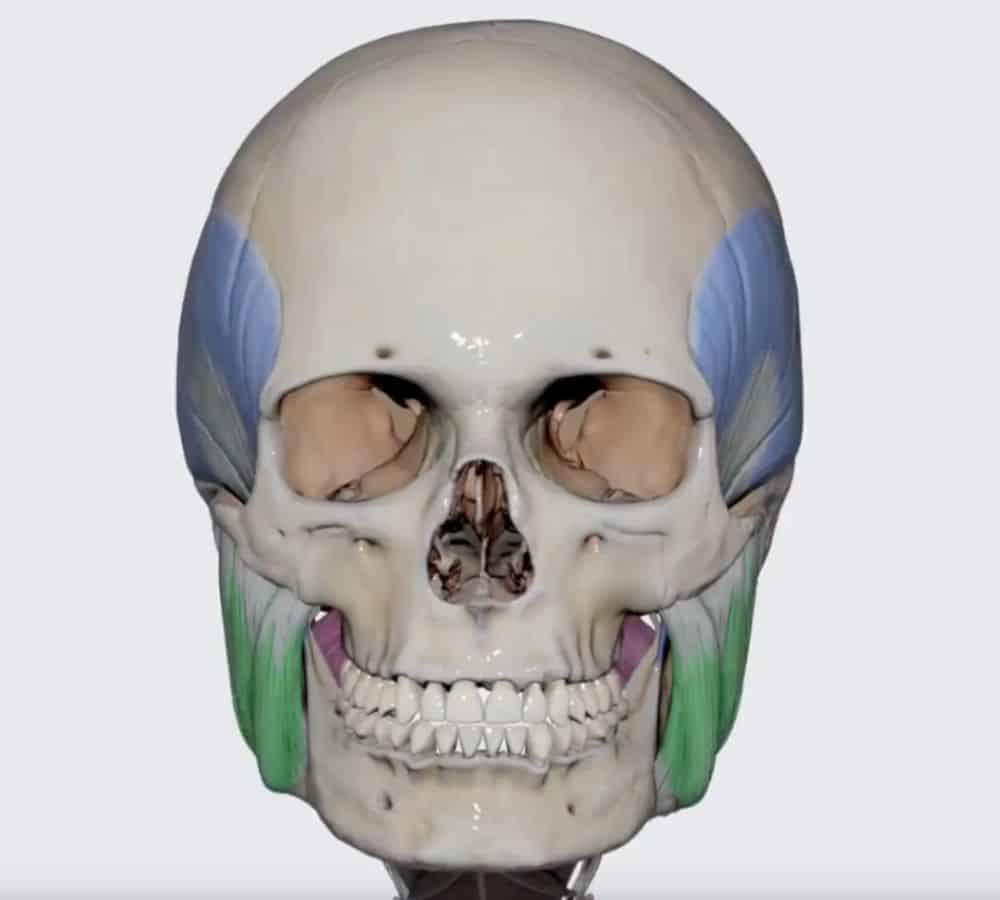
The TMJ, or temporomandibular joint, is the joint on either side of the jaw that lets it open, close, move side to side and move forwards. It is one of the most complex joints in the body: it hinges and slides at the same time, and the two joints are mechanically linked, so neither can move independently of the other.
These joints are subject to a disorder known as TMJ disorder — often shortened to TMJ, more accurately TMD — which can affect one joint or both. If the three terms are still running together for you, what is the difference between TMD, TMJ and bruxism? and TMD vs TMJ vs bruxism sort them out first.
There is no single best treatment, and any page that offers you one is overselling. The right approach is usually one or a combination of the options below, chosen after diagnosis — because TMD is not one condition. It is a label covering several different problems that happen to produce overlapping symptoms.
The distinction that decides everything
Broadly, TMD divides into problems of the muscles and problems of the joint itself, and they respond to different treatment.
- Muscular TMD — pain and tenderness in the chewing muscles, often worse on waking, frequently associated with clenching. Usually responds well to conservative management.
- Joint (intra-articular) TMD — the disc inside the joint, the capsule, or the bony surfaces. This is the group that clicks, locks, or grinds, and splints and exercises help less because the problem is structural rather than muscular.
The RACGP's clinical review of TMD draws the same line, and adds a useful rule of thumb for telling them apart: “tenderness elicited on palpation of the TMJ, joint clicking and crepitus are signs of intra-articular derangement, whereas pain on jaw movement, headache and referred pain are suggestive of a muscular problem”.
A third distinction matters just as much: some patients have overactive jaw muscles and some have weak, underperforming ones. Treating the second group as if they were the first makes them worse. This is why Smile Solutions measures muscle activity and bite force before deciding on treatment rather than starting with an appliance — EMG muscle mapping and bite force analysis explains what that measurement actually involves. TMD & Teeth Grinding.
You should know that this kind of measurement is contested, and it would be wrong of us not to say so. The United States National Academies of Sciences, Engineering, and Medicine reviewed the field in 2020 and concluded that devices used “to measure muscle activity, to track jaw movement magnetically or optically, to measure vibrations from the TMJ” have “little or no diagnostic utility for TMDs beyond established methods” such as the standardised DC/TMD examination. Its concern is specific: that these tests are “often used as proxies for demonstrating the need for treating the occlusion as a purported cause of TMD”. Our own reason for measuring is different — to avoid loading an already weak muscle group — but the honest position is that the NASEM report does not support these devices as diagnostic instruments, and you are entitled to ask any clinician, here or elsewhere, what a measurement will change about your treatment before it is taken.
Symptoms
The most common are:
- limited jaw movement, or inability to open the mouth
- “lock” jaw
- clicking or grating noises from the joints
- toothache or tooth sensitivity
- difficulty or discomfort chewing
- jaw pain, or pain in the muscles associated with jaw movement
- headaches, earache, or a blocked-ear sensation with no ear disease found
- neck and shoulder tightness
On limited movement, the RACGP gives the figures a clinician uses: “normal jaw opening values are 35–45 mm; a value less than 25 mm suggests dysfunction with no translation occurring within the joint”.
What are the most common symptoms of TMD? takes them one at a time, and is TMD serious? deals with the question most people are really asking underneath.
The toothache symptom is worth noting, because it sends people to the dentist looking for a problem with a tooth that is not there. Some patients have had a healthy tooth treated, or even removed, before the jaw joint was considered. If a tooth has been treated and the pain has not changed, that is information. What are the causes of toothache and what are their symptoms?, I have a toothache, what could be the cause? and tooth pain and ache cover the dental causes that do need treating; what to do if you suffer from sensitive teeth covers sensitivity specifically.
The ear symptoms are the other common detour — a course of antibiotics for an ear infection that was never there. I have a toothache. Should I see my GP for antibiotics? makes the same point about the other end of the jaw.
The mistake runs both ways, and the RACGP states the more serious direction bluntly: “many orofacial and otological conditions can mimic TMD. Conversely, the assumption that TMD is the cause of a patient's symptoms can result in a more sinister pathology being missed.” Its differential list includes trigeminal neuralgia, temporal arteritis, sinusitis, mandibular fracture and, rarely, tumours of the joint or parotid gland. That is the argument for a diagnosis rather than a splint.
A clicking joint that does not hurt and does not limit opening usually needs nothing at all. Clicking is common in the general population, much of it lifelong and harmless. The RACGP makes the same point about what imaging finds: “disk displacement is a common finding in the general population and the majority of those are asymptomatic”. Treatment is for symptoms that bother you, not for noises.
What causes it
The exact cause is not always identifiable, which is an honest and important point, and it is the single most useful thing to understand about TMD. In many patients no single cause is ever found, and the condition is managed rather than solved — can TMD be fixed? is the longer answer to that.
Suggested contributing factors include:
- clenching or grinding of the teeth (bruxism) — see what is bruxism and how is it managed? and night time tooth grinding and clenching
- mental stress, and disturbed sleep — see seven ways stress can affect your mouth and, where snoring or interrupted breathing is part of the picture, snoring and sleep apnoea
- injuries to the jaw joints — including whiplash and blows to the chin; if the injury is recent, emergency dentistry and what should I do in a dental emergency?
- conditions such as arthritis
- prolonged wide opening — a long dental appointment, a general anaesthetic, or dental surgery such as wisdom teeth removal; how long does it take to recover from wisdom teeth surgery? sets out what is normal afterwards
- habits such as nail biting, chewing gum for long periods, or resting the chin on a hand
One popular explanation deserves a caution. The idea that TMD is usually caused by a “bad bite”, and cured by permanently adjusting the bite, is not well supported. It matters because the treatments that follow from it — grinding down teeth, full-mouth rebuilds, orthodontics undertaken specifically to cure jaw pain — are irreversible and expensive.
This is not our opinion. The RACGP's clinical review states that “there is minimal evidence that occlusion abnormalities contribute to TMD”, and, on the practical consequence, that “malocclusion of the teeth should be noted if present; however, this does not contribute to the manifestation of TMD and orthodontic referral is not recommended for this finding alone”. The NASEM report goes further, concluding that “current experimental evidence, reviews, and weak occlusal theory indicate that occlusion should not be considered a contributing cause for the common TMDs”, and calling for “efforts to move away from the focus on occlusion — as either a cause of TMD or a treatment objective — … in clinical practice and in dental training and education”.
Where the sources disagree, and they do. healthdirect, Australia's government-funded health information service, lists “an uneven bite” among the causes of TMJ dysfunction, along with “dental (tooth) issues, such as new fillings or dentures that may cause you to have an uneven bite”. That is directly at odds with the RACGP and NASEM positions above. We are not going to pretend the disagreement away: it is real, it runs between reputable Australian and international sources, and it is one reason bite-based treatment for jaw pain is still widely offered. What the evidence does support is that an uneven-feeling bite is a common symptom of TMD, and healthdirect lists it as one of those too. What it does not support is grinding teeth away or straightening them in order to cure jaw pain.
Bite irregularities are extremely common and mostly symptomless: see what is malocclusion of the teeth? and treatment of malocclusion. Reversible treatment comes first, and anything permanent should have a clear justification you understand — second opinions and corrective dentistry if you want another view before committing.
Treatment options
Treatments aim to relieve the most common symptoms and restore function. Once your health professional has made a diagnosis, the options include:
Self-management — genuinely the first line
This is not a consolation prize. For many patients it is the treatment that works.
- Rest the jaw. Soft diet for a period, cut food small, avoid chewing gum, and do not open wide when yawning — support the chin. Rest is not the same as immobilising the joint: the RACGP warns that “TMJ immobilsation has no benefit and may actually worsen symptoms due to muscle contractures and fatigue”.
- Heat or cold. Warm packs for muscular ache; cold for an acutely inflamed, swollen joint.
- Stop the habits. Teeth should be apart at rest. “Lips together, teeth apart” is the cue. How can I stop grinding my teeth when I sleep? covers the daytime habit as well as the night-time one.
- Sleep and stress. Both measurably affect clenching, which is why TMD often flares in difficult periods and settles afterwards.
- Simple analgesia — over-the-counter pain relief or anti-inflammatories, taken according to the packaging, and discussed with a pharmacist or doctor if you take other medication.
Most acute TMD improves within weeks to a few months, with or without treatment. That is a genuinely reassuring fact, and it has numbers behind it. The RACGP reports that “up to 40% of symptomatic patients have spontaneous resolution of their symptoms without any treatment, and 50–90% of patients have relief with conservative therapy”. It also sets a sensible timeframe: absent red flags, “it is reasonable to trial conservative management for six to eight weeks prior to referral”. That is why aggressive early intervention is rarely justified.
The international guideline agrees on where to start. The BMJ's 2023 clinical practice guideline for chronic TMD pain, produced with the GRADE method, issues strong recommendations in favour of cognitive behavioural therapy with or without biofeedback or relaxation therapy, therapist-assisted mobilisation, manual trigger point therapy, supervised postural exercise, supervised jaw exercise and stretching, and “usual care (such as home exercises, stretching, reassurance, and education)”. The self-management column is the best-supported column.
Occlusal splint therapy
A custom-made guard or splint fitted to your upper or lower teeth, usually worn at night. Splints are made in the practice’s own on-site laboratory, and how can a night guard be used to treat TMD? explains the designs and what each is for.
It does two jobs: alleviating symptoms, and protecting the teeth from further damage if you clench or grind. The second is the one people underestimate — bruxism wear is irreversible, and enamel does not grow back (if enamel is the hardest substance in the body, why do teeth break?). Grinding is also the largest patient-side variable in how long restorations survive — the lifespans quoted in how long do dental fillings last?, what types of dental crowns are available? and teeth and aging all assume a mouth that is not grinding through them.
On the first of those two jobs — relieving symptoms — the evidence is weak, and you should hear that from us rather than from somewhere else. The RACGP states that “the use of occlusional and non-occlusional splints is controversial and evidence to support their use is inconclusive”. Cochrane's 2024 review of occlusal interventions for TMD (CD012850) included 57 randomised trials and 2,846 participants, judged only one study to be at low risk of bias, and concluded: “we have very low certainty in the evidence for all comparisons”, and “overall, we found insufficient evidence to reach conclusions regarding the effectiveness of occlusal interventions for managing symptoms of TMD, despite the available studies including almost 3000 participants”. The BMJ 2023 guideline places reversible occlusal splints among its conditional recommendations against, for chronic TMD pain.
One line in that guideline is not conditional, and it is the most important sentence on this page. The BMJ panel issued a strong recommendation AGAINST irreversible oral splints, alongside discectomy and the combination of anti-inflammatories with opioids. If anyone proposes permanently altering your bite or your teeth to treat jaw pain, that is the recommendation to weigh it against, and the reason to ask for the alternative in writing first.
So a night splint remains a reasonable, reversible, tooth-protective thing to try — and it is the tooth-protection case, not the pain case, that the evidence supports best. Be clear about what a splint does not do. It protects the teeth from grinding; it does not stop the grinding, and it is not a cure for TMD. It also has to be fitted and adjusted for you — an unadjusted over-the-counter guard can change your bite, which is the main argument against buying one online. Getting a new mouthguard — a trip to the chemist or the dentist? puts numbers and trade-offs around that choice.
A splint is also not a sports mouthguard. A night guard is a hard, thin appliance for grinding; a sports mouthguard is a thick, cushioned appliance for impact. They are different appliances for different jobs and are not interchangeable in either direction — the sports version is covered in what kind of mouthguard should I use?.
Physiotherapy and manual therapy
Used to address the muscular discomfort associated with TMD. Your clinician may prescribe exercises designed to increase strength and ease movement, alongside manual therapy to the jaw, neck and shoulders.
This is the best-evidenced group of treatments in the field. As above, the BMJ 2023 guideline strongly recommends therapist-assisted mobilisation, manual trigger point therapy, supervised postural exercise and supervised jaw exercise and stretching for chronic TMD pain, and notes that “serious adverse events are unlikely with exercise and cognitive behavioural therapy” — which is not something that can be said of the invasive options. The RACGP similarly reports that physiotherapy “has been shown to be effective in the management of TMD … especially with regards to improving joint range of motion”, while noting honestly that “stretching and jaw exercises may improve range of movement but may not necessarily improve pain”.
Because the jaw, neck and posture work as a chain, assessment often extends well beyond the jaw itself. Smile Solutions has an in-house osteopath for exactly this reason. Where the underlying pattern is a habitual one — tongue posture, breathing through the mouth, swallowing pattern — orofacial myofunctional therapy and mouth breathing are the relevant reading.
Medication
Simple analgesics and anti-inflammatories are the usual starting point. Where muscle pain is prominent and persistent, a doctor or specialist may consider other options. All of these are prescribing decisions for a practitioner who has examined you, and this page names none as a recommendation.
Two boundaries in the published guidance are worth knowing as a patient, because they are about what should not happen. The RACGP states that “opioids are not recommended for the management of chronic TMD pain because of the risk of the patient developing drug dependency”, and lists several drug classes shown to have “little to no benefit” in TMD. The BMJ 2023 guideline issues one of its three strong recommendations against anti-inflammatories combined with opioids, and observes that “long-term opioids, NSAIDs, and invasive or irreversible procedures are associated with a small risk of serious, potentially catastrophic, harms”. Jaw pain that is being managed with escalating pain relief rather than a diagnosis is a reason to ask for a review.
Muscle relaxant injections
Widely offered, and not appropriate for every patient. They can help where the problem is genuinely overactive, over-functioning muscle; they are of limited benefit where the problem is structural, and they are counterproductive in patients whose jaw muscles are already weak.
The published guidance here has moved, and the two main sources now disagree. The RACGP's clinical review states that intramuscular botulinum toxin injections “have been shown to be efficacious in myofascial causes of TMD pain and tension-type headache”. The later BMJ 2023 guideline places botulinum toxin injection among its conditional recommendations against for chronic TMD pain. Both are reputable; the BMJ document is the more recent and was produced specifically as a GRADE-based guideline with a linked network meta-analysis. We are not going to adjudicate between them for you, but you should know the question is open and ask what the expected benefit is, over what period, before consenting.
They are prescription-only medicines with recognised side effects, best used as a circuit-breaker alongside conservative treatment rather than as indefinite therapy. Muscle relaxants for jaw clenching: when they help, when they don’t, and what to try instead goes through that decision in detail.
When conservative treatment isn't enough
Where the above methods have been tried and symptoms persist, you may be referred to a specialist in TMJ disorders — in practice, an oral medicine specialist, an oral and maxillofacial surgeon, a prosthodontist with a focus in occlusion, or a pain specialist. Why would I need to see a dental specialist? and specialist care explain how referral works here, and complex dental cases describes what happens when more than one specialty is involved.
In rare cases, surgery may be performed by an oral and maxillofacial surgeon if appropriate. Surgery is genuinely a last resort here, not an early option, and it is reserved for identified structural disease rather than for pain alone. Note that the BMJ 2023 guideline's strong recommendations against include discectomy — removing the joint disc — for chronic TMD pain, and lists arthrocentesis among its conditional recommendations against. Oral & Maxillofacial Surgeons, and what does oral and maxillofacial surgery involve?.
Imaging is not automatic. An MRI can show the disc and soft tissue, and is useful for persistent locking, restricted opening, or suspected arthritis. But imaging findings often do not match symptoms — disc displacement is found in plenty of people with no pain at all — so a scan is ordered to answer a specific question, not to go looking. The RACGP puts MRI in the same place: it is “the gold standard for investigation of TMD”, but “given the high cost of MRI, it is predominantly used in the setting of severe, treatment-resistant TMD, as well as for pre-operative planning purposes”. How safe are dental x-rays and our technology cover what is used and when.
When to be seen sooner
Most TMD is not urgent. Arrange prompt assessment if:
- the jaw has locked open or shut and will not move
- you cannot open far enough to eat
- there is swelling over the joint, or fever
- symptoms followed a blow to the face or head
- there is new numbness in the face, or a sudden change in how the teeth meet
The RACGP's own red-flag list for jaw and facial pain is worth reading alongside that one: persistent and worsening pain, trismus, cranial nerve abnormalities, neurologic dysfunction, concurrent infection, systemic illness, weight loss, asymmetrical neck or facial swelling, unilateral hearing loss, vestibular dysfunction, and new-onset or one-sided tinnitus.
Facial swelling with fever, or difficulty swallowing or breathing, is a medical emergency — call 000 or attend a hospital emergency department. What is considered a dental emergency? sets out the dental side of that line.
Common questions
Is there actually a best treatment, or is that the wrong question?
It is the wrong question, and the guidelines are structured to say so. TMD is a group of conditions rather than one, so the BMJ 2023 guideline asks clinicians and patients to work down a hierarchy — first the strongly recommended options, then those conditionally recommended in favour, then those conditionally against — and states that “shared decision making is essential to ensure patients make choices that reflect their values and preference, availability of interventions, and what they may have already tried”. The strongly recommended options are all conservative: exercise, manual therapy, cognitive behavioural therapy, education and reassurance.
How likely is it to get better on its own?
More likely than most people expect. The RACGP reports that up to 40% of symptomatic patients have spontaneous resolution without any treatment, and that 50–90% get relief with conservative therapy. Those figures come from the cited literature rather than from us, and they are one reason a six-to-eight-week trial of conservative management before referral is considered reasonable in the absence of red flags. It is also why an expensive irreversible treatment offered at the first appointment deserves a second opinion.
Will straightening my teeth or adjusting my bite fix my jaw?
The weight of evidence says do not expect it to, and the risk is that the treatment cannot be undone. The RACGP states that malocclusion “does not contribute to the manifestation of TMD and orthodontic referral is not recommended for this finding alone”, and the 2020 NASEM report concludes that “occlusion should not be considered a contributing cause for the common TMDs”. healthdirect does list an uneven bite among the causes of TMJ dysfunction, so you will meet the other view; we have set out both above rather than choosing for you. The safe practical position is that reversible treatment comes first and nothing irreversible should be done to your teeth for jaw pain without a justification you have understood and, if you want one, a second opinion.
Does a night splint actually work, or does it just protect my teeth?
Both answers are honest, but they rest on different amounts of evidence. Tooth protection is the clearer case: grinding wear is irreversible and a splint takes the wear instead of the enamel. Symptom relief is much less certain — the RACGP calls the splint evidence “inconclusive”, Cochrane's 2024 review of 57 trials and 2,846 participants rated the certainty “very low for all outcomes in all comparisons”, and the BMJ 2023 guideline conditionally recommends against reversible occlusal splints for chronic TMD pain. A splint is cheap relative to the alternatives, reversible, and worth trying; it is not a cure, and if it has not helped after a fair trial that is information rather than a reason to escalate to something permanent.
How common is TMD, really?
It depends entirely on what is being counted, and the figures you will see quoted differ by roughly fivefold for that reason. The RACGP's review gives 5% to 12%, which is a figure for symptomatic disease requiring treatment. Systematic reviews that examine study populations against standardised RDC/DC-TMD criteria report roughly 29% to 31% meeting a TMD diagnosis. Those are not the same quantity and should not be treated as interchangeable. If a page or a clinician quotes a prevalence figure at you, the useful follow-up question is what it counts.
Why does my jaw problem give me earache and headaches?
Because the joint sits immediately in front of the ear canal and shares nerve supply and muscle attachments with the surrounding region. The RACGP records that otological symptoms — “otalgia, tinnitus, aural fullness, vertigo and subjective hearing impairment” — are frequently reported in TMD, and are more common in patients with muscular problems than in those with a disc disorder. The important corollary is the one in the symptoms section above: the traffic runs both ways, and assuming TMD is the cause can mean a more serious condition is missed. Ear symptoms with no ear disease found are worth having the jaw examined; ear symptoms with hearing loss on one side belong in the red-flag list.
Does this article replace an individual dental assessment?
No. It provides general information. Symptoms, suitability, risks and treatment choices depend on examination and, where indicated, imaging or other records from an appropriately registered practitioner.
Related reading
- TMD & Teeth Grinding — the service page
- Can TMD be fixed?
- What causes TMJ pain and how is it treated?
- What is the cause of my jaw pain?
- How can a night guard be used to treat TMD?
- Why does a cracked tooth hurt so much?
- Chipped or cracked teeth
- General dentistry
Practical details
Smile Solutions runs a dedicated TMD clinic with diagnostic technology including EMG muscle mapping and bite force analysis, an in-house osteopath, and six splint designs made in its own laboratory. There is no AHPRA dental specialty in TMD — it is managed within general dentistry, prosthodontics, oral medicine, oral and maxillofacial surgery and allied health, and each clinician's own registration is what the public register shows. The practice’s registered specialists and the full team are listed by name.
Smile Solutions, Level 1, 220 Collins Street, Manchester Unity Building, Melbourne VIC 3000 — getting here. Phone 13 13 96, contact us, or theteam@smilesolutions.com.au. Monday–Friday 8.00am–6.00pm, Saturday 8.30am–1.30pm, Sunday by appointment.
Related: TMD & Teeth Grinding, Snoring & Sleep Apnoea, Orofacial Myofunctional Therapy, Oral & Maxillofacial Surgeons.
Registration for any practitioner can be verified free on the AHPRA public register at ahpra.gov.au.
Sources named on this page: the Royal Australian College of General Practitioners' clinical review of temporomandibular disorders; the National Academies of Sciences, Engineering, and Medicine report Temporomandibular Disorders: Priorities for Research and Care (2020); the BMJ Rapid Recommendations clinical practice guideline on management of chronic pain associated with temporomandibular disorders (BMJ 2023;383:e076227); Cochrane Review CD012850, Occlusal interventions for managing temporomandibular disorders (2024); and healthdirect Australia.
Published 22 June 2017. General information only — it is not a diagnosis, a treatment plan or a promise of any particular clinical outcome, and it does not replace advice from your treating practitioner. TMD has several distinct causes, its symptoms overlap with conditions that are not TMD, and which treatment is appropriate can only be decided after examination. Responses vary considerably between individuals, and some TMD is managed rather than cured. Prescription-only medicines are described here as part of a general account of care, not as a recommendation.
Smile Solutions trades under ABN 28 193 514 103.
Images on This Page
-
https://www.facebook.com/tr?id=800557773428361&ev=PageView&noscript=1
(no alt text)
-
https://www.smilesolutions.com.au/wp-content/uploads/2025/10/calendar_month.svg
(no alt text)
-
https://www.smilesolutions.com.au/wp-content/themes/arcadian-wordpress-theme/assets/images/smile_solutions_logo_white.png
Smile Solutions Logo
-
https://www.smilesolutions.com.au/wp-content/themes/arcadian-wordpress-theme/assets/images/smile_solutions_logo_purple.png
Smile Solutions Logo
-
https://www.smilesolutions.com.au/wp-content/uploads/2023/11/SS-Tooth-1-1-150x150.png
Smile Solutions
-
https://www.smilesolutions.com.au/wp-content/uploads/2025/09/Temporomandibular-Joint-TMJ.jpg
3D model of human skull anatomy
-
https://www.smilesolutions.com.au/wp-content/uploads/2025/09/Root-Canal-2-300x217.jpg
Root Canal
-
https://www.smilesolutions.com.au/wp-content/uploads/2026/08/Mouth-Breathing-300x270.jpg
Mouth Breathing
-
https://www.smilesolutions.com.au/wp-content/uploads/2025/09/Dental-Crown-at-Smile-Solutions-300x300.jpg
Dental Crown at Smile Solutions
-
https://www.smilesolutions.com.au/wp-content/themes/arcadian-wordpress-theme/assets/images/family_owned_bussiness.png
Family Owned Business
-
https://www.smilesolutions.com.au/wp-content/themes/arcadian-wordpress-theme/assets/icons/icon--phone.svg
Smile Solutions Contact
-
https://www.facebook.com/tr? id=800557773428361&ev=PageView&noscript=1
(no alt text)