What TMD is, and whether it is serious
What TMD is
Temporomandibular disorders (TMD) are a category of non-specific painful and dysfunctional jaw conditions.
The word to notice is non-specific. TMD is not a single disease with a single cause. It can involve:
- The jaw joint itself
- The muscles surrounding the jaw
- The nerves that supply the jaws
And because it can involve any of those, no two individuals experience the same symptoms. That variability is precisely why it is so often misattributed — to a tooth, to a sinus, to tension headaches, to an ear problem. If the terminology is part of the confusion, what is the difference between TMD, TMJ and bruxism? and TMD vs TMJ vs bruxism separate the joint from the disorder from the habit. TMD and teeth grinding is the service page.
Is it serious? In the sense of dangerous, generally no. In the sense of consequential, yes — if left untreated, dysfunction of the joint can negatively affect day-to-day activities, and the intensity can worsen over time.
The pain
The degree of pain differs between individuals, and so does where it is felt. What are the most common symptoms of TMD? lists the full set; what causes TMJ pain and how is it treated? and what is the cause of my jaw pain? approach it from the pain side.
Where it originates
Muscular (myofascial pain) — presenting as tenderness, or as trismus (restricted opening).
Within the jaw joint (arthralgia) — pain from the joint itself.
Mimicking tooth or gum pain — caused by parafunction: grinding or clenching. See what is bruxism and how is it managed? and night time tooth grinding and clenching.
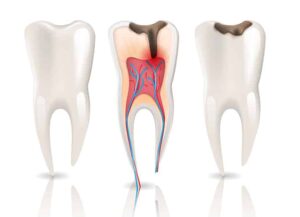
That third one matters enormously. TMD can present as toothache in a tooth that is entirely healthy. People are sometimes treated for a tooth that was never the problem — which is why diagnosis, rather than treatment, is the first job. What are the causes of toothache and what are their symptoms?, I have a toothache, what could be the cause? and tooth pain and ache cover the causes that genuinely are dental. If a tooth has already been treated and nothing changed, second opinions and corrective dentistry is the page for that situation.
Where it is felt
Pain can trigger secondary pain through a referral pathway, presenting as:
- Headache
- Earache
- Neck and shoulder pain
Referred pain is why people with TMD commonly see several practitioners before anyone examines the jaw. The place it hurts is frequently not the place the problem is. It is also why some people are given antibiotics for an infection that is not there — the same trap described in I have a toothache. Should I see my GP for antibiotics?.
The dysfunction
Separate from pain, TMD causes mechanical problems.
Dysfunction within the jaw can limit:
- Opening and closing
- Side-to-side movements
- The more complex movements responsible for chewing and speaking
It may present as a clicking or grinding noise in one or both jaw joints.
Why untreated TMD matters
The intensity can vary drastically between individuals, and if left untreated it can worsen over time.
The quality-of-life consequences are specific and worth naming:
- Increased frequency of headaches
- Avoiding work and social outings because of pain
- Avoiding foods you enjoy
That last one is the quiet marker. People with TMD often adapt their diet without consciously deciding to — chewing on one side, avoiding anything that requires a wide opening or sustained chewing. By the time it is noticed, it has usually been happening for a while. Dental health and general wellbeing and the three layers of dental wellness and longevity set out why chewing function is not a small thing.
There is a second, slower consequence, where grinding is part of the picture: tooth wear. Enamel does not grow back, and grinding is the single largest patient-side variable in how long any restoration survives — which is why how long do dental fillings last?, what types of dental crowns are available? and teeth and aging all treat it as a planning question rather than an afterthought.
What the evidence on night guards actually shows
Most of what is written about TMD management is about symptom relief, which is hard to measure. There is one adjacent question where a long follow-up exists, and it is worth reporting precisely rather than loosely, because it does not say quite what people assume.
A study published in Clinical Oral Investigations followed 598 root-canal-treated teeth in 312 patients for up to 37 years. Of that group, 119 patients (38.1%) were diagnosed with bruxism — assessed clinically and from study casts by looking at tooth wear — and 69 (22.1%) used a night guard.
The headline survival figures were “97%, 81%, 76% and 68% after 10, 20, 30 and 37 years”. When the authors looked at what separated the teeth that survived from the teeth that came out, they concluded that “the most significant prognostic factors associated with tooth extraction were the presence of deep (> 6 mm) periodontal pockets, the presence of pre-operative apical radiolucency and the lack of occlusal protection (no use of a night guard).”
In the regression, use of a night guard was a protective factor associated with tooth survival (OR = 0.34; 95% CI: 0.13–0.86; p = 0.023), alongside shallow pocket depths and the use of a fibre post. Working against survival were a cast metal post (OR = 2.14; 95% CI: 1.14–4.01) and a pre-operative periapical radiolucency (OR = 1.87; 95% CI: 1.07–3.28).
Three caveats, because the number is easy to over-read:
- It describes root-filled teeth, not teeth in general. Whether the same protection applies to a healthy tooth, a veneer or a crown on a vital tooth is not what was measured. See root canal and endodontists.
- It is an observational association, not a trial. Patients who wear a guard every night may differ from those who do not in other ways that also matter.
- The same study puts periodontal pocket depth in the same tier of importance, which is a reminder that a guard is not a substitute for the gum care described on dental cleans and hygienists.
What it does support is the ordinary clinical advice: if you grind, the protection is worth wearing, and the benefit shows up over decades rather than weeks. It is not evidence that a splint relieves TMD pain — a separate question, answered separately below.
Getting diagnosed
A consultation can establish whether it is TMD or another dental issue.
The dentist will ask:
- When the pain first started
- What triggers it
- Whether you wake up with pain
- Where it is located
- How intense it is
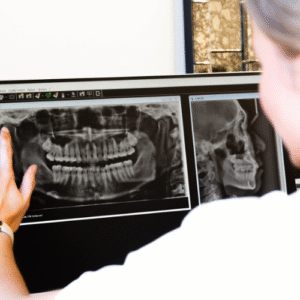
Those questions, with a clinical examination and possible X-rays, allow an accurate diagnosis. How safe are dental x-rays covers the imaging question, and EMG muscle mapping and bite force analysis and our technology describe the measurements used to tell a muscle problem from a joint problem.
"Do you wake up with pain?" is the most diagnostically loaded of them. Pain that is worst on waking points strongly towards nocturnal grinding or clenching — which changes the management entirely. It is also the point at which sleep is worth asking about: where snoring or interrupted breathing is in the history, snoring and sleep apnoea and mouth breathing matter, because clenching is sometimes the airway’s doing rather than the jaw’s.
Once TMD is diagnosed, the next step is narrowing down its causes or triggers, because that is what determines which treatment will help. Can TMD be fixed? is honest about how often a cause is found, and what is the best way to treat TMJ? sets out the options that follow.
Management
With effective management tailored to the individual, TMD can be managed and symptoms alleviated.
The tools include, but are not limited to:
A night guard — protecting the teeth and reducing the load from nocturnal grinding. See how can a night guard be used to treat TMD?; guards are made in the practice’s own on-site laboratory, and a trip to the chemist or the dentist? explains why an unadjusted shop-bought guard is not the same thing. A night guard is also not a sports mouthguard — different appliance, different job, not interchangeable in either direction; the sports version is covered in what kind of mouthguard should I use?.
Jaw exercises — improving function and reducing muscular tension. Where tongue posture, breathing and swallowing pattern are involved, orofacial myofunctional therapy is the structured version.
Heat therapy and massage — for the muscular component.
Physiotherapy — particularly where the neck and shoulders are involved. Stress is worth addressing alongside it: seven ways stress can affect your mouth, and how can I stop grinding my teeth when I sleep? for the habit itself.
Muscle relaxant injectables — used in some cases to reduce muscular overactivity. These are prescription-only medicines, and whether they are appropriate is a clinical decision made in consultation with a practitioner qualified to prescribe them. Information about specific prescription products cannot be advertised to the public in Australia, so this is discussed at consultation rather than described here. Note that the 2023 BMJ clinical practice guideline issues a conditional recommendation against injectable treatments of this kind for chronic TMD pain — a point worth raising at that consultation. Muscle relaxants for jaw clenching: when they help, when they don’t sets out the limits of the category.
Where conservative management is not successful, non-conservative strategies such as surgery may be considered. That is the territory of oral and maxillofacial surgeons — see what does oral and maxillofacial surgery involve? and, where the jaw relationship itself is the issue, jaw surgery.
Note the order. Conservative management comes first, and for most people it is sufficient. Surgery is a later consideration, not an early one. Understanding your treatment explains how a plan and a written quotation are put together, and published fees are in the price guide.
Common questions
Will it go away on its own?
Often, yes — and the figures are more encouraging than most people expect. The RACGP, writing for Australian GPs, reports that "up to 40% of symptomatic patients have spontaneous resolution of their symptoms without any treatment", and that "50–90% of patients have relief with conservative therapy". healthdirect, the Australian government health service, says the same in plainer terms: "in most cases, TMJ dysfunction improves over time. Your symptoms may go away without needing treatment."
That is the basis for the order described above — conservative first. The RACGP suggests that in the absence of red flags "it is reasonable to trial conservative management for six to eight weeks prior to referral", which is a useful yardstick if you are wondering how long is too long to wait.
There is a limit to the patience, though. healthdirect notes that "if your TMJ dysfunction does not get better after a few weeks, it can lead to chronic (long-term) jaw pain", and that chronic jaw pain "can be distressing and may require surgery". The National Academies review of TMDs makes the same point about the risk of the problem becoming entrenched rather than resolving.
So: not dangerous for most people, frequently self-limiting, and worth a planned conservative trial with a review date rather than indefinite waiting. See Can TMD be fixed?
What would make this something other than TMD? What are the warning signs?
This is the question the page title really asks, and it has a specific published answer. The RACGP publishes a red-flag list for orofacial pain, and any of these warrants prompt medical assessment rather than watchful waiting:
- persistent and worsening pain
- trismus — restricted mouth opening
- cranial nerve abnormalities or neurologic dysfunction
- concurrent infection, or systemic illness
- weight loss
- asymmetrical neck or facial swelling
- unilateral hearing loss, vestibular dysfunction, or new-onset or unilateral tinnitus
The reason the list exists is stated bluntly in the same article: "the assumption that TMD is the cause of a patient's symptoms can result in a more sinister pathology being missed", and it records that rare neoplastic causes — fibrosarcoma and chondrosarcoma of the TMJ, and parotid malignancies — "have occasionally been misdiagnosed as TMD".
healthdirect adds its own urgent-care triggers: seek urgent care if you have symptoms of TMJ dysfunction together with vision problems such as double or blurred vision, difficulty eating or drinking, or frequent and severe headaches.
The RACGP also lists what else can imitate TMD, which is worth knowing because it explains why the assessment ranges beyond the jaw: dental causes (decay, abscess, eruption); ear conditions (otitis media, otitis externa, mastoiditis, Eustachian tube dysfunction); headache disorders (tension type, migraine, cluster); nerve conditions (trigeminal, postherpetic and glossopharyngeal neuralgia); inflammatory conditions (temporal arteritis, rheumatoid arthritis, lupus, parotitis); trauma; and sinusitis.
None of that is a reason to panic — the great majority of jaw pain is ordinary TMD. It is a reason to have it examined rather than self-diagnosed.
Is my bite the cause? Should I have my teeth adjusted or have orthodontics to fix it?
This is where the sources genuinely disagree, and where the disagreement can cost you teeth — so it is worth setting out carefully.
healthdirect lists "an uneven bite" and "new fillings or dentures that may cause you to have an uneven bite" among the causes of TMJ dysfunction. That is the Australian government consumer page, and it is what many patients arrive having read.
The professional and systematic-review evidence says otherwise. The National Academies of Sciences, Engineering, and Medicine (2020) states that "current experimental evidence, reviews, and weak occlusal theory indicate that occlusion should not be considered a contributing cause for the common TMDs." The RACGP is equally direct: "there is minimal evidence that occlusion abnormalities contribute to TMD", and "malocclusion of the teeth should be noted if present; however, this does not contribute to the manifestation of TMD and orthodontic referral is not recommended for this finding alone." It also notes that disc displacement is a common finding in the general population and the majority of those people are asymptomatic.
Where that leaves the treatments. The Cochrane review of occlusal interventions for TMD (2024) covered both splints and occlusal adjustment — "the grinding down of teeth to improve occlusion" — across 57 studies and 2,846 participants, and judged only one study to be at low risk of bias. Its conclusion: "further research is needed to find clear evidence of whether occlusal splints or occlusal adjustments (i.e. grinding down teeth) are beneficial or harmful." The 2023 BMJ clinical practice guideline goes further on the irreversible end, issuing a strong recommendation against irreversible oral splints for chronic TMD pain.
The practical conclusion: an uneven bite is worth noting, and a high filling that appeared last week is worth adjusting. But permanently altering your teeth — grinding them down, or undertaking orthodontics — to treat jaw pain is not supported by the evidence, and the irreversible versions are specifically recommended against. If that is proposed to you, ask what evidence it rests on and consider a second opinion. See Second Opinions & Corrective Dentistry.
Does a splint actually relieve the pain, or just protect the teeth?
Those are two different claims, and the evidence behind them is very different in strength.
On protecting teeth, the 37-year study set out above is the best evidence on this page — and note what it measured: survival of root-filled teeth, where lack of occlusal protection was among the most significant factors associated with extraction.
On relieving TMD pain, the evidence is much weaker, and honesty requires saying so. The Cochrane review (2024) found that a full hard stabilisation splint "may reduce pain in muscles when chewing compared to receiving no treatment, but the results are very uncertain", that "there is little or no evidence that occlusal splints can give other benefits", and — its own emphasis — "it is important to note that we have very low certainty in the evidence for all comparisons and outcomes assessed." The RACGP puts it as "the use of occlusional and non-occlusional splints is controversial and evidence to support their use is inconclusive", and the 2023 BMJ guideline issues a conditional recommendation against reversible occlusal splints for chronic TMD pain.
So the honest position is: a night guard has good observational support as tooth protection where you grind, and weak, uncertain support as a pain treatment. Those are different reasons to wear one, and a splint recommended to you should come with a clear statement of which job it is being asked to do. See How can a night guard be used to treat TMD?
What does the evidence say actually helps?
Unusually for this condition, there is a clear answer — and almost everything on the strongly-supported list is something done rather than something bought.
The 2023 BMJ clinical practice guideline, for patients with chronic pain (three months or more) associated with TMD, issued strong recommendations in favour of:
- cognitive behavioural therapy, with or without biofeedback or relaxation therapy
- therapist-assisted mobilisation
- manual trigger point therapy
- supervised postural exercise
- supervised jaw exercise and stretching, with or without manual trigger point therapy
- usual care — home exercises, stretching, reassurance and education
It made conditional recommendations in favour of manipulation, supervised jaw exercise with mobilisation, manipulation with postural exercise, and acupuncture, among others — and strong recommendations against irreversible oral splints and discectomy.
The RACGP describes the same conservative package: patient education and reassurance, jaw rest, a soft diet, a warm compress over the painful area, and passive stretching exercises, noting that stretching and jaw exercises may improve range of movement but may not necessarily improve pain, and that cognitive behavioural therapy is beneficial for short-term and long-term pain management. It flags behaviour modification — improving sleep hygiene, reducing stress, and eliminating parafunctional habits such as clenching and grinding — as particularly important, and reports that physiotherapy has been shown to be effective, especially for joint range of motion.
One warning from the same source, because it is counter-intuitive: "TMJ immobilisation has no benefit and may actually worsen symptoms due to muscle contractures and fatigue." Resting the jaw is not the same as stopping it moving.
What can I do myself, starting today?
healthdirect publishes a short self-care list, and it costs nothing:
- eat soft foods
- cut all food into small pieces
- avoid biting your nails
- avoid clenching your jaw
- avoid opening your mouth wide
- avoid chewing gum
It adds two observations worth holding onto. "You may notice your symptoms are worse when you are stressed or anxious" — so the relaxation and CBT items on the list above are not a consolation prize, they are among the strongest-supported treatments. And "you might have TMJ dysfunction without any obvious cause", which is worth knowing if you have been hunting for the one thing you did wrong.
On prevention, healthdirect suggests managing stress and anxiety levels, visiting your dentist regularly to prevent dental problems, and using a mouthguard at night if you grind your teeth.
What not to do: do not stop moving the jaw altogether, for the reason in the previous answer; and do not pursue irreversible changes to your teeth as a first-line treatment. If the self-care list has not helped within six to eight weeks, that is the point the RACGP suggests for further assessment rather than continuing alone.
A note on the evidence base
The descriptions of TMD symptoms, referral patterns and the practice's management approach above are the clinical account of the authoring dentist and the practice. The figures, guideline positions and quoted statements in the questions above are drawn from independent published sources, listed below. Where those sources disagree with one another — most importantly on whether the bite causes TMD — the disagreement is set out rather than resolved in favour of whichever is more convenient.
Sources:
- Royal Australian College of General Practitioners / Australian Journal of General Practice (2018), Temporomandibular dysfunction — prevalence, spontaneous resolution and conservative relief figures, the red-flag list, the differential diagnosis list, the occlusion statements, and the conservative management package.
- National Academies of Sciences, Engineering, and Medicine (2020), Temporomandibular Disorders: Priorities for Research and Care — the occlusion statement.
- Cochrane Oral Health, Occlusal interventions for managing temporomandibular disorders (CD012850, 2024) — the splint and occlusal adjustment findings and certainty ratings.
- The BMJ Rapid Recommendations (2023), clinical practice guideline on chronic pain associated with TMD — the strong and conditional recommendations.
- healthdirect Australia (reviewed November 2025), Temporomandibular joint dysfunction — the symptom and self-care lists, the urgent-care triggers and the prognosis statements.
- Long-term retrospective study of endodontically treated teeth, Clinical Oral Investigations (PubMed Central) — survival rates at 10, 20, 30 and 37 years, the prognostic factor conclusions, and the odds ratios for night guard use, posts and periapical radiolucency.
Related reading
- TMD and teeth grinding — the service page
- What are the most common symptoms of TMD?
- Can TMD be fixed?
- What is the best way to treat TMJ?
- What is bruxism and how is it managed?
- Why would I need to see a dental specialist?
- Specialist care
- General dentistry
Practical details
Written by Dr Florina Besim. The full team and the practice’s registered specialists are listed by name.
Smile Solutions, Level 1, 220 Collins Street, Manchester Unity Building, Melbourne VIC 3000 — getting here. Phone 13 13 96, contact us, or theteam@smilesolutions.com.au. Monday–Friday 8.00am–6.00pm, Saturday 8.30am–1.30pm, Sunday by appointment.
Published 12 April 2023. Symptoms, response to treatment and outcomes vary between individuals. General information only; it does not replace advice from your treating practitioner.
Smile Solutions trades under ABN 28 193 514 103.
Images on This Page
-
https://www.facebook.com/tr?id=800557773428361&ev=PageView&noscript=1
(no alt text)
-
https://www.smilesolutions.com.au/wp-content/uploads/2025/10/calendar_month.svg
(no alt text)
-
https://www.smilesolutions.com.au/wp-content/themes/arcadian-wordpress-theme/assets/images/smile_solutions_logo_white.png
Smile Solutions Logo
-
https://www.smilesolutions.com.au/wp-content/themes/arcadian-wordpress-theme/assets/images/smile_solutions_logo_purple.png
Smile Solutions Logo
-
https://www.smilesolutions.com.au/wp-content/uploads/2023/01/Florina-150x150.jpg
Dr Florina Besim
-
https://www.smilesolutions.com.au/wp-content/uploads/2025/09/TMD-Teeth-Grinding.png
Dental consultation with skull model.
-
https://www.smilesolutions.com.au/wp-content/uploads/2025/11/TMD-Teeth-Grinding-Smile-Solutions-300x270.png
Woman holding her face, looking concerned.
-
https://www.smilesolutions.com.au/wp-content/uploads/2025/09/Root-Canal-2-300x217.jpg
Root Canal
-
https://www.smilesolutions.com.au/wp-content/uploads/2023/11/SS-Tooth-1-1-150x150.png
Smile Solutions
-
https://www.smilesolutions.com.au/wp-content/uploads/2025/09/Wisdom-Teeth-Smile-Solutions-300x300.png
Smile Solutions Dentist Melbourne
-
https://www.smilesolutions.com.au/wp-content/uploads/2025/11/Kia-150x150.jpg
Dr Kia Pajouhesh
-
https://www.smilesolutions.com.au/wp-content/themes/arcadian-wordpress-theme/assets/images/family_owned_bussiness.png
Family Owned Business
-
https://www.smilesolutions.com.au/wp-content/themes/arcadian-wordpress-theme/assets/icons/icon--phone.svg
Smile Solutions Contact
-
https://www.facebook.com/tr? id=800557773428361&ev=PageView&noscript=1
(no alt text)