What are the three layers of dental wellness?
Oxygen, breathing and sleep; the microbiology of the mouth; and functional restoration, occlusion and lifelong nutrition. The framework treats oral health not as isolated teeth and gums but as an interconnected system that affects how well you breathe, how your body manages inflammation, and how long you can sustain good nutrition as you age. The practice page for this work is wellness and longevity.
Most people think of the dentist as somewhere you go to fix a toothache, get a filling, or whiten your smile. For decades that was a reasonable expectation. What has changed is the understanding of the mouth’s relationship to the rest of the body — and much of that understanding is association rather than established cause, a distinction this article keeps in view rather than glossing over. Dental health and general wellbeing, health problems linked to poor oral hygiene and the importance of dental hygiene: a window onto your overall health cover the same territory in plainer terms.
Layer 1: Oxygen, breathing and sleep
Without adequate oxygen and restorative sleep, everything else suffers.
Several conditions dentists see routinely sit near this territory: obstructive sleep apnoea (OSA) — see snoring and sleep apnoea — upper airway resistance syndrome, bruxism (night grinding) and temporomandibular dysfunction (TMD). For the definitions, TMD vs TMJ vs bruxism: understanding what’s actually wrong with your jaw and what is the difference between TMD, TMJ and bruxism?; for the symptoms, what are the most common symptoms of TMD? and is TMD serious?.
One popular claim here should be set aside. Sleep bruxism is often described as the body's compensatory response to an obstructed airway. A 2024 meta-analysis found the odds of sleep bruxism in people with obstructive sleep apnoea did not differ from controls — odds ratio 1.23, 95% CI 0.47 to 3.20 — with no dose-response gradient across mild, moderate or severe apnoea. The two can occur in the same person, and either is a reason to be assessed, but the airway should not be presented as the explanation for the grinding.
What is at stake systemically. Untreated obstructive sleep apnoea is associated with:
- Cardiovascular disease, hypertension, stroke and atrial fibrillation
- Type 2 diabetes and obesity
- Depression, anxiety and cognitive decline
- Impaired immune function
- In children: effects on facial growth, behaviour, and daytime function that can resemble ADHD
That last point is worth dwelling on. A child who is not sleeping properly because of a compromised airway can present as inattentive, irritable and struggling at school, so airway screening belongs in the assessment before a behavioural diagnosis is settled on. Mouth breathing: the silent habit that’s changing your face and your health is the article closest to this point, and children’s dentistry and should your child see a specialist paediatric dentist? cover who assesses it.
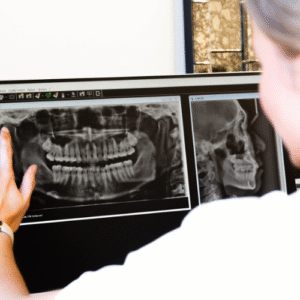
How it is investigated. A TMD clinic may use EMG muscle mapping, bite force analysis, occlusal heat mapping, and CBCT 3D airway imaging to build a picture of how jaw, muscles and airway interact during function and sleep. EMG muscle mapping and bite force analysis: how we diagnose jaw problems describes that process, and technology the equipment. How safe are dental x-rays answers the radiation question CBCT raises.
An important limit, and it is a formal one. Dental assessment does not diagnose sleep apnoea. ADA Policy Statement 6.7 is unambiguous: "initial diagnosis of Sleep Apnoea must be made by an appropriate medical practitioner. If a dental appliance is required, it should be managed by a dentist." It adds that "dental sleep medicine is not a recognised dental specialty." Diagnosis requires a sleep study, interpreted by a sleep physician; a dentist can identify signs, screen, and refer. (Note that sleep dentistry is something different again: sedation for treatment, not treatment of sleep disorders.)
How it is treated. Depending on the diagnosis: mandibular advancement splints, bruxism splints, myofunctional therapy, osteopathic treatment, or in complex cases corrective jaw surgery. The ADA's position is that oral appliances "can be a first-line therapeutic option for adults with snoring and mild to moderate forms of Obstructive Sleep Apnoea," and may also suit people with severe OSA who cannot tolerate CPAP. It also sets a condition that is easy to overlook: "where there is long-term use of oral appliances, monitoring of the patient's temporomandibular joint function and orthodontic movement of teeth is essential." An appliance worn nightly for years can move teeth and load the joint, so that review is part of the treatment rather than an optional extra.
Orthodontic expansion deserves a caveat rather than a claim. A 2026 systematic review update on rapid maxillary expansion for paediatric OSA found that the only trial with a watchful-waiting comparator "found no significant difference in AHI change between RME and observation," and that because paediatric OSA can improve spontaneously in growing children, results from uncontrolled studies cannot be distinguished from that natural course. Its conclusion: "extreme caution is warranted before recommending RME as a treatment for pediatric OSA." Expansion may be indicated for orthodontic reasons; it is not an established airway treatment.
See what kind of mouth guard should I use?, how can a night guard be used to treat TMD?, orofacial myofunctional therapy, jaw surgery and what is orthognathic surgery?. The ADA's summary of who should be involved is that "medical and dental expertise are both required" and "a team approach is essential" — in practice spanning sleep physicians, TMD clinicians, prosthodontists, orthodontists, oral surgeons, osteopaths and myofunctional therapists. Complex dental cases: what happens when multiple specialists need to collaborate describes how that is coordinated.
At home. Nasal breathing retraining, nasal dilators, postural pillows, heat packs for muscle management and jaw exercises can support clinical treatment. How can I stop grinding my teeth when I sleep?, night time tooth grinding and clenching and muscle relaxants for jaw clenching: when they help, when they don’t, and what to try instead set out what is worth trying and what is not.
One home measure needs a clear warning. Mouth taping during sleep should not be undertaken on your own initiative. It can be dangerous in anyone with undiagnosed sleep apnoea, nasal obstruction, or reflux, and the evidence for it is limited. If it is used at all, it should be only where specifically indicated by a clinician who has assessed your airway — after a sleep study, not instead of one.
Layer 2: The microbiology of the mouth
The mouth is home to hundreds of bacterial species. In balance they are harmless. Out of balance, they become a silent source of chronic inflammation with effects beyond the gums.
The conditions where pathogenic bacteria thrive: periodontal disease — periodontal (gum) disease and what is gum disease? — hidden dental abscesses — what is a tooth abscess? and can a dental abscess affect your general health? — failing root canal infections, bacterial leakage under old restorations — how long do dental fillings last? — and anaerobic pockets around partially erupted wisdom teeth.
The systemic associations, stated with the appropriate caution:
- Porphyromonas gingivalis, a common periodontal pathogen, has been found in the brain tissue of people with Alzheimer’s disease. This is a genuine and much-discussed finding, but it does not establish that gum disease causes dementia — the bacteria may be a passenger rather than a driver, and research is ongoing.
- Oral bacteria have been identified in atherosclerotic plaque. Again, an association; causation is not proven, and shared risk factors complicate the picture.
- The oral–gut axis means an imbalanced oral microbiome may influence gut health.
- Diabetes and periodontal disease have a bidirectional relationship — each worsens the other, and this is the best-evidenced link of the group. Susceptibility to periodontitis is "increased by approximately threefold in people with diabetes," and treating it is associated with HbA1c reductions of approximately 0.4% — though Diabetes Australia notes that improvement "lasted for only a short three-month period." See diabetes and dental health: the two-way street that most people don’t know about and diabetes and oral health.
- Chronic inflammation from untreated oral infection adds to overall inflammatory burden. How good oral hygiene can increase your lifespan is the article that makes the longevity case, with the same caution about causation.
How it is investigated. Periodontal probing and charting — when do you need deeper cleaning? explains the pocket-depth threshold — microbiological flora analysis, bacterial culture and identification, CBCT imaging for hidden abscesses, root canal integrity assessment, and assessment of restoration margins. Bleeding gums is the sign most people notice first and most often ignore.
How it is treated. Specialist periodontal treatment, guided biofilm removal, root canal retreatment — root canal treatment, everything you need to know about root canal treatment, root canal treatment: who and what is involved?, the risk of broken files during root canal treatment and endodontist vs dentist for root canal: why it makes a difference — abscess drainage, gum grafting, wisdom tooth removal, and replacement of leaking restorations. Endodontists, periodontists, hygienists, oral health therapists and oral surgeons work to systematically reduce bacterial load.
At home. An effective electric toothbrush — which toothbrushes do dentists recommend? — interdental brushes — is flossing really that important? — and, where prescribed, a high-fluoride toothpaste (5,000 ppm) and a casein phosphopeptide re-mineralising product — selecting a toothpaste: fluoride or non-fluoride? and the benefits of fluoride. Tongue cleaning reduces the coating, though reviews rate the evidence that it manages bad breath as low certainty — do I need to use a tongue scraper? and bad breath. High-fluoride products are recommended on assessment rather than bought speculatively. The whole routine is in what is the ideal daily routine for oral hygiene?.
Layer 3: Functional restoration, occlusion and lifelong nutrition
This is the layer most people associate with dentistry — fixing teeth, replacing missing ones, straightening crooked ones. The purpose runs deeper than appearance. What is restorative dentistry? and what does restorative dentistry involve? cover the field.
Teeth are tools for nutrition. When they fail, through decay, structural loss, malocclusion or loss, the ability to chew nutrient-dense food declines. And diet follows chewing capacity: people who cannot chew shift toward soft, processed, higher-carbohydrate food, because that is what is manageable — which in turn raises decay risk, as how does your diet affect your teeth? and how does sugar affect your dental health? describe.
The observed associations:
- People with no remaining teeth have higher mortality rates. This is a strong and repeated finding, though tooth loss also tracks with smoking, socioeconomic disadvantage and general health, so it is not a simple causal chain.
- Tooth loss predicts nutritional decline, which is linked to sarcopenia (muscle wasting), cardiovascular disease from compensatory high-sugar diets, and cognitive decline
- Poor nutrition worsens diabetes
- Loss of functional dentition in later life correlates with loss of independence — I am in my late 60s: how can I keep my teeth in top condition now that I am older? and teeth and aging: how can I keep my smile looking younger?
How it is investigated. Full occlusal analysis, digital bite force mapping, CBCT 3D imaging, digital scanning, digital design, and treatment planning that includes the nutritional consequences — understanding your treatment.
How it is treated. Ceramic restorations — same-day CEREC restorations milled on site, or laboratory hand-crafted in the Smile Solutions laboratory — dental implants and what are the replacement options for missing teeth?, dentures and dental bridges, endodontic retreatment, Invisalign and orthodontic alignment, corrective jaw surgery, occlusal equilibration, and restoration of stable centric occlusion. Prosthodontists, orthodontists, periodontists, oral surgeons, endodontists, general dentists and ceramists collaborating to rebuild functional capacity — see complex dentistry and dentists and registered specialists.
At home. Regular professional hygiene, a personalised home care regimen, attention to dietary quality, ongoing occlusal monitoring, and maintaining the ability to eat hard foods — nuts, seeds, lean meats, raw vegetables. Keeping that capacity is a health goal in its own right, not a lifestyle preference. How often should I go to the dentist? covers the interval at which all of this is reviewed.
How the layers interact
The three do not exist in isolation, and the interactions are the reason for treating them as one system.
| Interaction | Effect |
|---|---|
| Sleep apnoea and mouth breathing | Dry the mouth, reducing saliva and shifting the bacterial balance toward pathogenic species. Poor sleep makes oral infection worse. |
| Chronic periodontal inflammation | Adds to systemic inflammatory burden, compounding the cardiovascular stress caused by nightly oxygen deficit. |
| Well-restored, aligned teeth | Are easier to keep clean. Lower bacterial load means lower systemic risk — structural work directly serves microbiological goals. |
| Proper occlusion | Reduces muscle strain, and a splint protects teeth from grinding forces. Whether occlusal or orthodontic change improves the airway is not established — see the caution above. |
The dry-mouth row has its own articles: my mouth is always dry — why is this and does it affect my teeth? and my mouth always feels dry! What can I do?.
When all three are addressed together — adequate oxygen and sleep, controlled bacterial load, and functional chewing capacity — the oral health foundation supports the rest.
Why this matters now
The evidence linking oral health to systemic disease has never been stronger, even where causation remains open. Yet dental care is often delivered in silos, with no one holding the whole picture — and, as the ADA puts it for sleep-disordered breathing specifically, "a team approach is essential."
Smile Solutions brings these disciplines together at one site, which allows each layer to be investigated, treated and monitored within a single coordinated plan. The practical benefit is not the number of clinicians but the coordination — records, imaging and treatment sequencing in one place. Everything under one roof and Is a bigger dental practice better? Part 2 set out both the benefit and its limits.
Common questions
I snore, and my partner says I stop breathing. Do I go to my GP or my dentist?
Your GP, first. This is the one part of Layer 1 where the sequence is not a matter of preference.
The Sleep Health Foundation, the Australian public-facing body on sleep health, puts the pathway plainly: signs such as “snoring, obesity, observed breathing pauses and sleepiness during the day may suggest that a person has OSA. The best way to be really sure is with an overnight sleep study. This measures your sleep, breathing and oxygen levels. Your GP can refer you for a sleep study.” Expect to be asked about other sleep disorders at the same time — insomnia, restless legs and general sleep habits are commonly assessed alongside.
That sits on top of the ADA position quoted above: “initial diagnosis of Sleep Apnoea must be made by an appropriate medical practitioner”, and dental sleep medicine is not a recognised dental specialty. A dental assessment can screen, can identify signs, and can make and manage an appliance once a diagnosis exists — but it cannot substitute for the study, and any practitioner offering to diagnose your apnoea from a scan is offering something the profession's own policy does not support.
The useful thing a dental appointment can contribute before the referral is observation: wear patterns, jaw and muscle findings, and what your airway looks like on imaging taken for other reasons. Bring those to the GP rather than treating them as an answer.
How would I know if I have it? I sleep through the night as far as I know.
That is exactly the problem — the Sleep Health Foundation's own summary list includes “you may have no idea this happens.”
What is physically occurring is described precisely: repeated episodes of narrowing or complete closure of the throat during sleep, where “breathing is reduced or stops for a short time – from 10 seconds up to a minute or more – and blood oxygen levels fall.” The sleep interruption that restarts breathing “can occur” after “as little as 3 seconds”, which is far too brief to remember, and these episodes “may happen many times – even hundreds of times – overnight.” A person can therefore be woken hundreds of times and wake with no memory of waking once.
Two further points people are rarely told. Symptoms differ by sex: the Foundation notes that “females may experience difficulties falling asleep and maintaining sleep, poor mood and fatigue, while males may be more likely to present with ‘typical’ OSA symptoms such as loud snoring, and high levels of daytime sleepiness.” Someone presenting with poor mood and unrefreshing sleep rather than snoring is not ruled out. And the household notices before the person does — partners who lie awake waiting for breathing to restart are describing a symptom, not being dramatic.
One figure worth taking seriously, stated as the Sleep Health Foundation's own: “people with OSA are approximately two and half times more likely to have a motor vehicle accident than those without it.” If you drive or operate machinery and you are sleepy in the afternoons, that moves the referral up the list.
CPAP or a mouthpiece — which one actually works better?
CPAP is more effective at controlling the breathing disturbance; the appliance is more likely to be worn. That is the trade-off, and the sources do not fully agree on how to weigh it, which is worth seeing rather than being handed a recommendation.
The Cochrane review of oral appliances (17 studies, 831 participants) is the higher-tier evidence and the more conservative. Against an inactive control appliance, an active appliance reduced daytime sleepiness (Epworth score −1.81; 95% CI −2.72 to −0.90) and improved the apnoea-hypopnoea index (−10.78 events per hour; 95% CI −15.53 to −6.03). Against CPAP, across ten studies, there was no statistically significant difference in symptoms, but appliances were less effective than CPAP at reducing the apnoea-hypopnoea index, and CPAP was better at improving minimum arterial oxygen saturation during sleep. In two small crossover studies, participants preferred the appliance to CPAP. Its conclusion is that appliances “should not be considered as first choice therapy” where symptoms and sleep disruption are severe, but that it is “appropriate to recommend OA therapy to patients with mild symptomatic OSAH, and those patients who are unwilling or unable to tolerate CPAP therapy.”
The ADA puts the boundary slightly further out, holding that appliances “can be a first-line therapeutic option for adults with snoring and mild to moderate forms of Obstructive Sleep Apnoea.” Mild versus mild-to-moderate is the whole of the disagreement, and it is not trivial if you sit in the middle.
Two caveats before you use any of this. The Cochrane review's searches are current only to June 2008 and it has not been updated since, so treat the effect sizes as the formal position rather than the latest estimate. And the Sleep Health Foundation notes something both of the above assume: “for people with a mild level of OSA and few symptoms, losing weight, decreasing the amount of alcohol consumed in the evening or adjusting the sleeping position may be all that is needed” — most people have more episodes lying on their backs. Those measures cost nothing and are worth trying alongside whatever is prescribed, not instead of the sleep study.
If I end up with an appliance, what is the ongoing commitment?
More than people expect, and the requirement comes from the ADA rather than from any practice's preference: “where there is long-term use of oral appliances, monitoring of the patient's temporomandibular joint function and orthodontic movement of teeth is essential.”
Read that literally. A mandibular advancement device holds the lower jaw forward for seven or eight hours a night, every night, for years. Two things can follow. The teeth can move, because a sustained force applied to teeth is what orthodontics is, and the bite you had when the appliance was fitted is not guaranteed to be the bite you have in three years. And the joint and muscles are loaded in a posture they do not otherwise hold, which matters particularly for anyone who already has TMD symptoms. Neither is a reason to avoid an appliance; both are reasons that review appointments are part of the treatment and not an upsell.
So the questions to ask when one is proposed: how often will the bite and joint be checked, what records are taken at the start so that movement can be measured against something, what is done if the bite changes, and who manages the appliance if it needs adjusting. A device supplied without that follow-up is being supplied incompletely.
On the question of buying one over the counter: the appliance described in the Australian material is custom-made and fitted by a dentist, covering both arches and clipping together to hold the jaw forward. A boil-and-bite device bought without a diagnosis carries both of the risks above with none of the monitoring, and it may relieve the snoring your household hears while leaving the oxygen desaturation that is the part doing harm. What kind of mouth guard should I use? and snoring and sleep apnoea.
Related reading
- What can I do to strengthen my teeth?
- 10 ways to avoid ruining your teeth
- Seven ways stress can affect your mouth
- Oral cancer: how your dentist can help with early detection
- Caring for your teeth: 8 steps to dental health
Practical details
This article describes a clinical framework, not a diagnosis or a treatment recommendation. Several of the associations described are areas of active research where causation has not been established, and figures quoted are from published studies of other populations. Obstructive sleep apnoea requires medical diagnosis; a dental assessment can screen and refer but cannot diagnose it. Do not begin mouth taping or any airway intervention without clinical assessment.
Sleep apnoea descriptions, symptoms, diagnostic pathway and the motor vehicle accident figure are quoted from the Sleep Health Foundation; oral appliance effect sizes are from the Cochrane review of oral appliances for obstructive sleep apnoea, whose searches are current only to June 2008; professional scope statements are from ADA Policy Statement 6.7.
Specialist registration can be verified on the AHPRA register, or by calling 1300 419 495. The practice’s registered specialists are identified as such within the full team.
Smile Solutions, Level 1, 220 Collins Street, Manchester Unity Building, Melbourne VIC 3000 — getting here. Phone 13 13 96, contact us, or theteam@smilesolutions.com.au. Monday–Friday 8.00am–6.00pm, Saturday 8.30am–1.30pm, Sunday by appointment. Published fees are in the price guide.
Published 15 July 2026, by Dr Kia Pajouhesh. General information only; it does not replace advice from your treating practitioner or your doctor.
Smile Solutions trades under ABN 28 193 514 103.
Images on This Page
-
https://www.facebook.com/tr?id=800557773428361&ev=PageView&noscript=1
(no alt text)
-
https://www.smilesolutions.com.au/wp-content/uploads/2025/10/calendar_month.svg
(no alt text)
-
https://www.smilesolutions.com.au/wp-content/themes/arcadian-wordpress-theme/assets/images/smile_solutions_logo_white.png
Smile Solutions Logo
-
https://www.smilesolutions.com.au/wp-content/themes/arcadian-wordpress-theme/assets/images/smile_solutions_logo_purple.png
Smile Solutions Logo
-
https://www.smilesolutions.com.au/wp-content/uploads/2025/11/Kia-150x150.jpg
Dr Kia Pajouhesh
-
https://www.smilesolutions.com.au/wp-content/uploads/2025/09/Porcelain-Veneers-Smile-Solutions-1024x1024.png
Porcelain Veneers Smile Solutions
-
https://www.smilesolutions.com.au/wp-content/uploads/2025/09/Wisdom-Teeth-Smile-Solutions-300x300.png
Smile Solutions Dentist Melbourne
-
https://www.smilesolutions.com.au/wp-content/uploads/2025/11/TMD-Teeth-Grinding-Smile-Solutions-300x270.png
Woman holding her face, looking concerned.
-
https://www.smilesolutions.com.au/wp-content/uploads/2026/07/Photography-and-Facial-Analysis-300x270.jpg
Photography and Facial Analysis
-
https://www.smilesolutions.com.au/wp-content/themes/arcadian-wordpress-theme/assets/images/family_owned_bussiness.png
Family Owned Business
-
https://www.smilesolutions.com.au/wp-content/themes/arcadian-wordpress-theme/assets/icons/icon--phone.svg
Smile Solutions Contact
-
https://www.facebook.com/tr? id=800557773428361&ev=PageView&noscript=1
(no alt text)
-
https://bat.bing.com/action/0?ti=25148060&tm=gtm002&Ver=2&mid=511b0c18-18ac-46d5-8862-510951df4c45&bo=1&sid=e28bbd50ab2511f184cae5336f1f6782&vid=e28c20a0ab2511f19ea4b7efbf0d45b0&vids=1&msclkid=N&pi=918639831&lg=en-US&sw=800&sh=600&sc=24&nwd=1&tl=The%20Three%20Layers%20of%20Dental%20Wellness%20%26%20Longevity%20-%20Smile%20Solutions&p=https%3A%2F%2Fwww.smilesolutions.com.au%2Fdental-articles%2Farticle%2Fthe-three-layers-of-dental-wellness-longevity%2F&r=&evt=pageLoad&sv=2&cdb=AQAQ&rn=150428
(no alt text)