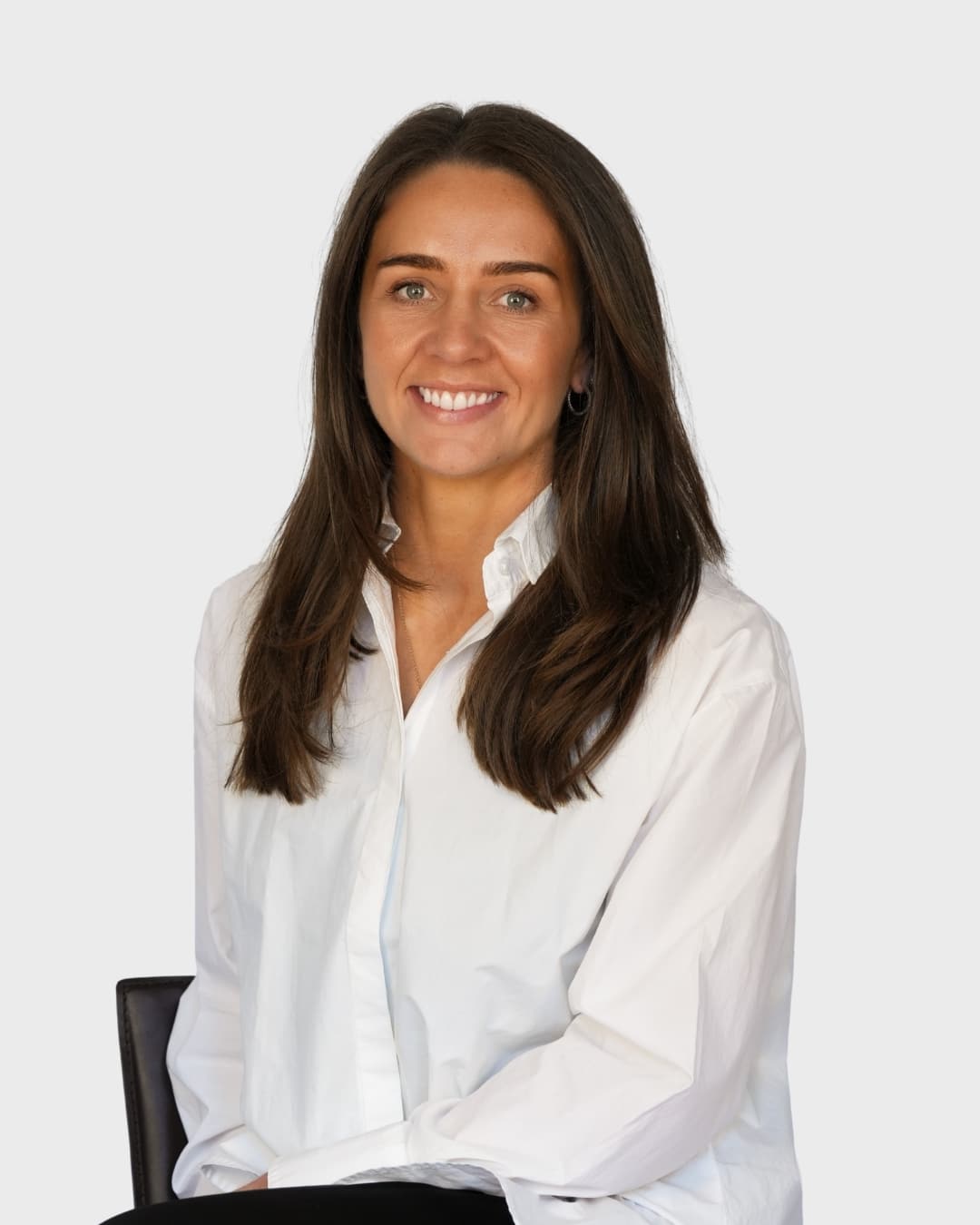
Naomi Hoopmann, Oral Health Therapist
Role: Oral health therapist — dental hygiene and dental therapy
Qualifications: Bachelor of Oral Health, University of Adelaide (2011)
Registration: Registered dental practitioner, oral health therapist division, general registration, DEN0001592768
Registration status can be verified on the AHPRA register of practitioners at ahpra.gov.au. Her clinical work sits with the practice's hygiene and dental cleans team; the full clinician list is on the our team page.
Background
Naomi Hoopmann graduated from the University of Adelaide with a Bachelor of Oral Health in 2011 and moved to Melbourne to practise as an oral health therapist at Smile Solutions.
She is a member of the Australian Dental and Oral Health Therapists Association and the Australian Dental Hygiene Association, attends meetings and courses regularly, and has a particular interest in oral health research.
She works extensively with children. She has written for the practice on daily hygiene, dry mouth and mouthwash; those articles are listed below.
What an oral health therapist is
An oral health therapist is a registered dental practitioner in their own right — not an assistant, not a nurse, not a dentist. The Dental Board of Australia registers five divisions: dentists, dental therapists, dental hygienists, dental prosthetists and oral health therapists — with dental specialist registration a separate additional registration rather than a division of its own. An oral health therapist is dual-qualified as hygienist and therapist from a single three-year degree and may practise in both scopes — what is the difference between a dental therapist and a dental hygienist?
They are independently registered and independently accountable, with their own indemnity insurance, their own continuing professional development, and the same registration standards and complaints process as a dentist. What does a dental hygienist do? and dental hygienist vs dentist cover the hygiene side.
Scope includes: periodontal assessment and pocket charting; scaling and root surface debridement; managing gum disease; oral hygiene instruction; fluoride; fissure sealants; radiographs; and, on the therapy side, examination, fillings, extraction of primary teeth and preformed crowns in children.
Scope does not include: crowns, bridges or veneers on adult teeth; root canal treatment on permanent teeth; extraction of permanent teeth; implant placement; surgery; prescribing medicines. Findings outside scope go to a dentist, and from there to a specialist where required — the dentists and registered specialists page records who holds which registration.
The boundary is set individually, not by job title. The Dental Board's Scope of practice registration standard (in effect 1 July 2020) "applies to all practitioners registered with the Board" and "requires dental practitioners to practise within the scope of their education, training, and competence at all times" — phrased elsewhere by the Board as an obligation to "only provide treatments in which they are educated, trained and competent". (Source: Dental Board of Australia, FAQ: Specialist registration; Teeth whitening products.)
Reading dental evidence: what a patient can use
Oral health is unusually full of confident claims backed by very little, and a practitioner with an interest in research is worth having in a practice for exactly that reason. Some tools for telling the two apart — dental myths exposed takes on a few of the commonest.
Where the evidence is strong:
- Fluoride toothpaste. Decades of trials, very large effect, essentially free. The single most effective individual measure against decay — selecting a toothpaste: fluoride or non-fluoride?
- Water fluoridation. The most cost-effective population measure available, sustained by a large body of evidence — fluoridated water: is it good for you?
- Fissure sealants on permanent molars in children at risk. Consistently supported — who is a suitable candidate for dental sealants?
- Interdental cleaning for gum health, particularly interdental brushes where the spaces allow them.
- Smoking cessation for periodontal outcomes. The largest single modifiable factor — and the effects of vaping on your oral health covers the substitute.
- Frequency of sugar intake as the driver of decay, more than total quantity — how does sugar affect your dental health?
What "strong" looks like when you put a number on it. The water fluoridation case is the clearest example, because the effect size is published rather than asserted. The National Health and Medical Research Council "found that water fluoridation reduces tooth decay by 26 to 44% in children and adolescents, and by about 27% in adults", and NHMRC "supports Australian states and territories fluoridating their drinking water supplies within the range of 0.6 to 1.1 milligrams of fluoride per litre". On the safety question that generates most of the argument, its 2016 review "confirmed that community water fluoridation helps to reduce tooth decay, and that there is no reliable evidence that water fluoridation at current Australian levels causes health problems", a conclusion reissued as a public statement on 9 November 2017. (Source: NHMRC, water fluoridation public statement and FAQ.) That is what a well-supported dental claim looks like: a named body, a stated effect size, a defined dose range, and a review date.
Where the evidence is weak or absent:
- Whitening toothpastes for anything beyond surface stain. Actual teeth whitening is a different treatment — why should I go to a dentist for teeth whitening?
- Charcoal products — abrasive, no fluoride, no demonstrated benefit, and potential harm to enamel and existing restorations.
- Oil pulling — no reliable evidence of benefit over conventional hygiene.
- "Detox" and "remineralising" products that omit fluoride.
- Alkaline or "pH-balancing" oral products making systemic claims.
- Routine six-monthly recall for everyone. The interval should follow individual risk; the evidence does not support a universal six months — how often should I go to the dentist?
Where the evidence is contested or nuanced:
- Flossing. Trials are small, short and of poor quality, so systematic reviews report weak evidence — which is regularly misreported as "flossing doesn't work". What the reviews actually say is that the studies are inadequate, not that interdental cleaning is useless. The biological case is strong and interdental brushes have better supporting evidence than floss. Is flossing really that important?
- Mouthwash. Chlorhexidine works and is intended for short-term use; long-term daily use stains teeth. Most supermarket mouthwashes add little to good brushing — should I be using mouthwash as well as brushing and flossing my teeth?
- Systemic links. Periodontitis is consistently associated with cardiovascular disease, but treating gum disease has not been shown to prevent cardiovascular events. The diabetes relationship is better established and bidirectional — diabetes and dental health: the two-way street and health problems linked to poor oral hygiene.
A useful habit: when a dental product or treatment is promoted, ask what the comparison was, over how long, in how many people, and who funded it. Most oral health marketing does not survive those four questions.
And sources disagree with themselves, which is worth knowing rather than hiding. The Australian Dental Association's own mouthguard policy says in one place that over-the-counter guards "provide better protection than no mouthguard, however their protection varies depending on the design, comfort, adaptation and thickness of the final product", and in its model club policy that they "offer little or no protection and can dislodge during play". Both sentences sit in the same document. The reconcilable reading is that a well-adapted boil-and-bite is better than nothing and an ill-fitting one is not, which is precisely the point the policy makes about quality control. (Source: ADA Policy Statement 2.2.5, Prevention and Management of Oral Injuries.)
Children
- First visit by the first birthday, or within six months of the first tooth — familiarisation and advice, not treatment. When should a child first visit the dentist?
- Baby teeth matter. They hold space for the permanent teeth and the last are not lost until around age eleven or twelve — protecting your child from dental disease.
- Fluoride toothpaste from the first tooth — a smear under three, a pea-sized amount after. Spit, don't rinse.
- Supervise brushing until about age eight. Manual dexterity, not willingness, is the limiting factor — kids' teeth cleaning tips and how to encourage your child to brush their teeth.
- Never put a child to bed with a bottle of anything but water.
- Custom-fitted mouthguards for contact sport; boil-and-bite guards protect substantially less — should my child wear a mouthguard?
- The Child Dental Benefits Schedule funds basic dental treatment for eligible children through Medicare.
The national picture, for scale. The Australian Dental Association reports "34% aged 5-6 years having experienced decay in primary or baby teeth and 27% aged 5-10 years having untreated tooth decay in primary teeth", and that "nearly 11 (10.8) in every 1,000 children aged 5-9 are hospitalized for potentially preventable problems due to dental conditions", rising to 14.3 per 1,000 for Indigenous children. Only 56% of children see a dentist before age 5. On timing, the ADA's survey of 25,000 adults found that "40% of us think around two years old is acceptable for the first dental visit", against advice to attend "when their first tooth comes through or by the age of one – whichever comes first" — and roughly a third of first visits happen because of pain or a problem. Interdental cleaning is the other gap: "76% of children never floss themselves, nor have their parents do it", although "once a child has two or more baby teeth side-by-side, dentists recommend parents floss daily". (Sources: ADA, Dental Health Week #3: Kids' dental issues mostly preventable; Open wide: the oral habits of Aussie families revealed.)
A child's first dental experiences shape their attitude for decades. Tell-show-do, short familiarisation visits, an agreed stop signal, praise for cooperation — and parents avoiding the words "hurt", "needle" and "pain" even when reassuring. Combating dental anxiety in children and dental anxiety cover the rest.
Which sports actually need a mouthguard
The ADA does not treat this as one question. Its policy sets out four risk levels with protective measures matched to each:
- Mouthguards strongly recommended — "off-road bike riding, skateboarding, rock climbing, white-water rafting, trampolining, combat sports, football, basketball, squash, and field hockey".
- Head protection worn, which may remove the need — "full-face helmets in ice hockey and goalkeepers in field hockey cricket, rollerblading, and cycling".
- Not normally worn, but justifiable in some circumstances — "high diving, surfboarding, and skiing".
- Impractical or unwarranted because the risk is low — "swimming, athletics, aerobics, and rowing".
Two details from the same policy are worth repeating to parents. "Children with prominent front teeth may be a higher risk of injury and may benefit from orthodontic assessment and early treatment to reduce this risk" — see children's braces and Invisalign. And protection belongs at training, not only on match day: "protective equipment such as helmets and mouthguards should be used during training as well as competition". The ADA's stated position is that "the need to wear a mouthguard should be assessed by a dentist based on risk factors, including an individual's sporting or occupational activities and dental anatomy", and that "the most effective protection against oral damage is a custom fitted mouthguard". (Source: ADA Policy Statement 2.2.5.)
Injury is not only a sporting matter. The same policy identifies occupational exposure — "physical impact from work equipment where fracturing of teeth is likely, including labourers, tradespeople, and riggers", and "tooth abrasion where abrasive dust or particles may enter the mouth, including miners, bricklayers, and tilers" — and notes that "oral piercing jewellery may also increase the risk and degree of oral injury". If an injury does happen, see chipped and cracked teeth and emergency dentistry; the ADA directs dentists to the International Association of Dental Traumatology guidelines for managing traumatic dental injuries.
Gum disease: the facts
- Bleeding when you brush or floss is not normal. Healthy gums do not bleed — what is gum disease?
- Gingivitis is reversible. Periodontitis is not — the bone it destroys does not grow back. Periodontal (gum) disease
- It is painless until advanced, and it is the leading cause of adult tooth loss.
- Smoking is the largest modifiable risk factor, and it masks the bleeding that would warn you.
- Once you have had periodontitis it is managed, not cured — maintenance continues indefinitely, and advanced cases are referred to a periodontist. When do you need deeper cleaning?
Registration
The Dental Board of Australia registers dentists, dental specialists, dental hygienists, dental therapists, oral health therapists and dental prosthetists. It does not register dental technicians, dental assistants or dental nurses, or administrative staff.
Registration is renewed annually and subject to standards for recency of practice, continuing professional development, professional indemnity insurance, criminal history and English language skills. Conditions appear on the public register.
Each of those standards has a published date of effect — continuing professional development and recency of practice from 1 December 2015, professional indemnity insurance arrangements from 1 July 2016, scope of practice from 1 July 2020, English language skills from 18 March 2025, criminal history from 15 July 2026. Ahpra "publishes an online register of all dental practitioners that provides the profession and the public with up-to-date information about a dental practitioner's registration status", and it "also includes details of the specialty or specialties for dentists who hold specialist registration" — one of the 13 recognised dental specialties, a category separate from the oral health therapist division and not held or claimed here. (Source: Dental Board of Australia, Registration Standards; Specialist Registration.)
Common questions
My child has just knocked a front tooth clean out. What do I do in the next ten minutes?
This is one of the very few true emergencies in dentistry, and what happens in the first few minutes — before anyone reaches a clinic — largely decides the outcome. The International Association of Dental Traumatology sets out the first-aid sequence, and the single most important variable is how long the root surface spends DRY, not how long has passed overall.
If it is an adult tooth:
- Keep everyone calm and find the tooth.
- Pick it up by the crown — the white part. Do not touch the root.
- Put it straight back into the socket, right where you are. Immediate replantation at the scene is the best treatment there is. If it is dirty, rinse it briefly in milk, saline or the child's own saliva first — not by scrubbing it.
- Have the child bite gently on a clean handkerchief, gauze or napkin to hold it in place.
- Go to a dentist immediately.
If you cannot put it back, the tooth must not be allowed to dry — dehydration of the root surface begins within minutes. The IADT lists storage media in descending order of preference: milk, then HBSS (a balanced salt solution sold in tooth-rescue kits), then saliva — spat into a container — then saline. Water is last: "although water is a poor medium, it is better than leaving the tooth to air-dry". What you must not do is wrap it in a tissue, put it in an empty container, or leave it in a pocket.
If it is a baby tooth, never put it back. Replanting a primary tooth risks damaging the permanent tooth developing directly above it. If you are not certain which it is, do not replant — bring the tooth with you and let the clinician decide.
One correction to a very widespread piece of advice: you will often see a flat "20 minutes" or "30 minutes" deadline, after which people assume it is hopeless and do not bother. The guideline does not say that. It sets out the categories by extra-oral dry time, and it is explicit that "the decision to replant a permanent tooth is almost always the correct decision even if the extra-oral dry time is more than 60 minutes", because replanting preserves the bone and keeps future options open — the tooth can always be removed later if it has to be. So do not give up on a tooth because of the clock. Keep it wet and go.
See chipped and cracked teeth and emergency dentistry.
Does my child need a paediatric dentist, or is an oral health therapist the right person?
For most children, ordinary preventive and restorative care of baby teeth sits squarely inside an oral health therapist's scope: examination, radiographs, fluoride, fissure sealants, fillings, preformed crowns and extraction of primary teeth. There is no referral requirement to book that care.
Paediatric dentistry is one of the thirteen recognised dental specialties, and a paediatric dentist is a dentist who has completed the further qualification and holds specialist registration with the Dental Board. The register shows who does; it is checkable free at ahpra.gov.au.
What typically moves a child towards that referral is complexity rather than age: a child who cannot be treated safely awake and may need sedation or general anaesthetic, extensive early-childhood decay, a medical condition or disability that changes how treatment must be delivered, a developmental abnormality of the teeth, or significant trauma. Anything requiring root canal treatment on a permanent tooth or extraction of a permanent tooth is outside an oral health therapist's scope in any case.
The governing rule is not the job title but the Dental Board's scope of practice standard, which requires every registered practitioner to work "within the scope of their education, training, and competence at all times". That test is individual, which is why referral inside a practice is routine rather than a sign anything has gone wrong. See specialist care and why would I need to see a dental specialist?
Is a fluoride-free ‘natural’ toothpaste all right for my child?
It is a genuine choice, but it is not an equivalent one, and the asymmetry in the evidence is the whole answer.
Fluoride is the most thoroughly tested intervention in preventive dentistry. The Australian Dental Association lists "using an age-appropriate fluoride toothpaste" among the four main oral hygiene strategies, alongside brushing twice daily for two minutes, cleaning between the teeth once a day, and regular professional care. At population level the NHMRC puts a number on water fluoridation — a reduction in tooth decay of 26 to 44% in children and adolescents and about 27% in adults — and its 2016 review found "no reliable evidence that water fluoridation at current Australian levels causes health problems".
Against that, we have not been able to find a comparable body of independent evidence for fluoride-free "remineralising", "natural" or "detox" toothpastes. That is not the same as proof they do nothing; it means no one has shown they do something, at a standard anywhere near the fluoride evidence. On a child — who cannot make the decision and will live with the result — that asymmetry matters.
The practical points that go with fluoride toothpaste are about dose, not avoidance: a smear under three and a pea-sized amount after, supervision until around eight because manual dexterity is the limiting factor, and spit, do not rinse — rinsing washes away the fluoride you just paid for.
If you have a specific reason for avoiding fluoride, say what it is at the appointment rather than quietly switching. A concern about swallowing at a particular age, a sensory aversion to a flavour and a general preference for natural products are three different problems with three different answers. See selecting a toothpaste: fluoride or non-fluoride? and the benefits of fluoride.
Articles by Naomi Hoopmann
- 3 oral hygiene tips you need to know
- My mouth always feels dry! What can I do?
- The truth and myths about mouthwashes
Related reading
- My mouth is always dry — why is this and does it affect my teeth?
- Your Smile Solutions dental hygienist visit: what to expect
- Price guide — indicative fees, and what changes them
Practical details
Naomi Hoopmann's registration can be checked on the AHPRA public register. Call 13 13 96 to book a hygiene appointment or a child's visit, or use the contact page.
Smile Solutions, Level 1, 220 Collins Street, Manchester Unity Building, Melbourne VIC 3000. Phone 13 13 96, or theteam@smilesolutions.com.au. Monday–Friday 8.00am–6.00pm, Saturday 8.30am–1.30pm, Sunday by appointment.
This page records qualifications and career history as published by the practice. General information only — it is not a diagnosis, a treatment plan or a promise of any particular clinical outcome. Practitioner availability changes; confirm when booking.
Smile Solutions trades under ABN 28 193 514 103.
Images on This Page
-
https://www.facebook.com/tr?id=800557773428361&ev=PageView&noscript=1
(no alt text)
-
https://www.smilesolutions.com.au/wp-content/uploads/2025/10/calendar_month.svg
(no alt text)
-
https://www.smilesolutions.com.au/wp-content/themes/arcadian-wordpress-theme/assets/images/smile_solutions_logo_white.png
Smile Solutions Logo
-
https://www.smilesolutions.com.au/wp-content/themes/arcadian-wordpress-theme/assets/images/smile_solutions_logo_purple.png
Smile Solutions Logo
-
https://www.smilesolutions.com.au/wp-content/uploads/2016/05/Naomi.jpg
Naomi Hoopmann
-
https://www.smilesolutions.com.au/wp-content/uploads/2025/11/Smile-Solutions-7-300x270.png
Smile Solutions Melbourne CBD
-
https://www.smilesolutions.com.au/wp-content/uploads/2016/05/Naomi-150x150.jpg
Naomi Hoopmann
-
https://www.smilesolutions.com.au/wp-content/uploads/2016/08/Dry-Mouth-300x270.jpg
Dry Mouth
-
https://www.smilesolutions.com.au/wp-content/uploads/2013/12/Stages-of-Dental-Decay-300x270.jpg
Stages of Dental Decay
-
https://www.smilesolutions.com.au/wp-content/themes/arcadian-wordpress-theme/assets/images/family_owned_bussiness.png
Family Owned Business
-
https://www.smilesolutions.com.au/wp-content/themes/arcadian-wordpress-theme/assets/icons/icon--phone.svg
Smile Solutions Contact
-
https://www.facebook.com/tr? id=800557773428361&ev=PageView&noscript=1
(no alt text)