Why do I bite my cheek after a filling?
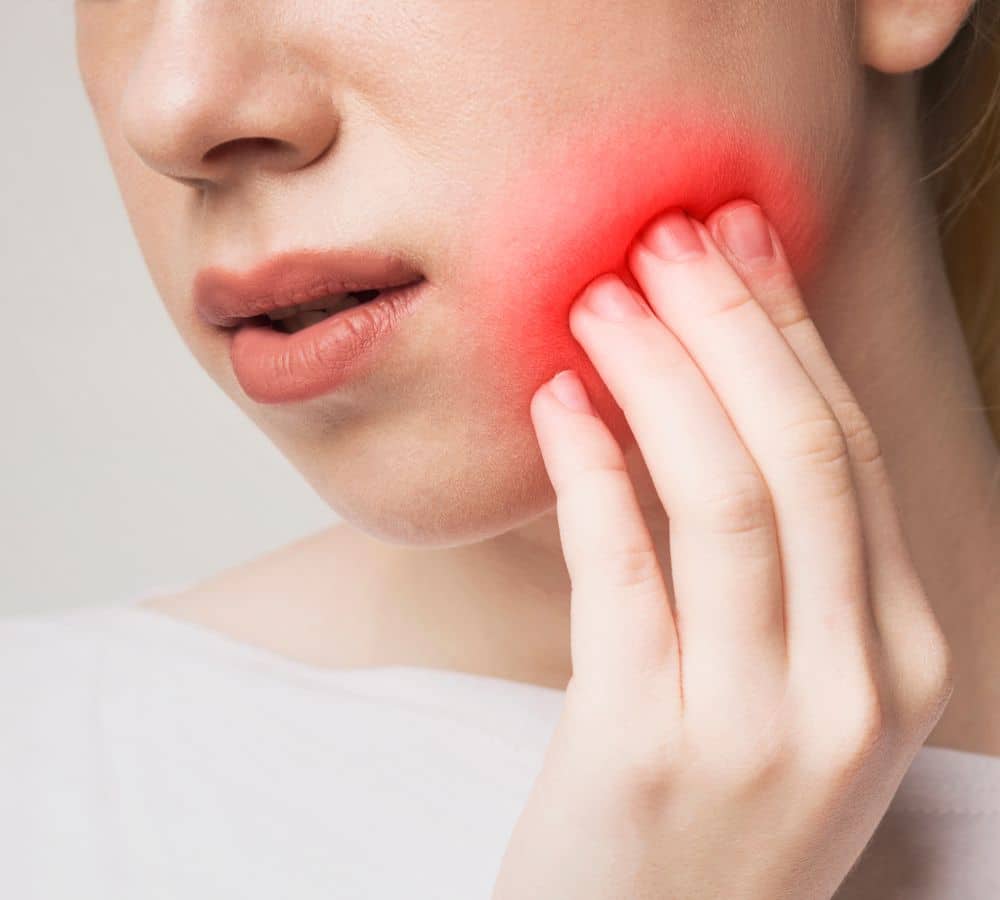
Because the anaesthetic that made the filling comfortable also removes the feedback you normally rely on — you cannot feel the cheek, so you cannot feel yourself biting it.
Normally there is a fast, unconscious reflex: the moment a tooth catches soft tissue, you stop before any damage is done. Local anaesthetic switches that reflex off, because it blocks the sensory nerve carrying the signal. The muscles that close your jaw are unaffected and as strong as ever. That combination — full biting force, no sensation — is the whole explanation.
It is also why the injury is usually worse than an ordinary cheek bite. Without the reflex you do not stop at the first contact; you keep chewing.
Why anaesthetic is used at all
Cleaning a tooth to prepare it for a filling irritates the nerve of the tooth, which can cause a sharp shooting pain. A simple injection of local anaesthetic prevents that. Why do I need a filling? covers what the appointment involves either side of the injection.
Local anaesthetics work by temporarily blocking the sodium channels that nerves use to send signals. The effect is entirely temporary and entirely local — the nerve is not damaged, and normal sensation returns as the drug is cleared.
How the injection is made comfortable
The area is swabbed with a numbing gel before the injection, then the fluid is injected slowly.
The needles used are very fine. Most people do not feel them going in, though there may be a slight sting or pinch as the medicine displaces tissue in the gum — that sensation is the fluid, not the needle. Injecting slowly is the single biggest factor in comfort, which is why an unhurried clinician is worth more than any particular gadget.
Two types of numbing
Block injection — numbs an entire area of the mouth, such as the lower jaw on one side. It works by anaesthetising a main nerve trunk before it branches, which is why it also numbs the lip, chin and half the tongue.
Infiltration injection — numbs a specific smaller area, such as one or two front teeth. The solution diffuses through the bone directly around the tooth.
Your clinician chooses based on which tooth is being treated and how large the filling is. A block is why the whole side of your face feels affected, not just the tooth — and it is why lower back teeth produce far more cheek and lip biting than upper front teeth do. Lower jaw bone is dense, so a block is usually needed; upper jaw bone is more porous, so infiltration often suffices and the numbness stays more local.
What numbness feels like
- The area can feel swollen — it is not, it just seems that way
- It may feel droopy
- Your tongue may feel thick after a lower block, and speech a little slurred
- You may get pins and needles as the medicine wears off
How long it lasts depends on the dose, the type used and the individual — typically a couple of hours to several hours. Some longer-acting anaesthetics used for surgery can keep soft tissue numb for considerably longer.
Soft tissue stays numb longer than the tooth does. The tooth is comfortable again well before the lip and cheek have recovered, which is the window in which most biting injuries happen. If you are not sure whether the numbness has gone, touch the lip rather than testing it by chewing.
What to avoid while numb
Two things, and both matter:
Avoid very hot food and drinks. The numbed area has no sense of temperature, so you can burn yourself without knowing. Scald injuries to the palate and lip are common for exactly this reason.
Avoid chewy foods. These are what cause cheek biting, because you cannot feel it happening.
If you need to eat while still numb, stick to soft foods that are neither hot nor chewy — and, if you can, chew on the other side. Better still, wait.
Children, and why this matters more for them
This is the situation to take seriously. Young children very commonly chew a numb lip or cheek out of curiosity, and because the sensation is strange rather than painful they can keep doing it for a long time. The resulting injury can be substantial and alarming to look at the next day.
If your child has had a filling under local anaesthetic:
- watch them for the first couple of hours and remind them not to bite, suck or pick at the numb lip
- delay eating until sensation returns, or offer something soft and cool
- expect the injury, if it happens, to look far worse than it is
It is worth telling them in advance that their lip will feel big and funny but is not actually hurt, so the sensation does not become a game. Children's dentistry explains how appointments are run for children, combating dental anxiety in children covers the lead-up, and when a child should see a paediatric dentist sets out when a specialist is the better choice. If the injury happens out of hours, children's dental emergencies has the practical steps.
If you have bitten your cheek
- Rinse with a warm salty mouthwash several times a day — a teaspoon of salt in a cup of warm water — to keep the area clean
- Avoid smoking and alcohol while the wound heals
- Stick to soft, bland food and avoid anything salty, acidic, crunchy or spicy, which will sting
- Do not pick at it. A cheek bite develops a white or yellowish surface as it heals; that is normal healing tissue, not infection or pus
- Simple pain relief taken according to the packaging is fine if it is sore
A cheek bite from a numb mouth can look alarming — the tissue swells and whitens — but it generally heals on its own within a week or so. The mouth heals faster than almost anywhere else on the body. The causes of mouth ulcers and their usual treatments covers the ones that are not caused by biting.
Get it looked at if:
- it is not settling after about two weeks
- it is becoming more painful rather than less after the first few days
- there is spreading redness or swelling, or a fever
- bleeding will not stop with ten minutes of firm pressure
- the bite went right through the lip or cheek, or was caused by trauma rather than numbness
One caution worth stating: once healed, a cheek bite should disappear completely. Any ulcer, lump, or red or white patch in the mouth that has not healed within two weeks should be examined, regardless of what you think caused it. How a dentist can help with early detection of oral cancer explains what that examination looks for, and the causes, symptoms and treatment of mouth cancer covers the signs in more detail. This is not a reason to panic about a cheek bite; it is a reason not to assume every persistent patch is one.
If the biting keeps happening without anaesthetic
Repeatedly catching the same spot when you are not numb is a different problem, and it is worth mentioning at your next visit. Common causes are a filling or crown left slightly over-contoured, a sharp edge on a tooth, cheek tissue that has swollen from previous bites and now sits in the way, or a bite that has shifted. All are straightforwardly adjustable, and none should be tolerated for months. A bite that has shifted for other reasons may point to TMD and teeth grinding or to orthodontic causes.
Similarly, a new filling that feels high when you bite needs a quick adjustment — do not wait for it to settle. It will not, and chewing on a high spot can leave the tooth tender for weeks, and in time crack it.
Common questions
Can I drive and go back to work afterwards?
For an ordinary filling under local anaesthetic only, there is usually nothing stopping you — the numbness is confined to part of your face, and your reaction time and judgement are unaffected. The practical nuisances are speech after a lower block, and not being able to eat or drink anything hot until sensation returns.
If you have had any form of sedation, the answer changes completely. The Victorian Government's own patient information is unambiguous: "You should avoid driving home after having any sedation." That applies to happy gas, oral sedation and intravenous sedation alike, and it means arranging how you are getting home before the appointment rather than discovering the rule afterwards. Most practices will also ask that someone accompanies you.
If you are going back to a job that involves talking to people for a living, a lower block on a Friday afternoon is easier than one at 9am on a presentation day. It is a reasonable thing to factor into when you book.
Can I have a filling without being numbed at all?
Sometimes, and it is a fair thing to ask about — but go in understanding the trade-off rather than expecting a free lunch.
Very small, shallow cavities can occasionally be treated without local anaesthetic, and laser dentistry can treat some small cavities without an injection, as noted below. Which cavities are suitable is a clinical judgement made on the day, not something that can be promised in advance.
The trade-off is the reason anaesthetic exists. Preparing a tooth irritates the nerve inside it, and the deeper the cavity, the more likely that is to produce a sharp pain part-way through — at which point the injection is given anyway, with a tooth that is already sensitised and a patient who is now on edge.
A more useful conversation than “can I skip it” is usually: agree a stop signal — raising a hand — and ask the clinician to start without anaesthetic on the understanding that you will stop and numb the tooth if it becomes uncomfortable. The stop signal is one of the standard coping techniques the Victorian Government lists for anxious patients: "agreeing with your dentist on a signal to stop during the treatment for a break (such as raising your left pointer finger or hand)".
It is the needle I cannot face. What are the options?
This is common enough to be worth planning for rather than enduring. The Victorian Government's dental anxiety guidance lists the non-drug measures first, and they are not trivial: deep breathing, meditation, distraction such as music or a device, guided imagery, progressive muscle relaxation, an agreed stop signal, a weighted blanket you bring yourself, and hypnosis. It also notes that "referral to a psychologist can be helpful too. Short, targeted therapies including cognitive behavioural therapy can be very successful."
Where that is not enough, the same source sets out the medical options for severe anxiety or phobia — relative analgesia (happy gas), anxiety-relieving medication, conscious sedation (twilight sedation) or general anaesthesia — with two cautions attached that are worth knowing before you ask for one. "Not all dentists offer treatment under sedation", and "some pre-existing medical conditions or medications may affect the type of sedation you can have, or may prevent you from having some types of sedation". The Australian Dental Association's own policy adds the plainest statement of all: "Both general anaesthesia and conscious sedation procedures encompass risk."
So it is a conversation to have with your dentist and, where relevant, your doctor — with your full medication list — rather than a box to tick when booking. Dental anxiety and how can I ease my anxiety about visiting the dentist? go further.
What if the numbness has not worn off, or something else feels wrong?
Most of what people worry about in the hours afterwards is ordinary: a lip that feels enormous, a droopy smile, slurred speech after a lower block, and pins and needles as sensation returns. A racing heart for a minute or two after the injection is also a common and self-limiting reaction to the adrenaline included in many local anaesthetic solutions to make them last longer.
What is worth a phone call rather than a wait:
- numbness or an altered, tingling sensation that is still present the following day, particularly in the lip, chin or tongue
- a rash, itching, wheeze, or swelling of the face or throat — that is an urgent problem, and 000 if breathing is affected
- pain that is increasing rather than settling after the first couple of days, or swelling that grows
- a trismus — difficulty opening the jaw — that persists for more than a few days after a lower block
None of these is common. All of them are easier to deal with early, and every one of them should be recorded in your file so it can be taken into account next time. Which is also the reason the practice asks you to tell your clinician about any allergy or previous reaction to local anaesthetic, and about any medication you take — the history is what prevents the repeat.
Does any of this change what I pay?
Local anaesthetic for a filling is part of the procedure rather than a separate decision you are charged for making. What moves the number is the filling itself: how many surfaces of the tooth are involved, what material is used, and whether the tooth has lost enough structure that a crown or an onlay is the more sensible answer than a larger filling. Published fees are in the price guide, and how long do dental fillings last? covers the durability side of that choice.
Sedation is the exception, and it is a substantial one. The Australian Dental Association notes that "conscious sedation provides access to care at a lower cost-of-service than general anaesthesia" — which tells you both that sedation costs money and that the two options differ considerably in what they cost. If sedation is on the table, ask for the sedation fee and the dental fee in writing, ask whether the sedation is provided by the dentist or by a separate practitioner who will bill separately, and ask what your health fund and Medicare do and do not cover. What sedation adds to your dental bill is honest about that arithmetic.
Related reading
- How long do dental fillings last?
- Porcelain, amalgam or composite resin?
- What do I do if a temporary filling comes out?
- Can you reverse tooth decay?
- What is laser dentistry?
- What does restorative dentistry mean?
Practical details
Smile Solutions, Level 1, 220 Collins Street, Manchester Unity Building, Melbourne VIC 3000 — getting here. Phone 13 13 96, contact us, or theteam@smilesolutions.com.au. Monday–Friday 8.00am–6.00pm, Saturday 8.30am–1.30pm, Sunday by appointment.
For patients who find injections difficult, the practice uses computer-controlled anaesthetic delivery systems — DentaPen and the STA Wand — which deliver anaesthetic at a controlled rate and pressure. How much difference that makes varies from person to person. Laser dentistry can also treat some small cavities without local anaesthetic at all, though which cavities are suitable is a clinical judgement. Dental Anxiety and Laser Dentistry; how lasers are used in dentistry goes into the range of uses. Where anxiety is severe, sleep dentistry is a further option — what sedation adds to your dental bill is honest about the cost.
Tell your clinician about any allergy or previous reaction to local anaesthetic, and about any medication you take, before treatment.
Related: Tooth Fillings, CEREC Restorations, Dental Anxiety, Emergency Dentistry. The clinical team is listed by name.
Registration for any practitioner can be verified free on the AHPRA public register at ahpra.gov.au.
Published 3 December 2018. General information only — it is not a diagnosis, a treatment plan or a promise of any particular clinical outcome, and it does not replace advice from your treating practitioner. How long anaesthetic lasts and how any injury heals vary between individuals; any mouth ulcer or lesion that has not healed within two weeks should be examined.
Smile Solutions trades under ABN 28 193 514 103.
Images on This Page
-
https://www.facebook.com/tr?id=800557773428361&ev=PageView&noscript=1
(no alt text)
-
https://www.smilesolutions.com.au/wp-content/uploads/2025/10/calendar_month.svg
(no alt text)
-
https://www.smilesolutions.com.au/wp-content/themes/arcadian-wordpress-theme/assets/images/smile_solutions_logo_white.png
Smile Solutions Logo
-
https://www.smilesolutions.com.au/wp-content/themes/arcadian-wordpress-theme/assets/images/smile_solutions_logo_purple.png
Smile Solutions Logo
-
https://www.smilesolutions.com.au/wp-content/uploads/2023/11/SS-Tooth-1-1-150x150.png
Smile Solutions
-
https://www.smilesolutions.com.au/wp-content/uploads/2018/12/Biting-Cheek-After-Filling.jpg
Biting Cheek After Filling
-
https://www.smilesolutions.com.au/wp-content/uploads/2025/09/Root-Canal-2-300x217.jpg
Root Canal
-
https://www.smilesolutions.com.au/wp-content/uploads/2026/08/Mouth-Breathing-300x270.jpg
Mouth Breathing
-
https://www.smilesolutions.com.au/wp-content/uploads/2025/09/Dental-Crown-at-Smile-Solutions-300x300.jpg
Dental Crown at Smile Solutions
-
https://www.smilesolutions.com.au/wp-content/themes/arcadian-wordpress-theme/assets/images/family_owned_bussiness.png
Family Owned Business
-
https://www.smilesolutions.com.au/wp-content/themes/arcadian-wordpress-theme/assets/icons/icon--phone.svg
Smile Solutions Contact
-
https://www.facebook.com/tr? id=800557773428361&ev=PageView&noscript=1
(no alt text)
-
https://bat.bing.com/action/0?ti=25148060&tm=gtm002&Ver=2&mid=a0f881a8-6817-4c34-abeb-778186d09b6d&bo=1&sid=e0f93bf0ab2511f1a08951c99efb8c79&vid=e0f98820ab2511f1b53151a7521f8865&vids=1&msclkid=N&pi=918639831&lg=en-US&sw=800&sh=600&sc=24&nwd=1&tl=Why%20do%20I%20bite%20my%20cheek%20after%20a%20filling%3F%20-%20Smile%20Solutions&p=https%3A%2F%2Fwww.smilesolutions.com.au%2Fdental-articles%2Farticle%2Fbite-cheek-filling%2F&r=&evt=pageLoad&sv=2&cdb=AQAQ&rn=292945
(no alt text)