Dr Joanne Ong, General Dentist
Role: General dentist
Qualifications: Bachelor of Health Sciences (Dentistry) / Master of Dentistry, La Trobe University (2022)
Registration: Registered dentist, general registration, DEN0002699203
Registration status can be verified on the AHPRA register of practitioners at ahpra.gov.au. The service page for this scope is General Dentistry.
Background
Dr Joanne Ong joined Smile Solutions on graduating from La Trobe University, where she completed a Bachelor of Health Sciences in Dentistry and a Master of Dentistry in 2022.
La Trobe's dental programme is based in Bendigo, and its students provide care in regional Victorian communities as part of their clinical training. Dr Ong treated patients from a wide range of backgrounds during that period.
She has a particular interest in restorative dentistry and intends to continue with postgraduate coursework. See What does restorative dentistry involve?
She has written the practice's article on jaw joint problems: Can TMD be fixed?
She speaks English, Cantonese and Mandarin Chinese.
Outside the practice she travels, golfs, and does arts and crafts.
What a general dentist does
A general dentist holds general registration with the Dental Board of Australia and provides:
- examination, diagnosis and treatment planning
- radiographs and diagnostic imaging within the dental scope
- scale and clean, and treatment of gum disease
- fillings, inlays, onlays, crowns and bridges
- root canal treatment
- extractions, including wisdom teeth
- dentures and implant-supported restorations
- whitening and other cosmetic treatment
- referral to specialists where a case sits outside general practice
A general dentist is not a specialist. Specialist titles are protected under the Health Practitioner Regulation National Law and require specialist registration, which follows three years of full-time postgraduate university training. See Why would I need to see a dental specialist?
What the Dental Board actually sets out
Two things are worth quoting rather than paraphrasing, because they are the substance behind the word ‘specialist'.
First, the list is closed. The Dental Board of Australia states that “there are 13 dental specialties in Australia which are approved by the Australian Health Workforce Ministerial Council” — dento-maxillofacial radiology, endodontics, forensic odontology, oral and maxillofacial surgery, oral medicine, oral and maxillofacial pathology, oral surgery, orthodontics, paediatric dentistry, periodontics, prosthodontics, public health dentistry (community dentistry), and special needs dentistry.
Second, the specialty degree is not the whole requirement: an applicant for specialist registration must have “completed a minimum of two years general dental practice” and “met all other requirements for general registration as a dentist”.
And the standard that governs what any practitioner may do, specialist or general, is the Scope of practice registration standard (in effect 1 July 2020), which “requires dental practitioners to practise within the scope of their education, training, and competence at all times”. (Source: Dental Board of Australia — dentalboard.gov.au.)
The Master of Dentistry pathway
La Trobe University's programme is a five-year integrated sequence: a Bachelor of Health Sciences (Dentistry) followed by a Master of Dentistry. It is an accredited entry-level dental qualification, assessed by the Australian Dental Council, and leads to the same general registration and the same scope of practice as a Bachelor of Dental Science from any other Australian dental school.
Dental programmes in Australia carry titles that can look confusing — BDSc, BDS, DDS, DMD, MDent — but all accredited entry-level programmes produce dentists with identical registration. What distinguishes practitioners afterwards is specialist training and experience, not the letters on the entry-level degree.
Newly qualified dentists
Australia has no compulsory internship year for dentists, unlike medicine. A dentist is fully registered and may practise independently from graduation. In practice, most new graduates work in a supervised or well-supported environment, and reputable practices structure early-career work that way — with mentoring, case discussion and a clear route to refer. The practice's own arrangements are described under the Graduate Program and Dental Internship.
What a newly qualified dentist brings is current training: contemporary materials, current evidence, and recent instruction in adhesive and minimally invasive techniques — see Composite Bonding and Our Technology. What comes with time is speed, pattern recognition for unusual presentations, and judgement about when not to treat. Both matter, which is why practices with a mix of experience levels tend to work well — see What makes a truly great dentist? and Our Team.
Every registered dentist, regardless of experience, must complete continuing professional development, hold professional indemnity insurance, and renew registration annually. Those obligations are set by named registration standards with published dates of effect: Continuing professional development, 1 December 2015; Recency of practice, 1 December 2015; Professional indemnity insurance arrangements, 1 July 2016; Criminal history, 15 July 2026; and English language skills, 18 March 2025. (Source: Dental Board of Australia, Registration standards.) They are conditions of staying on the register, not distinctions — every registered dentist meets them or does not remain registered.
Restorative dentistry: the honest version
- No restoration lasts forever. Every filling will eventually need replacing, and each replacement removes more tooth. Preventing the first filling is worth more than any material choice. See How long do dental fillings last? and How Do I Prevent Dental Decay?
- Composite (white) fillings bond to the tooth and need less tooth removal. They are technique-sensitive and generally have shorter service lives than amalgam in large load-bearing restorations. See Dental fillings: porcelain, amalgam or composite resin?
- Early enamel decay can often be arrested rather than drilled, with fluoride, diet change and monitoring. A dentist who watches a small lesion is usually practising well. See Can you reverse tooth decay & do I need a filling? and The stages of dental decay
- A crown removes substantially more tooth than a filling and is indicated when there is too little tooth left to support one, or after root canal treatment on a back tooth. It is not automatically the better option. See What types of dental crowns are available?
- Sensitivity after a deep filling is common and usually settles over weeks. Sensitivity that worsens, or pain that lingers after cold, needs review. See What to do if you suffer from sensitive teeth and Tooth Pain and Ache
On the diet side of preventing the first restoration, the World Health Organization's position is unambiguous: “the consumption of free sugars in foods and beverages is the most common risk factor for dental caries”, and “limiting the intake of free sugars to less than 10% of total energy intake — and ideally to less than 5% — minimizes the risk of dental caries throughout the life course”. Free sugars means “all sugars added to foods and beverages by the manufacturer, cook or consumer, plus sugars naturally present in honey, syrups and fruit juices”. (Source: WHO.) See How does sugar affect your dental health?
TMD and jaw pain
Jaw joint and jaw muscle problems are among the commonest reasons people arrive in pain without a tooth to blame. The starting points are TMD and Teeth Grinding and Dr Ong's own Can TMD be fixed?, with:
- What are the most common symptoms of TMD?
- Is TMD serious?
- TMD vs TMJ vs Bruxism: Understanding What's Actually Wrong with Your Jaw
- What causes TMJ pain and how is it treated?
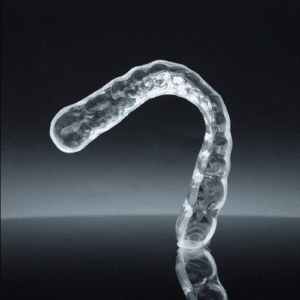
- How can a night guard be used to treat TMD?
- What is bruxism and how is it managed?
One argument for a night guard has nothing to do with jaw comfort. A long-term study of 598 root-treated teeth found that wearing a night guard was among the factors protective for the tooth surviving, with an odds ratio of 0.34 (95% CI 0.13–0.86) for extraction — alongside healthy gum attachment (probing depths of 5 mm or less, OR 0.68) and the use of a fibre rather than cast metal post. (Source: PMC, Long-term tooth survival and success following primary root canal treatment.) That is a single cohort and not a prediction for any individual, but it makes the point that grinding force is a threat to heavily restored teeth, not only to the jaw joint. See What kind of mouth guard should I use?
Language and dental care
Being treated in your own language is not a convenience — it changes the quality of care. Consent is only informed if it is understood, medical histories are only useful if they are accurate, and pain is difficult to describe in a second language. See Understanding Your Treatment and How important is communication in dentistry?
Practitioners who speak community languages meaningfully improve access for patients who would otherwise rely on family members to interpret, which raises its own accuracy and privacy problems.
The regulator approaches the same problem from the other direction: every registered dental practitioner must satisfy the Dental Board's English language skills registration standard, in effect since 18 March 2025, with Ahpra publishing further detail “including information about changes to minimum test scores effective from 23 April 2026”. (Source: Dental Board of Australia, Registration standards.) The standard guarantees that a practitioner can communicate in English; additional languages are a separate benefit and are not recorded on the register.
If your preferred language is not spoken at a practice, you are entitled to ask for an interpreter for anything significant, and free telephone interpreting services exist in Australia for health settings. Ask when booking — see Contact Us.
Registration
Dentists are one of the registered dental practitioner divisions under the National Law. The Dental Board of Australia registers dentists, dental specialists, dental hygienists, dental therapists, oral health therapists and dental prosthetists. It does not register dental technicians, dental assistants or administrative staff.
Every registered dentist holds a DEN-prefixed number. Conditions, undertakings and reprimands appear on the public register, and Ahpra “publishes an online register of all dental practitioners that provides the profession and the public with up-to-date information about a dental practitioner's registration status” — which is free to search and is the authoritative record.
Common questions
I have been told my bite is causing my jaw pain, and that adjusting my teeth will fix it. Is that right?
This is the most important question on this page, because the answer protects you from treatment that cannot be undone.
The current evidence does not support the bite as the cause. The United States National Academies of Sciences, Engineering, and Medicine reviewed the field in 2020 and concluded that “current experimental evidence, reviews, and weak occlusal theory indicate that occlusion should not be considered a contributing cause for the common TMDs”. That is a direct statement about the theory on which bite-adjustment treatment rests.
And the treatment side has a formal recommendation against it. The international clinical practice guideline published in The BMJ in December 2023, developed using GRADE methods with patients on the panel, makes strong recommendations against irreversible oral splints and against joint surgery for chronic TMD pain, noting that “invasive or irreversible procedures are associated with a small risk of serious, potentially catastrophic, harms”, while “serious adverse events are unlikely with exercise and cognitive behavioural therapy”. That guideline applies to pain of three months or more; it does not apply to acute jaw pain of under three months.
What usually happens instead is encouraging. The Royal Australian College of General Practitioners records that “up to 40% of symptomatic patients have spontaneous resolution of their symptoms without any treatment”, and that “50–90% of patients have relief with conservative treatment”. The same source gives the measurement a clinician will take: “normal jaw opening values are 35–45 mm; a value less than 25 mm suggests dysfunction”.
So the practical line: reversible things first — and be sceptical of any plan that proposes to reshape, crown or orthodontically move teeth in order to treat jaw pain. Ask what happens if it does not work, and whether it can be undone. “No” to that second question is a reason to pause. See Can TMD be fixed? and TMD and Teeth Grinding.
Does it matter that a dentist qualified recently?
It is a fair thing to wonder about and it deserves a straight answer rather than reassurance.
What is the same: registration. A dentist who graduated this year and one who graduated thirty years ago hold the same general registration, the same scope of practice, and the same obligations — continuing professional development, recency of practice, indemnity insurance, annual renewal. Australia has no compulsory internship year for dentists, so full registration comes at graduation.
What is not on the register: any measure that would let you compare. It does not record how long anyone has practised, how many of a procedure they have done, or any outcome. No Australian body publishes that data for individual dental practitioners, so there is no way to look up the comparison and we are not going to pretend otherwise.
What is actually decidable is narrower and more useful, and it is the same question you would ask of anyone at any stage: is this particular case within this practitioner's competence, and what happens if it turns out not to be? The Dental Board's Scope of practice registration standard puts the obligation on the practitioner — to “practise within the scope of their education, training, and competence at all times” — but you are entitled to ask the question out loud.
Good questions: how often do you do this procedure; what would make you refer this on; and who here would it go to. A clear answer to the second is worth more than any number of years. See Why would I need to see a dental specialist? and Our Team.
Do I need a referral, and what should I bring to a first appointment?
No referral is needed — dental care in Australia sits outside the Medicare referral arrangements that govern medical specialist appointments, so you can book directly.
Bring: your medicines and medical conditions written down rather than recalled; any existing radiographs, or the name of the practice holding them; anything already quoted elsewhere, by name or item number; and your questions on paper.
On the images: the radiology principle is that “strict and individualized justification should determine the prescription of each radiograph”, and that a justified radiograph “should make a substantial contribution to distinguishing between treatment options”. A usable recent image should not simply be repeated, though a different view or a newer one often is justified where the situation has changed — and you may ask which applies. For scale, the International Atomic Energy Agency puts a routine intraoral radiograph at 1–8 μSv, “usually less than one day of natural background radiation”. See How safe are dental x-rays.
If English is not the language you are most comfortable in, say so when you book rather than on the day. Consent that is not understood is not consent, and a jaw or tooth problem is difficult to describe precisely in a second language. Ask whether a practitioner speaking your language is available, or whether an interpreter can be arranged — additional languages are not recorded on the AHPRA register, so the practice is the only place that information exists.
What happens to my notes if I change dentist, here or elsewhere?
Your clinical record is held by the practice rather than by the individual practitioner, which is the answer to several different worries at once.
- If you see someone else within the same practice, your history, radiographs and treatment plan are already there. Ask that the plan be read before treatment continues rather than restarted.
- If you move to a different practice, you can ask for your records and images to be sent. They are routinely transferred on request, and sending them saves both repeat imaging and repeat explanation.
- If you are following a particular practitioner who has moved, the AHPRA register will confirm they are still registered but does not record where they now work. The practice is the place to ask.
For anything staged over months — orthodontics, implants, a large restorative plan — it is worth asking at the start who performs each stage and who covers if that person is unavailable. It is a reasonable question and the answer is easier to get before treatment than during it. See Understanding Your Treatment and Contact Us.
Practical details
Dr Ong's registration can be checked on the AHPRA public register. See Contact Us to ask about appointments or language preferences. Published fees are in the Price Guide.
Smile Solutions, Level 1, 220 Collins Street, Manchester Unity Building, Melbourne VIC 3000. Phone 13 13 96, or theteam@smilesolutions.com.au. Monday–Friday 8.00am–6.00pm, Saturday 8.30am–1.30pm, Sunday by appointment. Location and directions.
This page records qualifications and career history as published by the practice. General information only — it is not a diagnosis, a treatment plan or a promise of any particular clinical outcome. Practitioner availability changes; confirm when booking.
Smile Solutions trades under ABN 28 193 514 103.
Images on This Page
-
https://www.facebook.com/tr?id=800557773428361&ev=PageView&noscript=1
(no alt text)
-
https://www.smilesolutions.com.au/wp-content/uploads/2025/10/calendar_month.svg
(no alt text)
-
https://www.smilesolutions.com.au/wp-content/themes/arcadian-wordpress-theme/assets/images/smile_solutions_logo_white.png
Smile Solutions Logo
-
https://www.smilesolutions.com.au/wp-content/themes/arcadian-wordpress-theme/assets/images/smile_solutions_logo_purple.png
Smile Solutions Logo
-
https://www.smilesolutions.com.au/wp-content/uploads/2023/01/Joanne.jpg
Dr Joanne Ong
-
https://www.smilesolutions.com.au/wp-content/uploads/2025/11/Speciality-Splints-300x300.png
Speciality Splints
-
https://www.smilesolutions.com.au/wp-content/uploads/2023/01/Joanne-150x150.jpg
Dr Joanne Ong
-
https://www.smilesolutions.com.au/wp-content/themes/arcadian-wordpress-theme/assets/images/family_owned_bussiness.png
Family Owned Business
-
https://www.smilesolutions.com.au/wp-content/themes/arcadian-wordpress-theme/assets/icons/icon--phone.svg
Smile Solutions Contact
-
https://www.facebook.com/tr? id=800557773428361&ev=PageView&noscript=1
(no alt text)