Why pregnancy needs particular attention
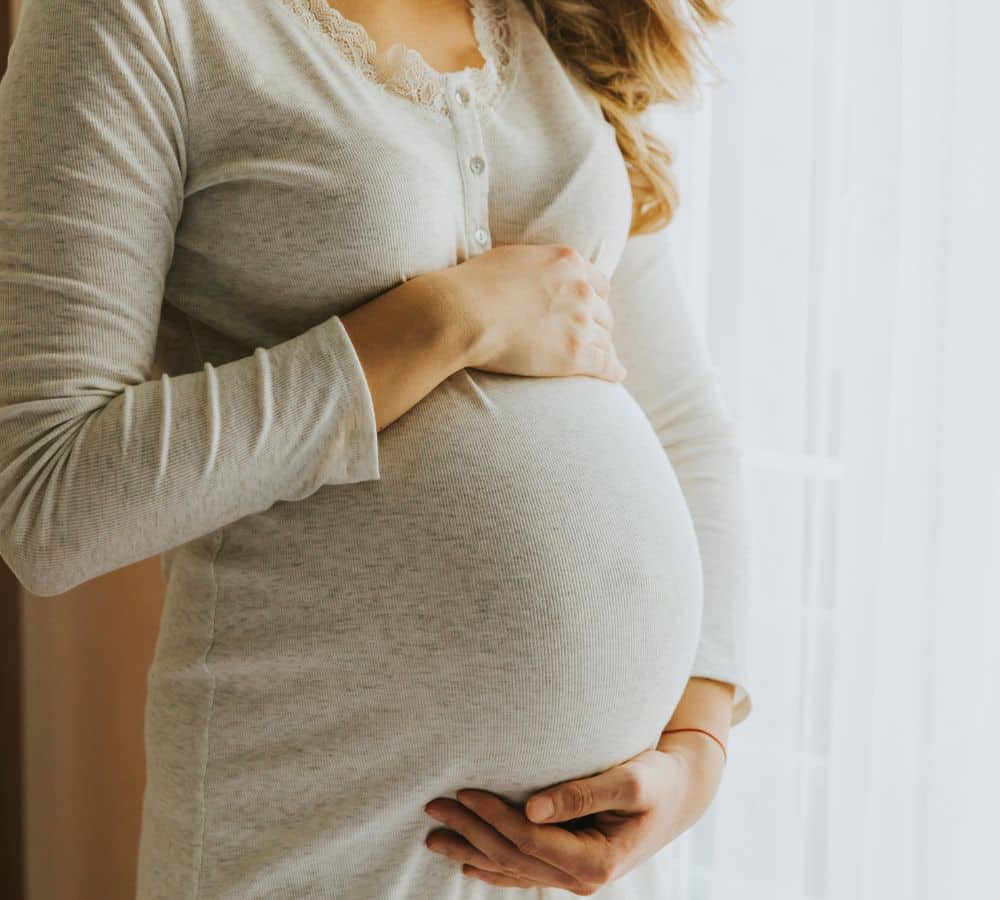
Pregnancy comes with a great many guidelines about what to do and not do, and they can be overwhelming. On oral health, two questions come up repeatedly: how do I protect my teeth during pregnancy, and is dental treatment safe during pregnancy? The second has its own article — is it safe to visit the dentist during pregnancy? — along with oral health care while pregnant and pregnancy and dental health.
Hormone levels rise during pregnancy, which can cause gums to swell and bleed more than usual. That alone is a reason to see a dentist and hygienist while pregnant — see bleeding gums and what does a dental hygienist do?.
Preventive dental work such as teeth cleaning is important to avoid oral infections and gum disease — both of which have been linked to preterm birth. That association is drawn from research and is not a settled causal claim, but it is a strong reason to treat gum disease rather than defer it. Worth keeping that distinction in view: the link is repeatedly observed, and trials of treating gum disease in pregnancy have not consistently shown a reduction in preterm birth — so the honest statement is “linked to”, not “causes”. Gum disease is worth treating on its own merits regardless. What is gum disease?, periodontal (gum) disease and when do you need deeper cleaning?
Restorative work such as fillings should be carried out to reduce the chance of infection developing — why do I need a filling? and tooth fillings.
The recommendations, in short
- Keep teeth and gums clean — brushing twice daily for at least two minutes, and flossing once daily. See what is the ideal daily routine for oral hygiene?, how often should I brush my teeth? and is flossing really that important?
- Be gentle. Use a soft-bristled toothbrush, a gentle technique, and a fluoride toothpaste. Which toothbrushes do dentists recommend?, how much pressure should I apply when brushing? and the benefits of fluoride
- For extreme gum sensitivity, try a sensitive toothpaste, or ask your dentist what to use — selecting a toothpaste: fluoride or non-fluoride? and what to do if you suffer from sensitive teeth
- Eat a balanced diet, and reduce sweets. Choose fruit, vegetable sticks or nuts as snacks. The rule that matters is frequency rather than quantity — sugar: what does it do to your teeth? and how does your diet affect your teeth?. Grazing, which pregnancy often encourages, is exactly the pattern that causes decay
- Have preventive examinations and cleans during your pregnancy. How often should I go to the dentist? and dental cleans with our hygienists
- Postpone non-emergency dental work until the second trimester, or until after delivery where possible.
- Postpone elective procedures until after delivery — including teeth whitening and other cosmetic work.
- Do not put off necessary dental work — decay, gingivitis or periodontal disease can cause infection. How does tooth decay develop? and can you reverse tooth decay?
- Always tell your dentist you are pregnant, and how far along.
The two apparently contradictory items in that list are the important pair. Non-urgent work is deferred to the second trimester, which is the most comfortable and settled period. But treatment that is actually needed is not deferred at all — because an untreated infection carries a greater risk than the treatment does. “Postpone the optional; treat the necessary” is the principle. What is considered a dental emergency? and emergency dentistry cover the urgent end.
Tell your dentist early, so decisions about imaging, anaesthetic and medication are made with that in mind — how safe are dental x-rays? and understanding your treatment.
One small specification worth adding to the first item. The World Health Organization names the three things that prevent decay together: limiting free sugars, adequate exposure to fluoride, and removal of plaque “by toothbrushing with fluoride toothpaste containing 1000–1500 ppm concentration.” That number is printed on the tube, and it is worth checking once — some pastes marketed as natural, children's or sensitivity formulations sit below it or contain no fluoride at all.
Pregnancy gingivitis
Gum problems become more likely during pregnancy.
Pregnancy gingivitis relates to higher levels of progesterone, which increase the blood supply to the gums and cause them to bleed more easily.
If you have pregnancy gingivitis, see a dental hygienist. Your Smile Solutions hygienist visit: what to expect describes the appointment.
The hygienist will:
Remove all tartar — the calcified deposit that forms on teeth and contributes to both bleeding and decay.
Review your oral hygiene, ensuring you are managing plaque — the sticky residue that traps bacteria and contributes significantly to gingivitis and decay.
You may need more frequent hygiene visits through the pregnancy if your gums are particularly tender.
Worth knowing: the increased bleeding is largely hormonal, and it settles after delivery. What does not settle by itself is any plaque or tartar allowed to accumulate in the meantime — which is why the response is more cleaning, not less. Are women especially prone to oral health problems? covers the other hormonal stages where the same thing happens.
Gingivitis and periodontitis are not the same thing, and the difference is the whole point
This distinction decides whether the nine months cost you anything permanent, so it is worth setting out precisely. A review in Diabetologia describes the two conditions this way:
Gingivitis is the form “in which the inflammation is confined to the gingiva, and is reversible with good oral hygiene.”
Periodontitis is the form “in which the inflammation extends and results in tissue destruction and alveolar bone resorption” — and “the tissue destruction that occurs is largely irreversible.”
Reversible and largely irreversible. That is the entire argument for treating tender, bleeding gums during a pregnancy rather than waiting for it to be over. Pregnancy gingivitis, managed, leaves nothing behind. The same inflammation left to progress does not.
Two further points from that review that matter to anyone deciding whether their gums are worth an appointment:
Early periodontitis gives you almost no warning. The review states that “in the early stages, the condition is typically asymptomatic; it is not usually painful, and many patients are unaware until the condition has progressed enough to result in tooth mobility.” That is a warning, not reassurance — the absence of pain is precisely why it advances unnoticed.
It is not visible from the outside either. The pocket that forms between gum and tooth is described as “not evident on simple visual inspection”, and assessment “using a periodontal probe is essential.” Which is to say: you cannot check this at the bathroom mirror, and neither can anyone else without the instrument. The review also notes that periodontal diseases are collectively the most common diseases known to mankind, and that severe periodontitis typically affects up to 15 per cent of most adult populations.
Morning sickness and your teeth
Stomach acid corrodes the surface of the teeth.
So do not brush your teeth straight after vomiting.
Instead:
- Rinse your mouth with water
- Apply a little fluoride toothpaste to your teeth with a fingertip, to protect and strengthen them
The reason: acid softens enamel temporarily. Brushing at that moment removes the softened layer permanently. Waiting roughly an hour lets saliva re-harden the surface first. This is the same mechanism described in what is acid wear and how can I avoid it?, what is dental erosion and how is it addressed? and how does acidic food affect your teeth? — and it applies equally to acidic drinks, including the sugar-free ones, which are just as erosive as the sugared kind. Sugar-free gum helps get saliva moving again — the Australian Dental Association's policy statement describes sugar-free chewing gums without added acids as “dentally safe alternatives” to the sugared kind.
If nausea makes brushing difficult — which is common — a bland or unflavoured toothpaste and a smaller brush head often help more than willpower does.
Pregnancy epulis
Occasionally a red, localised swelling develops on the gum during pregnancy. This is called a pregnancy epulis.
It is benign, and usually resolves after pregnancy.
It should still be assessed by your dentist, and in some cases may need to be removed — particularly if it bleeds readily, interferes with eating, or does not settle after delivery.
The reason to have it looked at rather than assume: a lump on the gum has several possible causes, and confirming which one it is takes a single appointment. The general rule for the mouth applies here too — any ulcer, lump, or red or white patch that has not resolved in two weeks should be examined. See oral cancer: signs, risk factors and how your dentist can help and the cause of mouth ulcers and their usual treatments.
If you are deferring whitening, know what the law says about the kits
The list above puts teeth whitening in the “postpone until after delivery” column. The predictable consequence is that someone reaches for an over-the-counter or online kit instead, so the regulatory position is worth stating plainly.
Teeth whitening products in Australia are scheduled substances under the Poisons Standard, and the concentration is what determines who may supply them.
Hydrogen peroxide at 3–6 per cent and carbamide peroxide at 9–18 per cent are Schedule 5 substances requiring “Caution”, which means products up to those concentrations can be sold direct to consumers provided they carry the stipulated safety warnings.
Above that, it changes completely. Schedule 10 lists substances “of such danger to health as to warrant prohibition of their sale, supply and use other than in specified exempt circumstances” — and Schedule 10 specifically states that teeth whitening products containing more than 6 per cent hydrogen peroxide or 18 per cent carbamide peroxide may only be sold, supplied and used by registered dental practitioners as part of their dental practice. The Australian Dental Association notes that these provisions are formalised in all state and territory poisons legislation.
Two practical readings of that.
The concentrations are not interchangeable at face value. The ADA records that one-third of a carbamide peroxide concentration is equivalent to hydrogen peroxide — so 18 per cent carbamide peroxide approximates 6 per cent hydrogen peroxide, which is why the two thresholds sit where they do. It also notes that professionally used products range as low as 3–6 per cent for some take-home products and up to 35 per cent in some in-chair products.
A product sold to you directly at above those limits is not a bargain; it is outside the scheduling. The ADA observes that while weak solutions of under 3 per cent hydrogen peroxide have been used in the mouth in mouthwashes and toothpastes for many years with few problems, the potential for adverse effects on the oral tissues increases at higher concentrations.
None of the above is a statement about whitening in pregnancy specifically — there is no independent evidence cited here either way on that, and this page's advice remains simply to postpone elective work. It is about what you might buy in the meantime.
Look after yourself, and have a dental check-up and clean while you are pregnant. It is a straightforward thing to fit in, and it prevents most of what is described above.
Common questions
How does anyone tell whether my gums are the reversible kind or the other kind?
Not by looking, and not by how they feel — which is the uncomfortable part of the answer and the reason the appointment matters.
The review quoted above is explicit on both counts. The pocket that forms between gum and tooth in periodontitis is “not evident on simple visual inspection”, and assessment “using a periodontal probe is essential.” And in the early stages the condition is “typically asymptomatic; it is not usually painful, and many patients are unaware until the condition has progressed enough to result in tooth mobility.”
So the distinction between the reversible condition and the largely irreversible one is made with an instrument, by someone measuring, and recording the numbers. A probe is walked around each tooth and the depth of the space between gum and tooth is read off in millimetres. It takes a few minutes and it is the only thing that answers the question.
What you can usefully contribute to that assessment:
- How long the bleeding has been happening, and whether it started with the pregnancy or predated it. Bleeding that predates the pregnancy is not pregnancy gingivitis with a hormonal explanation.
- Whether it is general or in one place. Generalised tenderness behaves differently from one spot that bleeds every time.
- Whether any tooth feels loose or has moved, or whether anything has changed in how your teeth meet. Those are the later signs named in the review, and they change the urgency.
- Any family history of gum disease or early tooth loss.
Ask for the measurements to be read out and recorded, and ask what they were. The value of a number taken now is that there is something to compare against after the birth — which is how you will know whether anything was actually lost during the nine months.
Will all this settle once the baby arrives, and when should I go back?
Much of it will, and the part that will not is the part worth planning for.
What settles on its own: as this page notes, the increased bleeding is largely hormonal, and it settles after delivery. A pregnancy epulis is described as benign and usually resolving after pregnancy. If gingivitis is what you had, and it was managed, it is reversible “with good oral hygiene” and leaves nothing behind.
What does not settle on its own: any tartar that accumulated in the meantime — it is calcified and does not come off with a brush. Any enamel lost to acid from morning sickness, which is permanent. Any decay that started. And if the inflammation had progressed past gingivitis, the tissue destruction is described as “largely irreversible.”
So the honest version is: the symptom resolves, the consequences do not, and the point of care during the pregnancy is to make sure there are no consequences to resolve.
On when to go back: book a check-up and clean in the months after the birth rather than waiting for the next thing to go wrong. Two reasons specific to this period. First, it is the appointment that compares against the measurements taken during the pregnancy, which is the only way to know whether anything changed. Second, it is the one most likely to be skipped — everything else is competing for the same time, and nothing hurts.
Things worth raising at that visit: whether the bleeding has in fact settled or persisted; any sensitivity or roughness that appeared during morning sickness; an epulis that has not gone; and the baby's own first visit, which is due when the first tooth appears or by twelve months — when should a child first visit the dentist?.
Some days nausea makes brushing impossible. What actually helps?
This is one of the most common problems and one of the least discussed, so it is worth being practical rather than exhortative. The goal on a bad day is fluoride onto the teeth, not a performance of a perfect routine.
Things that tend to help:
- Change the toothpaste, not your resolve. Strong mint is a frequent trigger. A bland, unflavoured or children's-flavour paste is the single most effective change, and this page already recommends it alongside a smaller brush head.
- Check the fluoride number while you are choosing. The WHO specifies 1000–1500 ppm, and it is printed on the tube — some low-flavour and “natural” pastes sit below that or contain none, which would trade one problem for another.
- Move the time. Brushing at whatever hour the nausea is mildest counts just as much as brushing at a traditional one. Two short sessions at odd times beat one skipped session at the right time.
- Brush the back teeth first, while the gag reflex is least provoked, and use a small head with a light touch.
- Use the fingertip method this page describes for after vomiting — a little fluoride toothpaste applied directly to the teeth — on days when a brush in the mouth is genuinely not possible. It is not equivalent to brushing, and it is much better than nothing.
- Keep water beside you rather than anything sweet or acidic, particularly overnight. The ADA specifically names “sipping drinks, other than water, during interrupted sleep” among the patterns to avoid.
- Sugar-free gum between times, which the ADA describes as a dentally safe alternative and which gets saliva moving.
And the timing rule that cuts across all of it: after vomiting or anything acidic, rinse with water and wait about an hour before brushing. Brushing softened enamel removes it.
Tell your dentist that this is happening rather than presenting a tidier version. A preventive plan built on what you are actually managing — which might mean a high-fluoride paste or a shorter recall interval — is worth more than advice built on what you are aiming at.
Should I be taking extra calcium to protect my teeth?
For your own teeth, probably not in the way the question assumes — and the underlying worry it comes from is unfounded.
The belief behind it is that a pregnancy draws calcium out of the mother's teeth. It does not: enamel mineral is not mobilised the way bone mineral is, and a well-managed pregnancy does not cost you tooth structure. What costs tooth structure during a pregnancy is acid from morning sickness, and decay from a changed eating pattern — neither of which a calcium supplement addresses.
On calcium itself, the sources are about diet rather than supplements. The Australian Dental Association's position is that calcium-rich foods and drinks such as milk, cheese and some fish “should be promoted as the preferred source of dietary calcium.” The Australian Dietary Guidelines set 2½ serves a day of milk, yoghurt, cheese and/or alternatives for pregnant women, and add the qualification that full-fat cheeses should be limited to 2–3 serves per week.
What the independent sources behind this page do not establish is that a calcium supplement prevents tooth decay, so we are not going to claim it. Whether you need a supplement at all is a question for your GP, midwife or a dietitian, not a dental one.
One genuinely dental caution about supplements, from the ADA: medications, “including over-the-counter vitamin and mineral tablets, may include sugars (particularly those that are chewable and dissolved in the mouth) or contribute to dry mouth, both of which can contribute to tooth decay or softening and loss of tooth structure” — and it lists “chewing and sucking acidic vitamin tablets” among the things to avoid. So the form matters: take a chewable or dissolvable one with a meal rather than between meals, rinse with water afterwards, and do not brush straight away if it was acidic. Do not stop or change anything you have been told to take.
Could I just use a mouthwash while my gums are sore?
As an addition, possibly. As a replacement for cleaning the area, no — and during a pregnancy there is an extra step before you start anything new.
On the general point, the position is consistent across the sources. The Australian Dental Association's oral hygiene policy places brushing for two minutes twice a day and cleaning between the teeth once a day with floss or interdental brushes at the centre of the routine, with mouthrinse among the aids alongside it. Australian Prescriber puts it plainly: a mouthwash is “an adjunct to, not a substitute for, regular brushing and flossing”, and “should never be the sole means of oral hygiene”. healthdirect's consumer line is blunter still: “most people don't need to use mouthwash.”
That matters here because sore gums create exactly the temptation to swap one for the other. As this page sets out, the inflammation is a response to plaque at the gum line; a rinse does not remove plaque, which is a biofilm and has to be physically disrupted. Substituting a rinse leaves the cause in place.
The pregnancy-specific step: ask your dentist, pharmacist, GP or midwife before starting any mouthwash you are not already using. Some rinses are medicated, some contain alcohol, and some are intended for short courses under supervision rather than general use. None of that is a decision to make from a supermarket shelf while pregnant, and it is a thirty-second question.
What will help more, if the gums are too sore to brush properly: a softer brush, a gentler technique, and an earlier hygiene appointment rather than a later one. Should I be using mouthwash as well as brushing and flossing my teeth? and the truth and myths about mouthwashes.
Related reading
- When should a child first visit the dentist?
- Baby teething: signs, symptoms and treatments
- Protecting your child from dental disease
- Children's dentistry
- How do I prevent dental decay?
- Seven ways stress can affect your mouth
- Dental health and general wellbeing
Practical details
Smile Solutions, Level 1, 220 Collins Street, Manchester Unity Building, Melbourne VIC 3000 — getting here. Phone 13 13 96, contact us, or theteam@smilesolutions.com.au. Monday–Friday 8.00am–6.00pm, Saturday 8.30am–1.30pm, Sunday by appointment. The clinical team is listed by name, and fee ranges are in the price guide.
Published 12 December 2018. Always tell your dental practitioner you are pregnant, or may be. The gingivitis and periodontitis definitions, the asymptomatic-early-stage statement, the periodontal probe point and the prevalence figures are from P M Preshaw et al., “Periodontitis and diabetes: a two-way relationship”, Diabetologia; they describe periodontal disease generally, not pregnancy specifically. The fluoride toothpaste concentration is from the World Health Organization. The Poisons Standard scheduling, concentration thresholds and equivalence statements are from the Australian Dental Association's policy statement on teeth whitening; scheduling can change, so confirm the current position before relying on it. The calcium, vitamin-tablet and acidic-food statements are from the ADA's policy statement on diet and oral health, and the dairy serve figures from the Australian Dietary Guidelines (Eat For Health, NHMRC). The statements on the place of mouthrinse are from the ADA's Policy Statement 2.2.3 (Oral Hygiene), Australian Prescriber and healthdirect. General information only; it does not replace advice from your treating practitioner, GP or midwife.
Smile Solutions trades under ABN 28 193 514 103.
Images on This Page
-
https://www.facebook.com/tr?id=800557773428361&ev=PageView&noscript=1
(no alt text)
-
https://www.smilesolutions.com.au/wp-content/uploads/2025/10/calendar_month.svg
(no alt text)
-
https://www.smilesolutions.com.au/wp-content/themes/arcadian-wordpress-theme/assets/images/smile_solutions_logo_white.png
Smile Solutions Logo
-
https://www.smilesolutions.com.au/wp-content/themes/arcadian-wordpress-theme/assets/images/smile_solutions_logo_purple.png
Smile Solutions Logo
-
https://www.smilesolutions.com.au/wp-content/uploads/2023/11/SS-Tooth-1-1-150x150.png
Smile Solutions
-
https://www.smilesolutions.com.au/wp-content/uploads/2013/01/Pregnancy-and-Dental-Care.jpg
Pregnancy-and-Dental-Care
-
https://www.smilesolutions.com.au/wp-content/uploads/2025/09/Root-Canal-2-300x217.jpg
Root Canal
-
https://www.smilesolutions.com.au/wp-content/uploads/2026/08/Mouth-Breathing-300x270.jpg
Mouth Breathing
-
https://www.smilesolutions.com.au/wp-content/uploads/2025/09/Dental-Crown-at-Smile-Solutions-300x300.jpg
Dental Crown at Smile Solutions
-
https://www.smilesolutions.com.au/wp-content/themes/arcadian-wordpress-theme/assets/images/family_owned_bussiness.png
Family Owned Business
-
https://www.smilesolutions.com.au/wp-content/themes/arcadian-wordpress-theme/assets/icons/icon--phone.svg
Smile Solutions Contact
-
https://www.facebook.com/tr? id=800557773428361&ev=PageView&noscript=1
(no alt text)
-
https://bat.bing.com/action/0?ti=25148060&tm=gtm002&Ver=2&mid=e7c6486a-875a-4700-a17f-5351d39aaa02&bo=1&sid=9a8e4f10ab2511f186c7cfb21d1b4fda&vid=9a8e9d70ab2511f183795f2e1907b847&vids=1&msclkid=N&pi=918639831&lg=en-US&sw=800&sh=600&sc=24&nwd=1&tl=How%20do%20I%20protect%20my%20teeth%20during%20pregnancy%3F%20-%20Smile%20Solutions&p=https%3A%2F%2Fwww.smilesolutions.com.au%2Fdental-articles%2Farticle%2Fprotect-teeth-pregnancy%2F&r=&evt=pageLoad&sv=2&cdb=AQAQ&rn=527484
(no alt text)