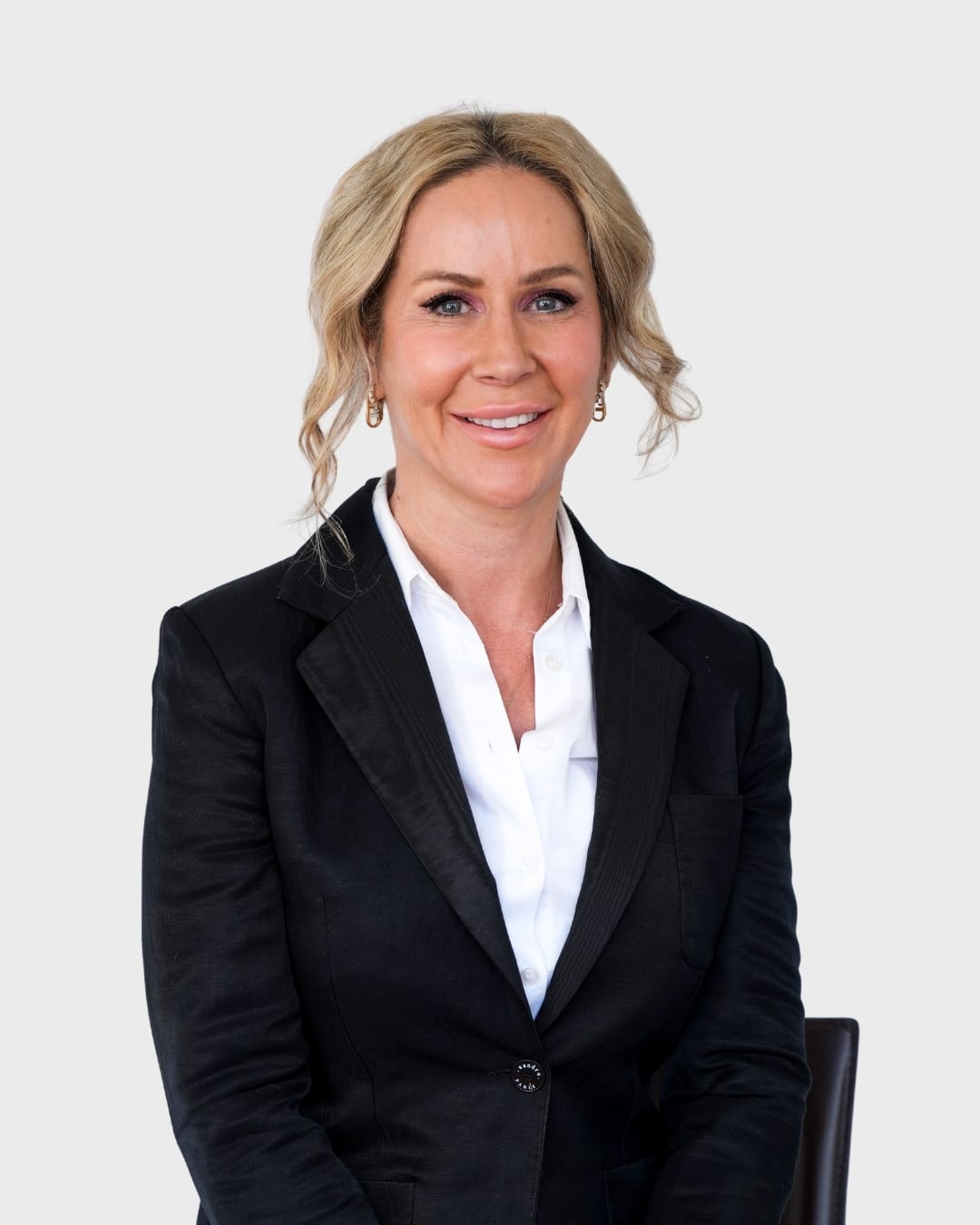
Dr Silvia Ciach, General Dentist
Role: General dentist
Qualifications: BDSc, University of Melbourne (2001)
Registration: Registered dentist, general registration, DEN0001025814
Registration status can be verified on the AHPRA register of practitioners at ahpra.gov.au. She practises within general dentistry; the full clinician list is on the our team page.
Background
Dr Silvia Ciach joined Smile Solutions in 2001 on graduating from the University of Melbourne with a Bachelor of Dental Science, and has practised there since.
Her focus is restorative dentistry, and in particular chairside CAD/CAM restorations — inlays, onlays, crowns and veneers designed and milled in the practice and fitted in a single appointment. The practice reports that she has completed more than 3,500 such restorations.
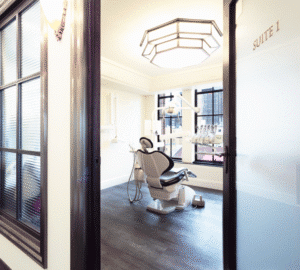
She attends international conferences on CAD/CAM dentistry. The scanning and milling equipment the practice uses is described on the technology page.
A note on comparative claims
Some published descriptions of this practitioner's work include comparisons with other clinicians. Australian law prohibits advertising of a regulated health service that claims superiority over other practitioners, or that creates an unreasonable expectation of benefit. Case volume is also not independently auditable: there is no public registry of restorations performed, so a figure of this kind is a practice-reported number, not a verified one.
What can be said accurately is that this is a practitioner with more than two decades of continuous practice and substantial experience in one technique. Experience of that kind is genuinely relevant — chairside CAD/CAM is technique-sensitive, and the design step in particular rewards repetition. It does not need a superlative attached to it to be meaningful.
What the advertising law actually says
This is not a matter of editorial taste. Section 133 of the Health Practitioner Regulation National Law states that a person must not advertise a regulated health service, or a business that provides one, in a way that:
- "is false, misleading or deceptive or is likely to be misleading or deceptive"
- "offers a gift, discount or other inducement to attract a person to use the service or business, unless the advertisement also states the terms and conditions of the offer"
- "uses testimonials or purported testimonials about the service or business"
- "creates an unreasonable expectation of beneficial treatment", or
- "directly or indirectly encourages the indiscriminate or unnecessary use of regulated health services"
Ahpra's guidelines identify, among the comparisons that are not acceptable in advertising a regulated health service, "comparisons between health outcomes and quality of care offered by different regulated health services", "comparing professions, or the competency, skill or experience of practitioners", and "price comparisons of regulated health services".
The penalties are not nominal. A court may order a penalty "for an individual (e.g. a registered health practitioner) a maximum penalty of $60,000 per offence" and "a body corporate a maximum penalty of $120,000 per offence". Where the breach involves unlawful use of a protected title, the maximum for an individual is "financial penalty of up to $60,000 per offence, imprisonment for up to three years per offence or both".
What a practitioner page is allowed to tell you
The same guidelines are equally clear that accurate information about training and experience is useful and permitted: "If a practitioner holds further or postgraduate qualifications, or has specific experience, or has completed specific courses it is acceptable to advertise that in an accurate and factual manner." The worked example Ahpra gives of acceptable wording is "10 years' experience working at clinic XY".
What is not permitted is language that implies a registration the practitioner does not hold. Ahpra's position is that where a practitioner does not hold specialist registration, "any advertising using words or titles related to specialty is likely to mislead the public to believe the practitioner holds a type of specialist registration approved under the National Law" — including "the words, or variations of the words or phrases 'specialist', 'specialises in', 'specialty', or 'specialised'". By contrast, "words such as 'substantial experience in' or 'working primarily in' are less likely to be misleading". That is the reason for the wording used throughout this page.
What a general dentist does
A general dentist holds general registration with the Dental Board of Australia and provides examination and diagnosis, radiographs, cleaning and gum treatment, fillings, inlays, onlays, crowns and bridges, root canal treatment, extractions, dentures, implant restorations, whitening and cosmetic treatment, and referral to specialists where a case sits outside general practice.
A general dentist is not a specialist. Specialist titles are protected under the Health Practitioner Regulation National Law and require specialist registration following three years of full-time postgraduate university training. Which clinicians hold it is set out on the dentists and registered specialists page.
The Dental Board recognises thirteen dental specialties — "There are 13 dental specialties in Australia which are approved by the Australian Health Workforce Ministerial Council" — dento-maxillofacial radiology, endodontics, forensic odontology, oral and maxillofacial surgery, oral medicine, oral and maxillofacial pathology, oral surgery, orthodontics, paediatric dentistry, periodontics, prosthodontics, public health dentistry (community dentistry) and special needs dentistry. An applicant for specialist registration must hold an approved qualification in the specialty and must have "completed a minimum of two years general dental practice", as well as meeting every other requirement for general registration as a dentist.
Checking this registration yourself
The Dental Board of Australia states that "Ahpra publishes an online register of all dental practitioners that provides the profession and the public with up-to-date information about a dental practitioner's registration status", and that the register "also includes details of the specialty or specialties for dentists who hold specialist registration".
A search will show the registration number, the division, whether specialist registration is held and in which specialty, whether the registration is current, and any conditions, undertakings or reprimands. It is the only authoritative answer, and it is free.
Every practitioner on that register is also bound by the Board's registration standards, each with a published date of effect: specialist registration (1 July 2010), general registration for overseas-qualified dental practitioners (20 December 2011), endorsement for conscious sedation (27 October 2015), continuing professional development (1 December 2015), recency of practice (1 December 2015), professional indemnity insurance arrangements (1 July 2016), the list of recognised specialties and titles (1 October 2017), scope of practice (1 July 2020), English language skills (18 March 2025) and criminal history (15 July 2026). The scope of practice standard "requires dental practitioners to practise within the scope of their education, training, and competence at all times" — the formal basis for referring a case on rather than attempting it.
Chairside CAD/CAM: an honest account
CEREC is the best-known chairside CAD/CAM system; several others exist. The sequence replaces impressions and a laboratory with a digital scan, on-screen design and an in-practice milling unit, so the restoration is made from a ceramic block while the patient waits. The practice's own account of the system is in everything you need to know about Smile Solutions CEREC technology.
What it genuinely offers:
- One appointment instead of two. No temporary restoration, no second injection, no second visit. The same argument applied to front teeth is set out in the case for same-day porcelain veneers.
- No temporary crown to debond or leak — temporaries are a real source of sensitivity and trouble, and eliminating them is a genuine benefit.
- A digital scan instead of an impression — more comfortable, and it avoids the distortion impression material can introduce.
- Consistent material. Industrially produced ceramic blocks have well-characterised, homogeneous properties.
- Immediate remakes. If something is not right, it can be redesigned and milled again in the same visit.
What it does not change:
- The tooth preparation is identical. The time is saved in manufacture, not in how much tooth is removed. A same-day crown removes exactly as much tooth as a laboratory crown.
- It is not automatically better than laboratory work. A skilled ceramist layering porcelain can achieve aesthetics that are difficult to match with a monolithic milled block. This matters most for front teeth, and many practitioners mill posterior work chairside while sending anterior cases to a laboratory.
- Material choice still matters. Lithium disilicate, zirconia and composite blocks differ in strength, translucency and how they wear the opposing teeth. Ask which is being used and why — how much does a dental crown cost in Melbourne? Materials compared covers what each material changes, including the fee.
- It does not extend the life of the restoration. Same-day and laboratory restorations of the same material perform comparably. Nothing about the speed makes the result last longer.
A useful question to ask any practice offering same-day restorations: which cases do you send to the laboratory, and why? A practitioner who mills everything regardless of the case is letting the equipment decide the treatment.
Restorative dentistry: the honest version
Restorative dentistry is the repair and replacement of damaged tooth structure. What that means in practice:
- No restoration lasts forever. Every filling, inlay and crown will eventually need replacing, and each replacement removes more tooth than the last. The sequence ends in a crown, then possibly a root canal, then extraction. Preventing the first restoration is worth more than any material choice.
- An inlay or onlay preserves more tooth than a crown where a substantial part of the tooth is still sound. This is one of the clearest arguments for adhesive ceramics: partial coverage became practical only because ceramic can be bonded. Porcelain, amalgam or composite resin? sets out how the materials differ.
- A crown removes a great deal of tooth and is indicated when there is too little left to support anything less, or after root canal treatment on a back tooth. What types of dental crowns are available? and the difference between porcelain crowns and veneers are the two questions patients ask most.
- Early enamel decay can often be arrested rather than drilled, with fluoride, dietary change and radiographic monitoring — see can you reverse tooth decay and do I need a filling? and the stages of dental decay.
- Sensitivity after a deep restoration is common and usually settles over weeks; pain that lingers after cold, or worsens, needs review.
- Cracked teeth are among the commonest reasons for an onlay. A crack stabilised early with a cusp-covering restoration often saves the tooth; one that reaches the pulp or splits the root usually does not. How will my cracked tooth be treated? explains the decision.
On the two preventive measures that sit behind all of this, the published evidence is specific. The National Health and Medical Research Council "found that water fluoridation reduces tooth decay by 26 to 44% in children and adolescents, and by about 27% in adults". And where a root-filled tooth is the alternative to extraction, a peer-reviewed cohort study of endodontically treated teeth reported "overall success rates of ETT" of "87.8% (95% CI: 84 to 90%) and 80.8% (95% CI: 75 to 86%) at the tooth and patient levels, respectively".
Registration
Dentists are one of the registered dental practitioner divisions under the National Law. The Dental Board of Australia registers dentists, dental specialists, dental hygienists, dental therapists, oral health therapists and dental prosthetists. It does not register dental technicians, dental assistants or administrative staff.
All registered practitioners must complete continuing professional development each year and declare it at renewal. CPD is a registration requirement, not a distinction, and courses and manufacturer training do not confer specialist status.
Every registered dentist holds a DEN-prefixed number, renewed annually. Conditions, undertakings and reprimands appear on the public register.
Articles by Dr Ciach
- I am in my late 60s. How can I keep my teeth in top condition now that I am older?
- What are the risks of having dental treatment overseas?
- Is it safe to visit the dentist during pregnancy?
Common questions
A number like ‘3,500 restorations' does not mean much to me. What should I actually ask when choosing who does the work?
Ask things that have checkable answers. Ahpra's own guidance on what a practitioner may say is a good guide to what is worth hearing: it accepts accurate statements of qualifications and experience — its worked example of acceptable wording is ‘10 years' experience working at clinic XY' — while treating ‘comparing professions, or the competency, skill or experience of practitioners' as an unacceptable form of advertising. In other words, the regulator does not think a ranking is a meaningful thing to publish, and neither should you.
The questions that do have answers:
- Which cases do you send to the laboratory, and why? A practitioner who never sends anything out is letting the equipment decide the treatment.
- Which material are you using for my tooth, and what made you choose it over the alternatives?
- What is the least you could do that would work? An onlay instead of a crown, a repair instead of a replacement, monitoring instead of drilling.
- What happens if it chips or debonds — who pays, and for how long after fitting? Get the remake position in writing before you start, not after something breaks.
- What will I need to do to maintain this, and when will we review it?
And for registration, go to ahpra.gov.au rather than any website, including this one. See Understanding Your Treatment and the Price Guide.
I am pregnant. Should I put dental treatment off until afterwards?
Usually the opposite — the thing to avoid is arriving at the end of a pregnancy with an untreated problem, and it is worth telling the practice you are pregnant, or planning to be, so that the sequencing and the imaging decisions can be made with that in the picture.
The Australian Dental Association's Dental Health Week survey of 25,000 adults reported that ‘75% of women didn't have a dental checkup before conception, which is vital because poor oral health in pregnant mothers is associated with poorer pregnancy outcomes like low birthweight babies'. That is worth reading precisely: the word is associated. The peer-reviewed literature on gum disease and systemic health is consistent in finding associations with adverse pregnancy outcomes, and equally consistent in not establishing that treating gum disease prevents them. Anyone who tells you that a course of gum treatment will protect your baby is going beyond the evidence; anyone who tells you inflamed, bleeding gums do not matter is going beyond it in the other direction.
On radiographs, the principle that applies to everyone applies here with the volume turned up: ‘strict and individualized justification should determine the prescription of each radiograph', and a justified radiograph ‘should make a substantial contribution to distinguishing between treatment options'. It is entirely reasonable to ask what a proposed image is expected to change, and whether it can wait. See Is it safe to visit the dentist during pregnancy? and Pregnancy and dental health.
I have a mouthful of old amalgam fillings. Should I have them replaced?
Not on general principle, and here the honest position is partly an admission.
We checked the independent reference material behind this site — regulator publications, professional policy statements and peer-reviewed reviews — for a statement on the safety of amalgam or of composite resin. There is none in it. So on the health question specifically, this page cannot point you to an authority either way, and any site that states the matter as settled, in either direction, should be asked what it is relying on.
What the material does support is the arithmetic of replacement, which applies whatever the material: every replacement removes more tooth than the last, and the sequence ends in a crown, then possibly a root canal, then extraction. Replacing a sound, sealed, symptom-free restoration spends tooth structure to buy an appearance. That is a legitimate thing to want — but it should be a decision made knowingly, and priced as cosmetic work rather than as treatment.
The restorations worth replacing are the ones that have failed: recurrent decay at the margin, a fracture in the tooth or the filling, a restoration that cannot be cleaned around, or pain. Ask to be shown what has actually failed, on a radiograph or a photograph, before a replacement plan is agreed. See How long do dental fillings last? and Second Opinions and Corrective Dentistry.
Is it worth having treatment done overseas while I am travelling?
The part of this that can be answered without a comparison between practitioners — which Australian law does not permit and which nobody has the data for anyway — is the part about what happens afterwards.
The questions that decide it:
- Who fixes it if it fails, and where? Remakes and corrections are the usual reason a saving disappears. A remake that requires a flight is not a remake.
- What records will you be given? Ask for the treatment plan, the item descriptions, the radiographs and photographs, and the material and batch details of anything fitted, in a form your dentist here can read. Without them, whoever sees you next is working blind.
- How long is the follow-up window, and who pays for it?
- Is the work staged sensibly for the time available? Complex restorative and implant work is normally staged over months precisely so that problems are caught between stages. Compressing it into a fortnight removes the checkpoints rather than the risk.
- Where does a complaint go? The Australian regulator's complaint and notification pathways cover practitioners registered in Australia. Treatment provided overseas sits outside that system, under whatever the local arrangements are.
If the motive is cost, it is worth asking for a written, itemised quote here first — including the option of doing less, or staging the work over a longer period — so that the comparison is between two real plans rather than between a plan and an advertised price. See What are the risks of having dental treatment overseas?, Overseas dental work could cost you more in the long-term and the Price Guide.
Related reading
- Overseas dental work could cost you more in the long-term
- Teeth and aging: how can I keep my smile looking younger?
- Pregnancy and dental health
- Understanding your treatment — how a plan is explained and costed before it starts
- Price guide — indicative fees, and what changes them
Practical details
Dr Ciach's registration can be checked on the AHPRA public register at ahpra.gov.au. For questions about consultation or same-day restorations, use the contact page.
Smile Solutions, Level 1, 220 Collins Street, Manchester Unity Building, Melbourne VIC 3000. Phone 13 13 96, or theteam@smilesolutions.com.au. Monday–Friday 8.00am–6.00pm, Saturday 8.30am–1.30pm, Sunday by appointment.
Sources for the externally verifiable statements on this page
- Ahpra — Advertising a regulated health service (section 133 of the National Law, the penalties, and the guidelines on comparisons, qualifications and specialty wording).
- Dental Board of Australia — Specialist Registration and Registration Standards.
- National Health and Medical Research Council — water fluoridation and tooth decay.
- Peer-reviewed endodontic cohort study (PubMed Central) — success rates of endodontically treated teeth.
- Australian Dental Association — Dental Health Week survey of 25,000 Australian adults (pre-conception dental check-ups).
- PubMed Central — Radiation Exposure and Frequency of Dental, Bitewing and Occlusal Radiographs (justification of radiographs).
This page records qualifications and career history as published by the practice. General information only — it is not a diagnosis, a treatment plan or a promise of any particular clinical outcome. Practitioner availability changes; confirm when booking.
Smile Solutions trades under ABN 28 193 514 103.
Images on This Page
-
https://www.facebook.com/tr?id=800557773428361&ev=PageView&noscript=1
(no alt text)
-
https://www.smilesolutions.com.au/wp-content/uploads/2025/10/calendar_month.svg
(no alt text)
-
https://www.smilesolutions.com.au/wp-content/themes/arcadian-wordpress-theme/assets/images/smile_solutions_logo_white.png
Smile Solutions Logo
-
https://www.smilesolutions.com.au/wp-content/themes/arcadian-wordpress-theme/assets/images/smile_solutions_logo_purple.png
Smile Solutions Logo
-
https://www.smilesolutions.com.au/wp-content/uploads/2016/05/Silvia.jpg
Dr Silvia Ciach
-
https://www.smilesolutions.com.au/wp-content/uploads/2013/01/Pregnancy-and-Dental-Care-300x270.jpg
Pregnancy-and-Dental-Care
-
https://www.smilesolutions.com.au/wp-content/uploads/2016/05/Silvia-150x150.jpg
Dr Silvia Ciach
-
https://www.smilesolutions.com.au/wp-content/uploads/2025/09/Smile-Solutions-Level-10-300x270.png
Smile Solutions Level 10
-
https://www.smilesolutions.com.au/wp-content/uploads/2013/04/Dental-Tourism-300x270.jpg
Dental Tourism
-
https://www.smilesolutions.com.au/wp-content/themes/arcadian-wordpress-theme/assets/images/family_owned_bussiness.png
Family Owned Business
-
https://www.smilesolutions.com.au/wp-content/themes/arcadian-wordpress-theme/assets/icons/icon--phone.svg
Smile Solutions Contact
-
https://www.facebook.com/tr? id=800557773428361&ev=PageView&noscript=1
(no alt text)
-
https://bat.bing.com/action/0?ti=25148060&tm=gtm002&Ver=2&mid=d08db8cd-b18a-405f-9aa8-0d5debab24fd&bo=1&sid=05fedc60ab2711f19f52aba524f0d4a6&vid=05ffb940ab2711f18f0f19213df07a2a&vids=1&msclkid=N&pi=918639831&lg=en-US&sw=800&sh=600&sc=24&nwd=1&tl=Dr%20Silvia%20Ciach%20%7C%20General%20Dental%20Care%20%7C%20Smile%20Solutions&p=https%3A%2F%2Fwww.smilesolutions.com.au%2Four-team%2Fdr-silvia-ciach%2F&r=&evt=pageLoad&sv=2&cdb=AQAQ&rn=117905
(no alt text)