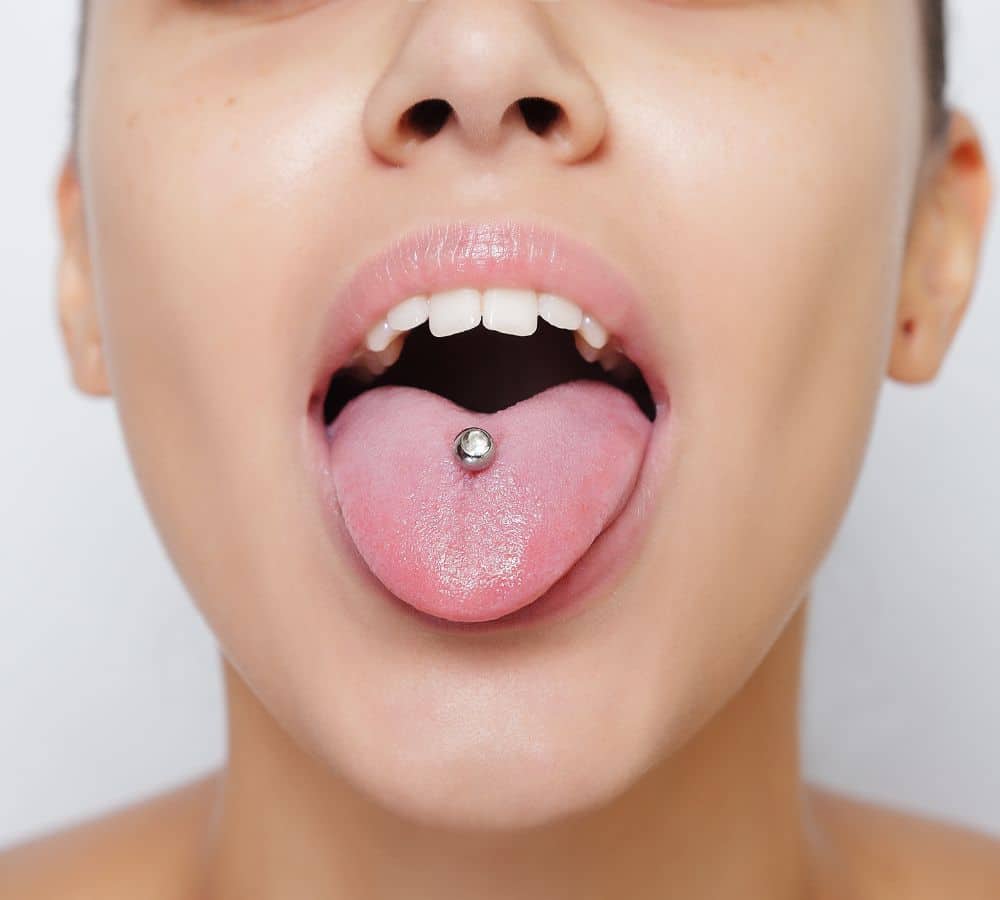
Are tongue and lip piercings bad for teeth?
Yes — and the mechanism that does the most damage is not the one most people worry about. Infection at the time of piercing is a real risk, but the larger long-term problem is mechanical: constant contact between metal jewellery, teeth and gums, thousands of times a day, for years.
The two consequences that matter are gum recession and enamel wear or fracture, and both are permanent. Neither hurts while it is happening, which is why they are usually noticed late.
What the independent guidance actually says
It is worth being straight about the evidence base before going further. The Australian Dental Association's policy on the prevention and management of oral injuries deals with piercings in a single line: “Oral piercing jewellery may also increase the risk and degree of oral injury.” That sentence is close to the whole of the published Australian professional guidance addressed specifically to oral piercings.
Everything else on this page is clinical reasoning applied to a piercing — drawn from what is well established about gum recession, enamel wear and dental trauma generally, rather than from a body of piercing-specific research. That is a real limitation and you should read the rest of the page knowing it.
The same ADA policy is blunt about the category of harm it places piercings in. “Oral damage is often irreversible, frequently complex, difficult, and costly to repair.” Its position on what to do after an injury is equally plain: anyone who has suffered an oral injury should be promptly assessed by a dentist and be treated and reviewed as recommended, and dentists should work to the International Association of Dental Traumatology guidelines for the management of traumatic dental injuries. “Wait and see whether it settles” is not in that document.
Gum recession
A piercing that rests against the gum wears it away. Lip and labret piercings typically damage the gum on the outer surface of the lower front teeth; tongue piercings damage the gum on the inner surface.
Why this matters more than it sounds:
- Recession exposes the root surface, which has no enamel. As Diabetes Australia puts it in its own explanation of gum disease, when bone and gum recede this uncovers and exposes the root surface, which is not as strong as the white enamel covering the tooth crown. Root surfaces decay faster — see how does tooth decay develop? — are far more sensitive — what to do if you suffer from sensitive teeth — and are harder to clean.
- Gum does not grow back. Once lost, it stays lost. Grafting can cover a recession defect, but that is a surgical procedure with its own limits, and it is the province of a periodontist.
- Recession is progressive as long as the cause remains, and if the bone beneath is lost too, the tooth can loosen. In severe cases the outcome is tooth loss — after which the conversation becomes what are the replacement options for missing teeth? and dental implants.
The same permanent loss is caused, more slowly, by brushing too hard — over brushing: what can it do to my teeth? and how much pressure should I apply when brushing my teeth?. If both are happening at once, the gum at the lower front teeth is being attacked from two directions.
Look for it now if you have a piercing. Compare the gum height on the teeth nearest the jewellery with the equivalent teeth on the other side. A visible step or a longer-looking tooth is recession, and it is the point at which to act. Bleeding gums, what is gum disease? and periodontal (gum) disease cover the disease process that recession often runs alongside, and when do you need deeper cleaning? the treatment threshold.
Enamel wear, chips and cracks
Jewellery rubbing against teeth wears the enamel — the outer layer that protects the tooth from daily use. Thinned enamel leaves teeth weakened, sensitive, and vulnerable. If enamel is the hardest substance in the body, why do teeth break? explains why hardness does not mean it cannot chip, and what can I do to strengthen my teeth? what can be done about enamel that is already thinned.
More acutely, biting down on a metal ball fractures teeth. Chips and cracks are common in people with tongue piercings, and this is not always gradual: a single bite onto a barbell can crack a tooth or break a cusp off a molar. See chipped and cracked teeth, what should I do if I have a chipped tooth?, do I have to get a chipped tooth fixed?, why does a cracked tooth hurt so much? and how will my cracked tooth be treated?.
Two points that make this worse than it first appears:
- Enamel does not regrow. Wear is cumulative and permanent — the same is true of dental erosion from acid, and of wear from grinding, both of which compound the problem.
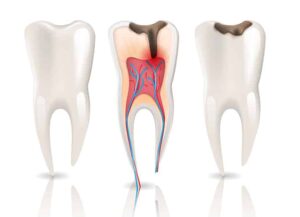
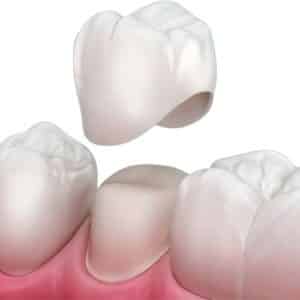
- A crack running below the gumline may make the tooth unrestorable, so a piercing that cost a small amount can lead to a crown, root canal treatment, or an extraction and implant. Everything you need to know about root canal treatment and the price guide between them give a sense of what that costs.
Crowns, veneers and porcelain restorations are more brittle than natural enamel and chip more readily against metal. If you have restorations on your front teeth, the risk is higher, not lower — porcelain veneers, composite bonding and how long do porcelain veneers last? set out what they will and will not take.
The other risks worth knowing
- Swelling immediately after piercing — tongue swelling in the first days can be significant and, rarely, can obstruct the airway. Seek urgent care for difficulty breathing or swallowing. See what is considered a dental emergency? and emergency dentistry.
- Infection, at the time and later. The mouth carries a very high bacterial load — can a dental abscess affect your general health? shows how far an oral infection can travel.
- Prolonged bleeding, particularly if a blood vessel in the tongue is pierced.
- Nerve damage, causing numbness or altered taste.
- Swallowing or inhaling a loose component if the jewellery unscrews.
- Metal allergy, most often to nickel.
- Speech and eating changes while adapting.
- Interference with imaging — metal jewellery obscures dental radiographs and must be removed for MRI. How safe are dental x-rays covers what those radiographs are for.
- Increased plaque and calculus around the site, and persistent bad breath — see what causes bad breath and how can I fix it?.
The sore that does not heal
One item on that list deserves its own heading, because the location makes it matter more than it would elsewhere.
Guidance published by the RACGP is that unexplained or non-healing changes in the mouth persisting more than two to three weeks — a persistent ulcer, red patches, lumps, a sore throat, or red or speckled lesions — should prompt an oral cancer screen. It also identifies the lateral margins of the tongue and the floor of the mouth as the highest-risk sites for oral cancer.
Those are precisely the tissues a tongue piercing sits between, and they are tissues a piercing chronically irritates. That does not mean a piercing causes oral cancer — nothing in the guidance says so, and the established risk factors it lists are age over 45, tobacco, alcohol, areca (betel) nut chewing and limited access to dental care. What it means is narrower and more practical: if you have a piercing, you have a standing reason for a sore in that area, and that is exactly the circumstance in which a lesion gets explained away rather than examined. The RACGP notes oral cancer has a five-year survival of around 50%, mostly because of diagnostic delay, with an average Australian delay of about four months from symptom onset to diagnosis. Apply the two-to-three-week rule to your piercing site the same way you would anywhere else. The cause of mouth ulcers and their usual treatments and oral cancer: how your dentist can help with early detection go further.
How to reduce the damage if you keep the jewellery
Oral piercings are a form of self-expression, and the point of this article is not to talk you out of one. It is to make sure you know the trade-off and can manage it.
- Take it out when you eat, sleep, brush and during any strenuous activity. These are exactly the times you use your mouth most, or have the least control over how the jewellery contacts your teeth. This single habit removes a large share of the risk. If you play sport, take it out and wear a mouthguard instead — should I wear a mouthguard while playing sports?.
- Choose smaller and softer. A shorter barbell reduces movement and contact. Acrylic, PTFE or silicone ends are far kinder to enamel than metal, and swapping the ends alone meaningfully reduces chipping risk.
- Check the fit regularly. Loose ends fall off, get swallowed, or let the bar swing further.
- Keep it and the site clean. Brush the jewellery as well as your teeth — what is the ideal daily routine for oral hygiene?, is flossing really that important? and which toothbrushes do dentists recommend?.
- Stop playing with it. Clicking it against the teeth is the habit that does the wear, and it belongs on the same list as chewing ice and opening things with your teeth: 10 ways to avoid ruining your teeth.
- Have it monitored. Ask your dentist to photograph and chart the gum levels around the affected teeth, so change is measured rather than guessed at. Recession is slow enough that you will not see it happening yourself. How often should I go to the dentist?, dental cleans and hygienists and understanding your treatment cover the visits at which that charting happens.
- Act early on recession. Once a defect is established, the piercing usually has to go if the tooth is to be saved.
Common questions
I have just chipped a tooth on the jewellery. How urgent is it?
Get it looked at, and do not wait to see whether it settles. A chip that does not hurt is still a chip, and the reason for promptness is what may be behind it rather than what you can see.
The ADA's position on oral injury generally is that anyone affected “should be promptly assessed by a dentist and be treated and reviewed as recommended”, and the Better Health Channel's dental injuries advice is to “always seek immediate advice from an oral health professional.” Neither offers a wait-and-see option.
The reason is set out in the endodontic literature on cracked teeth: “if left untreated, [a cracked tooth] may progress to irreversible pulpal disease and possibly tooth loss.” A visible chip can be the end of it, or it can be the visible part of a crack running into the tooth — and which of those you have is not something you can determine by how it feels.
Before the appointment: keep the area clean, chew on the other side, avoid very hot and very cold food if the tooth is sensitive, and take the jewellery out rather than risk a second impact on an already weakened tooth. If a piece of tooth has come away, bring it. If there is bleeding that will not stop, spreading facial swelling, or difficulty breathing or swallowing, that is a hospital matter rather than a dental appointment. Emergency dentistry and what should I do if I have a chipped tooth?.
Can a cracked tooth be saved, and will I end up needing a crown?
Usually it can, and often yes — and what decides both is largely how early it is found.
The endodontic review literature on cracked teeth reports “encouraging outcomes for vital as well as endodontically treated [cracked teeth] restored with cuspal coverage restorations”, and identifies what improves the odds: “early management, cuspal coverage restorations, and absence of deep periodontal probing depth of non-endodontic origin increase the survival rate.” Cuspal coverage means a restoration that caps the biting cusps and holds the tooth together — a crown or an onlay — rather than a filling placed inside it, and that is why a crown is so often proposed for a cracked tooth specifically.
The factors that count against a tooth are worth knowing, because they explain why two people get different answers. The literature lists a periodontal probing depth of 5 mm or more next to the crack as associated with reduced survival, along with multiple cracks, a crack extending into the root, the tooth being the last one in the arch, pre-existing apical periodontitis, and the presence of a post inside the root canal.
There is one category where the answer is different. A vertical root fracture — a crack running down the root itself — carries a poor outlook: the literature notes that it “commonly progresses subtly, leading to a delayed diagnosis that results in extraction”, and that extraction is recommended in a single-rooted tooth with one. In multi-rooted teeth, removing the affected root rather than the whole tooth may be an option.
One last point that ties back to the piercing: the same review states that “careful occlusal assessment and management of parafunctional habits and/or occlusal interferences is essential to reduce the likelihood of the propagation of existing cracks.” Clicking a metal barbell against a cracked tooth is a parafunctional habit by any reading. How will my cracked tooth be treated?, what types of dental crown are available? and endodontists.
I have had mine for five years with no problems. Am I in the clear?
Not necessarily, and this is the question the page is really written for. Every one of the three main harms is characteristically silent.
Recession is painless and gradual, and you are the worst-placed person to notice it, because you see your own gums every day. It is detected by comparing charted measurements over time, not by looking.
Enamel wear is cumulative by definition. A tooth thinned over years does not announce itself until it becomes sensitive or until a piece breaks off, and by then the enamel is gone for good.
Cracks are the subtlest of the three. A vertical root fracture “commonly progresses subtly, leading to a delayed diagnosis that results in extraction” — and while that is the severe end, it makes the general point: the crack that eventually costs you a tooth spent years being a crack that cost you nothing.
And the soft tissue has its own rule, from the RACGP guidance above: any unexplained or non-healing change lasting more than two to three weeks warrants examination, regardless of how easily the piercing explains it.
So the honest answer is that five uneventful years is genuinely good news about the first five years and tells you very little about the next five. What converts it into real reassurance is having the gum levels charted and photographed now, so that there is a baseline to measure against — which is worth asking for by name at your next appointment rather than assuming it is being done. How often should I go to the dentist?
I am getting one anyway. What should I ask, and what should I watch for afterwards?
Fair enough — and knowing what to watch for is more useful than being talked out of it.
Before: ask what metal the jewellery is and whether a nickel-free option is available; ask whether shorter bars and acrylic, PTFE or silicone ends can be fitted from the outset rather than swapped later, since those are the single biggest reduction in chipping risk; and tell the piercer about any bleeding disorder, anticoagulant medication or heart condition, and raise it with your doctor or dentist first if you have one.
In the first fortnight, the things that need same-day attention rather than patience are: difficulty breathing or swallowing, or a change in your voice; bleeding that will not stop; spreading swelling of the face or neck, particularly with fever; and any numbness or altered taste that persists. Swelling of the tongue itself is expected early on — swelling that is getting worse rather than better, or that is making it hard to breathe or swallow, is not, and belongs at a hospital emergency department.
After it settles, the habits in the section above are the whole of the long-term management, and the first one does most of the work: out for eating, sleeping, brushing and sport. Then tell your dentist you have it, so the site and the gum levels around the nearest teeth are on the record from the start rather than from whenever something goes wrong.
Related reading
- Top tips on how to avoid dental problems
- What should I do when a tooth is knocked out?
- The effects of vaping on your oral health
- What does a dental hygienist do?
Practical details
If you already have a piercing, or are considering one, take your dental health into account. Smile Solutions dentists can assess existing damage, chart the gum levels for monitoring, and advise on options for reducing further wear — contact us to arrange it.
The statements attributed above to the Australian Dental Association, Diabetes Australia, the Better Health Channel and the RACGP are drawn from those organisations’ own published material, which remains the primary source. Cracked-tooth prognosis and management statements are quoted from the peer-reviewed endodontic literature on cracked teeth and vertical root fractures, and describe cracked teeth generally rather than piercing-related cracks specifically.
Specialist registration can be verified on the AHPRA register, or by calling 1300 419 495. The practice’s registered specialists are identified as such within the full team.
Smile Solutions, Level 1, 220 Collins Street, Manchester Unity Building, Melbourne VIC 3000 — getting here. Phone 13 13 96, or theteam@smilesolutions.com.au. Monday–Friday 8.00am–6.00pm, Saturday 8.30am–1.30pm, Sunday by appointment.
Published 27 September 2015. General information only; it does not replace advice from your treating practitioner.
Smile Solutions trades under ABN 28 193 514 103.
Images on This Page
-
https://www.facebook.com/tr?id=800557773428361&ev=PageView&noscript=1
(no alt text)
-
https://www.smilesolutions.com.au/wp-content/uploads/2025/10/calendar_month.svg
(no alt text)
-
https://www.smilesolutions.com.au/wp-content/themes/arcadian-wordpress-theme/assets/images/smile_solutions_logo_white.png
Smile Solutions Logo
-
https://www.smilesolutions.com.au/wp-content/themes/arcadian-wordpress-theme/assets/images/smile_solutions_logo_purple.png
Smile Solutions Logo
-
https://www.smilesolutions.com.au/wp-content/uploads/2023/11/SS-Tooth-1-1-150x150.png
Smile Solutions
-
https://www.smilesolutions.com.au/wp-content/uploads/2015/09/Tongue-Piercing.jpg
Are tongue and lip piercings bad for teeth?
-
https://www.smilesolutions.com.au/wp-content/uploads/2025/09/Root-Canal-2-300x217.jpg
Root Canal
-
https://www.smilesolutions.com.au/wp-content/uploads/2026/08/Mouth-Breathing-300x270.jpg
Mouth Breathing
-
https://www.smilesolutions.com.au/wp-content/uploads/2025/09/Dental-Crown-at-Smile-Solutions-300x300.jpg
Dental Crown at Smile Solutions
-
https://www.smilesolutions.com.au/wp-content/themes/arcadian-wordpress-theme/assets/images/family_owned_bussiness.png
Family Owned Business
-
https://www.smilesolutions.com.au/wp-content/themes/arcadian-wordpress-theme/assets/icons/icon--phone.svg
Smile Solutions Contact
-
https://www.facebook.com/tr? id=800557773428361&ev=PageView&noscript=1
(no alt text)
-
https://bat.bing.com/action/0?ti=25148060&tm=gtm002&Ver=2&mid=77535c17-53db-4e35-9024-edf27b1abd0d&bo=1&sid=22b79f90ab2711f18e0537d04c83738b&vid=22b7ed00ab2711f194dd471073734eda&vids=1&msclkid=N&pi=918639831&lg=en-US&sw=800&sh=600&sc=24&nwd=1&tl=Are%20tongue%20and%20lip%20piercings%20bad%20for%20teeth%3F%20-%20Smile%20Solutions&p=https%3A%2F%2Fwww.smilesolutions.com.au%2Fdental-articles%2Farticle%2Ftongue-and-lip-piercings-teeth%2F&r=&evt=pageLoad&sv=2&cdb=AQAQ&rn=24571
(no alt text)