All your conventional braces questions answered
What are braces made of?
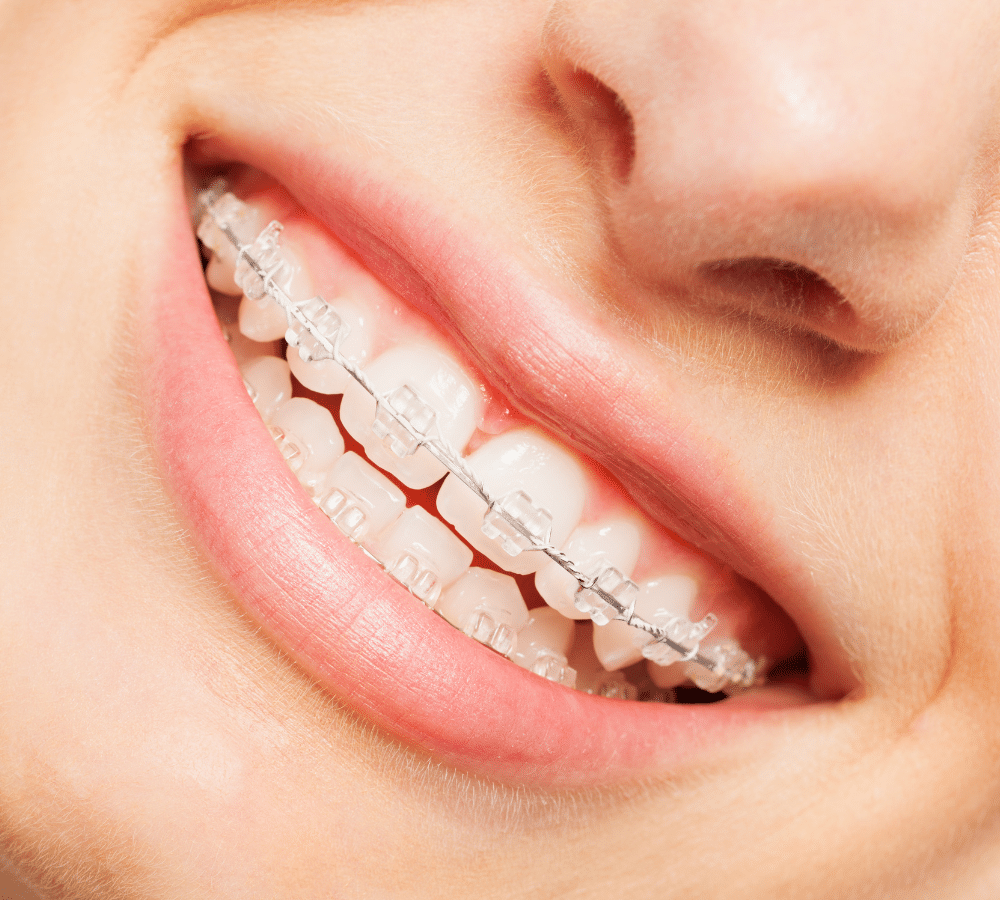
Conventional braces have two main parts:
- A series of brackets — metal or clear — attached to the surface of each tooth
- An arch wire running through slots in the brackets, which slowly moves the teeth when tensioned
The Australian Dental Association's consumer site notes that traditional metal braces "have been used for about a hundred years and are still commonly used to straighten teeth", with ceramic braces being the same appliance made from white or tooth-coloured material.
The service page is Orthodontic Braces; Orthodontics is the overview, and Conventional braces vs lingual braces vs Invisalign compares the appliance types. If you are still deciding, how do I know which orthodontic treatment is best for me? is the place to start.
How should I care for my teeth while wearing braces?
Excellent oral hygiene is crucial. Take particular care that the areas around the braces and along the gum line stay free of plaque — those are precisely the places a normal brushing stroke misses. The baseline routine, braces or no braces, is in what is the ideal daily routine for oral hygiene? and how often should I brush my teeth?
The ADA sets the same bar and is specific about the frequency: "for people wearing braces, brushing after every meal is recommended as food can get stuck around the brackets", and "both manual and electric toothbrushes can be used for cleaning around braces". So the brush you already own is fine; the timetable is what changes.
Clean after snacks and meals, using:
Your orthodontic toothbrush. Which toothbrushes do dentists recommend?
Superfloss — it has a stiffened end that threads between your teeth and the arch wire. Use the spongy section for large spaces and the smooth end for smaller ones. Is flossing really that important? answers the question people actually want answered.
Pikster interdental brushes — for cleaning between the teeth and the arch wire. The bendable heads reach around to the back teeth, and they last up to two weeks if rinsed properly after each use.
Those two tools exist for a reason the ADA states plainly: "cleaning between your teeth with string floss can be tricky while wearing braces", and floss threaders or interdental brushes "can help to clean between the teeth as well as between the orthodontic brackets". If ordinary floss has become a losing battle since your braces went on, that is expected rather than a failure of technique.
If you find cleaning difficult, or your gums seem puffy or bleed easily, book more frequent visits to your dentist or hygienist for professional hygiene therapy. Puffy gums during orthodontic treatment are a signal, not a nuisance — see Bleeding Gums and Dental Cleans & Hygienists, and your Smile Solutions dental hygienist visit: what to expect for what that appointment involves. Gums that stay inflamed are on a path described in what is gum disease? and periodontal (gum) disease; where it has gone past a routine clean, when do you need deeper cleaning? explains the difference.
The permanent consequence of not managing this is decalcification — white marks left in the enamel where plaque sat around a bracket, which stay after the braces come off. See What are the most common complaints associated with conventional braces? and what causes white spots on teeth?. Fluoride makes the enamel around a bracket more resistant, but it does not substitute for removing the plaque.
What if part of my braces breaks or comes loose?
None of these is an emergency, and breakages commonly happen in the first weeks of treatment. They are usually caused by crunchy or sticky foods.
Make an appointment and it will be repaired. Avoid activities that put your teeth or braces at risk — any mishap lengthens your treatment. (For an actual dental emergency — a knocked-out or broken tooth — see Emergency Dentistry.)
Poking wire
Use tweezers to place the wire back into position. If that and wax don't help, clip the wire behind the last bracket with nail clippers.
Broken bracket
A bracket is broken if it has come away from the tooth, spins, or moves up and down the wire. Not an emergency — it can be fixed at your next appointment.
If the very back bracket comes off, the wire will feel long; trimming the wire makes it more comfortable.
Broken power chain
If there is a tear in the power chain, don't worry — the rest of the elastic chain is still active, and repair is not urgent.
The exception: if you have an appointment coming up to have your braces removed and the power chain has broken, call the practice — Contact Us.
Elastic hook
If the hook (bracket) that connects your elastics has fallen off, stop wearing elastics altogether and tell your orthodontist at the next appointment.
Will my braces hurt?
Initially, your mouth needs time to adapt, and the braces may rub on your lips and cheeks. Mouth soreness and ulcers are common when braces are first applied, and can occur at any time during treatment.
For irritation: mould a piece of orthodontic wax into a tiny ball and cover the part causing the problem. This creates a barrier that lets the area heal.
A tip that makes the wax actually stay put: dry the area first.
An ulcer that is still there after two to three weeks should be looked at whatever caused it — the cause of mouth ulcers and their usual treatments.
After fitting and after each adjustment
Your braces will feel tight, and your teeth and gums may feel tender.
The tightness and tenderness mean your teeth are moving. These sensations may last up to a week.
During that time:
- Eat soft foods that don't require much chewing
- Over-the-counter pain relief can help if required — but note that ibuprofen and aspirin are not recommended during orthodontic treatment, because both have been shown to slow tooth movement. Check any medication with your practitioner or pharmacist
If jaw pain rather than tooth tenderness is the problem, raise it — see TMD and Teeth Grinding, what are the most common symptoms of TMD? and, if you grind at night, night time tooth grinding and clenching and what is bruxism and how is it managed?. A night guard cannot be worn over fixed braces, so grinding during orthodontic treatment is managed differently — how can a night guard be used to treat TMD? explains what the appliance normally does. For anyone whose difficulty is the appointment itself, see Dental Anxiety.
Do I still need to see my general dentist?
Yes — and the division of labour is clear:
- Your orthodontist cares for the braces and makes sure the plan is on track
- Your general dentist makes sure your teeth stay healthy and clean — see General Dentistry
Visit your general dentist every six months, or as advised, for a check-up and a clean. This matters more during orthodontic treatment than at any other time, because brackets make plaque harder to remove. Orthodontic treatment: general dentist vs specialist orthodontist? covers who does what. Decay found early during treatment is a small filling; found late it is not — can you reverse tooth decay, and do I need a filling? and how long do dental fillings last?
What about mail-order and DIY straightening?
Worth addressing here, because it is the alternative most often weighed against conventional braces on price.
The Australian Dental Association does not recommend DIY orthodontic treatment. Its stated reasoning is direct: there are "many risks to this treatment", and they "can lead to permanent damage to your teeth, gums, and jaw joints". What the ADA recommends instead is in-person treatment with a dentist or orthodontist, including a thorough assessment before treatment starts.
That assessment is the part a posted kit cannot replicate. Moving teeth is only safe once somebody has established that the gums are healthy, the roots and bone can take it, and the bite will end up somewhere workable. Orthodontic treatment: general dentist vs specialist orthodontist? and how to get straight teeth without braces? Or Invisalign cover the supervised alternatives.
How long will this take, and what happens after?
Treatment length varies with complexity and with compliance — see How long does orthodontic treatment take? and, for children, How long does my child need to wear braces? and when should I take my child to see an orthodontist?
On that last question the profession has a settled answer: the Australian Society of Orthodontists recommends children have an orthodontic assessment between the ages of 7 and 10, and, as the ADA points out, all the adult teeth do not have to be present for an assessment to be done. An examination at that age is what makes early intervention possible where it is needed — it is not a commitment to treatment.
When the braces come off, retainers hold the result — teeth move for life, with or without treatment. See Will my teeth need retainers after I've had braces? and why do teeth shift?
Cost
What drives the fee is set out on What is the cost of braces?; practice fees are on the Price Guide.
Payment plan options are available. Where a plan is advertised as interest free, that describes the plan term only — a deposit may be required, an establishment fee and ongoing account fees may apply, and charges can apply if the balance is not cleared within the agreed period. The applicable terms depend on the provider and the amount financed, and are set out in writing before you commit — ask what the deposit and the establishment fee are, in dollars, and what the total will be by the end. Payment Plans.
Common questions
Will Medicare or the Child Dental Benefits Schedule help pay for my child's braces?
No, and this is the single most common funding misunderstanding parents arrive with.
The Child Dental Benefits Schedule is a real and useful entitlement — Services Australia's figure is up to $1,158 for each eligible child over 2 consecutive calendar years — but Services Australia lists what it will not pay for, and the list is short and explicit: "orthodontic dental work", "cosmetic dental work" and "any dental services in a hospital". Braces fall squarely in the first of those.
What the CDBS does cover is the ordinary work that keeps a child in a fit state to have braces at all — examinations, x-rays, cleans, fissure sealants, fillings, root canals and extractions. That is not nothing: the hygiene demands of orthodontic treatment are high, and a child who arrives at their fitting appointment with untreated decay will have the braces delayed. See Child Dental Benefit Schedule and How does the Child Dental Benefits Schedule operate? — and check your own eligibility with Services Australia rather than assuming, because eligibility turns on the family's payment status, not on the dental need.
Private health insurance is the other route, and the thing to ask your fund before you commit is not the rebate percentage but the annual limit, the lifetime orthodontic limit, and whether a waiting period applies — orthodontic waiting periods are typically the longest in a policy. Ask for it in writing.
My child plays contact sport. Can they wear a mouthguard over braces?
Yes, and they should — but the answer is the opposite of what it is for a child without braces.
The Australian Dental Association's general position is that "the most effective protection against oral damage is a custom fitted mouthguard", and that over-the-counter types "offer little or no protection and can dislodge during play". For a mouth with fixed braces, though, the ADA adds the exception in the same sentence: those over-the-counter guards "may be appropriate during orthodontic treatment". The reason is practical — a custom guard is made from a mould of teeth that are deliberately moving, so it stops fitting within weeks, and it cannot be relined around brackets. Ask your orthodontist which type they want used and have it checked as treatment progresses.
Two further points from the same ADA policy that bear directly on a child in braces. First, the risk is not evenly spread across sports: the ADA sorts them into four levels, and the group where mouthguards are "strongly recommended" includes off-road bike riding, skateboarding, rock climbing, white-water rafting, trampolining, combat sports, football, basketball, squash and field hockey. Trampolining and skateboarding surprise people; football does not. Second, the ADA notes that "children with prominent front teeth may be a higher risk of injury and may benefit from orthodontic assessment and early treatment to reduce this risk" — which is to say the braces are themselves part of the injury prevention, not just a complication of it.
Protection should be worn "during training as well as competition", and the ADA's view is that whether a mouthguard is needed at all "should be assessed by a dentist based on risk factors, including an individual's sporting or occupational activities and dental anatomy". See Sport Mouthguards, Should my child wear a mouthguard? and New mouthguard — chemist or dentist?.
I hate how metal braces look. What are the actual alternatives, and are any of them invisible?
None of them is invisible, and it is worth being precise about that because the marketing language in this field is loose.
The ADA describes the options plainly. Ceramic braces are "the same as metal braces but made from white or tooth-coloured ceramic material", and the ADA's own wording is that they are "not completely invisible but are less obvious than metal braces". Lingual braces are "metal braces … stuck to the inside surface of the teeth making them practically invisible" — practically, because they are on the tongue side rather than because they cannot be seen at all. And of clear aligners the ADA says: "although the aligners are clear plastic, they are not invisible."
So the honest ranking is: lingual braces are the hardest to see from the front, ceramic braces are less obvious than metal, and clear aligners are removable but visible up close. Each trades something else away — lingual braces sit against the tongue and take longer to adapt to, ceramic brackets are bulkier than metal and the elastic ties on them can pick up stain from coffee, curry and red wine between adjustments, and aligners only work while they are actually in your mouth.
The ADA's own framing of aligner wear is the useful benchmark: the trays "should be worn at all times other than when eating and drinking liquids other than water", and drinking juice or soft drink while wearing them "can trap the liquids against the teeth, which can cause damage to the teeth if it happens frequently". See Conventional braces vs lingual braces vs Invisalign for the fuller comparison, and Invisalign.
Those white marks around the brackets — how do I actually stop them?
By changing three things, none of which is buying a product.
The first is timing. Decalcification happens where plaque is allowed to sit against enamel, and a bracket creates a shelf that plaque sits on. The ADA's standard for braces is not twice a day but "brushing after every meal … as food can get stuck around the brackets". If you clean only morning and night, plaque is on the tooth surface for the whole of the working day.
The second is the rinse. The ADA's step-by-step for brushing with braces ends: "after brushing, spit out the excess toothpaste but do not rinse your mouth with water. This allows the fluoride paste to sit on the teeth for longer, increasing protection." Most people rinse automatically and wash away the one thing that was about to help.
The third is reaching between the brackets at all, which string floss largely cannot do — hence the threaders and interdental brushes described above.
Why it matters more than it sounds: white spot lesions are enamel that has been demineralised, and they do not brush off after the braces come away. Some fade a little as the surface remineralises and rehydrates; many do not, and the remaining ones are then a cosmetic problem to be managed rather than a stain to be cleaned. That is the case for getting this right during treatment rather than after. See What causes white spots on teeth? and The benefits of fluoride.
Do I need an orthodontist, or can my general dentist put braces on?
Both are lawful, and the ADA says so directly: "Dentists that specialise in this treatment are called orthodontists. Many general dentists also perform orthodontic treatment."
The difference is registration, and it is checkable. Orthodontics is one of the 13 dental specialties recognised by the Dental Board of Australia and approved by the Australian Health Workforce Ministerial Council. To hold specialist registration in it, a practitioner must have completed the approved specialist qualification and a minimum of two years of general dental practice. Anyone who does not hold that registration is a dentist providing orthodontic treatment — which may be entirely appropriate for a straightforward case, and is a different thing from a registered specialist.
How to check, in about a minute and for free: look the person up on the AHPRA public register at ahpra.gov.au. It shows whether they are registered, in what division, whether specialist registration in orthodontics is recorded, and whether any conditions or undertakings sit on that registration. It will not tell you how many cases like yours they have finished, so ask that separately.
What should steer the decision is the case rather than the label: the complexity of the movement required, whether jaw growth or surgery is in the picture, and how the person proposes to monitor it. If you want a second opinion before committing to two years of treatment, that is a reasonable thing to ask for and a reasonable thing to be given. See Orthodontic treatment: general dentist vs specialist orthodontist?, Orthodontists and Dentists & Registered Specialists.
Related reading
- What are the most common complaints associated with conventional braces?
- Conventional braces vs lingual braces vs Invisalign
- How to get straight teeth without braces? Or Invisalign
- Children's Braces & Invisalign
- Treatment of malocclusion
Practical details
At our Melbourne CBD practice, orthodontic treatment is provided by registered specialist orthodontists. Specialist registration can be verified on the AHPRA register or by calling 1300 419 495; the clinicians are listed on Our Team.
Smile Solutions, Level 1, 220 Collins Street, Manchester Unity Building, Melbourne VIC 3000 — getting here. Phone 13 13 96, or theteam@smilesolutions.com.au. Monday–Friday 8.00am–6.00pm, Saturday 8.30am–1.30pm, Sunday by appointment.
Published 5 December 2018. General information only; it does not replace advice from your treating practitioner. Payment plan terms are set by the credit provider and change; confirm current terms directly before you commit.
Smile Solutions trades under ABN 28 193 514 103.
Images on This Page
-
https://www.facebook.com/tr?id=800557773428361&ev=PageView&noscript=1
(no alt text)
-
https://www.smilesolutions.com.au/wp-content/uploads/2025/10/calendar_month.svg
(no alt text)
-
https://www.smilesolutions.com.au/wp-content/themes/arcadian-wordpress-theme/assets/images/smile_solutions_logo_white.png
Smile Solutions Logo
-
https://www.smilesolutions.com.au/wp-content/themes/arcadian-wordpress-theme/assets/images/smile_solutions_logo_purple.png
Smile Solutions Logo
-
https://www.smilesolutions.com.au/wp-content/uploads/2023/11/SS-Tooth-1-1-150x150.png
Smile Solutions
-
https://www.smilesolutions.com.au/wp-content/uploads/2025/09/Clear-Braces-Smile-Solutions.png
Clear Braces Smile Solutions Specialist Orthodontist
-
https://www.smilesolutions.com.au/wp-content/uploads/2025/09/Root-Canal-2-300x217.jpg
Root Canal
-
https://www.smilesolutions.com.au/wp-content/uploads/2026/08/Mouth-Breathing-300x270.jpg
Mouth Breathing
-
https://www.smilesolutions.com.au/wp-content/uploads/2025/09/Dental-Crown-at-Smile-Solutions-300x300.jpg
Dental Crown at Smile Solutions
-
https://www.smilesolutions.com.au/wp-content/themes/arcadian-wordpress-theme/assets/images/family_owned_bussiness.png
Family Owned Business
-
https://www.smilesolutions.com.au/wp-content/themes/arcadian-wordpress-theme/assets/icons/icon--phone.svg
Smile Solutions Contact
-
https://www.facebook.com/tr? id=800557773428361&ev=PageView&noscript=1
(no alt text)