Straight teeth without visible braces: Invisalign and lingual compared
The problem adults have with orthodontics
Traditionally, orthodontic treatment was for children and young adults, and it typically involved conspicuous metal brackets and wires. See Orthodontics and Orthodontic Braces.
Today, more and more adults want straight teeth but do not want the self-consciousness that often comes with traditional orthodontic treatment. That is a legitimate reason to choose one appliance over another, and orthodontics has progressed enough to accommodate it. Whether it is worth doing as an adult at all is weighed in is having Invisalign as an adult worth it?
There are two established routes, and they fail in opposite ways — which is what makes the choice between them meaningful.
What is being corrected, in either case, is a malocclusion — what is malocclusion of the teeth? and treatment of malocclusion.
Worth saying plainly, because this page is about appearance and the appearance is only part of it: the Australian Dental Association's consumer material states that “orthodontic treatment is not just about straight teeth. It can correct a bad biting pattern, help with sleep apnoea, and prevent uneven wear of the teeth.” See snoring and sleep apnoea. A discreet appliance is a reason to proceed, not a reason to narrow what the treatment is for.
Invisalign
Invisalign is the simplest and most aesthetic route to a discreet orthodontic result, and it had over two million users worldwide as at the time of writing in 2018. The service page is Invisalign, and Exploring Invisalign is a broader introduction.
How it works
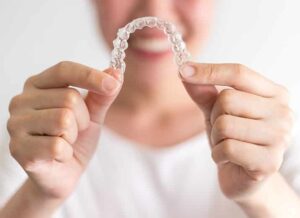
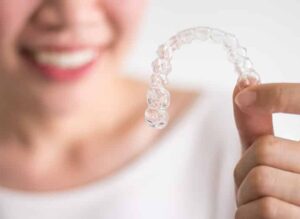
Treatment involves a series of clear, plastic, removable aligners. Patients wear a new aligner every two weeks, and each one moves the teeth a small amount until they reach the final position prescribed by the orthodontist.
Each smile is individually designed by the orthodontist using 3D virtual tooth movement software, which means you can see how your smile should look at the end of treatment before you begin. See Technology.
Comfort and wear
Unlike traditional and lingual orthodontic treatment, the aligners are removable, so comfort is higher. They are worn all the time except when eating. The ADA's rule is slightly wider than that and worth getting right: “The trays should be worn at all times other than when eating and drinking liquids other than water.” Drinks count, because “drinking liquids such as fruit juice or soft drink while wearing clear aligners can trap the liquids against the teeth, which can cause damage to the teeth if it happens frequently.” In practice all of that means 20 to 22 hours a day — see How to protect your aligners and your smile, and What are the hygiene benefits of Invisalign? for what removability does for cleaning.
In most cases, attachments — tooth-coloured “bumps” — are bonded to the teeth to give the smooth aligners mechanical purchase points, permitting more advanced tooth movements than the aligners could achieve on their own.
One thing to raise at the assessment: existing crowns, veneers and bridges do not always accept attachments the way natural enamel does, which can limit which movements are possible. See what types of dental crowns are available? and what does restorative dentistry mean?
Invisalign Teen
Invisalign suits both adults and adolescents. For adolescents, Invisalign Teen is recommended. See Children's Braces & Invisalign, When should I take my child to see an orthodontist? and how long does my child need to wear braces?
On timing, the ADA reports the Australian Society of Orthodontists' recommendation that children have an orthodontic assessment between the ages of 7 and 10, and that all the adult teeth do not have to be present for that assessment to be useful — an examination at that age is what allows early intervention to be considered at all.
Invisalign Teen uses the same aligners but allows for the dynamic nature of the adolescent dentition — extra aligners can be made to allow for tooth loss and eruption. And aligners may be replaced at no extra cost if a patient loses one, which is a sensible allowance for the age group. Confirm the current terms of any such inclusion when you book, since they are set by the practice and the manufacturer and change over time.
What Invisalign costs
No two mouths are the same, so cost varies from person to person and from practice to practice.
At Smile Solutions — a Blue Diamond provider of Invisalign — you have access to specialist orthodontists and competitive pricing. Why should I choose a Blue Diamond Invisalign provider? explains what the designation does and does not mean, and Specialist Orthodontist vs General Dentist: which is best for Invisalign? covers who provides it.
As a rough guide, at the date of writing:
| Treatment | Approximate cost |
|---|---|
| Invisalign i7 | $3,000 |
| Invisalign Lite | $5,200 |
| Invisalign Full | $7,800 |
| Invisalign Teen | $8,500 |
These figures are from 2018 and are not current — see the Price Guide, Invisalign cost in Melbourne: a complete breakdown by treatment type and What is the cost of braces? for the comparison against fixed appliances. How a written plan and quote are put to you before anything starts is covered in understanding your treatment.
Payment plan options are available. Where a plan is advertised as interest free, that describes the plan term only — a deposit may be required, an establishment fee and ongoing account fees may apply, and charges can apply if the balance is not cleared within the agreed period. The applicable terms depend on the provider and the amount financed, and are set out in writing before you commit — ask what the deposit and the establishment fee are, in dollars, and what the total will be by the end. Payment Plans.
Many orthodontic problems can be resolved with Invisalign, but consult an experienced orthodontist to determine whether it is the correct option for you. Not every case is suitable, and the honest assessment is worth more than the convenience. Conventional braces vs lingual braces vs Invisalign sets out what aligners cannot do.
Lingual (invisible) braces
The other route, and it works quite differently.
Lingual braces are cemented behind the teeth, and of the two options they are the one nothing shows on the outside of. The ADA describes them as “stuck to the inside surface of the teeth making them practically invisible” — practically, rather than completely, is the right word for both routes. Of clear aligners the same source is equally direct: “Although the aligners are clear plastic, they are not invisible.”
Unlike traditional treatment, the brackets are custom designed for each tooth of each patient, which facilitates precise and accurate tooth movements. All the wires are pre-bent by computer-controlled robots.
Treatment time is as fast as, and sometimes faster than, traditional braces, because of that improved accuracy. See How long does orthodontic treatment take?.
Treatment is more complicated than traditional braces and should only be performed by a skilled orthodontist with advanced training in lingual orthodontics. That is not a marketing line — working from the tongue side reverses the mechanics and the access, and it is a genuinely different skill. See Orthodontic treatment: general dentist vs specialist orthodontist?.
One limitation worth knowing before you set your heart on it: lingual braces are generally not recommended for patients with a narrow jaw, because they intrude on the tongue space.
Because they are fixed, they carry the cleaning burden that fixed appliances always do — and on the tongue side, where it is harder to see what you have missed. The ADA's advice for anyone in fixed braces is to brush after every meal, because food lodges around the brackets, and it notes that string floss is awkward around an appliance: floss threaders made for braces, or interdental brushes, are the practical substitutes, and an interdental brush cleans between the brackets as well as between the teeth. All your conventional braces questions answered and what are the most common complaints associated with conventional braces? apply in full.
The third route, and why we are not offering it
Search for straight teeth without braces and you will be shown companies that will post you a set of aligners with no in-person examination — direct-to-consumer, or DIY, orthodontics.
The Australian Dental Association does not recommend it. Its objection is not commercial: it states that the risks include permanent damage to teeth, gums and jaw joints, and it recommends instead in-person treatment with a dentist or orthodontist, including a thorough assessment before treatment starts and ongoing supervision while it runs.
Both halves of that matter, and for different reasons. The assessment is what establishes whether the crowding you can see is sitting on periodontal bone loss or untreated decay — which is also why the section below on treating the mouth first exists. The supervision is what catches teeth that are not tracking to the plan before the next aligner goes in. Neither can be done from photographs you took yourself.
Choosing between them
This is where the trade-off is clean.
| Invisalign | Lingual braces | |
|---|---|---|
| Aesthetics | Nearly invisible | More aesthetic — nothing on the outside of the teeth at all |
| Comfort | Higher — removable, smooth | Lower — sits against the tongue |
| Compliance | Required. Success depends on wearing them | Not required. They are cemented on |
That last row is the decisive one.
Lingual braces do not rely on patient compliance. Invisalign requires a high level of compliance to wear the aligners, and without it the treatment does not progress.
When deciding which is ideal, an orthodontist considers the age of the patient, the severity of the malocclusion, patient compliance and patient expectations. Both Invisalign and invisible braces can successfully treat the majority of malocclusions — so the choice is rarely about capability, and usually about which failure mode you are more likely to run into. See How do I know which orthodontic treatment is best for me?.
Be honest with yourself about the compliance question before you choose. It is the single best predictor of whether aligner treatment will work for you.
Before treatment starts
Orthodontics does not begin on an unhealthy mouth. Active decay and gum inflammation are treated first, because teeth are moved through bone that has to be healthy to respond. See what is the ideal daily routine for oral hygiene?, is flossing really that important?, what is gum disease?, when do you need deeper cleaning? and Dental Cleans & Hygienists.
What happens at the end
Whichever route you take, retainers hold the result, because teeth keep moving through life with or without treatment. See Will my teeth need retainers after I've had braces? and why do teeth shift?
With the range of treatments now available, crooked teeth no longer have to be accepted as permanent — and being unwilling to wear visible braces is no longer a reason to go untreated.
Common questions
The page says orthodontics can help with sleep apnoea. Does straightening my teeth treat it?
This needs unpicking, because two different things get run together and the distinction matters a great deal.
The ADA's consumer statement quoted above is real, and it is broad. But orthodontic alignment and oral appliance therapy for sleep-disordered breathing are different treatments, and the ADA's separate policy on sleep-disordered breathing sets out the rules for the second one.
First, nobody in a dental chair diagnoses it. That policy states that "initial diagnosis of Sleep Apnoea must be made by an appropriate medical practitioner", and that both the initial diagnosis and the prescription of therapy sit with medicine, not dentistry. The RACGP's guidance for GPs reinforces how that pathway works: a screening questionnaire result "by itself does not confirm a diagnosis of OSA, and the patient should proceed to sleep study testing".
Second, where dentistry does have a role, it is a specific one. The ADA policy says "dentists are the only dental practitioners who are qualified to manage oral appliance therapy" for sleep-disordered breathing, that oral appliances can be a first-line therapeutic option for adults with snoring and mild to moderate obstructive sleep apnoea, and that they may also be indicated for people with severe OSA who are not compatible with CPAP therapy. That is appliance therapy — not the aligners or braces described on this page.
Third, there is a caution that runs the other way, and it is directly relevant to anyone reading an orthodontics page: the policy states that where oral appliances are used long term, "monitoring of the patient's temporomandibular joint function and orthodontic movement of teeth is essential". Appliance therapy can move teeth as a side effect.
So: if you snore, or someone has told you that you stop breathing at night, that is a conversation to start with your GP, and it is worth having whether or not you go ahead with orthodontics. Do not choose an orthodontic appliance expecting it to treat a breathing problem. See Snoring & Sleep Apnoea.
Do I really need X-rays before orthodontic treatment?
Generally yes, because the things that determine whether a plan is safe are not visible in the mouth — the position of unerupted teeth, the level of the bone holding the teeth in, and anything unexpected in the jaws.
On dose, the International Atomic Energy Agency publishes typical effective doses for dental imaging: intraoral procedures 1–8 μSv, panoramic examinations 4–30 μSv, and CBCT at or below 50 μSv for small- or medium-sized scanning volumes, around 100 μSv for large volumes. It also supplies the comparison most people want: intraoral doses are "usually less than one day of natural background radiation", and panoramic doses even at the high end are "equivalent to a few days of natural background radiation, which is similar to that of a chest radiograph". CBCT is the outlier — it varies widely and sits materially higher, which is why it is not a routine orthodontic image.
The principle that matters more than any of those numbers is justification: each image must be justified for you, now, on the grounds that it will change a decision. You are entitled to ask why this image, what it will show, and what would change depending on the answer — and a clear answer to that question is a good sign about the plan generally. See How safe are dental X-rays?
My gums bleed when I brush. Does that stop me having orthodontics?
It does not rule it out, but it has to be dealt with first, and it is worth understanding what the bleeding means. NSW Health's dental guidance defines the two stages: gingivitis is "a preventable, reversible inflammation of the gingivae (gums) caused by poor oral hygiene" that "results in gingival tissues that bleed very easily when brushed"; periodontal disease is what happens when that "has progressed to involve the deeper soft tissues and supporting alveolar bone", and critically it "usually progresses without symptoms".
Read together, those two sentences explain the sequence used on this page. Bleeding is the reversible stage announcing itself; the stage that destroys the bone teeth are moved through is the quiet one. Orthodontics applies force to teeth held in that bone, so the state of the bone is not a detail — it is the foundation of the plan.
This is also the substance behind the ADA's insistence on "a thorough assessment before starting treatment" rather than a mail-order set of aligners. A photograph shows crowding. It does not show bone level, and it does not show a pocket.
Practically: report the bleeding rather than brushing around it, and expect a hygiene phase and possibly periodontal treatment before anything is fitted. See Bleeding Gums, what is periodontal disease? and Periodontists.
How do I check my orthodontist's registration, and does "advanced training in lingual orthodontics" appear on it?
The first part is easy and free. The Dental Board of Australia recognises thirteen dental specialties, approved by the Australian Health Workforce Ministerial Council, and orthodontics is one of them. Specialist registration is separate from general registration as a dentist: an applicant must meet every requirement for general registration and have completed a minimum of two years of general dental practice, with the specialty training on top of that.
AHPRA publishes a public online register showing every registered dental practitioner in Australia, their current registration status, and which specialty or specialties they hold. If a provider's own description and the register disagree, the register is the answer. You can also check by phone on 1300 419 495. See Dentists & Registered Specialists and Our Team.
The second part is where to be careful. "Advanced training in lingual orthodontics" is not a registration category — the register will show orthodontics, not a lingual sub-specialty, because no such sub-specialty exists in the Dental Board's list. That does not make the training meaningless; it means it is a course of study rather than a regulated title, and the way to assess it is to ask directly: what training, with whom, and how many lingual cases have you completed? The register tells you the person is a registered specialist orthodontist. Everything beyond that you have to ask about.
How will I be told whether my case can actually be done with aligners?
By assessment, and — honestly — not by anything published that you can check yourself in advance.
The ADA's consumer guidance lists what orthodontic treatment addresses: crooked or crowded teeth, incorrect biting patterns, severe misalignment of teeth and/or jaws, and past habits such as thumb sucking that have affected tooth position and jaw development. It also says that "your dentist or orthodontist will advise you if clear aligners are suitable for your individual situation." What it does not do — and nor does any independent Australian source in the reference material behind this page — is publish a threshold that separates the cases aligners can treat from the cases that need fixed appliances.
That absence is worth naming rather than papering over. There is no published rule you can measure yourself against, so a provider who tells you over the internet that your case is suitable is telling you something they cannot know, and a provider who declines a case in person is exercising judgement rather than applying a table.
What you can reasonably ask for is the reasoning: which specific movements your case needs, which of them the proposed appliance does well, which it does poorly, and what the plan is if the teeth do not track. That conversation is the same one the ADA describes as ongoing supervision, brought forward to the start. See Conventional braces vs lingual braces vs Invisalign.
Related reading
- Conventional braces vs lingual braces vs Invisalign
- How do I know which orthodontic treatment is best for me?
- Exploring Invisalign
- How long does orthodontic treatment take?
- Specialist Orthodontists
Practical details
The statements attributed to the Australian Dental Association on this page come from its consumer article on teeth straightening and braces, published at teeth.org.au, and from ADA Policy Statement 6.19 on sleep-disordered breathing. The diagnostic pathway for obstructive sleep apnoea is from the Royal Australian College of General Practitioners; the gum-disease definitions from the NSW Health Agency for Clinical Innovation's dental guidance; the dental imaging doses from the International Atomic Energy Agency; and the thirteen recognised dental specialties and two-year general practice requirement from the Dental Board of Australia. Everything else is our own clinical guidance.
Written by Dr David Austin. Booking a consultation: Complimentary Orthodontic Consultation. Confirm the current terms when you book — what the appointment includes, whether records such as scans or radiographs are part of it or charged separately, and whether any deposit applies.
Smile Solutions, Level 1, 220 Collins Street, Manchester Unity Building, Melbourne VIC 3000 — getting here. Phone 13 13 96, or theteam@smilesolutions.com.au. Monday–Friday 8.00am–6.00pm, Saturday 8.30am–1.30pm, Sunday by appointment. Full details on Contact Us.
Specialist registration can be verified on the AHPRA register, or by calling 1300 419 495; the clinicians are listed on Our Team.
Published 13 October 2018. Prices and usage figures are as at that date and are indicative, not a quote — confirm current fees with the practice. Payment plan terms are set by the credit provider and change; confirm current terms directly before you commit. Suitability, treatment time and results vary between individuals, and orthodontic treatment carries risks that should be discussed with your clinician. General information only; it does not replace advice from your treating practitioner.
Smile Solutions trades under ABN 28 193 514 103.
Images on This Page
-
https://www.facebook.com/tr?id=800557773428361&ev=PageView&noscript=1
(no alt text)
-
https://www.smilesolutions.com.au/wp-content/uploads/2025/10/calendar_month.svg
(no alt text)
-
https://www.smilesolutions.com.au/wp-content/themes/arcadian-wordpress-theme/assets/images/smile_solutions_logo_white.png
Smile Solutions Logo
-
https://www.smilesolutions.com.au/wp-content/themes/arcadian-wordpress-theme/assets/images/smile_solutions_logo_purple.png
Smile Solutions Logo
-
https://www.smilesolutions.com.au/wp-content/uploads/2016/05/David-150x150.jpg
Dr David Austin
-
https://www.smilesolutions.com.au/wp-content/uploads/2025/11/Invisalign-at-Smile-Solutions-1.png
How to get straight teeth without braces? Or Invisalign
-
https://www.smilesolutions.com.au/wp-content/uploads/2025/09/Invisalign-No-Braces-1-300x218.jpg
Invisalign No Braces 1
-
https://www.smilesolutions.com.au/wp-content/uploads/2025/09/orthodontics-invisalign-300x219.jpg
orthodontics invisalign
-
https://www.smilesolutions.com.au/wp-content/uploads/2025/09/Root-Canal-2-300x217.jpg
Root Canal
-
https://www.smilesolutions.com.au/wp-content/uploads/2023/11/SS-Tooth-1-1-150x150.png
Smile Solutions
-
https://www.smilesolutions.com.au/wp-content/themes/arcadian-wordpress-theme/assets/images/family_owned_bussiness.png
Family Owned Business
-
https://www.smilesolutions.com.au/wp-content/themes/arcadian-wordpress-theme/assets/icons/icon--phone.svg
Smile Solutions Contact
-
https://www.facebook.com/tr? id=800557773428361&ev=PageView&noscript=1
(no alt text)
-
https://bat.bing.com/action/0?ti=25148060&tm=gtm002&Ver=2&mid=bd171f2f-3c28-45e3-8212-b85b0b3194c4&bo=1&sid=fd2028f0ab2611f199ee4d27ef62d4b0&vid=fd204830ab2611f18e1027fd4762f46c&vids=1&msclkid=N&pi=918639831&lg=en-US&sw=800&sh=600&sc=24&nwd=1&tl=How%20to%20get%20straight%20teeth%20without%20braces%3F%20Or%20Invisalign%20-%20Smile%20Solutions&p=https%3A%2F%2Fwww.smilesolutions.com.au%2Fdental-articles%2Farticle%2Finvisalign-straight-teeth-without-braces%2F&r=&evt=pageLoad&sv=2&cdb=AQAQ&rn=138157
(no alt text)