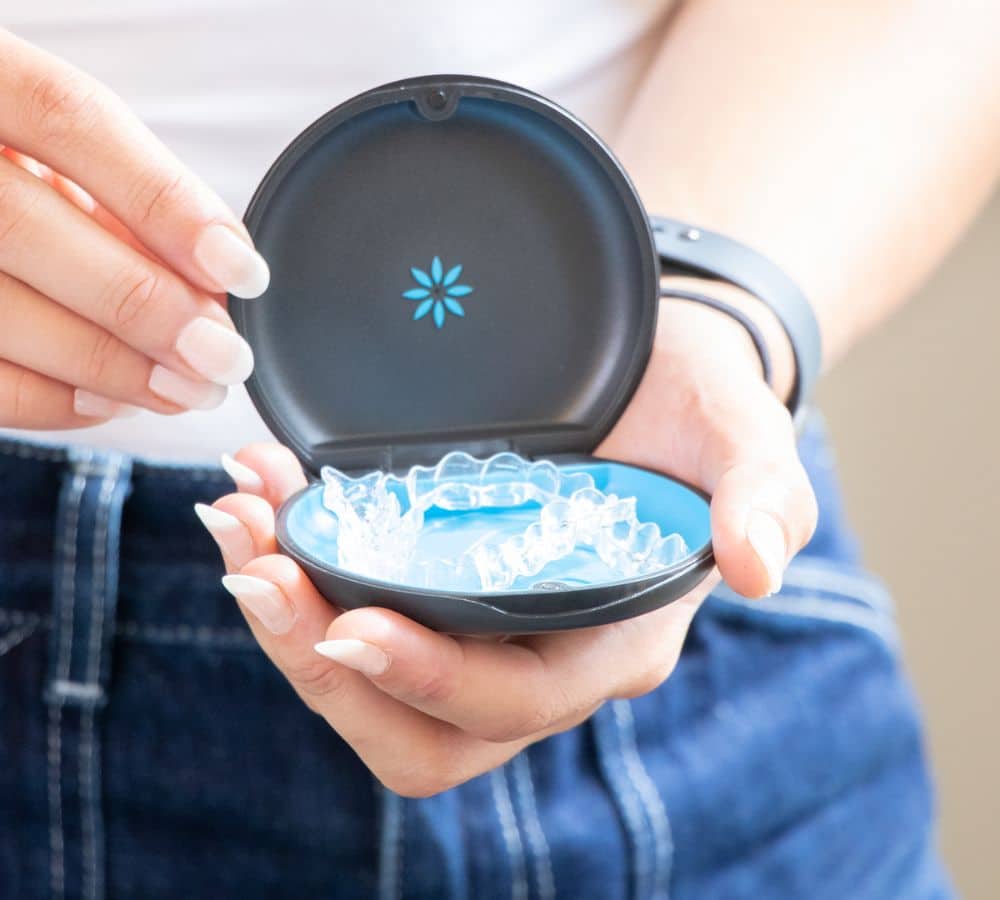
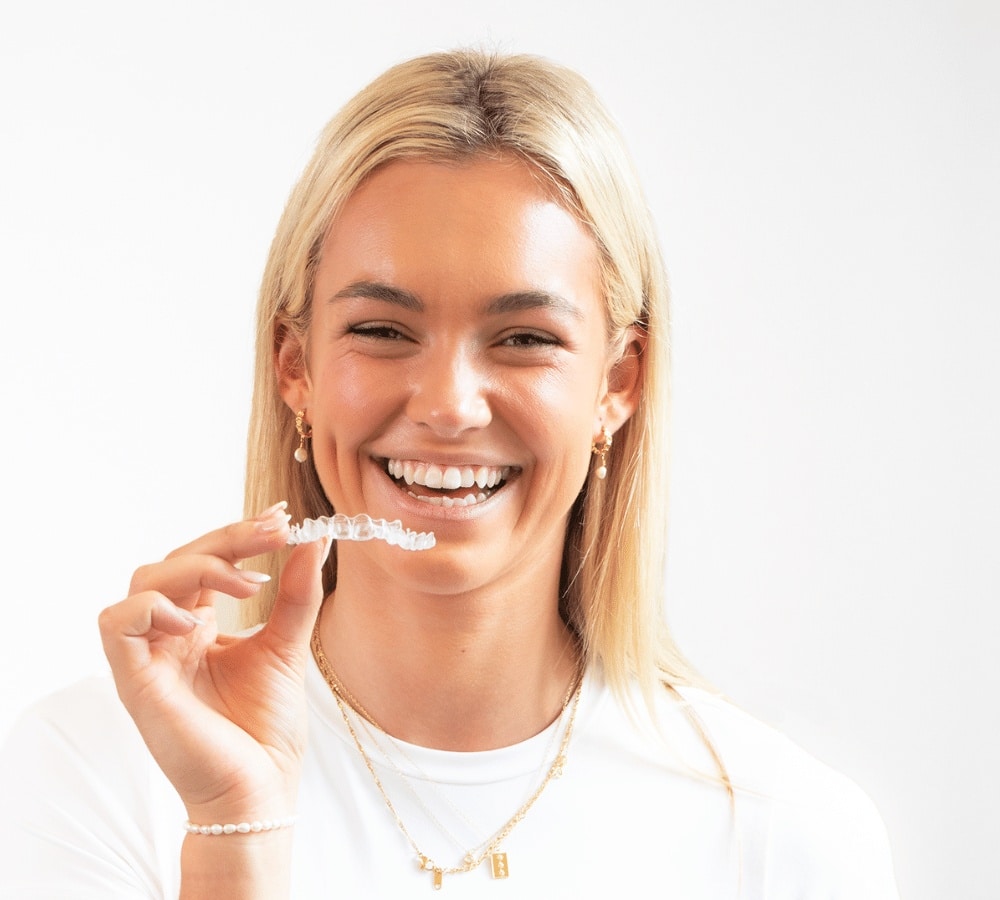
Invisalign cost in Melbourne, by treatment type
Why the quotes vary so much
If you research Invisalign in Melbourne you will see prices from around $2,500 to $9,500 and reasonably wonder how the same product varies that much.
The answer is that “Invisalign” is not a single treatment. It is a system with several product tiers designed for different levels of case complexity, and the tier you need determines a large part of your cost.
The ranges in this article are indicative 2026 Melbourne market figures, not a quote. Smile Solutions' own published prices are set out further down, and they are different — your case still has to be assessed before anyone can give you a number.
The treatment tiers
Invisalign Express — up to 7 aligners
Cost: $2,500 – $4,500
Best for: very minor crowding, slight relapse after previous orthodontics, single-arch minor adjustments
Treatment time: 3 to 6 months
Includes limited refinement aligners.
Invisalign Lite — up to 14 aligners
Cost: $4,000 – $6,000
Best for: mild to moderate crowding, minor spacing, simple alignment issues
Treatment time: 6 to 12 months
Includes one set of refinement aligners.
Invisalign Moderate — up to 26 aligners
Cost: $5,500 – $7,500
Best for: moderate crowding, spacing, some bite correction
Treatment time: 12 to 18 months
Includes refinement aligners.
Invisalign Comprehensive — unlimited aligners
Cost: $6,500 – $9,500
Best for: complex crowding, significant bite issues, extraction cases, severe spacing
Treatment time: 12 to 24+ months
Includes unlimited refinement aligners for up to five years.
The tier limits are aligner counts, and that is the thing to understand. Express is cheaper because it is capped at seven aligners — not because it is a lesser version of the same treatment. If your case needs 30 aligners, no amount of shopping puts it in the Express price bracket.
What Smile Solutions actually charges
The ranges above are market figures for Melbourne generally. They are not this practice's prices. Smile Solutions publishes a fixed price for each tier on Invisalign:
| Tier | Smile Solutions price |
|---|---|
| Express | $4,900 |
| Lite | $8,300 |
| Moderate | $10,100 |
| Comprehensive | $11,800 |
Each of these sits above the top of the corresponding market range quoted above. Two things account for much of the gap, and both are worth checking when you compare quotes elsewhere:
- Every tier is delivered by a specialist orthodontist, not a general dentist. Compare against the specialist row in the provider table below rather than the general-dentist row.
- The published price bundles items that some quotes exclude — diagnostics and a personalised treatment plan including an Invisalign simulation (valued at $300), rebate-only OPG and lat ceph X-rays (valued at $255), and removable and/or fixed retainers (valued at up to $950).
A $100 consultation fee applies if you book straight in with a specialist orthodontist, and it is not included in the treatment price. The complimentary consultation with a treatment coordinator is a discussion only — it does not include a check-up, X-rays, scans or any treatment — and a $50 refundable deposit secures it. Confirm the current terms when you book — what the appointment includes, whether records such as scans or radiographs are part of it or charged separately, and whether any deposit applies.
In-chair or take-home whitening is included at the end of treatment for plans paid in full or on a payment plan with a deposit of $2,000 or more. Pay-in-full, Payright and My Denta Plan options are listed on the Invisalign page. Replacement aligners, if you lose a set, are $100 per set.
What a quote should include
These prices typically cover the full treatment. Always confirm exactly what is included in any quote you receive.
A comprehensive quote covers:
- Initial records — digital scans (iTero), photographs, and possibly X-rays
- ClinCheck treatment plan — a 3D digital simulation of the planned movements from start to finish
- All aligner sets, including refinements if fine-tuning is needed after the initial series
- Attachments — tooth-coloured bumps bonded to certain teeth so the aligners can grip and move them effectively
- IPR (interproximal reduction) — gentle reshaping between teeth to create space, if needed
- Retainers — usually one set of Vivera retainers
- All review appointments — typically every 6 to 8 weeks throughout treatment
Where the money hides
Watch for quotes that exclude:
- Retainers — $500 to $800 separately
- Refinement aligners
- Attachment placement and removal
- X-rays and initial records
- A separate “treatment planning fee”
A low headline price that excludes several of these can cost more than a higher all-inclusive quote. The only way to compare two quotes honestly is to make both practices list the same seven items.
One of these deserves emphasis. Retainers are not optional. Teeth relapse without them, and relapse means paying for the treatment twice. A quote that excludes retainers is excluding a mandatory part of the treatment, not an upgrade. Nor are they a one-off — they wear out and get lost, and replacement is an ongoing cost for as long as you want the result to hold.
Why prices differ between clinics
1. Provider experience
Invisalign categorises providers by case volume: Bronze, Silver, Gold, Platinum, Diamond and Apex. Higher-tier providers treat more cases annually, which generally means more experience with complex situations.
This matters because the aligners are tools. The treatment plan is where clinical skill shows — which teeth move when, how much force to apply, where to place attachments. The same product in different hands does not produce the same result.
Provider tier is a volume measure, not a clinical qualification, and it is set by the manufacturer. Specialist registration is the separate thing, and it can be checked free on the AHPRA register or on Our Team.
2. General dentist or specialist orthodontist
This is the most significant factor in both cost and outcome.
| Typical cost | ||
|---|---|---|
| General dentist | $4,000 – $7,000 | Many deliver excellent results, particularly for straightforward cases |
| Specialist orthodontist | $5,500 – $9,500 | Three additional years of full-time postgraduate training in tooth movement, jaw development and bite correction |
The difference matters most in complex cases. If you have a significant overbite, underbite, crossbite or open bite alongside crowding, an orthodontist is trained to address the bite relationship as well as the alignment. Where the jaws themselves are the problem rather than the teeth, that is jaw surgery territory, planned with an oral and maxillofacial surgeon.
The failure mode worth naming: a general dentist may straighten the teeth beautifully and leave the underlying bite issue inadequately treated. Straight teeth in a bad bite still wear unevenly and still load the joint badly — see TMD and Teeth Grinding.
We have specialist orthodontists on the clinical team. Experienced general dentists handle simple alignment cases; complex bite corrections go to the orthodontists.
3. Practice overheads and technology
Clinics with advanced scanning (iTero Element 5D), dedicated orthodontic teams and comprehensive monitoring invest significantly in the experience. That shows in pricing, and in the predictability of results.
Invisalign compared with braces
Cost is broadly comparable for equivalent complexity. The decision usually comes down to lifestyle, compliance, and the clinical requirements of your case.
| Option | Cost | Notes |
|---|---|---|
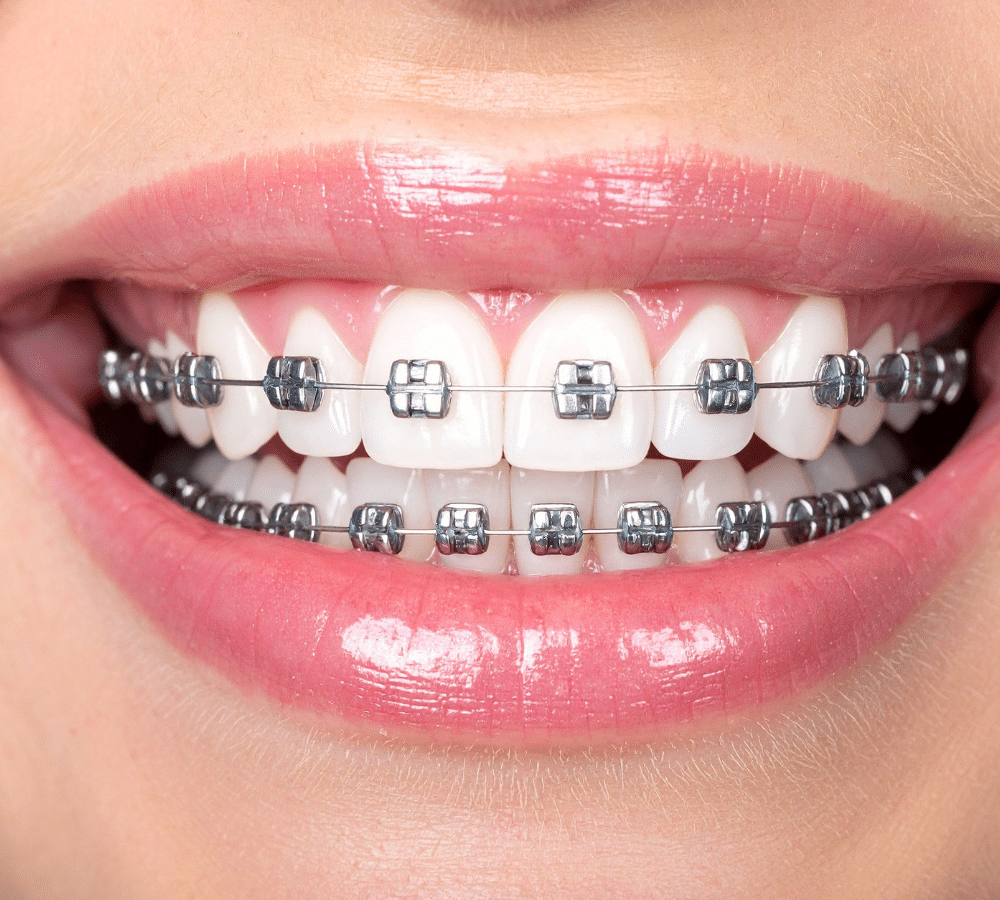
| Metal braces | $5,000 – $8,000 | Most effective for complex cases. Visible, fixed, dietary modifications, adjustments every 4–6 weeks |
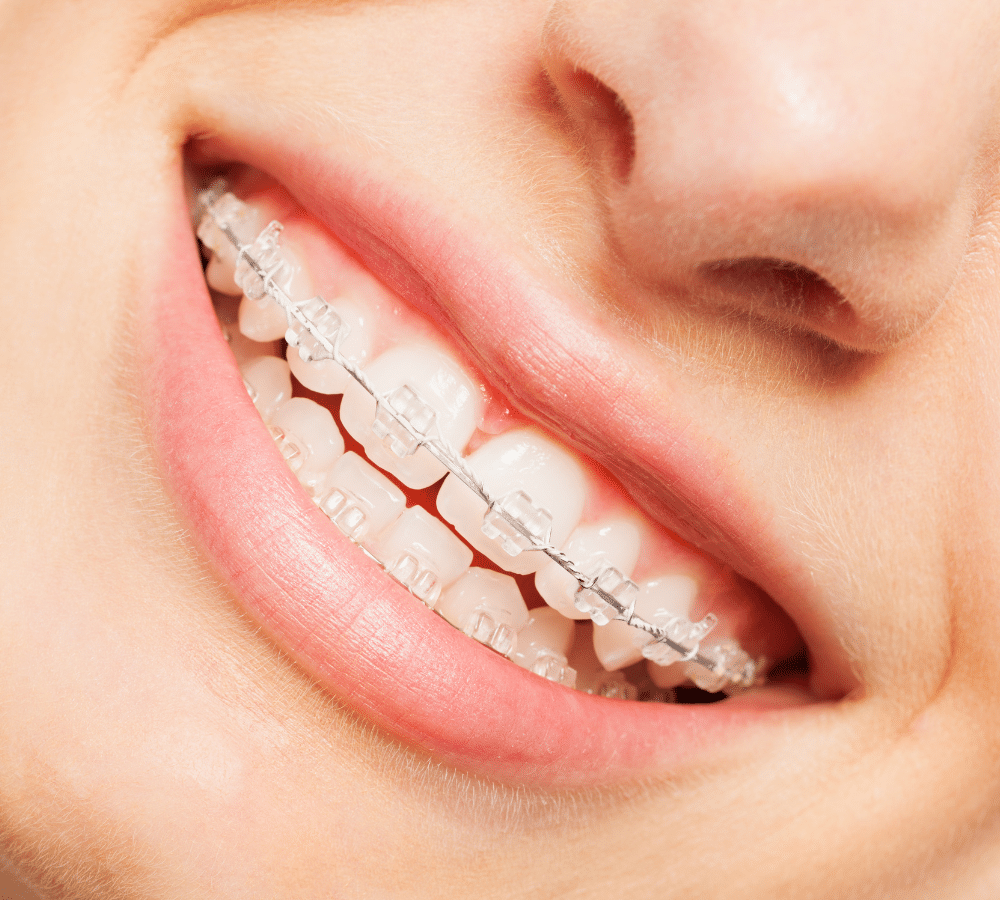
| Ceramic braces | $6,000 – $9,000 | Tooth-coloured; the ADA describes them as not completely invisible but less obvious than metal braces. Slightly more fragile than metal; similar capability |
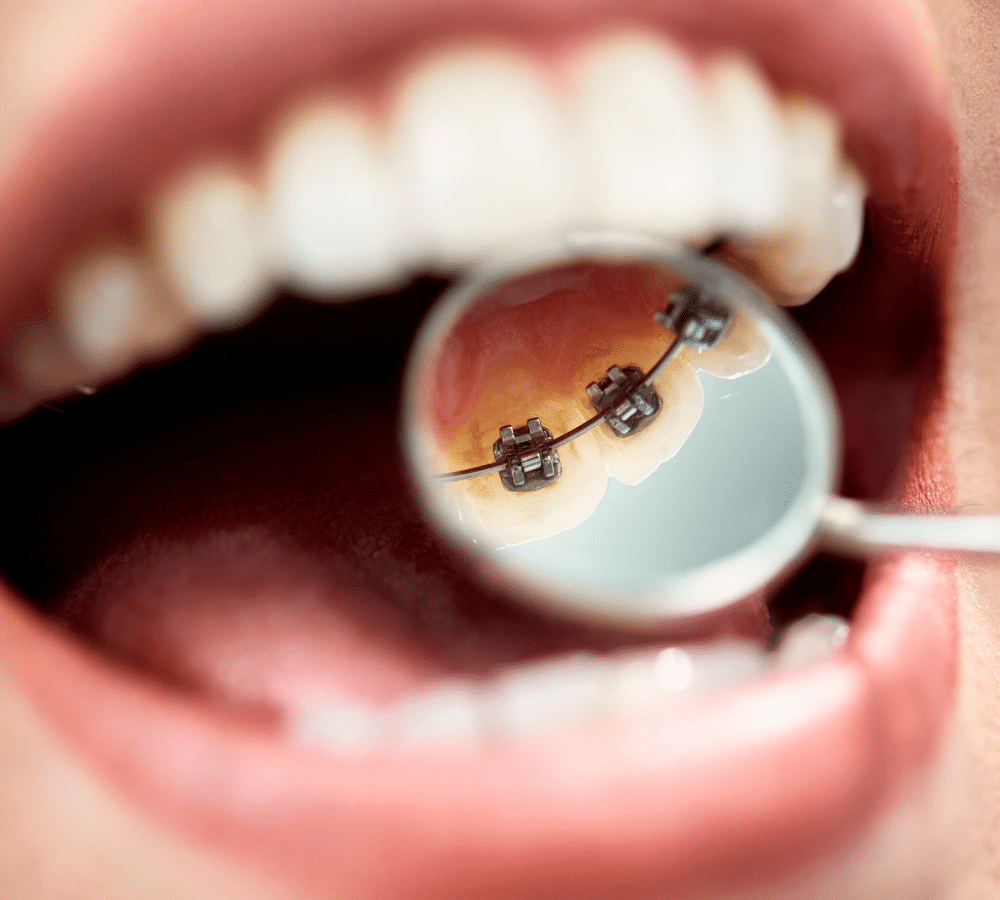
| Lingual braces (behind the teeth) | $8,000 – $13,000 | Fixed to the inside surface of the teeth, which the ADA describes as making them practically invisible; can affect speech initially; limited provider availability |
| Invisalign | $2,500 – $9,500 by tier | Removable for eating, brushing and flossing; nearly invisible; requires 20–22 hours per day wear |
The compliance line is the real difference. Braces work whether or not you cooperate, because you cannot take them out. Invisalign only works if you actually wear it — which suits some people and genuinely does not suit others. That is worth being honest with yourself about before choosing. See What is the cost of braces?, Which orthodontic treatment is best for me? and, for the cleaning advantage, Hygiene benefits of Invisalign.
Health fund coverage
Orthodontic cover behaves differently from other dental benefits.
Under 18:
- Many extras policies include orthodontic benefits
- Typical fund contribution: $1,000 – $2,500 over the lifetime of treatment
- 12 to 24-month waiting periods usually apply
- Some funds pay in instalments across the treatment period
Adults (18+):
- Orthodontic cover is less common in adult extras policies
- Where available, contributions are typically $500 – $1,500
- Check whether your policy specifically covers adult orthodontics — many exclude it
- Some funds cover Invisalign under “major dental” rather than “orthodontics”, with different benefit amounts
Maximising your benefit:
- Get pre-approval from your fund before starting
- If you are near the end of a benefit year, you may be able to claim part in one year and the remainder in the next, accessing two years of benefits
- Claims are processed on the spot through HICAPS
Note the phrase “over the lifetime of treatment”. Orthodontic benefits are usually a lifetime limit, not an annual one — which is why the second point above is worth planning around, and why using orthodontic benefit on a minor case can leave nothing for a later one.
The Child Dental Benefits Schedule does not cover orthodontics at all, for any eligible child — see Child Dental Benefits Schedule. For treatment timing in children, see Children's Braces and Invisalign and When should I take my child to an orthodontist?.
Payment options
- Payment plan options spreading the cost across the treatment period. The deposit, establishment fee, term and any default interest depend on the provider and the amount financed, and are set out in writing before you commit — ask what the establishment fee is in dollars, and what the deposit is for your tier, since a plan advertised as interest free can still carry fees. The plans currently offered are on Payment Plans and on Invisalign.
- Health fund claims processed on the spot
- Monthly payment options aligned with your treatment timeline
- Upfront payment may attract a small discount at some practices
Spread over 12 to 24 months, the monthly figure is often more manageable than the headline number suggests — though the total you will have paid by the end is the number to compare, not the monthly one. Patient payment plans explains what to check in the terms.
The cost of not treating it
Orthodontic treatment is not purely cosmetic. Untreated misalignment carries its own costs:
Increased decay risk — crowded teeth create areas that are difficult to clean, leading to more fillings and potentially crowns over time.
Gum disease — misalignment contributes to uneven forces and cleaning difficulty, raising periodontal risk. See Bleeding Gums.
Tooth wear — teeth that do not meet properly wear unevenly, potentially requiring crowns, veneers or other restorative work.
TMJ problems — bite problems can contribute to jaw pain, headaches and temporomandibular joint dysfunction.
Ongoing dental costs — well-aligned teeth are generally cheaper to maintain over a lifetime.
This is a reason to consider treatment, not a reason to rush it. These are risks, not certainties, and whether they apply to your particular bite is a clinical question. Is having Invisalign as an adult worth it? weighs the same argument for adults.
What happens at the consultation
- Clinical examination of your teeth, gums and bite
- Digital iTero scan — a 3D scan, no impression material
- Outcome simulation — many cases can see a digital preview of the expected result at the first appointment
- Treatment plan discussion — which tier is appropriate, estimated time, total cost
- Health fund and payment plan information for your situation
You leave with what you need to decide, with no pressure to proceed on the day.
The simulation is a plan, not a promise. Teeth do not always track to the model, refinement aligners are common, and no particular result can be guaranteed.
Common questions
Why not just order aligners online for a fraction of this?
Because the thing you would be skipping is the part that carries the clinical risk, and the Australian Dental Association does not recommend it. Its consumer guidance on teeth straightening names the practice — companies that "provide tooth straightening treatments directly to you without having to visit a dentist or orthodontist", usually called do-it-yourself or direct-to-consumer orthodontics — and states plainly that "the ADA do not recommend Australians have DIY orthodontic treatment."
The harms it lists are not cosmetic. "There are many risks to this treatment. They can lead to permanent damage to your teeth, gums, and jaw joints."
What the ADA recommends instead is specific, and it is two separate things rather than one: "in-person treatment with a dentist or orthodontist which includes a thorough assessment before starting treatment and ongoing supervision." The assessment matters because crowding can sit on top of untreated decay or periodontal bone loss that a photograph cannot show; the supervision matters because aligner treatment is a planned sequence, and someone has to confirm the teeth actually went where the plan said before the next tray goes in.
The financial point is worth stating too. The risk with a cheap course is not that it costs less — it is that a poor outcome has to be corrected, and correcting orthodontics is usually more expensive than doing it once. See Second Opinions & Corrective Dentistry.
Does a higher price mean better treatment?
Not on its own, and it is worth knowing how dental pricing actually works in Australia before reading anything into a number. There is no national scale of dental fees. The Australian Dental Association instead runs a periodic survey that describes what its members in private practice actually charge. Its 2022 survey — fees as at 1 July 2022, drawn from 3,819 valid responses out of 11,035 dentists invited, of whom 3,535 were general practitioners and 284 specialists — found considerable variation in the fees charged both within and between states.
Two findings from that survey bear on this page specifically. Across the 122 items surveyed, general practitioner fees rose on average 3.7% in the two years from 1 July 2020, and the largest increase of any category was orthodontics, at 6.9% — so orthodontic pricing has been moving faster than dentistry generally. And on specialist pricing, a fifth (20%) of responding specialists charged an hourly rate, with a mean of $921 in 2022 (up from $662 in 2020), a median of $800, and a range between $450 and $1,500 per hour. The ADA cautions that the specialist sample was small and should be interpreted with considerable caution.
So price tells you about the market, not about the outcome. What a price difference can legitimately reflect is scope — which tier, who is delivering it, and which of the seven items listed above are inside the number. That is why the comparison method on this page is to make both practices itemise, rather than to rank the totals.
How do I check that someone really is a specialist orthodontist?
Free, online, in about a minute — and it is worth doing, because "specialist" is a protected term with a specific meaning rather than a description anyone may adopt.
The Dental Board of Australia recognises thirteen dental specialties, approved by the Australian Health Workforce Ministerial Council, and orthodontics is one of them. Registration in a specialty is a separate registration from general registration as a dentist: beyond meeting every requirement for general registration, an applicant for specialist registration must also have completed a minimum of two years of general dental practice, with the specialty training on top of that.
AHPRA publishes a public online register of every registered dental practitioner in Australia, showing current registration status and, for those who hold it, which specialty or specialties they are registered in. If a provider's own description of themselves and the register do not agree, the register is the answer. You can also verify by phone on 1300 419 495.
Keep that separate from the manufacturer's provider tiers described above. Bronze through Apex is a case-volume category set by the aligner company; specialist registration is a regulatory status set by the Dental Board. Neither substitutes for the other. See Dentists & Registered Specialists and Our Team.
My child has crooked teeth. Should we wait until all the adult teeth are through?
No — and that is the single most common misunderstanding about timing. The ADA, citing the Australian Society of Orthodontists, recommends that children have an orthodontic assessment between the ages of 7 and 10, and is explicit that "all the adult teeth do not have to be present in the mouth for an assessment to be done." Its reasoning: "an examination at this age can allow for early intervention treatment should it be needed."
An assessment is not a commitment to treatment. In many cases the answer is to review again later. What it buys is the chance to catch the situations where acting early is easier than acting late — and the ADA notes that orthodontic treatment addresses more than appearance: crooked or crowded teeth, incorrect biting patterns, severe misalignment of teeth or jaws, and the effects of past habits such as thumb sucking. It adds that treatment "can correct a bad biting pattern, help with sleep apnoea, and prevent uneven wear of the teeth."
On the money: as noted above, the Child Dental Benefits Schedule does not cover orthodontic work — Services Australia lists orthodontic and cosmetic dental work, and any dental services in a hospital, among the services it will not cover. The CDBS does cover check-ups, X-rays, cleaning, fissure sealing, fillings, root canals and extractions for eligible children, up to $1,158 per child over two consecutive calendar years. So the assessment pathway and the funding pathway are different conversations. See When should I take my child to an orthodontist?
Is it worth paying for aligners rather than braces?
Only if you will wear them, and that is a question about your habits rather than your teeth.
The ADA's instruction on clear aligners is stricter than most people expect: "the trays should be worn at all times other than when eating and drinking liquids other than water." It also warns about what happens when that is ignored: "drinking liquids such as fruit juice or soft drink while wearing clear aligners can trap the liquids against the teeth, which can cause damage to the teeth if it happens frequently." An appliance that seals your teeth for twenty hours a day is an advantage when the teeth underneath are clean and a liability when they are not.
One expectation to set before spending the money: the ADA also notes that "although the aligners are clear plastic, they are not invisible." Much less obvious than metal brackets, certainly. Undetectable, no.
What aligners genuinely buy you, on the ADA's own account, is ordinary hygiene: with clear aligner treatment "your teeth can be brushed and flossed as normal", where braces need floss threaders or interdental brushes and brushing after every meal. That advantage is real and it is entirely conditional on taking them out and cleaning properly before they go back in. See How to protect your aligners and your smile and Hygiene benefits of Invisalign.
Where to go next
- What aligner treatment involves, and the current tier prices — Invisalign
- The fixed alternative — Braces, Orthodontics
- Is it worth it as an adult? — Is having Invisalign as an adult worth it?
- For a child or teenager — Children's Braces and Invisalign
- The specialists — Orthodontists
- Paying for it — Payment Plans
Practical details
Smile Solutions, Level 1, 220 Collins Street, Manchester Unity Building, Melbourne VIC 3000. Phone 13 13 96, or theteam@smilesolutions.com.au. Monday–Friday 8.00am–6.00pm, Saturday 8.30am–1.30pm, Sunday by appointment. Full details on Contact Us.
Specialist registration can be verified on the AHPRA register, or by calling 1300 419 495.
Statements attributed to the Australian Dental Association come from its consumer article on teeth straightening and braces, published at teeth.org.au, and from its Dental Fees Survey 2022. The thirteen recognised dental specialties and the two-year general practice requirement are from the Dental Board of Australia's specialist registration information; the Child Dental Benefits Schedule details from Services Australia.
Published 23 July 2026. Market ranges are indicative Melbourne figures at that date, not a quote. Smile Solutions' own tier prices are as published on Invisalign and are subject to change — confirm the current figure when you book. Offers, inclusions and payment plan terms are subject to their own conditions, which are set out before you commit; confirm them directly. Suitability, treatment time and results vary between individuals, no particular result is guaranteed, and orthodontic treatment carries risks that should be discussed with your clinician before you consent. General information only; it does not replace advice from your treating practitioner.
Smile Solutions trades under ABN 28 193 514 103.
Images on This Page
-
https://www.facebook.com/tr?id=800557773428361&ev=PageView&noscript=1
(no alt text)
-
https://www.smilesolutions.com.au/wp-content/uploads/2025/10/calendar_month.svg
(no alt text)
-
https://www.smilesolutions.com.au/wp-content/themes/arcadian-wordpress-theme/assets/images/smile_solutions_logo_white.png
Smile Solutions Logo
-
https://www.smilesolutions.com.au/wp-content/themes/arcadian-wordpress-theme/assets/images/smile_solutions_logo_purple.png
Smile Solutions Logo
-
https://www.smilesolutions.com.au/wp-content/uploads/2023/11/SS-Tooth-1-1-150x150.png
Smile Solutions
-
https://www.smilesolutions.com.au/wp-content/uploads/2026/01/Invisalign.jpg
Invisalign Cost in Melbourne: A Complete Breakdown by Treatment Type
-
https://www.smilesolutions.com.au/wp-content/uploads/2025/09/Smile-Solutions-Braces.png
Traditional braces Smile Solutions Specialist Orthodontist
-
https://www.smilesolutions.com.au/wp-content/uploads/2025/09/Clear-Braces-Smile-Solutions.png
Clear Braces Smile Solutions Specialist Orthodontist
-
https://www.smilesolutions.com.au/wp-content/uploads/2025/09/Lingual-Braces-Smile-Solutions.png
Internal Lingual Braces
-
https://www.smilesolutions.com.au/wp-content/uploads/2025/12/Invisalign-at-Smile-Solutions-1.jpg
Melbourne' Largest Specialist Provider of Invisalign
-
https://www.smilesolutions.com.au/wp-content/uploads/2025/09/Root-Canal-2-300x217.jpg
Root Canal
-
https://www.smilesolutions.com.au/wp-content/uploads/2026/08/Mouth-Breathing-300x270.jpg
Mouth Breathing
-
https://www.smilesolutions.com.au/wp-content/uploads/2025/09/Dental-Crown-at-Smile-Solutions-300x300.jpg
Dental Crown at Smile Solutions
-
https://www.smilesolutions.com.au/wp-content/themes/arcadian-wordpress-theme/assets/images/family_owned_bussiness.png
Family Owned Business
-
https://www.smilesolutions.com.au/wp-content/themes/arcadian-wordpress-theme/assets/icons/icon--phone.svg
Smile Solutions Contact
-
https://www.facebook.com/tr? id=800557773428361&ev=PageView&noscript=1
(no alt text)
-
https://bat.bing.com/action/0?ti=25148060&tm=gtm002&Ver=2&mid=92acfbc9-e331-4f19-a058-fffd7aef8256&bo=1&sid=299f7a50ab2711f181079bf28757f24b&vid=299fa160ab2711f1a6f373b2fbfce363&vids=1&msclkid=N&pi=918639831&lg=en-US&sw=800&sh=600&sc=24&nwd=1&tl=Invisalign%20Cost%20in%20Melbourne%3A%20A%20Complete%20Breakdown%20by%20Treatment%20Type%20-%20Smile%20Solutions&p=https%3A%2F%2Fwww.smilesolutions.com.au%2Fdental-articles%2Farticle%2Finvisalign-cost-in-melbourne-a-complete-breakdown-by-treatment-type%2F&r=&evt=pageLoad&sv=2&cdb=AQAQ&rn=494975
(no alt text)