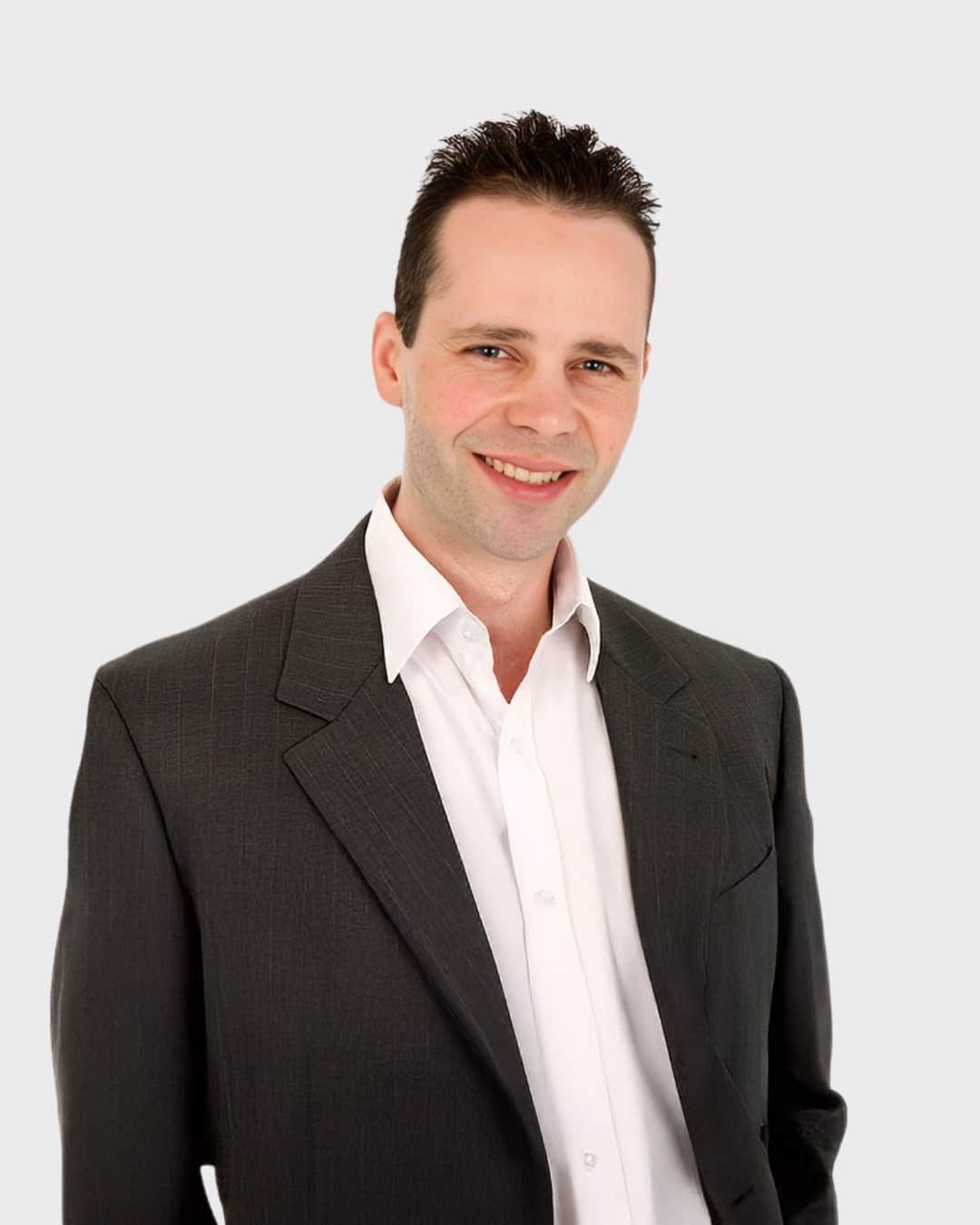
Dr David Austin, Specialist Orthodontist
Role: Specialist Orthodontist, Smile Solutions
Qualifications: BDSc (Melb), MDS Orth (HK), MOrth, RCS (Edin)
Registration: DEN0001022144 — Registered Dentist, Specialist, with Specialist Registration in Orthodontics
Specialist registration can be verified on the AHPRA register. The specialty page is Specialist Orthodontists, and the other specialists here are listed under Specialist Care.
Background
Dr Austin graduated from the University of Melbourne in 2004 with a Bachelor of Dental Science.
He worked as a dentist across a variety of private general and specialist orthodontic clinics in Melbourne, and part-time for the Australian Defence Force.
In 2007 he began specialist training in orthodontics at the University of Hong Kong. After three years there, he moved to Shanghai, working in a well-known clinic treating expatriate patients from around the world.
What those letters mean
- BDSc — Bachelor of Dental Science, the primary qualification to practise as a dentist.
- MDS Orth (HK) — Master of Dental Surgery in Orthodontics, the three-year full-time specialist qualification, taken at the University of Hong Kong.
- MOrth RCS (Edin) — Membership in Orthodontics of the Royal College of Surgeons of Edinburgh, awarded by examination.
None of these, on their own, permits the use of the title “specialist orthodontist” in Australia. That comes from entry on the Dental Board of Australia's specialist register, which is what the registration number above records — and which anyone can check, free, in under a minute.
Memberships and publications
Dr Austin was inducted as a member in orthodontics with the Royal College of Surgeons of Edinburgh.
He is a member of:
- The World Federation of Orthodontists
- The European Orthodontic Society
- The Hong Kong Society of Orthodontists
- The Australian Dental Association
He has published an article in one of Europe's leading orthodontic journals.
Professional memberships are not regulatory credentials. They indicate engagement with the field; registration is what establishes scope of practice. Both are worth knowing, and they are different things.
Patients and languages
Dr Austin offers treatment for children and adults. On adult treatment specifically, see Is having Invisalign as an adult worth it?
As well as his native English, he converses in French, Italian and Spanish.
He has written several of the practice's orthodontic articles, including a comparison of the treatment options — metal and ceramic braces, lingual braces and clear aligners — with a full account of the risks involved:
- Comparing conventional braces, lingual braces and Invisalign
- How long does it take to have orthodontic treatment?
- How to get straight teeth without braces? Or Invisalign
What an orthodontist does
Orthodontics is one of the recognised dental specialties in Australia, covering the diagnosis, prevention and treatment of irregularities of the teeth and jaws — see What is malocclusion of the teeth? and Treatment of malocclusion.
- Fixed braces — metal and ceramic
- Lingual braces, fitted behind the teeth
- Clear aligners, including Invisalign
- Functional and growth-modification appliances in children
- Retainers, fixed and removable
- Orthodontic preparation for jaw surgery
- Alignment before restorative or cosmetic work
How the appliances actually differ
| Strengths | Limitations | |
|---|---|---|
| Metal braces | Handle the widest range of problems, including complex movements; nothing depends on compliance | Visible; harder to clean; dietary restrictions Orthodontic Braces |
| Ceramic braces | Much less visible than metal | Bulkier and more brittle; the elastic ties can discolour |
| Lingual braces | Effectively invisible from the front | Higher cost; a speech and tongue-comfort adjustment period |
| Clear aligners | Removable, easy to clean, no dietary restrictions | Only work while worn — typically 20–22 hours a day; some movements are difficult or need attachments and elastics Invisalign® No Braces |
The trade-off in the last row is the one that decides most cases. An aligner sitting in a case does nothing. For a disciplined adult that is not an issue; for some teenagers it is the whole problem, and fixed braces are chosen precisely because they cannot be taken out. See How to protect your aligners and your smile and, on cleaning, What are the hygiene benefits of Invisalign?
“Which appliance” is also the second question, not the first. The first is what needs to move, in what order, and whether space needs creating — and the answer to that may rule out an appliance the patient had already decided on. See How do I know which orthodontic treatment is best for me? and What are the most common complaints associated with conventional braces?
The distinction that decides what is achievable
Braces and aligners move teeth. They do not move jaws.
A tooth-position problem can be corrected orthodontically at any age — which is why adults are often ideal patients, having chosen treatment themselves. A significant mismatch in jaw size or position is different: in a growing child it can often be guided using the growth still available; in an adult it usually needs surgery, and orthodontics alone can only camouflage it.
“Camouflage” is a real technique, not a euphemism. It means tipping and positioning the teeth to disguise an underlying skeletal discrepancy — producing a good-looking result without correcting the jaws. It is often the right choice: it avoids surgery, and many people are entirely happy with it. But it has limits, and a clinician should tell you plainly which you are being offered and what the alternative would involve. Jaw Surgery · What is orthognathic surgery? · What can I eat and drink following jaw surgery?
That is why the Australian Society of Orthodontists recommends an assessment at around eight to ten, even where teeth look straight. (The American body's guidance is earlier, by about age seven; the principle is the same.) Most children need only monitoring at that stage; the point is to establish whether a window exists that will later close. When should I take my child to see an orthodontist? · Children’s Orthodontics · How long does my child need to wear braces?
What specialist training adds
A specialist orthodontist has completed a three-year full-time postgraduate qualification after a dental degree. General dentists also provide orthodontic treatment, many competently; the difference is depth of training in diagnosis and treatment planning — deciding what must move, in what order, whether space needs creating, and whether a given appliance can achieve it at all.
This is not an argument that every case needs a specialist. Straightforward alignment is well within general practice. It is an argument for knowing which you are getting, and for asking who will plan the case as distinct from who will fit the appliance. Orthodontic treatment: general dentist or specialist orthodontist? · Specialist Orthodontist vs General Dentist: Which Is Best for Invisalign? · Why should I choose a Blue Diamond Invisalign provider?
A warning worth printing
Direct-to-consumer aligner services — where impressions or scans are taken without an in-person examination, and no clinician sees the mouth — have been the subject of regulator and professional-body concern in Australia and overseas.
The specific problems: no examination means undiagnosed decay and gum disease are moved rather than treated; radiographs are not taken, so root length and bone support are unknown; nobody is monitoring as the teeth move; and there is no one to stop treatment when something goes wrong. Moving teeth through bone affected by untreated periodontal disease can lose them. See What Is Gum Disease? and Specialist Periodontists.
Orthodontics is the movement of living tissue. It requires diagnosis, supervision and someone accountable for the outcome.
What can go wrong
No treatment is risk-free, and these should be discussed before you start:
- Root resorption — shortening of the roots during movement. Usually minor and of no consequence; occasionally significant.
- Decalcification — permanent white marks where plaque sat around brackets. Entirely preventable with good cleaning, and entirely permanent if it happens. See Dental Cleans and Hygienists.
- Gum recession, particularly where teeth are moved outside the bone envelope.
- Relapse — see below.
- Discomfort for a few days after each adjustment, and ulceration while the mouth adapts.
- Treatment taking longer than estimated, often because of missed appointments, breakages or aligner wear below the required hours.
- Jaw joint symptoms, which can improve, worsen or be unaffected — orthodontics is not a reliable treatment for TMJ problems, and should not be presented as one. See TMD and Teeth Grinding, What causes TMJ pain and how is it treated? and What is the difference between TMD, TMJ and bruxism?
A mouthguard is more important with braces, not less. Sports Mouthguards · Should I wear a mouthguard while playing sports? · Should my child wear a mouthguard?
Retention is permanent
Whatever moved the teeth, retention is lifelong. Teeth drift with age regardless of whether they were ever treated — see Why do teeth shift? Expect nightly retainer wear indefinitely, or a bonded wire behind the front teeth. Ask what retention is included in the fee and what replacements cost.
This is the single most under-emphasised fact in orthodontics, and the commonest reason people find themselves considering treatment a second time. Relapse after stopping retainers is not a failure of the original treatment — it is what teeth do. Will my teeth need retainers after braces?
Common questions
Is Dr David Austin a registered specialist orthodontist?
This profile identifies Dr Austin as a specialist orthodontist. Verify the current entry on the AHPRA public register using his name or the published registration number DEN0001022144.
Do I need a referral for an orthodontic consultation?
No referral is generally required. Information from your general dentist can still help with dental health, previous treatment and relevant radiographs.
How is the choice between braces and aligners made?
The diagnosis and movements required come first. Complexity, tooth and jaw relationships, oral health, age and ability to wear an appliance as instructed determine whether braces, aligners or another approach is suitable.
Can orthodontics correct an adult jaw-position problem?
Appliances can move teeth, but they cannot produce every skeletal change in a fully grown adult. Treatment may camouflage a jaw discrepancy, accept it or combine orthodontics with jaw surgery. Ask which outcome each option can realistically achieve.
Will teeth need to be extracted?
Not always. Extraction decisions depend on crowding, tooth and jaw positions, facial proportions, gum and bone limits and treatment mechanics. Ask to compare extraction and non-extraction plans where both are reasonable.
How long will treatment take?
Duration varies with complexity, biological response, appliance wear, breakages and missed appointments. Ask for a realistic range and the factors most likely to extend your case.
Will I need retainers permanently?
Yes. The profile states that retention is lifelong because teeth continue to move. Ask which retainers are included, how often they are checked and what repairs or replacements cost.
Who will see me at routine visits?
Ask who is responsible for diagnosis and treatment decisions, which appointments are with the orthodontist and which tasks may be performed by other registered team members under the plan.
How to verify any practitioner yourself
- Go to the AHPRA public register at ahpra.gov.au and choose “Register of practitioners”.
- Search by name, or by registration number — for this practitioner, DEN0001022144.
- Look for “Specialist” registration and the specialty named as Orthodontics. A practitioner without that entry may be an excellent clinician, but may not lawfully call themselves a specialist orthodontist.
Related reading
Specialist Orthodontists · Orthodontics · Orthodontic Braces · Invisalign® No Braces · Children’s Orthodontics · Jaw Surgery · Complimentary Orthodontic Consultation · How long does orthodontic treatment take? · What is the cost of braces? · Dentists & Registered Specialists · Our Team
On the complimentary orthodontic consultation: confirm the current terms when you book — what the appointment includes, whether records such as scans or radiographs are part of it or charged separately, and whether any deposit applies.
Practical details
Orthodontics is a recognised dental specialty. Specialist registration can be verified free on the AHPRA public register at ahpra.gov.au, or by calling 1300 419 495. To book, see Contact Us.
Smile Solutions, Level 1, 220 Collins Street, Manchester Unity Building, Melbourne VIC 3000. Phone 13 13 96, or theteam@smilesolutions.com.au. Monday–Friday 8.00am–6.00pm, Saturday 8.30am–1.30pm, Sunday by appointment. Location and directions.
This page records qualifications, registration and career history as published by the practice, and is current as at the date of publication. Team members and their availability change; the AHPRA register is the authoritative source for registration status.
General information only — it is not a diagnosis, a treatment plan, a quote or a promise of any particular clinical outcome, and it does not replace advice from your treating practitioner. Outcomes vary between individuals, and all orthodontic treatment carries risks — including root resorption, decalcification, gum recession, relapse and treatment taking longer than estimated. Recommended assessment ages are general guidance from professional bodies and vary between them. What is achievable in your case, and which approach suits it, can only be determined after examination and records. Fees are indicative and subject to change; confirm at your consultation.
Smile Solutions trades under ABN 28 193 514 103.
Images on This Page
-
https://www.facebook.com/tr?id=800557773428361&ev=PageView&noscript=1
(no alt text)
-
https://www.smilesolutions.com.au/wp-content/uploads/2025/10/calendar_month.svg
(no alt text)
-
https://www.smilesolutions.com.au/wp-content/themes/arcadian-wordpress-theme/assets/images/smile_solutions_logo_white.png
Smile Solutions Logo
-
https://www.smilesolutions.com.au/wp-content/themes/arcadian-wordpress-theme/assets/images/smile_solutions_logo_purple.png
Smile Solutions Logo
-
https://www.smilesolutions.com.au/wp-content/uploads/2016/05/David.jpg
Dr David Austin
-
https://www.smilesolutions.com.au/wp-content/uploads/2016/05/DA.jpg
DA
-
https://www.smilesolutions.com.au/wp-content/uploads/2025/09/Invisalign-No-Braces-1-300x218.jpg
Invisalign No Braces 1
-
https://www.smilesolutions.com.au/wp-content/uploads/2016/05/David-150x150.jpg
Dr David Austin
-
https://www.smilesolutions.com.au/wp-content/uploads/2025/11/Invisalign-at-Smile-Solutions-1-300x270.png
Invisalign at Smile Solutions 1
-
https://www.smilesolutions.com.au/wp-content/uploads/2025/09/orthodontics-invisalign-300x219.jpg
orthodontics invisalign
-
https://www.smilesolutions.com.au/wp-content/themes/arcadian-wordpress-theme/assets/images/family_owned_bussiness.png
Family Owned Business
-
https://www.smilesolutions.com.au/wp-content/themes/arcadian-wordpress-theme/assets/icons/icon--phone.svg
Smile Solutions Contact
-
https://www.facebook.com/tr? id=800557773428361&ev=PageView&noscript=1
(no alt text)
-
https://bat.bing.com/action/0?ti=25148060&tm=gtm002&Ver=2&mid=ffdcd682-1e4e-4cee-92e4-2f59086388d1&bo=1&sid=cd58fff0ab2711f185697b96e3bfad74&vid=cd594590ab2711f1922e0dc21b2cd610&vids=1&msclkid=N&pi=918639831&lg=en-US&sw=800&sh=600&sc=24&nwd=1&tl=Dr%20David%20Austin%20%7C%20Specialist%20Orthodontist%20%7C%20Smile%20Solutions&p=https%3A%2F%2Fwww.smilesolutions.com.au%2Four-team%2Fdr-david-austin%2F&r=<=2100&evt=pageLoad&sv=2&cdb=AQAQ&rn=657281
(no alt text)