Specialist orthodontist or general dentist for Invisalign?
The aligner is a tool
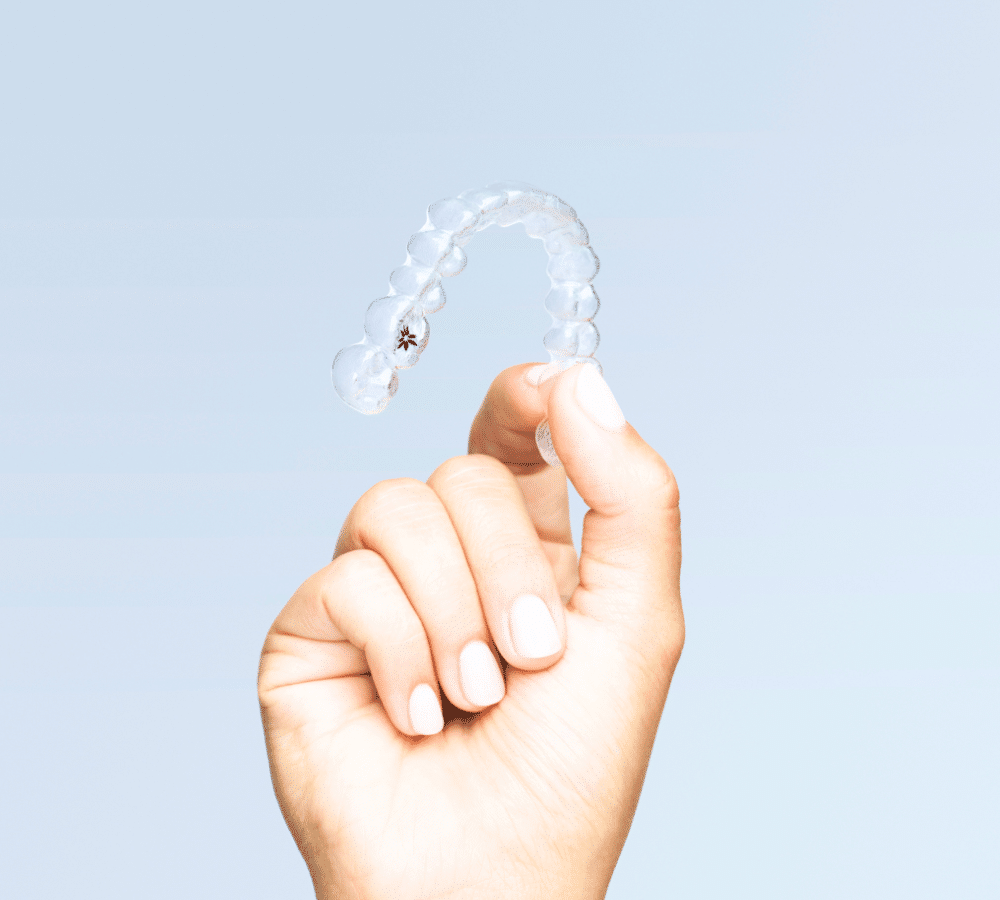
Invisalign changed how people think about orthodontics. Straightening teeth no longer meant two years of visible brackets and wires — and as the brand grew, so did the number of providers offering it. You can now have Invisalign from a specialist orthodontist, from a general dentist, and in some markets through direct-to-consumer models with minimal clinical oversight. See Invisalign.
What the marketing tends to leave out:
The aligner is a tool. A sophisticated, well-engineered one — but the quality of your result depends on who plans and manages the treatment, not on the brand printed on the box.
This is not a criticism of general dentists. Many are excellent clinicians who treat aligner cases well, and for straightforward cases the outcome is often equivalent. Orthodontics is a recognised specialty for a reason, though — and understanding what that training covers helps you judge which category your own case falls into. See Specialist Orthodontists, General Dentistry, and Orthodontic treatment: general dentist vs specialist orthodontist?.
The Australian Dental Association puts the two categories side by side without ranking them. On its consumer site it describes orthodontics as “a specialty field in dentistry that involves the diagnosis, prevention, and correction of crooked teeth, jaws, and unfavourable bite patterns”, and then notes plainly: “many general dentists also perform orthodontic treatment.” That is the whole of the profession's public position on who may do this work.
First, the honest answer to the question in the title
There is no published comparison that answers it, and anyone who tells you otherwise is not citing anything.
We went looking for it. In the independent material behind this library — regulator statements, professional guidelines, systematic reviews and the peer-reviewed literature we hold — there is no controlled trial, no systematic review and no registry study that compares orthodontic outcomes between general dentists and registered specialists, for aligners or for any other appliance. Success-rate percentages of the kind that circulate on practice websites (“general dentists achieve X per cent, specialists Y per cent”) do not trace to a source we can find. Treat them as marketing arithmetic wherever you meet them, including where the practice quoting them is this one.
That gap is not an accident of our reading list; it is also the reason the law constrains the question. Ahpra's advertising guidelines, made under section 133 of the National Law, list among the forms of comparative advertising that require complete information and acceptable evidence “comparisons between health outcomes and quality of care offered by different regulated health services” and “comparing professions, or the competency, skill or experience of practitioners.” Advertising may be misleading or deceptive where it “compares health outcomes, regulated health professions or practitioners or prices without complete information” or “makes claims about providing a superior regulated health service.” And the bar for evidence is specific: “acceptable evidence mostly includes empirical data from formal research or systematic studies in the form of peer-reviewed publications.”
So no Australian dental practice is permitted to tell you that one category of provider gets better results, and none of them has the evidence that would let it.
What can be described honestly is different in kind: what the two qualifications consist of, what the regulator requires of each, and which features of a case make the planning harder. That is what the rest of this page does. The question it will help you answer is “how complex is my case?” — not “who is better?”
What specialist training covers
A specialist orthodontist has completed an additional three years of full-time, university-based training exclusively in orthodontics, after their dental degree. See Dentists & Registered Specialists.
That training includes:
Biomechanics of tooth movement — how applied forces produce movement, including torque, tipping, bodily movement, rotation, and intrusion or extrusion.
Cephalometric analysis — interpreting lateral skull radiographs to assess jaw relationships, growth patterns and skeletal discrepancies that cannot be evaluated by looking at the teeth.
Growth and development — predicting how a child's or adolescent's jaws will grow, and timing treatment to use or work around that growth. On when to have a child looked at, the ADA reports that “the Australian Society of Orthodontists recommend children have an orthodontic assessment between the ages of 7 – 10”, and that “all the adult teeth do not have to be present in the mouth for an assessment to be done.” See Children's Braces & Invisalign and When should I take my child to see an orthodontist?.
Complex malocclusion management — severe crowding, impacted teeth, open bites, deep bites, crossbites, and skeletal discrepancies requiring surgical orthodontics or sophisticated mechanics.
Retention and stability — why teeth relapse, and how to design retention that holds the result. See Will my teeth need retainers after I've had braces?.
Interdisciplinary case planning — coordinating with prosthodontics, periodontal surgery, orthognathic surgery and restorative dentistry. See Complex Dentistry.
What the regulator itself requires, which is checkable
The university programme above is one description of the training. The Dental Board of Australia's own requirements are the part you can verify, and they are worth knowing because they define what the title means rather than what a course contains.
Orthodontics is one of the dental specialties recognised under the National Law, and the Board's specialist registration standard requires an applicant to have “completed a minimum of two years general dental practice” and to “meet all other requirements for general registration as a dentist”. As the Board puts it, “all dentists who wish to apply for specialist registration must have general registration and be on the Register of practitioners under the division of dentists” — specialist registration sits on top of general registration, it does not replace it. The Australian route is completion of “an approved program of study for specialist registration in Australia”; overseas-qualified applicants apply for general registration first and are assessed through a qualification equivalence pathway.
Specialist orthodontists are registered with AHPRA as specialists, and in Australia only a registered specialist orthodontist may use the title “orthodontist”. That is not a professional courtesy — it is section 115 of the National Law, which provides that a person must not knowingly or recklessly take or use the titles “dental specialist”, “medical specialist” or a specialist title for a recognised specialty unless the person is registered under that specialty, with section 117 extending the same prohibition to holding oneself out as registered or qualified when one is not. Ahpra's guidelines add that where a practitioner does not hold specialist registration, advertising using the words “specialist”, “specialises in”, “specialty” or “specialised”, or variations of them, “is likely to mislead the public”, and suggest “substantial experience in” or “working primarily in” as the accurate alternatives.
All of which makes the check trivial and worth doing. Look the clinician up yourself on the Ahpra public register: it shows whether registration is current, which division it is in, whether specialist registration is held and in which recognised specialty, and whether any conditions apply. It takes two minutes. The Smile Solutions clinicians are listed on Our Team.
There is also a boundary that applies to every registered practitioner equally, and it is the closest the regulator comes to answering this page's question. The Board's Scope of practice registration standard “requires dental practitioners to practise within the scope of their education, training, and competence at all times.” It does not rank categories of practitioner against each other. It puts the obligation on the individual to know where their own competence ends — which is exactly the judgement the rest of this page is about.
A general dentist offering Invisalign holds their dental degree plus whatever additional courses and manufacturer training they have undertaken. Some invest heavily in continuing education and become very proficient with aligners.
Where the difference shows
On simple cases the difference is often not apparent. Mild crowding in an adult with a healthy bite and no skeletal issues can be managed well by either provider.
The difference becomes consequential as complexity increases — and it shows in four places.
1. Diagnosis and treatment planning
This is the largest difference, and the step patients see least.
Before a single aligner is made, someone analyses the records, radiographs and clinical findings. The questions go well beyond which teeth move where:
Is there a skeletal component? If the upper jaw is too narrow or the lower jaw sits too far back, moving teeth alone will not fully correct it — and may create instability.
Is there sufficient bone to move teeth in that direction? Movements that push teeth outside the bone envelope can cause gum recession, root exposure and long-term periodontal problems. This is the most serious avoidable harm in aligner treatment — see Bleeding Gums and What is periodontal disease?.
What is the root morphology? Short roots, unusually curved roots, or roots close to anatomical structures require modified approaches.
Is there a TMJ issue? Patients with temporomandibular dysfunction need treatment planned with the joint in mind — ignoring it can worsen symptoms. See TMD and Teeth Grinding.
What is the long-term prognosis of each tooth? A plan relying on a tooth with a large restoration, a failing root canal or compromised periodontal support may be building on something that will not hold.
This is also the step that direct-to-consumer aligner services leave out, and the ADA is unambiguous about it. On its consumer site it states that “the Australian Dental Association (ADA) do not recommend Australians have DIY orthodontic treatment”, that the risks “can lead to permanent damage to your teeth, gums, and jaw joints”, and that it recommends instead “in-person treatment with a dentist or orthodontist which includes a thorough assessment before starting treatment and ongoing supervision.” Note what that recommendation does and does not say: it draws the line at in-person assessment and supervision, and it names dentist and orthodontist together.
2. Prescribing and staging the aligners
When a case is submitted to an aligner company, the software generates a proposed plan — the ClinCheck, in Invisalign's system. See Technology.
That is not a treatment plan in the clinical sense. It is a computer-generated simulation, which the prescribing clinician is expected to review, modify and refine.
The software does not know your bone levels, root anatomy, TMJ health, or the limits of aligner mechanics. It proposes movements from algorithms; the clinician's job is to correct them against clinical reality.
An experienced clinician reviewing a ClinCheck will:
Limit movements that exceed predictable aligner mechanics — root torque, bodily movement of canines and significant intrusion are less predictable with aligners, and knowing when to add auxiliaries, change staging, or switch to fixed appliances is a matter of judgement. Conventional braces vs lingual braces vs Invisalign covers those limits.
Place attachments strategically — the tooth-coloured bumps that give aligners grip. Their placement, shape and number significantly affect predictability.
Stage the movements — sequencing which teeth move first, building in overcorrection where needed, and including passive aligners to allow bone remodelling.
Plan the finish — the final 10 to 20 per cent of treatment is where good and excellent results diverge, in occlusal contacts, root parallelism and interdigitation.
3. Mid-course corrections
No orthodontic treatment goes exactly to plan. Teeth that track poorly, unexpected anchorage loss, aligner fit problems and variation in wear time all require judgement. On wear time, see How to protect your aligners and your smile.
What is needed:
- Recognising early that teeth are not tracking as planned
- Using auxiliaries — elastics, buttons, power ridges, or temporary fixed appliances — to recover lost movement
- Knowing when to stop aligner treatment and transition to fixed braces for movements aligners cannot predictably deliver
The risk where a tracking problem is not identified is that it compounds across subsequent aligners, so the finished result falls short of the plan — and the treatment runs longer. See How long does orthodontic treatment take?.
One thing that is entirely in your hands, and the ADA is specific about it. Aligner trays “should be worn at all times other than when eating and drinking liquids other than water”, and the reason for that second clause is not fussiness: “drinking liquids such as fruit juice or soft drink while wearing clear aligners can trap the liquids against the teeth, which can cause damage to the teeth if it happens frequently.” Follow the wear-time instruction your own clinician gives you for your appliance; the drinks point applies regardless.
4. The bite, not just the alignment
Perhaps the most consequential difference.
Many people think of orthodontics as making the front teeth straight. Alignment is only one component.
A properly finished case achieves:
- Class I molar and canine relationships — the back teeth meeting in their correct positions
- Proper overbite and overjet
- Functional occlusion — teeth meeting evenly, with appropriate guidance during jaw movement
- Root parallelism — adjacent roots parallel rather than converging in ways that compromise periodontal health
Alignment is relatively straightforward with modern aligners. The bite is where orthodontic expertise matters.
A case that finishes with straight-looking front teeth but a compromised bite can develop premature wear, TMJ symptoms, or instability leading to relapse. See Chipped and Cracked Teeth.
One caution on that last point, because it is often overstated elsewhere. The idea that a bite discrepancy causes temporomandibular disorders is not supported by the current position of the major reviewing bodies: the US National Academies of Sciences, Engineering, and Medicine concluded in 2020 that “occlusion should not be considered a contributing cause for the common TMDs”, and the Royal Australian College of General Practitioners takes the same view. So planning around an existing joint problem is sound practice, and promising that orthodontics will fix one is not. See TMD and Teeth Grinding.
A note on provider tiers
Invisalign categorises providers by case volume — Silver, Gold, Platinum, Diamond and above.
These tiers reflect the quantity of cases started, not the quality of outcomes. A high-volume provider is not necessarily a more skilled one. Why should I choose a Blue Diamond Invisalign provider? sets out what the designation does and does not tell you.
Worth knowing, because some patients choose a provider on tier level alone, assuming Diamond must be better than Gold. It is a volume measure, and should be read as one. It is also a manufacturer's commercial designation rather than anything conferred by a regulator or a professional body, and it appears nowhere on the Ahpra register.
Where a general dentist is a reasonable choice
In genuinely straightforward cases, an experienced general dentist can deliver good aligner results:
Minor crowding in an adult with a stable, healthy bite and no skeletal discrepancy — alignment without complex bite correction.
Minor orthodontic relapse, where teeth have shifted slightly after previous treatment. Small relapse is generally predictable to correct.
Simple spacing — small gaps between otherwise healthy, well-aligned teeth, where the bite is already stable and functional.
Pre-restorative alignment — a small amount of movement before crowns or veneers, particularly where the same dentist is planning the restorative work and can position the teeth to suit it. See Cosmetic Dentistry.
The operative phrase is genuinely straightforward — which is itself a diagnostic judgement, and not always obvious from the outside.
Where specialist input is essential
- Moderate to severe crowding requiring extractions
- Crossbites, anterior or posterior
- Open bites or deep bites
- Class II or Class III skeletal relationships
- Impacted teeth requiring exposure and alignment
- Orthodontics as part of multidisciplinary treatment — implants, jaw surgery, complex restorative work
- Growing children and adolescents where growth modification is indicated — see How long does my child need to wear braces?
- Cases with TMJ symptoms or history
- Significant asymmetry
- Any case where a previous provider's result was unsatisfactory — see Second Opinions & Corrective Dentistry
Which question to ask
The useful question is not “specialist or general dentist?” in the abstract. It is: how complex is my case, and who is best placed to plan it?
An assessment answers that — and a good clinician of either kind will tell you honestly which category you fall into, and refer you on where that is the right call. See Complimentary Orthodontic Consultation. Confirm the current terms when you book — what the appointment includes, whether records such as scans or radiographs are part of it or charged separately, and whether any deposit applies.
At Smile Solutions, specialist orthodontists work alongside other dental specialists in the one CBD practice — so where an orthodontic case has complexities beyond tooth alignment (a missing tooth needing an implant, gum recession needing grafting, a jaw discrepancy that may benefit from surgery) the orthodontist can consult the relevant specialist directly. See Specialist Care.
And because they offer both Invisalign and fixed braces, they can recommend the system suited to the case rather than the only system available. See How do I know which orthodontic treatment is best for me?.
Cost
See the Price Guide, What is the cost of braces? and Payment Plans. Comparing quotes across provider types requires knowing who is planning and managing the case, not only the brand of aligner.
Payment plan options are available. Where a plan is advertised as interest free, that describes the plan term only — a deposit may be required, an establishment fee and ongoing account fees may apply, and charges can apply if the balance is not cleared within the agreed period. The applicable terms depend on the provider and the amount financed, and are set out in writing before you commit — ask what the deposit and the establishment fee are, in dollars, and what the total will be by the end. Payment Plans.
Common questions
Is there evidence that one gets better results than the other?
Not that we can find, and that is worth saying plainly. There is no controlled trial, systematic review or registry study in the independent material behind this library comparing orthodontic outcomes between general dentists and registered specialists. Percentages of the “85 to 90 per cent versus 95 to 98 per cent” kind circulate widely on practice websites without a traceable source. Ahpra's advertising guidelines also treat “comparing professions, or the competency, skill or experience of practitioners” as comparative advertising that requires complete information and acceptable evidence — “empirical data from formal research or systematic studies in the form of peer-reviewed publications” — so the claim is both unsupported and not one a practice is free to make. What can be described is the difference in qualification and the features of a case that make planning harder, which is what this page does.
How do I check who I am dealing with?
On the Ahpra public register, in about two minutes. It shows whether the practitioner's registration is current, which division it is in, whether specialist registration is held and in which recognised specialty, and whether any conditions have been imposed. Orthodontics is one of the dental specialties recognised under the National Law, and section 115 makes it an offence to take or use a specialist title for a recognised specialty without being registered under it. Manufacturer designations such as Diamond or Platinum provider are commercial volume tiers and appear nowhere on the register.
Are clear aligners really invisible? And which appliance is least visible?
The accurate word is less obvious, and the Australian Dental Association is careful about this in a way marketing usually is not. On its consumer site it says of ceramic braces — the tooth-coloured version of conventional brackets — that “They are not completely invisible but are less obvious than metal braces”, and of lingual braces, fixed to the inside surfaces of the teeth, that this makes them “practically invisible”. Not completely. Practically.
Clear aligner trays sit in the same territory: thin, transparent, and much less conspicuous than brackets, but not undetectable at conversational distance — and the tooth-coloured attachments bonded to the teeth to give the trays grip stay on between appointments, so they are visible whether the tray is in or out.
So if the visible hardware is the deciding factor for you, rank them honestly rather than by advertising: lingual braces are the least visible appliance the ADA describes, aligners are close, ceramic brackets are less obvious than metal, and metal brackets are metal brackets. Each of those also has different mechanical capabilities, cost and cleaning demands — so “which is least visible” and “which will treat my case best” are two separate questions, and only the second is answered by an assessment. See Conventional braces vs lingual braces vs Invisalign and Braces.
Does treatment raise my risk of decay, and what changes about cleaning?
Yes for fixed braces, and the change is substantial. The ADA recommends that for people wearing braces, “brushing after every meal is recommended as food can get stuck around the brackets” — not twice a day, after every meal. Flossing becomes genuinely awkward: it notes that “Cleaning between your teeth with string floss can be tricky while wearing braces”, and that floss threaders or interdental brushes help, because an interdental brush “can help to clean between the teeth as well as between the orthodontic brackets.” Both manual and electric toothbrushes are fine. Any removable elastics or appliances should come out first and “be rinsed or cleaned before placing them back in your mouth”.
With aligners the cleaning picture is easier and the risk moves elsewhere. The ADA says teeth “can be brushed and flossed as normal when having clear aligner treatments” — the trays come out, so nothing obstructs the brush. The trays themselves need cleaning too, ideally when you clean your teeth: they “can be cleaned with an antibacterial liquid soap and a spare toothbrush”, rinsed well afterwards “with warm water”. Not hot, and not the toothbrush you use on your teeth.
Where aligners create a new hazard is anything you drink with them in, which is why the wear-time rule above has that second clause. Trapping a sugary or acidic liquid against enamel under a close-fitting tray is the worst version of a habit the profession already warns about: the ADA's diet policy names “the form, frequency, timing and total amount of sugar intake” as significant in starting decay, and separately advises that acidic drinks be avoided altogether where someone is already at high risk — a list that includes poor oral hygiene and “low or no fluoride exposure”. So: water only in the trays, fluoride toothpaste, and clean between the teeth every day for the whole of treatment rather than for the first month. See Interdental cleaning and Dental Cleans & Hygienists.
I have started with a general dentist. Can I be handed over mid-treatment, and what happens to my case?
Yes, and the possibility is built into the rules rather than being an admission of failure. The Dental Board of Australia's Scope of practice registration standard “requires dental practitioners to practise within the scope of their education, training, and competence at all times” — at all times includes halfway through a case that has turned out to be harder than it looked. A clinician who says so is complying with the standard, not failing at it. This page's own section on mid-course corrections describes the judgement involved in “knowing when to stop aligner treatment and transition to fixed braces”; recognising that the case itself needs different hands is the same kind of call.
What makes a handover workable is records, so ask for these in a form you can pass on:
- The original diagnostic records — pre-treatment photographs, radiographs and the intraoral scan or impressions, as files rather than printouts.
- The approved digital plan, and the aligner or appliance sequence, with which stage you are currently at.
- Where the attachments are, and which auxiliaries have been used.
- A note of what has not tracked as planned, which is the single most useful thing for whoever takes over.
- Any refinement scans already submitted.
Two practical cautions. Aligner cases are contracted to a manufacturer under a particular prescribing clinician, so a transfer usually means a new submission rather than a simple change of name, and there may be a cost to it — ask both practitioners, in writing, who bears that and what has already been paid for. And ask for the fee position to be set out in dollars before the transfer rather than after. If the reason you are asking is that you are unhappy with the result so far, an independent assessment first is reasonable — see Second Opinions & Corrective Dentistry.
Does this article replace an individual dental assessment?
No. It provides general information. Symptoms, suitability, risks and treatment choices depend on examination and, where indicated, imaging or other records from an appropriately registered practitioner.
Sources named on this page
- Dental Board of Australia, Scope of practice registration standard, Specialist registration standard and the FAQ on specialist registration; the public register of practitioners
- Ahpra and the National Boards, Guidelines for advertising a regulated health service, made under section 133 of the Health Practitioner Regulation National Law, including Appendix 2 on title protection (sections 113–119)
- Australian Dental Association (teeth.org.au), Teeth straightening and braces, including the Australian Society of Orthodontists' assessment-age recommendation, the ADA position on direct-to-consumer treatment, the appliance-visibility descriptions and the cleaning guidance
- Australian Dental Association, Policy Statement 2.2.2 on diet and nutrition, for the sugar and acid risk factors quoted
- National Academies of Sciences, Engineering, and Medicine (2020) and the Royal Australian College of General Practitioners, on occlusion and temporomandibular disorders
Practical details
Reviewed by Dr Joshua Ch'ng, registered dentist with specialist registration in orthodontics (DEN0001857728).
Smile Solutions, Level 1, 220 Collins Street, Manchester Unity Building, Melbourne VIC 3000. Phone 13 13 96, or theteam@smilesolutions.com.au. Monday–Friday 8.00am–6.00pm, Saturday 8.30am–1.30pm, Sunday by appointment. Full details on Contact Us.
Specialist registration can be verified on the AHPRA register, or by calling 1300 419 495.
Published 24 July 2026. Suitability, treatment time and results vary between individuals; orthodontic treatment carries risks that should be discussed with your clinician. General information only; it does not replace advice from your treating practitioner. Payment plan terms are set by the credit provider and change; confirm current terms directly before you commit.
Smile Solutions trades under ABN 28 193 514 103.
Images on This Page
-
https://www.facebook.com/tr?id=800557773428361&ev=PageView&noscript=1
(no alt text)
-
https://www.smilesolutions.com.au/wp-content/uploads/2025/10/calendar_month.svg
(no alt text)
-
https://www.smilesolutions.com.au/wp-content/themes/arcadian-wordpress-theme/assets/images/smile_solutions_logo_white.png
Smile Solutions Logo
-
https://www.smilesolutions.com.au/wp-content/themes/arcadian-wordpress-theme/assets/images/smile_solutions_logo_purple.png
Smile Solutions Logo
-
https://www.smilesolutions.com.au/wp-content/uploads/2023/11/SS-Tooth-1-1-150x150.png
Smile Solutions
-
https://www.smilesolutions.com.au/wp-content/uploads/2025/11/Invisalign-No-Brace-at-Smile-Solutions.png
Hand holding clear Invisalign aligner
-
https://www.smilesolutions.com.au/wp-content/uploads/2025/09/Smile-Solutions-Orthodontics-1024x922.jpg
Ortho at Smile Solutions
-
https://www.smilesolutions.com.au/wp-content/uploads/2025/09/Root-Canal-2-300x217.jpg
Root Canal
-
https://www.smilesolutions.com.au/wp-content/uploads/2026/08/Mouth-Breathing-300x270.jpg
Mouth Breathing
-
https://www.smilesolutions.com.au/wp-content/uploads/2025/09/Dental-Crown-at-Smile-Solutions-300x300.jpg
Dental Crown at Smile Solutions
-
https://www.smilesolutions.com.au/wp-content/themes/arcadian-wordpress-theme/assets/images/family_owned_bussiness.png
Family Owned Business
-
https://www.smilesolutions.com.au/wp-content/themes/arcadian-wordpress-theme/assets/icons/icon--phone.svg
Smile Solutions Contact
-
https://www.facebook.com/tr? id=800557773428361&ev=PageView&noscript=1
(no alt text)
-
https://bat.bing.com/action/0?ti=25148060&tm=gtm002&Ver=2&mid=7135ef31-6d10-4bad-8b2e-e9ce5e2b818f&bo=1&sid=df89c6d0ab2511f18e50e73d76249055&vid=df8bd080ab2511f1bb3c352f17d6c810&vids=1&msclkid=N&pi=918639831&lg=en-US&sw=800&sh=600&sc=24&nwd=1&tl=Specialist%20Orthodontist%20vs%20General%20Dentist%3A%20Which%20Is%20Best%20for%20Invisalign%3F%20-%20Smile%20Solutions&p=https%3A%2F%2Fwww.smilesolutions.com.au%2Fdental-articles%2Farticle%2Fspecialist-orthodontist-vs-general-dentist-which-is-best-for-invisalign%2F&r=&evt=pageLoad&sv=2&cdb=AQAQ&rn=992569
(no alt text)