Home teeth whitening: what to do and what not to do
Tooth discolouration occurs naturally with age, and coffee, red wine and smoking make it worse. See How can I improve the whiteness of my teeth?.
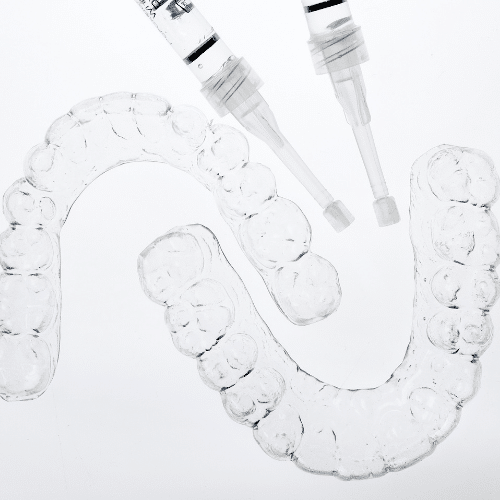
One option is the at-home whitening system — a self-application method using a mild gel worn in custom-made trays for 10 to 14 days. See Teeth Whitening.
You can whiten either:
- overnight, using the Night White system
- for half an hour a day, using the Day White system
It is a straightforward method and most patients find the results worthwhile. You are supplied with enough gel for the initial application and a number of subsequent maintenance applications.
This page is written for people who have already been supplied with trays and gel by a dentist. Your own clinician's instructions take precedence over anything here — gel concentrations and wear times differ between systems, and yours were chosen for your teeth. The difference between in-chair whitening and take-home whitening covers how the two compare.
Why the gel from a dentist is different from the one in a pharmacy
This is set by law, not by marketing.
Australia's Poisons Standard treats hydrogen peroxide at 3–6%, and carbamide peroxide at 9–18%, as Schedule 5 substances requiring "Caution" — which means whitening products up to those concentrations can be sold directly to consumers, provided they carry the stipulated safety warnings.
Above that line the rules change completely. Schedule 10 lists substances "of such danger to health as to warrant prohibition of their sale, supply and use other than in specified exempt circumstances", and it places there any teeth whitening product containing more than 6% hydrogen peroxide or 18% carbamide peroxide. Products above those concentrations may only be sold, supplied and used by registered dental practitioners, as part of their dental practice. The Australian Dental Association notes the two scales line up because one-third of a carbamide peroxide concentration is equivalent to hydrogen peroxide, so "18% carbamide peroxide approximates 6% hydrogen peroxide". These restrictions are enshrined in all state and territory poisons legislation.
That is the whole reason an over-the-counter kit works more slowly than the gel your dentist supplies — and why the stronger gel arrives with an examination attached rather than on a shelf.
Before you start: what this can and cannot do
Whitening changes the shade of natural tooth structure. It does nothing else.
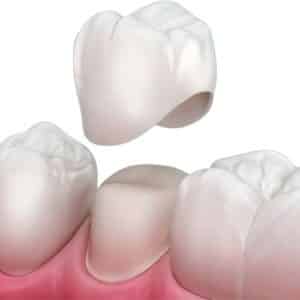
- Crowns, veneers, bridges and tooth-coloured fillings do not change colour. If you have them in visible positions, whitening the teeth around them can leave a mismatch. This needs planning before you start, not discovering afterwards. See I want to whiten my teeth but one of my front teeth has a porcelain crown, Dental Crowns and Porcelain Veneers
- Surface stain is not shade. If the problem is a film of coffee or tobacco stain, a professional clean removes it faster and more cheaply — see Dental Cleans & Hygienists
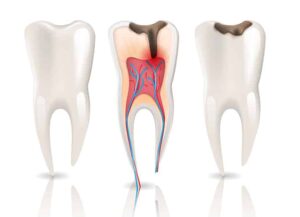
- Some discolouration responds poorly — grey tetracycline banding, white fluorosis patches, and single dark teeth that have had trauma or root canal treatment. A dark single tooth may need internal whitening, which is a different procedure done from inside the tooth
- Results vary considerably, and nobody can promise a specific number of shades in advance. The ADA's own policy asks practitioners to ensure patients have realistic and reasonable expectations, and to explain and document the risks and costs alongside informed consent
- It is not permanent. Teeth re-stain over months to years. Top-up treatment is normal, which is why you are given spare gel. See How long do the effects of teeth whitening last?
DO
Use a thin ribbon of gel, not a full tray. A small dot or thin line in the front of each tooth space is enough. Overfilling does not whiten faster — it pushes gel onto the gums, which is the main cause of the irritation described below.
Wipe away any excess that squeezes out when you seat the trays, with a clean finger or a soft brush.
Brush before you put the trays in, so the gel contacts the tooth rather than plaque.
Expect some sensitivity. You may experience transient and reversible tooth sensitivity during and after whitening. The ADA describes the same pattern: "the most common side-effects are transient tooth sensitivity and soft tissue irritation during or immediately following treatment". Manage it with frequent use of a sensitivity toothpaste and relief gel, or mild analgesia such as paracetamol or ibuprofen taken according to the packaging and checked against any medication you already take.
A practical trick most people are not told: wear the sensitivity toothpaste in the trays for 15–30 minutes on the nights you are not whitening, or before you start the course. It works considerably better than brushing with it.
If sensitivity is building, slow down rather than stop. Whitening every second night, or shortening the wear time, usually solves it. The total result is the same; it just takes longer.
Know that gums, tongue, lips or throat may also be affected. If any of these symptoms occur and are more than mild, discontinue treatment until your next dental visit. Symptoms usually subside within one to three days after stopping.
That is worth holding on to — sensitivity from whitening is uncomfortable but generally temporary, and it usually resolves on its own once you stop. Professionally supplied whitening is not associated with enamel damage at the concentrations used. The ADA's position is that bleaching products "are safe and effective when used by or under the supervision of a dentist and according to the professional directions for use" — and, in the same document, that "the potential for adverse effects on the oral tissues is increased when higher concentrations are used". Concentration and supervision are what that safety rests on, not the act of whitening in itself. See Why should I go to a dentist for teeth whitening?.
Expect a bubbling effect of the gel inside the trays while wearing them. This is normal and part of the bleaching process.
Expect uneven progress across each tooth. The area closest to the gums takes longer to lighten than the biting edge, and will remain the darkest part of the tooth. Knowing this in advance prevents people concluding the treatment has failed halfway through.
You may also see temporary white patches or a banded appearance partway through, particularly on the front teeth. This is normal dehydration of the enamel and evens out over a few days once the teeth rehydrate. Do not judge the result until at least a week after you finish.
Avoid tobacco, coffee, tea, colas and red wine, which may re-stain the teeth while they are most vulnerable — the first 24 to 48 hours after each application matter most. Curry, beetroot, berries and soy sauce belong on the same list.
Avoid citrus fruit and juices. They change the acidity of your saliva, which causes sensitivity and irritation.
Continue good oral hygiene throughout treatment and between dental visits — see General Dentistry and Bleeding Gums.
Rinse the trays in cold water after each use and let them air-dry. Never use hot water — it warps them permanently, and a warped tray no longer fits.
Store any remaining gel in a cool, dry place — the fridge is ideal — for later use once the whitening process is complete. Check the expiry date before a top-up; gel loses potency over time, and old gel is the usual reason a maintenance application does nothing.
Keep the gel out of reach of children.
DON'T
Do not eat, drink or smoke while wearing your bleaching trays.
Do not leave trays in longer than instructed, in the belief it will work faster. It will not; it will make your teeth and gums sore.
Do not use any household or other whitening products to whiten your teeth. Unregulated products, charcoal pastes, lemon juice and bicarbonate remedies are where the genuine risk of enamel damage lies — see Home whitening and charcoal whitening: does it work? Is it safe? and Difference between pharmacy whitening kits and dentist whitening.
Do not use the treatment if you are pregnant or lactating.
Do not whiten if you have untreated decay, a leaking filling, active gum disease or an unexplained sensitive tooth. Gel entering a cavity or a leaking margin is painful and can inflame the nerve. That is what the examination beforehand is for — the ADA's policy states that "appropriate examination to diagnose and treat any dental or oral health problems is required to minimise any potential discomfort or health risks associated with exposure to bleaching agents". If your circumstances have changed since you were supplied with trays, get checked before you start. See Tooth Fillings and What is periodontal disease?.
Whitening is not provided to under-18s other than in specific clinical circumstances — see Children's Dentistry.
When to stop and call
- severe or persistent sensitivity that does not settle within a few days of stopping
- a burn, ulcer or white patch on the gum where gel has sat
- a tray that no longer fits, or that has cracked
- pain in one specific tooth rather than generalised sensitivity — that is usually the tooth, not the whitening. See Tooth Pain & Ache
- no visible change after the full course, which may mean the discolouration is not the type that responds
Afterwards
Maintenance is the part people skip. A single top-up night every few months holds the result far more easily than a full repeat course once the teeth have drifted back.
Also worth knowing: if you are planning crowns or veneers on front teeth, whiten first. Restorations are matched to the shade of your teeth at the time they are made, and they cannot be lightened afterwards. Whitening after the fact is how mismatches happen. See Cosmetic dentistry options and Cosmetic Dentistry.
Common questions
Why can't I just buy more gel and skip the appointment?
Because the supply itself is the regulated act, not the wearing of the tray.
The Dental Board of Australia's guidance is clear that home use is perfectly legitimate — "no current laws or regulations limit teeth whitening products to in-clinic use". What it attaches conditions to is the handover. Before a practitioner gives you products to take home, the Board says they "should determine if they are a suitable candidate" by carrying out "an appropriate assessment and examination", considering your history, and applying the principles of risk minimisation and informed consent from the Code of conduct.
That assessment is not a formality invented to generate an appointment. It is the step that catches the leaking filling or the exposed root surface that turns a comfortable course into a painful one — and, above the Schedule 10 thresholds, the practitioner is the only person the law permits to supply the product at all.
There is a consumer-law dimension too. When a practitioner supplies you with take-home gel they take on obligations under the Australian Consumer Law, including consumer guarantees such as acceptable quality, requirements to replace or refund in certain circumstances, and potential liability to compensate for damages and loss. A gel bought from an unidentified online seller carries none of that.
How often can I top up? Is there a limit?
There is no fixed number, and you should be sceptical of anyone who gives you one.
What the Australian Dental Association does say is a caution about the other direction — continuous use. Its policy statement observes that the marketing of consumer whitening products "encourages unrealistic expectations about whitening results and promotes regular ongoing use to maintain desired effects", and then states the reason that matters: "this is a concern given the lack of clinical data supporting frequent home use of such products over long periods".
So the honest position is that indefinite, frequent whitening sits outside what the published evidence covers. The approach this page describes — finish the course, stop, let the shade settle, then a single top-up night when you judge it has drifted — keeps you well inside it.
If you find you need to top up every few weeks rather than every few months, the problem is probably not the gel. Extrinsic staining from coffee, tea, red wine or tobacco re-forms faster than any bleaching agent can outpace it, and a clean removes it in one visit. Raise it at your next check-up rather than reaching for more gel.
What happens if I swallow some gel — or if a child gets into it?
A small amount of gel swallowed during normal use is a recognised part of the treatment and not a cause for alarm. A mouthful is different, and a container in a child's hands is different again.
The ADA's policy statement is blunt about the chemistry. WorkSafe Australia designates hydrogen peroxide above 5% a hazardous substance. Direct exposure of skin, eyes and mucous membranes "may cause severe irritation or burns", and "ingestion may cause irritation to the oesophagus and stomach resulting in bleeding or sudden distension".
That is the reason behind the instruction on this page to keep the gel out of reach of children, and it is why it belongs in a cupboard rather than on the bathroom shelf next to the toothpaste. If a significant quantity is swallowed, particularly by a child, contact the Poisons Information Centre on 13 11 26 or seek medical attention — this is not a dental problem, and a dental practice is not the right first call.
The page says not to whiten while pregnant or breastfeeding. Why?
It is a precaution rather than a finding, and it is fairer to say so than to imply there is evidence of harm.
None of the independent sources behind this page — the ADA's policy statement, the Dental Board's guidance, or the Poisons Standard scheduling decisions — addresses whitening during pregnancy or breastfeeding at all. We have not found data showing harm, and we have not found data showing safety either. The restriction reflects the ordinary principle of deferring elective, non-urgent treatment during pregnancy where there is nothing to be gained from doing it now.
The Dental Board's requirement that a practitioner be able to justify the treatment is what makes that the default. Whitening is cosmetic and entirely deferrable; there is no clinical cost to waiting, and the shade of your teeth will not change in the interim. Routine dental care during pregnancy is a different matter and should not be postponed — if you have decay, gum inflammation or pain, be seen.
I have switched from cigarettes to vaping. Will my teeth stay whiter?
We cannot tell you that, and nobody honestly can from the evidence available.
The Australian Dental Association's consumer position on vaping does not address tooth staining. What it does say is this: "Vaping is not recommended as a replacement for tobacco smoking. Or as a way to quit tobacco smoking. There is currently not enough evidence to show that e-cigarettes are effective in helping people to quit smoking", and that vapes "contain harmful chemicals that can damage your lungs and oral health. You should not think of vaping as safer than smoking cigarettes."
On cigarettes the picture is much clearer, and it is worth knowing what you are leaving behind. The ADA states that smoking stains teeth, causes bad breath, slows healing of mouth sores, reduces saliva, and increases the risk of severe gum disease; that people who use tobacco are twice as likely to develop oral cancer as those who do not; and that smokers are more likely to lose their teeth than non-smokers. It also notes something useful for anyone whitening: "tooth whitening toothpastes can help to prevent and remove stains that develop on the surface of teeth from cigarette smoking but professional dental cleans may still be needed" — that is, much of what smoking does to the colour of teeth is surface stain a hygienist can remove, not shade a bleaching gel has to reach.
If quitting either is the goal, the ADA points to your doctor, your pharmacist, quit.org.au or Quitline on 13 78 48.
Practical details
Call reception with any questions about your home whitening treatment, or to book a consultation about whitening. Fees are on the Price Guide.
Smile Solutions, Level 1, 220 Collins Street, Manchester Unity Building, Melbourne VIC 3000. Phone 13 13 96, or theteam@smilesolutions.com.au. Monday–Friday 8.00am–6.00pm, Saturday 8.30am–1.30pm, Sunday by appointment.
Whitening does not change the colour of crowns, veneers or tooth-coloured fillings.
Related: Professional Teeth Whitening, Off-the-shelf teeth whitening — why the results disappoint, How long do teeth whitening effects last?, What charcoal whitening claims, Dental Cleans and Hygienists, What should I know about teeth whitening?, What teeth whitening options are available at Smile Solutions?.
Registration for any practitioner can be verified free on the AHPRA public register at ahpra.gov.au; the clinicians are listed on Our Team.
Published 30 August 2017. General information only — it is not a diagnosis, a treatment plan or a promise of any particular clinical outcome, and it does not replace advice from your treating practitioner. Whitening results vary considerably between individuals and depend on the cause of discolouration; whether whitening will work on your teeth can only be established after examination. Follow the instructions supplied with your own trays and gel, which take precedence over this page. Check any medication with your practitioner or pharmacist. This information is intended for people over 18.
Smile Solutions trades under ABN 28 193 514 103.
Images on This Page
-
https://www.facebook.com/tr?id=800557773428361&ev=PageView&noscript=1
(no alt text)
-
https://www.smilesolutions.com.au/wp-content/uploads/2025/10/calendar_month.svg
(no alt text)
-
https://www.smilesolutions.com.au/wp-content/themes/arcadian-wordpress-theme/assets/images/smile_solutions_logo_white.png
Smile Solutions Logo
-
https://www.smilesolutions.com.au/wp-content/themes/arcadian-wordpress-theme/assets/images/smile_solutions_logo_purple.png
Smile Solutions Logo
-
https://www.smilesolutions.com.au/wp-content/uploads/2023/11/SS-Tooth-1-1-150x150.png
Smile Solutions
-
https://www.smilesolutions.com.au/wp-content/uploads/2025/11/Smile-Solutions-Whitening-Trays.png
Professional Take-Home Whitening Trays
-
https://www.smilesolutions.com.au/wp-content/uploads/2025/09/Root-Canal-2-300x217.jpg
Root Canal
-
https://www.smilesolutions.com.au/wp-content/uploads/2026/08/Mouth-Breathing-300x270.jpg
Mouth Breathing
-
https://www.smilesolutions.com.au/wp-content/uploads/2025/09/Dental-Crown-at-Smile-Solutions-300x300.jpg
Dental Crown at Smile Solutions
-
https://www.smilesolutions.com.au/wp-content/themes/arcadian-wordpress-theme/assets/images/family_owned_bussiness.png
Family Owned Business
-
https://www.smilesolutions.com.au/wp-content/themes/arcadian-wordpress-theme/assets/icons/icon--phone.svg
Smile Solutions Contact