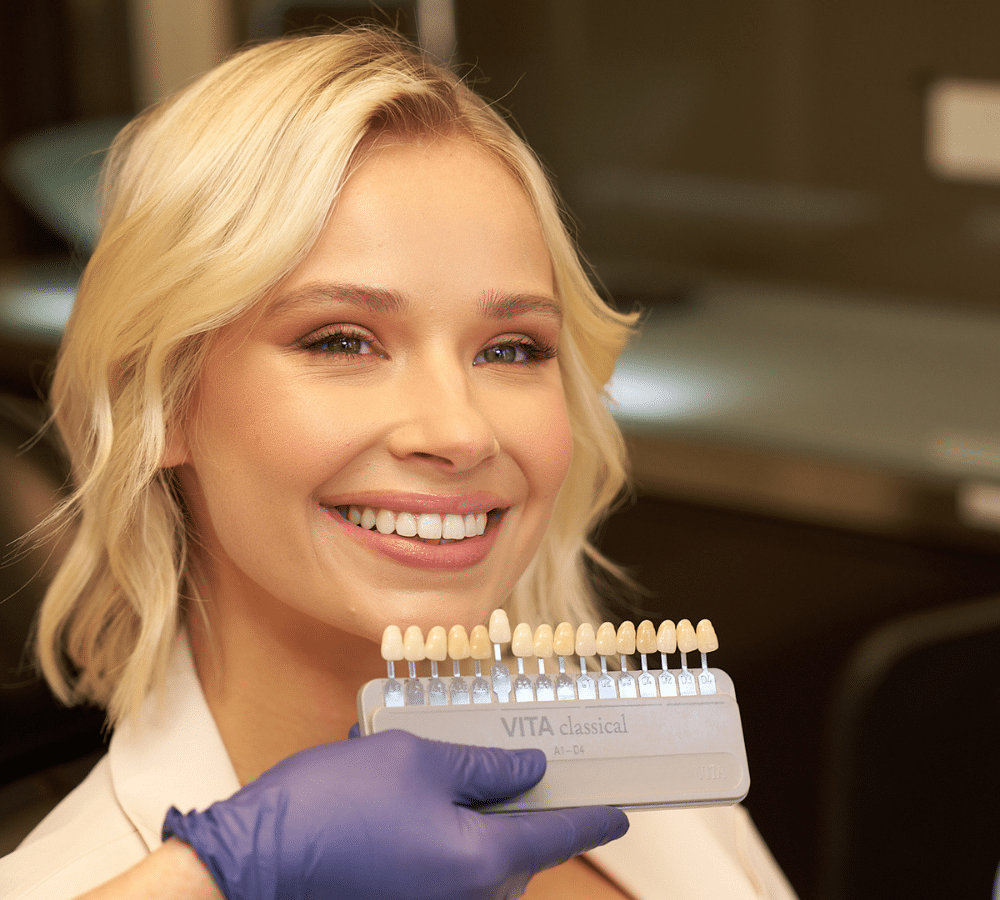
Teeth whitening options
Whitening at the dentist has become increasingly common, effective and affordable, and — when carried out after an examination, by a registered practitioner — it has a well-established safety record. The Australian Dental Association's policy statement puts it this way: bleaching products "are safe and effective when used by or under the supervision of a dentist and according to the professional directions for use", with "transient tooth sensitivity and soft tissue irritation" named as the most common side effects. See Teeth Whitening and Why should I go to a dentist for teeth whitening?.
Compared with products bought from a supermarket or chemist, the products used at the dentist are of significantly higher strength and potency, and are designed to maximise contact with your teeth to achieve a more desirable shade. That contact time is what over-the-counter kits cannot replicate — and the strength difference is fixed by law rather than by choice.
Australia's Poisons Standard treats hydrogen peroxide at 3–6%, and carbamide peroxide at 9–18%, as Schedule 5 substances requiring "Caution" — these can be sold direct to consumers if labelled with the stipulated safety warnings. Schedule 10, reserved for substances "of such danger to health as to warrant prohibition of their sale, supply and use other than in specified exempt circumstances", covers any teeth whitening product containing more than 6% hydrogen peroxide or 18% carbamide peroxide, and those may only be sold, supplied and used by registered dental practitioners as part of dental practice. The restriction is written into every state and territory's poisons legislation. See Difference between pharmacy whitening kits and dentist whitening.
This page is the comparison: in-chair versus take-home, and how to decide. For what to expect day to day once you have trays, see Home teeth whitening: what to do and what not to do; for the full service including current fees, Professional Teeth Whitening and the Price Guide.
First: will whitening work on your teeth at all?
Two different things get called whitening, and only one of them is bleaching.
Extrinsic stain sits on the outside of the enamel — tea, coffee, red wine, tobacco. A professional clean removes it, often for less money than any whitening treatment. See Dental Cleans & Hygienists.
Intrinsic shade is the colour of the tooth itself, largely the dentine showing through the enamel. It darkens with age as enamel thins. Only a peroxide bleaching agent changes this, because only it penetrates the enamel. See How can I improve the whiteness of my teeth?.
Some discolouration responds poorly to either: grey tetracycline banding, white fluorosis patches, and single dark teeth that have had trauma or root canal treatment. A single dark tooth may need internal whitening, a different procedure done from inside the tooth.
What the choice depends on
After a thorough check-up and clean, the approach depends on:
- the cause of your staining — smoking stains behave very differently from antibiotic staining
- your timeframe for achieving the result
- your sensitivity, which is often the deciding factor
- your budget
The two categories
In-chair — one hour, immediate results
Take-home — 10 to 14 days, whitening in your own time at home
The difference between in-chair whitening and take-home whitening sets out the trade-off in detail.
In-chair whitening
Uses a high-strength peroxide activated by a special light, completed within one hour.
Ideal for time-poor patients, or anyone with an event coming up who needs a fast result.
Zoom
The most popular in-chair procedure, performed in a 60-minute appointment. It produces an immediate improvement in the colour and whiteness of your teeth, using a combination of its patented whitening gel and the Zoom light.
The gum and lips are isolated with a barrier before the gel goes on, and the gel is applied in three or four intervals of around 15 minutes across the hour.
One honest caveat: some people will need to continue whitening at home afterwards, using the Day White maintenance system. In-chair whitening is a strong start rather than a complete answer for everyone.
Two more worth knowing before you book it for the day before a wedding:
- Sensitivity is more common and more intense with in-chair than with take-home, because the concentration is higher — which is consistent with the ADA's observation that "the potential for adverse effects on the oral tissues is increased when higher concentrations are used". It usually settles within a day or two.
- Teeth dehydrate during the appointment and look lighter than they will settle at. The shade rebounds slightly over the following days. Do not judge the result on the day, and leave a week before any event. See How long do the effects of teeth whitening last?.
At-home whitening
The Poladay and Polanight system — a mild gel worn in custom-made trays for 10 to 14 days.
Simple, and most patients find the results worthwhile. You are supplied with enough gel for the initial application and a number of subsequent maintenance applications.
How it works
- Your dentist takes upper and lower moulds or a digital scan of your teeth — see Technology
- Custom-fitted bleaching trays are made from them, at the Smile Solutions Laboratory
- You wear the trays with the appropriate gel, daily or nightly
- Duration ranges from one hour a day — while you watch television or read — to overnight
- Repeated over a few weeks
Why people choose it
It puts the control in your hands. You decide how white your teeth become before moving to a maintenance phase.
It doubles as your maintenance system afterwards, letting you touch up the whiteness later without starting again. That is the practical advantage over in-chair alone — you keep the trays, and a single top-up night every few months holds the result far more easily than repeating a full course.
It also allows more sensitive patients to tailor the procedure to their comfort, using shorter wear times and building up gradually. If sensitivity builds, slowing down works better than stopping — whiten every second night and the end result is the same, it just takes longer.
Which one, and can you have both?
| In-chair | Take-home | |
|---|---|---|
| Time to result | One hour | 10–14 days |
| Appointments | One, about an hour | One short visit, then at home |
| Control over final shade | Less | More |
| Sensitivity | More common, more intense | Gentler, adjustable |
| Maintenance included | Usually needs trays anyway | Trays are the maintenance |
| Cost | Higher | Lower |
Many patients do both, and it is often the best-value route: in-chair to get most of the change quickly, then trays to finish and to maintain it. Ask what a combined approach would cost against either alone.
A note on whitening outside a dental practice
Whitening is increasingly offered by people who are not registered dental practitioners. The ADA's policy statement names the settings directly: beauty and hair salons, shopping mall kiosks, dedicated teeth whitening salons, and mobile services.
Two things follow from the schedules above. The law bans people who are not registered dental practitioners from using, supplying and selling the higher-concentration products — so an operator outside a dental practice is either working at retail strength, or working outside the law. And the ADA's position is that teeth whitening "should only be performed if the treatment can be justified, and after a comprehensive dental examination has been conducted by a Dental Practitioner". That examination is what finds the decay, the leaking filling, the crack or the exposed root that turns whitening from uncomfortable into painful.
Operators in these settings sometimes describe their training in terms that imply a dental qualification. Whether someone is a registered dental practitioner can be checked, free and in about a minute, on the AHPRA public register at ahpra.gov.au.
Managing sensitivity
Worth planning for rather than reacting to, since it is the most common complaint:
- Start using a sensitivity toothpaste a week or two before you begin.
- Wear the sensitivity paste in the trays for 15–30 minutes on non-whitening nights. This works considerably better than brushing with it.
- Use a thin ribbon of gel, not a full tray. Excess squeezes onto the gums, which is where most irritation comes from.
- Ordinary pain relief per the packaging if needed.
- Sensitivity from whitening is generally temporary and usually settles within a few days of stopping. Pain in one specific tooth is different — that is usually the tooth, and it should be looked at. See Tooth Pain & Ache.
One recommendation before any whitening
Have your teeth examined and cleaned first, to remove any build-up of plaque and extrinsic staining. See General Dentistry.
This matters for three reasons: the gel reaches the enamel rather than the deposits on it; sometimes the clean alone achieves enough of the change you were after; and the examination checks for decay, leaking fillings, gum disease, cracks and exposed roots — all of which make whitening painful or damaging, and none of which you can see yourself. The ADA states the requirement plainly: "appropriate examination to diagnose and treat any dental or oral health problems is required to minimise any potential discomfort or health risks associated with exposure to bleaching agents". See Tooth Fillings and Bleeding Gums.
Realistic expectations
- Results vary considerably. Some people gain several shades; others one or two. Nobody can promise a specific number in advance. The ADA asks practitioners to ensure patients hold realistic and reasonable expectations, and to explain and document the risks and costs alongside informed consent.
- It is not permanent. Teeth re-stain over months to years; top-ups are normal.
- The area closest to the gums stays darker than the biting edge. That is normal anatomy, not a failed treatment.
- Whitening is generally not provided to under-18s, or during pregnancy or breastfeeding. See Children's Dentistry.
And if whitening is not the right tool for your discolouration, the alternatives are porcelain veneers, composite bonding or crowns — see Cosmetic dentistry options and Cosmetic Dentistry.
Common questions
Does bleaching damage enamel?
Used as intended, the professional bodies do not describe enamel damage as the risk. The ADA's position statement says peer-reviewed studies indicate peroxide bleaching products "are safe and effective when used by or under the supervision of a dentist and according to the professional directions for use", and names transient tooth sensitivity and soft tissue irritation as the common side effects.
The risks it does describe are about concentration and contact, and they are worth reading plainly. WorkSafe Australia's guidelines designate hydrogen peroxide above 5% as a hazardous substance. The ADA notes that direct exposure of skin, eyes and mucous membranes to hydrogen peroxide "may cause severe irritation or burns", and — the sentence that matters most for teeth — that "percolation of hydrogen peroxide into the nerve tissues — often accelerated by exposed dentine and enamel fractures — can lead to nerve inflammation".
Read that last clause carefully, because it is the actual argument for having your mouth examined first. The peroxide is not the variable you control; the state of the enamel it lands on is. Exposed root surfaces, a crack, a leaking filling or untreated decay give the gel a route it should not have. That is also why the ADA requires that whitening only proceed "after a comprehensive dental examination", and why ongoing sharp pain in one particular tooth during a course of whitening is a reason to stop and be seen rather than to push through.
Is the light actually doing anything, or is it theatre?
The honest answer is that the profession's own wording is more cautious than the marketing.
The ADA describes in-chair bleaching as "sometimes with the aid of a light or heat source that may shorten the application time required". May shorten the application time is a claim about speed, not about the final shade, and the ADA does not go further than that. Anyone telling you the lamp is what makes your teeth white is going beyond what the professional statement supports.
Where the light genuinely matters is safety, and there the ADA is specific. "The incorrect application of heat and other forms of energy during teeth whitening procedures, such as light from a plasma arc lamp or high-power (Class 4) laser may cause nerve damage to the tooth and burns to adjacent soft tissues", and failure to use appropriate protective eyewear "may also cause irreversible injury". The applicable standard is AS/NZS 4173:2018, Safe use of lasers and intense light sources in health care, which sets training requirements for dental practices and the cosmetics industry. In Western Australia, Queensland, Victoria and Tasmania, a registered practitioner must additionally hold a licence from the state regulator before using a Class 4 laser.
So the question worth asking is not "do you use a light" but "what sort, and who is trained to operate it". If you are wondering whether the lamp justifies the price difference between in-chair and take-home, the honest framing is that you are paying mainly for the higher-strength gel, the isolation of your gums, and the hour of supervised time.
I found a much stronger kit online from overseas. Is that a problem?
Probably, and the ADA says so directly: "from time to time, some products containing concentrations of bleaching agents that exceed legal limits in Australia have been found to be available online to Australian consumers".
Anything above 6% hydrogen peroxide or 18% carbamide peroxide sits in Schedule 10 of the Poisons Standard — the schedule reserved for substances dangerous enough to prohibit sale, supply and use outside specified exemptions. A product at that strength is lawful in Australia only in the hands of a registered dental practitioner. Buying it online does not change the chemistry, and it removes three things at once: the examination that checks the gel has nowhere harmful to go, the custom tray that keeps it off your gums, and any recourse if something goes wrong.
It also removes consumer protection. The ADA calls for the ACCC to monitor advertising and supply of whitening products against state and territory poisons laws, mandatory labelling standards for cosmetics, and the product safety, product liability and adverse-event reporting provisions of the Competition and Consumer Act 2010. Those protections attach to goods lawfully supplied here. They do not follow a parcel from an overseas seller.
Should I just keep whitening forever to maintain the result?
No — and this is one of the few places where the professional body pushes back explicitly on how these products are sold.
The ADA's statement observes that "the marketing of some teeth whitening products directly available to Australian consumers encourages unrealistic expectations about whitening results and promotes regular ongoing use to maintain desired effects", and adds the reason that should give you pause: "this is a concern given the lack of clinical data supporting frequent home use of such products over long periods".
In other words, indefinite continuous use is not something the evidence has established as safe or necessary — it is a consumption pattern that suits whoever sells the gel. The maintenance approach described above is the opposite: keep your trays, let the shade sit, and top up occasionally when you judge it has drifted, rather than running a permanent low-level course. If you find yourself needing to whiten constantly to hold a shade, that is worth raising at a check-up, because the more likely explanation is extrinsic staining that a clean would remove, or a diet and habit pattern that is re-staining faster than any gel can keep up with.
What am I entitled to be told before I agree to whitening?
More than most people realise, and it is set out in the Dental Board of Australia's own guidance rather than being a matter of courtesy.
The Board expects a practitioner to only perform procedures they are "educated about, trained for and competent in", and to be able to justify the treatment. Its guidance states that justifying treatment "includes knowing the patient's expectations of the products and explaining the risks", and that before any treatment, "you must ensure the patient has reasonable expectations and understands the risks. You must have and document their informed consent, including financial consent."
Financial consent is the phrase to remember. You are entitled to know the cost before you begin, not at the counter afterwards — including what a maintenance kit or a second course would cost if the first does not reach the shade you had in mind.
The Board's advertising guidelines set limits on the other side of the conversation too. Advertising for a regulated health service must not be misleading, must not "offer a gift, discount or other incentive, unless you state the terms and conditions", must not use testimonials about the service, must not "create an unreasonable expectation of beneficial treatment", and must not encourage unnecessary use of regulated health services. A whitening offer with no visible terms, or a page of before-and-after patient accounts, is a signal worth noticing.
Practical details
Smile Solutions, Level 1, 220 Collins Street, Manchester Unity Building, Melbourne VIC 3000. Phone 13 13 96, or theteam@smilesolutions.com.au. Monday–Friday 8.00am–6.00pm, Saturday 8.30am–1.30pm, Sunday by appointment. Full details on Contact Us.
Whitening does not change the colour of existing crowns, veneers or tooth-coloured fillings — if you have these on your front teeth, discuss the sequence with your dentist before starting. And if you are planning crowns or veneers, whiten first: restorations are matched to your shade on the day they are made and cannot be lightened afterwards. See I want to whiten my teeth but one of my front teeth has a porcelain crown.
Related: Professional Teeth Whitening, Home teeth whitening: what to do and what not to do, Off-the-shelf teeth whitening — why the results disappoint, How long do teeth whitening effects last?, Dental Cleans and Hygienists, What should I know about teeth whitening?, Home whitening and charcoal whitening: does it work? Is it safe?.
Registration for any practitioner can be verified free on the AHPRA public register at ahpra.gov.au; the clinicians are listed on Our Team.
Published 29 May 2018. General information only — it is not a diagnosis, a treatment plan, a quote or a promise of any particular clinical outcome, and it does not replace advice from your treating practitioner. Whitening results vary considerably between individuals and depend on the cause of discolouration; whether whitening will work on your teeth can only be established after examination, and results are not permanent. Sensitivity is a recognised effect. This information is intended for people over 18. Fees are indicative and subject to change; confirm at your consultation.
Smile Solutions trades under ABN 28 193 514 103.
Images on This Page
-
https://www.facebook.com/tr?id=800557773428361&ev=PageView&noscript=1
(no alt text)
-
https://www.smilesolutions.com.au/wp-content/uploads/2025/10/calendar_month.svg
(no alt text)
-
https://www.smilesolutions.com.au/wp-content/themes/arcadian-wordpress-theme/assets/images/smile_solutions_logo_white.png
Smile Solutions Logo
-
https://www.smilesolutions.com.au/wp-content/themes/arcadian-wordpress-theme/assets/images/smile_solutions_logo_purple.png
Smile Solutions Logo
-
https://www.smilesolutions.com.au/wp-content/uploads/2023/11/SS-Tooth-1-1-150x150.png
Smile Solutions
-
https://www.smilesolutions.com.au/wp-content/uploads/2025/11/Teeth-Whitening-at-Smile-Solutions.png
Teeth Whitening at Smile Solutions
-
https://www.smilesolutions.com.au/wp-content/uploads/2025/09/Root-Canal-2-300x217.jpg
Root Canal
-
https://www.smilesolutions.com.au/wp-content/uploads/2026/08/Mouth-Breathing-300x270.jpg
Mouth Breathing
-
https://www.smilesolutions.com.au/wp-content/uploads/2025/09/Dental-Crown-at-Smile-Solutions-300x300.jpg
Dental Crown at Smile Solutions
-
https://www.smilesolutions.com.au/wp-content/themes/arcadian-wordpress-theme/assets/images/family_owned_bussiness.png
Family Owned Business
-
https://www.smilesolutions.com.au/wp-content/themes/arcadian-wordpress-theme/assets/icons/icon--phone.svg
Smile Solutions Contact
-
https://www.facebook.com/tr? id=800557773428361&ev=PageView&noscript=1
(no alt text)
-
https://bat.bing.com/action/0?ti=25148060&tm=gtm002&Ver=2&mid=ff5f15a3-c9f9-425e-bf63-8235c689a12f&bo=1&sid=29a170f0ab2711f1b145612f975681e5&vid=29a18300ab2711f184124ff868dd735e&vids=1&msclkid=N&pi=918639831&lg=en-US&sw=800&sh=600&sc=24&nwd=1&tl=What%20are%20the%20different%20teeth%20whitening%20options%20are%20available%20at%20Smile%20Solutions%3F%20-%20Smile%20Solutions&p=https%3A%2F%2Fwww.smilesolutions.com.au%2Fdental-articles%2Farticle%2Fdifferent-teeth-whitening-options-available-smile-solutions-2%2F&r=&evt=pageLoad&sv=2&cdb=AQAQ&rn=886527
(no alt text)