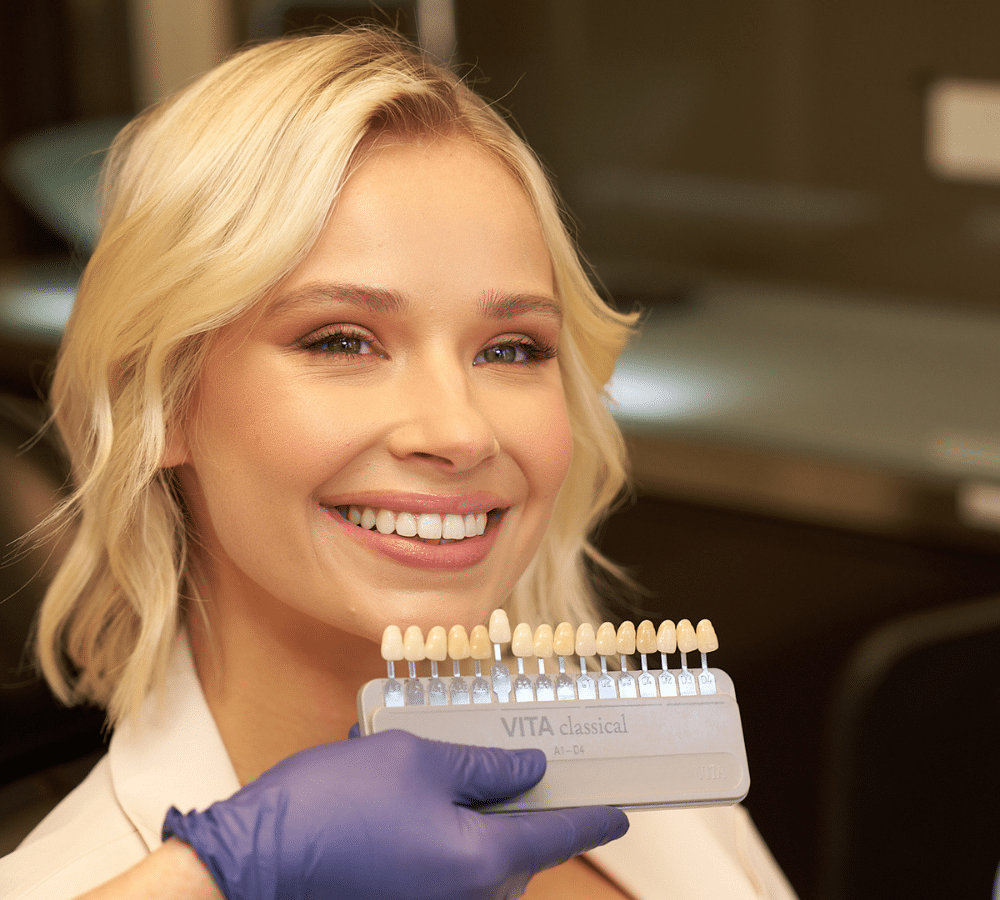
How long teeth whitening lasts, and when the rebound happens
The short answer, and the shape of it
Whitening — in-chair or at-home — lasts several years. Some rebound towards your original tooth colour should be expected from both methods. See Teeth Whitening.
What matters is when the rebound happens:
The most significant relapse occurs initially in the first month — usually within the first 24 hours.
Colour relapse is much slower between 6 months and 24 months.
Even with this relapse, your teeth will probably still be lighter than they were before whitening.
That front-loaded pattern explains the most common complaint about whitening. People judge the result against what they saw walking out of the surgery — which is the peak, not the outcome. The shade you have a week later is the real result. Setting that expectation is not a courtesy either: the Australian Dental Association's Policy Statement 2.2.8 requires that “practitioners should ensure that patients have realistic and reasonable expectations regarding the results of the bleaching treatment”, and that risks and costs are explained and documented with the patient's informed consent. See What should I know about teeth whitening? and how long do teeth whitening effects last?, which covers the same ground from the other direction.
Why results differ between people
Results can never be the same for any two people.
Some people achieve a whiteness several shades brighter than their existing tooth colour. Others achieve only a few shades' difference.
Relapse is not uncommon, usually because of personal behaviours — which is the part you can influence.
There is also the range of options available, each producing differing degrees of permanency:
- Over-the-counter: whitening toothpastes, mouthwashes and strips — see Difference between pharmacy whitening kits and dentist whitening
- Professional: in-chair whitening and dentist-supplied home kits — see The difference between in-chair whitening and take-home whitening, home teeth whitening versus having your teeth whitened at the dentist and What teeth whitening options are available at Smile Solutions?
The reason those options behave differently is concentration, and in Australia concentration is set by law rather than by preference. The ADA's policy statement sets out the framework. Hydrogen peroxide at 3–6%, and carbamide peroxide at 9–18%, are Schedule 5 substances under the Poisons Standard, requiring “Caution” labelling — products up to those strengths “can be sold direct to consumers if they are labelled with stipulated safety warnings”. Above that, Schedule 10 “specifically states that teeth whitening products containing more than 6% hydrogen peroxide or 18% carbamide peroxide may only be sold, supplied and used by registered dental practitioners as part of their dental practise”.
Two things follow. The equivalence is roughly one-third — “18% carbamide peroxide approximates 6% hydrogen peroxide” — so the two numbers on a label are not directly comparable. And the working range is wide: the ADA describes effective hydrogen peroxide concentrations “as low as 3-6% for some products supplied to patients for home use to 35% in some office-based bleaching products”. A supermarket kit and an in-chair treatment are not the same intervention at different prices.
Your dentist will advise on the degree of whitening, and the process, best suited to your teeth. See General Dentistry.
Not everyone's teeth are suitable
Dentists are the only people trained and qualified to assess your teeth and gums for whitening. That is the ADA's position, not only ours. Noting that whitening is now offered in beauty salons, shopping-mall kiosks and mobile services, its policy states that “only registered dental practitioners have the expertise to assess whether bleaching is safe for individual patients, to recommend the most appropriate technique and materials, and to provide treatment that meets regulated safety and quality standards of care”, and that treatment should follow “a comprehensive dental examination”. See Why should I go to a dentist for teeth whitening?.
They check for:
- Gum recession — see Bleeding Gums, what is gum disease? and periodontal (gum) disease
- Sensitivity — what to do if you suffer from sensitive teeth
- Tooth decay — see Tooth Fillings and how long do dental fillings last?
- Existing restorations — fillings, crowns and veneers; see also what types of dental crowns are available?
- Other oral conditions that might be an impediment
- Enamel thickness, which is measured
They also assess the cause of your discolouration — whether it is diet, ageing, or something else. That last assessment determines whether peroxide will help at all. Some discolouration does not respond to whitening, and finding that out beforehand is considerably better than finding it out afterwards. See How can I improve the whiteness of my teeth? and, where the marks are white rather than yellow, what causes white spots on teeth?
Worth separating out from colour altogether: enamel thinned by acid looks darker because the dentine beneath shows through, and bleaching does not address that. What is dental erosion and how is it addressed? and how does acidic food affect your teeth?
How whitening actually works
Whitening brings a dental bleach — hydrogen peroxide or carbamide peroxide — into contact with the teeth. This is done either at high concentration in one visit, or at lower concentration over a period of weeks at home.
Chemically: whitening breaks the carbon bonds that give enamel its yellowish tinge. Once broken, those bonds no longer reflect yellow, and the teeth look whiter.
We do not provide other methods of whitening, such as charcoal or abrasion. Those work by removing surface material rather than changing the tooth's colour — see Home whitening and charcoal whitening: does it work? Is it safe?.
What the research shows
At-home whitening
One of the longest studies assessed participants 9 to 12 years after six weeks of overnight home whitening with 10% carbamide peroxide.
- 33% reported no obvious change
- 27% reported a slight change
- 6% reported moderate to severe change
- The remainder had already redone the bleaching process
Read that carefully: a decade later, a third of participants saw no obvious loss of the result — which is a considerably better outcome than most people expect.
Other studies follow patients for two years, using both patient surveys and instrument-based light and colour measurement. Patient experiences vary; objective measurements tend to show that lightening persists, but that shades of yellow and red can return.
In-chair whitening
Follow-up studies show teeth are still lighter two years after treatment, but not as white as immediately after.
One finding worth knowing before you pay for it: the general consensus is that an activation light can reduce overall treatment time, but does not extend the duration of the whitening. The light makes the appointment shorter. It does not make the result last longer.
Home versus in-chair
Studies comparing the two show a similar rate of colour rebound, regardless of the length of the initial treatment.
This holds for 45-minute in-chair whitening, 10-day home whitening and 4-week home whitening alike.
So the choice between them is about convenience, cost, sensitivity management and how quickly you want the result — not about durability. Fees are on the Price Guide, and understanding your treatment covers what is quoted before you start.
What affects how long it lasts
Your result is affected by your original shade, dental health, previous whitening experience, diet and smoking.
The factors you can control are dental health, diet and smoking.
Dental health issues can be identified and prevented with regular check-ups and cleans. See Dental Cleans & Hygienists, what does a dental hygienist do? and your Smile Solutions dental hygienist visit: what to expect. Day to day, it is the ordinary routine that keeps surface stain from accumulating between visits — what is the ideal daily routine for oral hygiene? and is flossing really that important? Where calculus has built up below the gum, a polish is not the answer — when do you need deeper cleaning?
Diet
Most studies of teeth immersed in coloured liquids suggest red wine, cola and tea are worse than coffee for changing tooth colour.
That ordering surprises people. Tea beats coffee as a staining agent, largely because of its tannin content — are there antibacterial properties in tea? covers what else tea does, for better and worse. On wine specifically, what impact does wine have on my teeth?
Smoking
Smoking can change the internal colour of teeth, and — more noticeably — usually leaves an external stain, which can only be removed by dental prophylaxis performed by a hygienist or dentist. The substitutes are not colour-neutral or risk-neutral either: are e-cigarettes bad for my teeth? and the effects of vaping on your oral health.
Maintaining the result
Beyond dental health, diet and not smoking:
Touch-ups of in-chair whitening can be performed after a minimum of 12 months, or by using shorter courses of home whitening — see The do's and don'ts of home teeth whitening.
Some studies suggest hydrogen peroxide mouth rinses or whitening toothpastes may recover the whitening effect following staining. Be careful with that as a routine rather than an occasional measure. The ADA is pointed about it: “The marketing of some teeth whitening products directly available to Australian consumers encourages unrealistic expectations about whitening results and promotes regular ongoing use to maintain desired effects. This is a concern given the lack of clinical data supporting frequent home use of such products over long periods.” In other words the evidence for topping up indefinitely at home is not there — which is an argument for a planned touch-up under supervision rather than a permanent habit. On what those products can and cannot do, with so many toothpastes on the market, how can I make a wise choice? and the truth and myths about mouthwashes.
As with all dental treatment, speak with a dentist face to face about the suitability of these options in your case. Contact Us.
Is it safe?
Whitening is generally safe and, used correctly, can produce very satisfying results.
But if you choose the wrong treatment — or a suitable treatment is applied incorrectly — you risk damaging your teeth.
The ADA's summary of the evidence is reassuring on the common case and specific about what the common problems are: “peroxide-containing teeth bleaching products are safe and effective when used by or under the supervision of a dentist and according to the professional directions for use. The most common side-effects are transient tooth sensitivity and soft tissue irritation during or immediately following treatment.” Transient is the operative word, and “under the supervision of a dentist” is the condition attached to it.
The reason the concentration limits exist at all is the other end of the range. WorkSafe Australia designates hydrogen peroxide above 5% a hazardous substance, and the ADA notes that direct exposure of skin, eyes and mucous membranes “may cause severe irritation or burns”, while ingestion may irritate the oesophagus and stomach.
Possible side effects:
- Damage to and blistering of the gums
- Tooth sensitivity
- Irritation and possibly bleeding in the oesophagus and stomach if the bleaching agent is swallowed
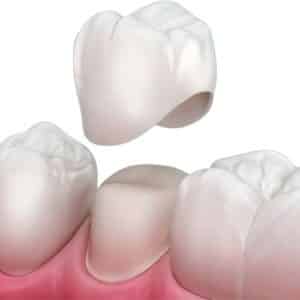
And an important one that is not a side effect but a design limitation: crowns, veneers and fillings will not change colour after whitening, so you can end up with “multicoloured” teeth. If you have restorations on your front teeth, this needs planning around before you start — see I want to whiten my teeth but one of my front teeth has a porcelain crown, what is the difference between porcelain crowns and veneers? and Cosmetic dentistry options.
Without professional assessment, it is not possible to rule out permanent side effects or other risks.
Before and after whitening, avoid
- Smoking
- Tea, coffee and red wine
- Highly coloured foods
- Mouthwashes
All of these can stain the teeth, reversing the effect of both home and in-chair whitening. Your dentist will advise when it is appropriate to resume them — although smoking is to be avoided at all times because of the overall health risks.
The reason this matters most immediately after treatment: the enamel is temporarily more porous, and picks up stain more readily than usual. The first 48 hours do a disproportionate amount of damage to the result.
Ultimately, the way to maintain both your whitening and the general health of your teeth and gums is to see your dentist and hygienist regularly — ideally every six months.
Common questions
I have a wedding in three weeks. Is that enough time?
Probably, but the timing that actually matters is not the one most people plan around.
The figures at the top of this page are the ones to work from. Most of the relapse happens in the first month, and usually in the first 24 hours, so the shade on the day of the event is going to be the settled shade rather than the peak — and that is a good thing, because the peak is not what you want photographed anyway. What you need is enough time after treatment to see the settled result and act on it if it is not what you hoped.
A practical way to think about it:
- Leave a clear week to see the real shade. Judging the result on the day you finish tells you nothing useful.
- Leave enough room for a short top-up if the settled shade has not gone as far as you wanted. That is a planned second course, not a rescue.
- Have the examination and any needed dental work well before that, because whitening is not done over an open cavity or untreated gum disease, and discovering either at the two-week mark compresses everything.
- If there are crowns or veneers in the smile line, add considerably more time — see the question below.
Three weeks is workable. Three days is not, and that is the version of this question that most often ends in disappointment.
One tooth is much darker than the rest. Will whitening even it out?
Usually not, and the reason matters more than the answer.
Generalised yellowing sits in the enamel and the dentine beneath it, and it is the thing peroxide is designed to act on. A single dark tooth is usually a different problem: the colour is coming from inside that particular tooth, typically after an injury or after the nerve has died. Whitening the outside of every tooth in the arch does not change what is happening inside one of them — and if anything it can make the contrast more obvious, because everything around the dark tooth moves and the dark tooth does not.
This is one of the things the assessment described above is for. The International Association of Dental Traumatology's guidance on traumatised teeth lists discolouration among the unfavourable outcomes its follow-up reviews are specifically looking for, which tells you how it is regarded clinically: as a sign, not a stain. A tooth that has darkened after a knock — even a knock years earlier — needs to be examined and imaged before anyone decides what to do about its colour.
So bring it up as its own question rather than assuming a whitening course will absorb it. The honest sequence is: find out why that tooth is dark, deal with that, then decide about colour.
My gums stung and went white where the gel touched them. What do I do?
Stop, rinse, and tell whoever supplied the gel — that day if it is severe, at the next contact if it is mild and settling.
The ADA's summary of the evidence names soft tissue irritation during or immediately following treatment as one of the two most common side effects, alongside transient sensitivity, and its policy is explicit that direct exposure of mucous membranes to hydrogen peroxide “may cause severe irritation or burns.” A white or blanched patch on the gum where the gel sat is that irritation, and it usually settles over a day or two.
What prevents it is fit and quantity. A properly fitting custom tray is designed to hold the gel against the teeth and off the gum, which is exactly what a generic tray cannot do; and overfilling any tray pushes gel out over the gum margin, which defeats the design. If this is happening every time, the tray or the amount is wrong, and that is a conversation rather than something to tolerate.
Two things not to do: do not press on through a severe reaction to finish the course on schedule, and do not swallow rinsed gel — as noted above, ingestion may irritate the oesophagus and stomach.
I have a crown on a front tooth. Does that rule whitening out?
No, but it changes the order of operations and the budget, and both are better discussed before anything starts.
The constraint is set out above: crowns, veneers and fillings do not change colour with peroxide. So whitening the natural teeth around an existing restoration moves everything except that restoration, and the match you have now is the match you are giving up.
The questions to ask at the consultation are sequencing questions:
- Which comes first? Where a restoration is going to be replaced anyway, there is a logic to whitening first and then matching the new work to the settled shade — which is another reason the settled shade, not the peak, is the one that matters.
- How long after whitening is the shade taken? Choosing a restoration shade against teeth that are still at their lightest builds the mismatch in at the start.
- What is the total cost if the restoration has to be remade? That is the number that decides most of these cases, and it belongs in the written plan rather than in a later surprise. Published fees are in the price guide.
- What happens if I do nothing? A perfectly acceptable answer to this question is to leave the colour alone.
I want to whiten my teeth but one of my front teeth has a porcelain crown goes through the same problem in more detail.
Related reading
- What should I know about teeth whitening?
- How can I improve the whiteness of my teeth?
- How long do porcelain veneers last?
- What happens to my teeth after dental veneers, and will I ever get cavities?
- I want a smile makeover — where should I start?
Practical details
Smile Solutions, Level 1, 220 Collins Street, Manchester Unity Building, Melbourne VIC 3000 — getting here. Phone 13 13 96, or theteam@smilesolutions.com.au. Monday–Friday 8.00am–6.00pm, Saturday 8.30am–1.30pm, Sunday by appointment. The clinicians are listed on Our Team; registration can be verified free on the AHPRA register, or by calling 1300 419 495.
The statements attributed to the Australian Dental Association come from its Policy Statement 2.2.8 on teeth whitening (bleaching) by persons other than dental practitioners, last reviewed September 2025. The reference to discolouration as a follow-up finding after dental trauma is from the International Association of Dental Traumatology's 2020 guidelines for the management of traumatic dental injuries. The follow-up study figures quoted above are drawn from the published whitening literature and are reported here as we hold them; they are not drawn from that policy statement.
Published 30 September 2018. Results, duration and side effects vary between individuals; whitening is not suitable for everyone. General information only; it does not replace advice from your treating practitioner.
Smile Solutions trades under ABN 28 193 514 103.
Images on This Page
-
https://www.facebook.com/tr?id=800557773428361&ev=PageView&noscript=1
(no alt text)
-
https://www.smilesolutions.com.au/wp-content/uploads/2025/10/calendar_month.svg
(no alt text)
-
https://www.smilesolutions.com.au/wp-content/themes/arcadian-wordpress-theme/assets/images/smile_solutions_logo_white.png
Smile Solutions Logo
-
https://www.smilesolutions.com.au/wp-content/themes/arcadian-wordpress-theme/assets/images/smile_solutions_logo_purple.png
Smile Solutions Logo
-
https://www.smilesolutions.com.au/wp-content/uploads/2023/11/SS-Tooth-1-1-150x150.png
Smile Solutions
-
https://www.smilesolutions.com.au/wp-content/uploads/2025/11/Teeth-Whitening-at-Smile-Solutions.png
Teeth Whitening at Smile Solutions
-
https://www.smilesolutions.com.au/wp-content/uploads/2025/09/Root-Canal-2-300x217.jpg
Root Canal
-
https://www.smilesolutions.com.au/wp-content/uploads/2026/08/Mouth-Breathing-300x270.jpg
Mouth Breathing
-
https://www.smilesolutions.com.au/wp-content/uploads/2025/09/Dental-Crown-at-Smile-Solutions-300x300.jpg
Dental Crown at Smile Solutions
-
https://www.smilesolutions.com.au/wp-content/themes/arcadian-wordpress-theme/assets/images/family_owned_bussiness.png
Family Owned Business
-
https://www.smilesolutions.com.au/wp-content/themes/arcadian-wordpress-theme/assets/icons/icon--phone.svg
Smile Solutions Contact
-
https://www.facebook.com/tr? id=800557773428361&ev=PageView&noscript=1
(no alt text)
-
https://bat.bing.com/action/0?ti=25148060&tm=gtm002&Ver=2&mid=d581131b-4c5b-4fce-9602-4e8643512b2b&bo=1&sid=d8f682a0ab2711f18cc62b9518bf4163&vid=d8f6bf90ab2711f1b2683d64366a95c6&vids=1&msclkid=N&pi=918639831&lg=en-US&sw=800&sh=600&sc=24&nwd=1&tl=How%20long%20do%20the%20effects%20of%20teeth%20whitening%20last%3F%20-%20Smile%20Solutions&p=https%3A%2F%2Fwww.smilesolutions.com.au%2Fdental-articles%2Farticle%2Flong-effects-teeth-whitening-last%2F&r=<=1914&evt=pageLoad&sv=2&cdb=AQAQ&rn=796497
(no alt text)