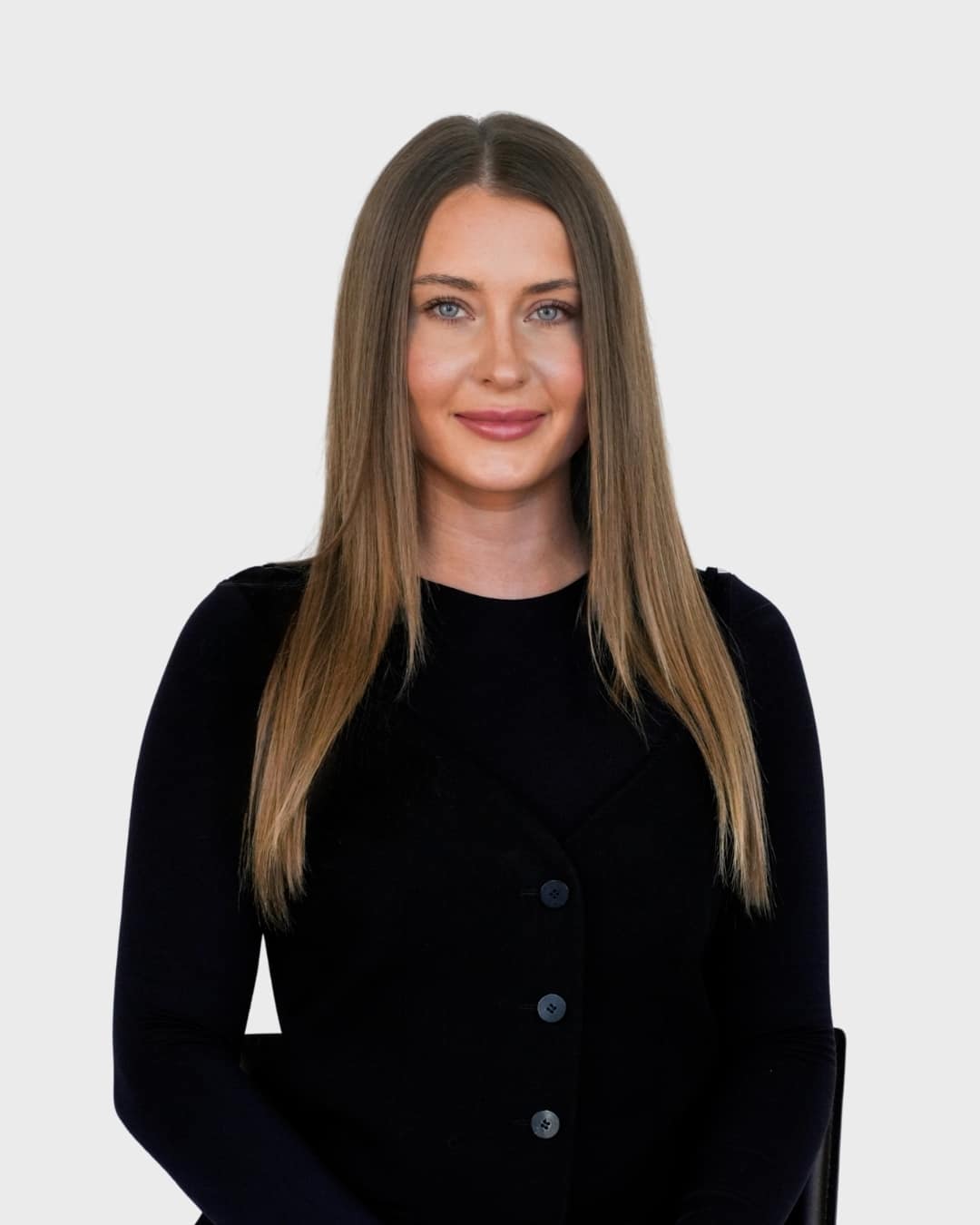
Agne Diliartaite, Senior Dental Technician
Role: Senior Dental Technician, Smile Solutions
Qualifications: Dip. Dental Technology
What a dental technician does
A dental technician makes the appliances and restorations that a dentist or prosthodontist prescribes. They do not examine, diagnose or treat patients; they work from impressions, digital scans, photographs and written prescriptions supplied by the treating clinician.
The work covers:
- Crowns, bridges, inlays and onlays in ceramic, zirconia or metal
- Porcelain veneers
- Full and partial dentures, including the cast metal frameworks for partials
- Occlusal splints and night guards
- Custom sports mouthguards
- Orthodontic appliances and retainers
- Implant-supported restorations and their substructures
A senior technician typically also carries responsibility for quality control, for the more demanding cases, and for supervising and training other technicians.
Why the laboratory side matters to a patient
The distinction worth understanding is that a restoration is designed by the clinician and made by the technician, and the outcome depends on both.
Fit is the clearest example. A crown that is a fraction of a millimetre out at the margin leaves a gap where bacteria collect — invisible on the day, and a source of decay underneath years later. Crowns do not decay; the tooth under them does, and the margin is where that starts.
Shade, translucency, surface texture and the way a tooth catches light are all decided in the laboratory. A front tooth is not one colour: it is more translucent at the biting edge, more saturated at the gum, and carries surface texture and internal characterisation that make it read as a tooth rather than a tile. Reproducing that is craft, and it is the single biggest determinant of whether a front crown looks real.
And design matters structurally. Whether a partial denture rests its load on the remaining teeth or presses into the gum affects how long those teeth last — a decision made at the drawing stage, not the fitting stage.
Where the laboratory is on site, as it is here, the technician can see the patient's actual teeth and complexion rather than working from a written shade code and a photograph, and adjustments can be made in the same visit rather than across a fortnight of postage.
How the work is actually made now
The field has changed more in fifteen years than in the previous fifty.
The traditional workflow: an impression in a tray, poured in plaster to make a model, a wax pattern hand-carved on that model, then cast in metal or pressed in ceramic. Still used, still excellent, and still the reference standard for some work.
The digital workflow: an intraoral scanner captures the preparation directly, the restoration is designed on screen in CAD software, and it is then milled from a solid block or 3D printed. Advantages are speed, no impression material, easy storage and reproduction of the design, and same-day restorations where the practice mills chairside.
Neither is automatically better. Scanning struggles where the margin sits below the gum or where bleeding obscures it; a well-taken conventional impression can still beat a poor scan. The skill is in the preparation, the capture and the design, not the machine.
Materials, briefly:
- Zirconia — very strong, and in its earlier, more opaque forms best suited to back teeth. Newer, more translucent generations are used further forward, with a trade-off: the more translucent the zirconia, the less strong it is.
- Lithium disilicate — excellent appearance, widely used for front teeth and smaller restorations.
- Metal-ceramic — the long-standing workhorse; strong, predictable, and prone to a dark line at the gum margin as gums recede.
- Gold — by durability one of the best materials ever used in dentistry, now used far less purely because of appearance.
- Cobalt-chromium for cast partial denture frameworks; acrylic for denture bases and teeth.
If you want the material comparison written out with the trade-offs and the cost implications, see How Much Does a Dental Crown Cost in Melbourne? Materials Compared and What types of dental crowns are available?.
What the evidence says about the laboratory-made part of an implant
Implant treatment is usually discussed in terms of the implant itself, but a large share of what goes wrong over time happens in the suprastructure — the crown, bridge or framework made in the laboratory and attached to the implant. Those are the components a technician makes, and the published complication rates are worth knowing before you choose one.
The ITI Academy consensus statements on implant survival and complications, drawing on prospective studies with at least five years of follow-up, report for implant-supported fixed partial dentures that "the incidence of suprastructure-related complications (veneer and framework fracture) was 14.0% after 5 years", that "the incidence of connection-related complications (screw loosening or fracture) was 7.3% (5 years)", and that "the incidence of implant fracture was 0.4% after 5 years and 1.8% after 10 years" (ITI Academy, Implant Survival and Complications). The same source records that "FPDs without any biologic or technical complications were encountered in 61.3% of patients after 5 years".
Read those numbers the right way round. They are not an argument against implants — the implant itself very rarely fractures. They say that the ceramic and the screw joint are the parts most likely to need attention, that a proportion of patients should expect something to need adjusting within five years, and that this is maintenance rather than failure. It is a fair question to ask, before the work is made, what happens if a veneer chips or a screw loosens, whether the restoration is designed to be retrievable, and what that would cost.
Common questions
Can I book an appointment directly with a dental technician?
A dental technician makes restorations and appliances from a registered clinician's prescription and does not diagnose or prescribe treatment. Start with the dentist or specialist responsible for your care.
What does the technician contribute to my treatment?
The technician translates the clinical prescription and records into the physical restoration or appliance. Material handling, fit, shape, shade and communication with the clinician all affect the finished work.
Where is the laboratory work made?
This profile states that Smile Solutions operates an in-house dental laboratory in Melbourne. For your own case, ask which parts are made there, the material selected and whether any work is sent elsewhere.
Are dental technicians registered with AHPRA?
No. Dental technicians are not registered health practitioners, so they do not appear on the AHPRA register. Verify the dentist or specialist who examines you, prescribes the work and remains responsible for the clinical treatment.
How is the restorative material chosen?
The prescribing clinician considers tooth or implant position, bite, available space, appearance, allergies or sensitivities and the repair strategy, then works with the technician. Ask why the selected material suits your case and what alternatives exist.
What happens if a crown, denture or appliance needs repair?
It first needs clinical assessment to identify whether the problem is in the appliance, supporting tooth, implant, bite or fit. Some work can be repaired or adjusted; other failures require remaking and possibly additional clinical treatment.
Registration
This is a point of genuine confusion, and worth stating accurately.
Dental technicians are not registered health practitioners in Australia. The Dental Board of Australia registers dentists, dental specialists, dental hygienists, dental therapists, oral health therapists and dental prosthetists — but not dental technicians, because technicians do not provide clinical care directly to patients. They work only to a registered practitioner's prescription.
That is not an opinion about the role; it is how the National Law is drawn. Ahpra's advertising guidelines set out the protected titles profession by profession, and for the dental profession the list is exactly "dentist, dental therapist, dental hygienist, dental prosthetist, oral health therapist" — the same five names again appear as the divisions of the dental practitioner register (Ahpra, Guidelines for advertising a regulated health service, Tables 1 and 3). Dental technician is not on either list.
Dental prosthetists are a different role and are registered: they can consult with patients directly and fit dentures without a dentist's referral. A dental technician cannot. See Dentures.
Prosthodontists are different again — registered dentists holding specialist registration in one of the thirteen recognised specialties. The Dental Board states that "there are 13 dental specialties in Australia which are approved by the Australian Health Workforce Ministerial Council", prosthodontics among them, and that an applicant for specialist registration must have "completed a minimum of two years general dental practice" as well as meeting "all other requirements for general registration as a dentist" (Dental Board of Australia, Specialist Registration). See Specialist Prosthodontists, and the full list of registered specialists working here.
So if you are looking up a technician on the AHPRA register, you will not find them there, and that is expected rather than a red flag. The registration that matters for your treatment is that of the dentist or specialist who prescribed the work — and you can check it. Ahpra "publishes an online register of all dental practitioners that provides the profession and the public with up-to-date information about a dental practitioner's registration status", a register which "also includes details of the specialty or specialties for dentists who hold specialist registration" (Dental Board of Australia, Specialist Registration).
One further standard is worth knowing, because it governs who may prescribe what: the Board's Scope of practice registration standard, in effect since 1 July 2020, "requires dental practitioners to practise within the scope of their education, training, and competence at all times" (Dental Board of Australia, FAQ: Specialist registration). The prescription for a piece of laboratory work has to come from someone whose training covers it.
Qualification for the technician's role itself is by a Diploma or Advanced Diploma of Dental Technology, or a Bachelor of Dental Technology.
Related reading
Service pages for the work made in the laboratory:
- Dental Crowns
- Dental Bridges
- Porcelain Veneers
- Dentures
- Same-Day CEREC Restorations
- Our Technology
- The Smile Solutions Laboratory
Articles that explain the laboratory side in more detail:
- What is the difference between porcelain crowns and veneers?
- What are the different types of dentures (partial vs full vs implant retained, metal vs plastic)?
- 5 things you should know about your new dentures
- My denture is broken. What should I do?
- Everything you need to know about CEREC technology
And for what happens before the laboratory work starts: Understanding Your Treatment and the Price Guide.
Practical details
Smile Solutions operates an in-house dental laboratory. The clinicians who prescribe laboratory work hold registration with the Dental Board of Australia, verifiable free on the AHPRA public register at ahpra.gov.au, or by calling 1300 419 495. You can see the whole clinical team on the Our Team page.
Smile Solutions, Level 1, 220 Collins Street, Manchester Unity Building, Melbourne VIC 3000. Phone 13 13 96, or theteam@smilesolutions.com.au. Monday–Friday 8.00am–6.00pm, Saturday 8.30am–1.30pm, Sunday by appointment. Location and directions, or contact us.
This page records a staff role and qualification as published by the practice. General information only — it is not a diagnosis, a treatment plan or a promise of any particular outcome. Figures quoted from the ITI Academy and the Dental Board of Australia are those publishers', are averages across study populations, and do not predict an individual result.
Smile Solutions trades under ABN 28 193 514 103.
Images on This Page
-
https://www.facebook.com/tr?id=800557773428361&ev=PageView&noscript=1
(no alt text)
-
https://www.smilesolutions.com.au/wp-content/uploads/2025/10/calendar_month.svg
(no alt text)
-
https://www.smilesolutions.com.au/wp-content/themes/arcadian-wordpress-theme/assets/images/smile_solutions_logo_white.png
Smile Solutions Logo
-
https://www.smilesolutions.com.au/wp-content/themes/arcadian-wordpress-theme/assets/images/smile_solutions_logo_purple.png
Smile Solutions Logo
-
https://www.smilesolutions.com.au/wp-content/uploads/2023/11/Agne.jpg
Agne Diliartaite
-
https://www.smilesolutions.com.au/wp-content/themes/arcadian-wordpress-theme/assets/images/family_owned_bussiness.png
Family Owned Business
-
https://www.smilesolutions.com.au/wp-content/themes/arcadian-wordpress-theme/assets/icons/icon--phone.svg
Smile Solutions Contact
-
https://www.facebook.com/tr? id=800557773428361&ev=PageView&noscript=1
(no alt text)
-
https://bat.bing.com/action/0?ti=25148060&tm=gtm002&Ver=2&mid=e78db87f-316e-4a54-8380-af2d9cfc50ff&bo=1&sid=6043c660ab2811f1987edf066c5a860e&vid=6043dae0ab2811f182a235d62ca367da&vids=1&msclkid=N&pi=918639831&lg=en-US&sw=800&sh=600&sc=24&nwd=1&tl=Agne%20Diliartaite%20-%20Smile%20Solutions&p=https%3A%2F%2Fwww.smilesolutions.com.au%2Four-team%2Fagne-diliartaite%2F&r=<=1967&evt=pageLoad&sv=2&cdb=AQAQ&rn=727393
(no alt text)