A third consecutive Australian Business Award for Service Excellence
The awards
In 2014 Smile Solutions received the Australian Business Award for Service Excellence — the third consecutive year it had done so.
The practice was also recognised for Innovation and as an Employer of Choice.
The Service Excellence award recognises organisations achieving outstanding results through initiatives demonstrating leadership and commitment to service excellence.
What the judges described
The judges’ citation, summarised. All descriptions and figures below are the awards body’s statements as at 2014, and are historical rather than current.
Growth. The business had grown from a one-dentist operation in 1993 to employ over 90 people, with a patient base of over 65,000. The judges described it as the largest private dental practice in Australia in a single location.
The service model. The citation described Smile Solutions as providing Dental Board registered specialists across all fields of dentistry under one roof, alongside general dentistry.
That phrase needs a correction, and it is ours to make rather than the awards body’s. Australia recognises thirteen dental specialties. We have registered specialists in six of them — endodontics, oral and maxillofacial surgery, orthodontics, paediatric dentistry, periodontics and prosthodontics. That is six of the thirteen, not all of them, and a case needing dento-maxillofacial radiology, forensic odontology, oral medicine, oral and maxillofacial pathology, oral surgery, public health dentistry or special needs dentistry is referred out. See Dentists & Registered Specialists, specialist care and why would I need to see a dental specialist?
Expansion. In the year preceding the award, the network had expanded to include branches in six Melbourne metropolitan and Greater Melbourne localities, as part of the Core Dental Group initiative — whose stated goal was to offer the most appropriate service possible in terms of technical excellence, patient comfort and convenience, clinical outcomes and cost.
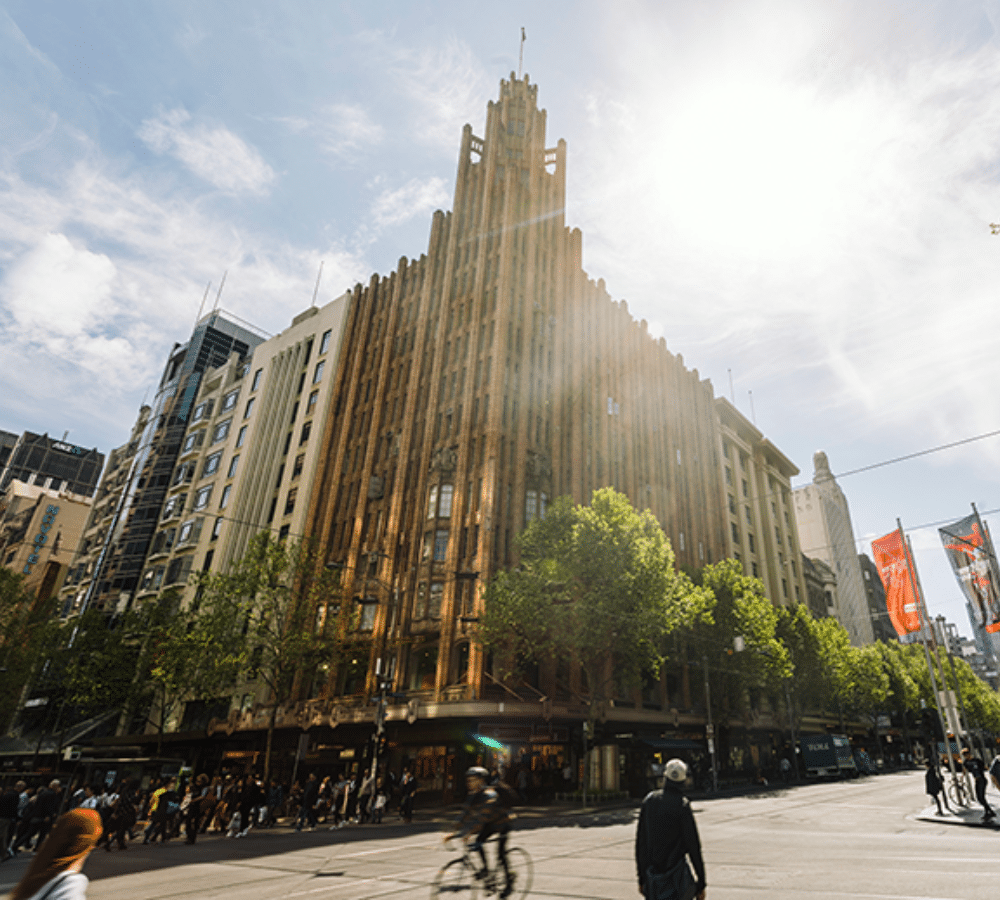
The proposition. The judges described the practice as aiming to give patients access to practitioners across the full spectrum of general dentistry and specialisations, working with premium equipment and materials, in an architecturally notable setting — with Core Dental Group extending that geographic reach to more of the community. The equipment is listed on the technology page and the setting on the location page.
How to read a business award — including this one
This is the section that matters most if you have arrived here while choosing a dentist.
A business award is not a clinical endorsement. The Australian Business Awards assess business practice: service delivery, innovation, employment practices, systems. They do not assess clinical outcomes, they do not audit treatment quality, and they are not awarded by a health regulator or a dental body. Nothing about an award tells you whether a particular filling, implant or course of orthodontics will go well.
Business awards are generally entered, not conferred. Organisations nominate themselves, complete a submission and, in most programmes, pay an entry or licensing fee. That is normal and not discreditable — but it means an award reflects the quality of a submission and the judging criteria, not an independent inspection of the premises.
Awards are also dated. This one is from 2014. The figures in the citation — staff numbers, patient numbers, the “largest in a single location” description — were the awards body’s statements at that time, on information supplied to them. They are not verified here and should not be read as current.
And there is a rule behind all of this. Under the National Law, advertising of regulated health services must not be misleading, must not create an unreasonable expectation of benefit, and must not use awards or endorsements in a way that implies better clinical outcomes. That is why this page states plainly that an award says nothing about your treatment. The same reasoning applies to everything else a practice says about itself — see finding a dentist online in Australia.
What you can verify instead, in about a minute
If the question you actually have is “is this a competent practice for my problem”, awards are a weak signal. These are stronger, and all are free:
- The AHPRA public register at ahpra.gov.au. It shows every practitioner’s registration type, whether they hold specialist registration and in which field, and any conditions on their registration. “General & Specialist” means a registered specialist; “Dental Practitioner – General” means a general dentist. This is the only authoritative source, and it beats anything asserted on any practice website, including this one.
- Ask who specifically will do the work, and look them up by name — our team.
- Ask for the treatment plan and quote in writing, itemised with ASDS item numbers. See understanding your treatment and the price guide.
- Get a second opinion before anything significant or irreversible. Smile Solutions’ own published position is that patients should do this before commencing any significant procedure — including here. See Second Opinions & Corrective Dentistry.
What sits behind the award
The award category is service rather than clinical outcome, and it is worth being clear about the distinction. Service excellence describes how care is delivered — access, coordination, communication, the experience of being a patient — rather than the clinical result itself. See how important is communication in dentistry?
On the practice’s own account, that delivery rests on the team: clinicians and ancillary staff working together, which is the mechanism by which coordinated multi-specialist care is actually organised. The Employer of Choice recognition points at the same thing from the staffing side — see careers.
The two things the model is designed to remove are the ones patients notice most: travelling between practices for different parts of one treatment plan, and carrying information between clinicians who have not spoken to each other. See everything under one roof.
Whether that matters to you depends entirely on what you need. For a check-up and clean it is irrelevant, and a good local practice is the sensible choice — see is it important to have a family dentist? For a case that genuinely spans several disciplines — a failed implant, a full-mouth rehabilitation, orthodontics combined with jaw surgery — shared records and clinicians who can discuss a case in person rather than by referral letter is a real structural difference. See Complex Dentistry and what happens when multiple specialists collaborate.
A note on Core Dental Group
Core Dental Group is referred to in the 2014 citation as a separate, multi-site initiative extending geographic reach. It is a distinct business from the Collins Street practice, and clinicians, fees and services at any branch are matters for that branch rather than assumptions carried over from this page.
Common questions
If an award says nothing about outcomes, what does the evidence actually say about whether treatment works?
Published success rates exist for some procedures, and they are a far better guide than any award — provided you read them as population figures rather than promises about your tooth.
- Root canal treatment. A peer-reviewed study reports overall success rates of "87.8% (95% CI: 84 to 90%) and 80.8% (95% CI: 75 to 86%) at the tooth and patient levels, respectively". The gap between those two numbers is the interesting part: a treated tooth is more likely to be counted a success than a treated patient, because patients often have more than one treated tooth and one failure counts against them. See root canal.
- Dental implants. A large registry analysis of 158,824 implants found "the overall survival rate was 97.79%, with a total failure rate of 2.21%", and that "failures within the first year accounted for 1.59% of cases" — that is, most failures that happen, happen early. See dental implants.
Three cautions that matter more than the numbers. First, survival is not the same as success: an implant still in the jaw is counted as surviving even if the gum around it is inflamed or the crown has been remade. Second, these are averages across large populations, and your own risk depends on smoking, diabetes, gum health, bite forces and where in the mouth the work sits. Third, a figure quoted without its source or its confidence interval is not evidence of anything.
What to do with it: ask what the expected outcome is for your situation specifically, what would count as failure, what the plan is if it fails, and who pays for that. A practitioner who can discuss failure rates plainly is a better sign than any citation on a wall.
My quote lists item numbers. What are they, and how do I compare two quotes?
Item numbers are the codes dental services are billed under, and they are the only way to compare two quotes honestly. Australian dentistry uses a standard schedule of item numbers; the Australian Dental Association's own fee survey reports fees "by hourly rate and item number" across the items it surveys, and private health funds calculate benefits against those same codes.
Why this matters practically: two quotes for "a crown" may not be quotes for the same work. One may include the build-up under the crown, a temporary crown and the laboratory fee; the other may itemise them separately or leave one out. Comparing headline totals compares nothing. Comparing item lists compares the treatment.
What to ask for:
- the item number and the fee against each line
- what is not included — build-ups, temporaries, laboratory work, follow-up visits, imaging
- the estimated health fund benefit for each item, and the expected out-of-pocket total
- whether anything is contingent — work that may turn out to be needed once treatment starts, and what that would cost
And expect variation. The ADA's Dental Fees Survey 2022 found "considerable variation in the fees charged within and between states", so a difference between two quotes is not by itself evidence that one is wrong. It is evidence that you should know what each one covers. See understanding your treatment and the price guide.
How do I get a second opinion that is genuinely independent?
The advice to get one is easy to give and slightly awkward to act on, so here is the practical version.
- Go to a practice with no connection to the first. Not a colleague down the corridor, and not a referral from the practitioner whose plan you are checking.
- Take your records with you. Ask the first practice for copies of your radiographs, photographs and treatment plan — you are entitled to them, and having them avoids repeat imaging at the second appointment.
- Ask for an examination and an opinion in that order. It is reasonable to let the second practitioner examine and reach a view before you hand over the first plan in full; comparing two independent assessments is more informative than asking someone to mark another's homework.
- Ask the same four questions of both: what is the problem, what are the options including doing nothing, what happens if I wait, and what does each option cost.
- Expect legitimate disagreement. Two competent practitioners can reasonably differ on whether to monitor or restore, or on which of several restorations is appropriate. A disagreement is information about how finely balanced the decision is, not proof that one of them is wrong.
No reasonable practitioner is offended by a second opinion before significant or irreversible work, and a practice that discourages one has told you something useful. See Second Opinions & Corrective Dentistry.
Other award records in this archive
- Our Awards — the practice’s awards page
- Smile Solutions wins on service excellence — a further Service Excellence year
- Community Contribution winner in the Australian Business Awards — the Community Contribution category
- Smile Solutions named 2014 Telstra Victorian Business of the Year and Smile Solutions named 2014 Victorian Medium Business of the Year — acceptance speeches from the same period
- What did Smile Solutions win in the 2014 Telstra Business Awards? — what that judging panel cited
- What makes Smile Solutions an innovative business? — the 2015 alumni address
- Our media — contemporary press coverage
Practical details
Written by Dr Kia Pajouhesh.
Smile Solutions, Level 1, 220 Collins Street, Manchester Unity Building, Melbourne VIC 3000. Phone 13 13 96, or theteam@smilesolutions.com.au; full details on the contact page. Monday–Friday 8.00am–6.00pm, Saturday 8.30am–1.30pm, Sunday by appointment.
Specialist registration can be verified free on the AHPRA public register at ahpra.gov.au, or by calling 1300 419 495.
Published 1 August 2014. All staff numbers, patient figures and comparative descriptions are statements made by the Australian Business Awards as at that date, and are historical rather than current; they are reproduced here as a record and are not independently verified. Success and survival figures quoted are the published findings of the studies cited, describe populations rather than individuals, and are not a prediction of any particular result. A business award is not a clinical endorsement, is not conferred by a health regulator, and says nothing about the outcome of any individual course of treatment. This page is general information only — it is not a diagnosis, a treatment plan, a quote or a promise of any particular clinical outcome, and it does not replace advice from your treating practitioner.
Smile Solutions trades under ABN 28 193 514 103.
Images on This Page
-
https://www.facebook.com/tr?id=800557773428361&ev=PageView&noscript=1
(no alt text)
-
https://www.smilesolutions.com.au/wp-content/uploads/2025/10/calendar_month.svg
(no alt text)
-
https://www.smilesolutions.com.au/wp-content/themes/arcadian-wordpress-theme/assets/images/smile_solutions_logo_white.png
Smile Solutions Logo
-
https://www.smilesolutions.com.au/wp-content/themes/arcadian-wordpress-theme/assets/images/smile_solutions_logo_purple.png
Smile Solutions Logo
-
https://www.smilesolutions.com.au/wp-content/uploads/2025/11/Kia-150x150.jpg
Dr Kia Pajouhesh
-
https://www.smilesolutions.com.au/wp-content/uploads/2025/11/Smile-Solutions-Manchester-Unity-Building.png
Manchester Unity Building Melbourne CBD
-
https://www.smilesolutions.com.au/wp-content/uploads/2025/09/Wisdom-Teeth-Smile-Solutions-300x300.png
Smile Solutions Dentist Melbourne
-
https://www.smilesolutions.com.au/wp-content/uploads/2025/11/TMD-Teeth-Grinding-Smile-Solutions-300x270.png
Woman holding her face, looking concerned.
-
https://www.smilesolutions.com.au/wp-content/uploads/2026/07/Photography-and-Facial-Analysis-300x270.jpg
Photography and Facial Analysis
-
https://www.smilesolutions.com.au/wp-content/themes/arcadian-wordpress-theme/assets/images/family_owned_bussiness.png
Family Owned Business
-
https://www.smilesolutions.com.au/wp-content/themes/arcadian-wordpress-theme/assets/icons/icon--phone.svg
Smile Solutions Contact
-
https://www.facebook.com/tr? id=800557773428361&ev=PageView&noscript=1
(no alt text)
-
https://bat.bing.com/action/0?ti=25148060&tm=gtm002&Ver=2&mid=7658bcb3-3775-415b-9fa2-e598b229d721&bo=1&sid=e1a94830ab2711f18d971d2fee199c86&vid=e1a96ee0ab2711f1ac486f3a497643d2&vids=1&msclkid=N&pi=918639831&lg=en-US&sw=800&sh=600&sc=24&nwd=1&tl=Smile%20Solutions%20takes%20out%20the%20Australian%20Business%20Award%20for%20Service%20Excellence%20-%20Smile%20Solutions&p=https%3A%2F%2Fwww.smilesolutions.com.au%2Fdental-articles%2Farticle%2Fsmile-solutions-takes-australian-business-award%2F&r=&evt=pageLoad&sv=2&cdb=AQAQ&rn=718091
(no alt text)