Smile Solutions wins on service excellence
The award
We were named a winner of the Australian Business Award for Service Excellence in 2017 — the sixth consecutive year of receiving the accolade.
The practice began as a one-room, one-dentist, eight-patient operation. As at 2017 it comprised 82 clinicians and a client base of over 85,000. Those figures are historical statements from that date, not current numbers.
What the award is, and is not. The Australian Business Awards assess business practice — service delivery, systems, innovation. They are not issued by a health regulator, they do not audit clinical outcomes, and they say nothing about how any individual course of treatment will go. Business awards are also generally entered rather than conferred: an organisation nominates itself and makes a submission. None of that makes the award meaningless; it makes it a statement about how a service is organised, which is the only thing it claims to be. Smile Solutions takes out the Australian Business Award for Service Excellence is the earlier article on the same award; the awards page lists the full set, and we are a Community Contribution winner in this year's Australian Business Awards covers a different category.
What underpins it
A large part of the service proposition is having a wide range of dental services available under one roof. Everything under one roof — we do it all at Smile Solutions and Is a bigger dental practice better? Part 1 and Part 2 make the argument in full.
Teeth whitening, wisdom teeth removal, children's dentistry and dental implants — all in one location in the heart of Melbourne's CBD. Those four are teeth whitening, wisdom teeth, children's dentistry and dental implants; services lists the rest and location has directions.
The clinical team spans general dentists, hygienists and oral health therapists, orthodontists, periodontists, prosthodontists, endodontists, paediatric dentists and oral and maxillofacial surgeons. Each has its own page: orthodontists, periodontists, prosthodontists, endodontists, paediatric dentists and oral and maxillofacial surgeons, alongside general dentistry and dental cleans and hygienists.
For accuracy: that is six of Australia's thirteen recognised dental specialties, alongside general practice and allied roles. That is six of the thirteen, not all of them, and cases needing dento-maxillofacial radiology, forensic odontology, oral medicine, oral and maxillofacial pathology, oral surgery, public health dentistry or special needs dentistry are referred out. Dentists & Registered Specialists, and why would I need to see a dental specialist?
The two facilities added
This is the substantive part of the article, and both changes are more consequential than they sound.
Dental Creations — the on-site laboratory
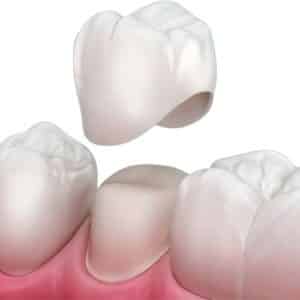
Dental Creations manufactures crowns and bridges, and supports the prosthodontics team in producing dentures, implant components and orthodontic appliances. See the Smile Solutions laboratory, what types of dental crowns are available?, dental bridges and dentures.
Because the laboratory is in the building, laboratory work can be altered almost immediately — clinicians have direct access to it.
That matters more than convenience. In conventional practice, a crown that does not fit or a shade that is slightly wrong goes back to an external laboratory, and the patient returns in a week or two wearing a temporary. With the laboratory in the same building, an adjustment can happen during the appointment — and the technician can look at the patient's teeth directly rather than working from an impression and a written shade note. The same-visit version of this is covered in same-day CEREC restorations and the case for same-day porcelain veneers versus temporary veneers worn for 2-3 weeks.
The shade point is the one clinicians rate most highly. Matching a single front tooth to its neighbours is the hardest thing in restorative dentistry, because natural teeth are not one colour — they vary from gum to edge, have translucency at the tip, and carry individual characterisations. A photograph and a shade tab lose most of that. A ceramist standing in front of the patient does not. What is the difference between composite veneers and porcelain veneers? and I want to whiten my teeth but one of my front teeth has a porcelain crown explain why shade is the hard part; the mock-up reveal is where it gets settled before anything is made.
Two further practical consequences: all work is made in Melbourne rather than sent offshore, and only TGA-approved materials are used. That is worth knowing because dental laboratory work is not always traceable, and patients are rarely told where their crown was made or what it was made from. You are entitled to ask, anywhere. What are the risks of having dental treatment overseas? covers the same question about treatment as a whole.
Collins Street Imaging — in-house radiology
An in-house radiology centre where all dental imaging takes place, which patients can visit without an appointment. The technology page lists the equipment.
Images are processed and viewable immediately — which speeds up treatment and reduces the time and effort asked of the patient.
The practical difference: a diagnosis that would otherwise require a referral to an imaging centre, a separate appointment, and a return visit to discuss the result can be completed in one visit. For someone in pain, that is the difference between being treated today and being treated next week — see emergency dentistry and why choose us in a dental emergency?.
It matters most for the cases where imaging changes the plan rather than confirming it — a CBCT scan before implant placement or a difficult lower wisdom tooth, where the position of the nerve determines whether and how the procedure is done at all. See what do I need to know about dental implants?, what costs are involved with wisdom teeth removal? and EMG muscle mapping and bite force analysis, which describes CBCT airway imaging in TMD assessment.
A necessary qualification: easy access to imaging is not a reason to have more of it. All radiographs involve radiation exposure and are taken only when there is a clinical reason — not routinely, and not to a schedule. If you are offered a scan, it is reasonable to ask what question it is being taken to answer. How safe are dental x-rays and how safe are dental X-rays and when do they become unsafe? are the two articles on exactly this.
The model
Co-locating these behind-the-scenes services removes the need for patients to go elsewhere for them, which streamlines care and saves stress, time and money.
The culture is described as revolving around collaboration and integration — clinicians, laboratory and imaging working in the same place, on the same case, at the same time. How do I manage to keep 60 demanding clinicians happy — all under the one roof? and what makes Smile Solutions an innovative business? describe how that is organised.
Whether that matters to you depends on what you need. For a check-up and clean it is largely irrelevant, and a good local practice is the sensible choice. The structure earns its keep on complex, multi-stage cases — a failed implant, a full-mouth rehabilitation, orthodontics combined with jaw surgery — where shared records and clinicians who can discuss a case in person rather than by referral letter is a real structural difference. Complex Dentistry, and complex dental cases: what happens when multiple specialists need to collaborate.
What to check instead of an award
If you are choosing a practice, these are free and take about a minute, and they are stronger signals than any accolade:
- The AHPRA public register at ahpra.gov.au — it shows each practitioner's registration, whether they hold specialist registration and in which field, and any conditions. It beats anything asserted on any practice website, including this one. The clinical team here is listed by name.
- Ask who specifically will do the work, then look that person up. What makes a truly great dentist? and finding a dentist online in Australia cover what else to weigh.
- Ask for the plan and quote in writing, itemised — understanding your treatment and the price guide.
- Get a second opinion before anything significant or irreversible. Second Opinions & Corrective Dentistry.
Common questions
How long does porcelain work actually last?
Long, but not forever, and the published figures are more useful than any promise. A systematic review of porcelain laminate veneers pooled 6,500 veneers across twenty-five clinical studies and reported a 10-year estimated cumulative survival rate of 95.5% when veneer fracture, debonding, secondary decay and the need for root canal treatment were all counted together as failure. Broken down by the individual complication, the same analysis reported 10-year survival of 96.3% against fracture, 99.2% against debonding, 99.3% against secondary caries and 99.0% against the need for endodontic treatment. In total, 433 of the 6,500 veneers failed on that combined definition.
Two findings in that review change what you should ask about. First, how much tooth is removed matters: the review records that "the survival rate of LVs is negatively affected by veneer preparations extending into dentin", and that high failure rates have been associated with largely exposed dentine surfaces. A conservative preparation that stays in enamel is not only kinder to the tooth, it lasts better. Second, grinding matters: the review identifies bruxism as a risk factor for fractures of ceramics, and reports a significantly higher failure rate in patients who grind.
And the general principle underneath all restorative work, from the NHMRC: "once a tooth is filled, it becomes structurally weaker and will almost certainly require further treatment in the future". Porcelain is a repair with a long life, not a permanent solution — so the right questions are how long this one is expected to last in your mouth, what would make it fail sooner, and what replacing it later would involve. See what is the difference between composite veneers and porcelain veneers? and night time tooth grinding and clenching.
How do I find out where my crown was made and what it is made of?
You ask, and you are entitled to an answer wherever you are treated. Dental laboratory work is manufactured to order, and the practice ordering it knows both the material and the laboratory. Most patients never ask, which is the only reason they are rarely told.
What to ask for, specifically:
- the material by name — for example a zirconia, a lithium disilicate, a feldspathic porcelain, a porcelain-fused-to-metal, or the metal alloy used under it
- where it was manufactured, and whether the laboratory can be identified
- whether you can have a written record of the material and its manufacturer for your file
- for anyone with a metal sensitivity or allergy history, what alloy is involved before anything is made
Why it is worth having in writing: if the restoration has to be repaired, matched or remade years later, the next clinician needs to know what they are dealing with. If you have a reaction, the material is the first thing anyone will ask about. And a laboratory that can be identified is a laboratory whose work can be sent back.
None of this is an argument about any one laboratory. It is a record-keeping standard you can apply to any practice, including this one. See what types of dental crowns are available? and what are the risks of having dental treatment overseas?
What should be settled before anything irreversible is done to a front tooth?
Everything about the appearance, before the drill starts. Preparation for a crown or veneer removes tooth structure permanently, and the review cited above is the reason to be careful about how much: survival is worse where the preparation extends into dentine. So the sequence matters.
Things worth settling first:
- See the proposed shape and length before it is made — a wax-up, a digital design or a trial mock-up in the mouth. The mock-up reveal is what this stage is for.
- Settle the shade before, not after. If you are considering whitening, do it first and let the colour stabilise — porcelain does not lighten with whitening, so a crown matched to unwhitened teeth will stand out later. That specific problem is covered in I want to whiten my teeth but one of my front teeth has a porcelain crown.
- Look at it in daylight, not only under surgery lighting, and with the person whose opinion you actually care about present if that helps.
- Ask how much tooth is being removed and whether a more conservative option — composite bonding, or no treatment at all — would achieve enough.
- Ask what happens if you do not like it, before anything is cemented: what can be adjusted, what would be remade, and at whose cost.
The underlying point: a temporary crown, a trial smile or a mock-up can be changed. A prepared tooth cannot be put back.
Can I get copies of my own x-rays?
Yes. They are part of your health record and you can request them. It is worth doing in two situations in particular: when you are getting a second opinion, and when you are moving to another practice, because a recent image that travels with you prevents an unnecessary repeat exposure.
Practical notes: ask for the images in a form you can pass on — a file or a disc rather than a photograph of a screen — along with the date each was taken and the report or findings if one was written. A practice may charge a reasonable administrative fee for copying records. Keeping your own note of when imaging was last taken is the simplest way to answer the question "do we need a new one?" at the next appointment.
Related reading
- Smile Solutions named Telstra Victorian Business of the Year
- our team celebrates our Telstra Business Award win
- What I love about running a large dental practice
- The Smile Solutions Experience
- Why choose us
- Our media
Practical details
Smile Solutions, Level 1, 220 Collins Street, Manchester Unity Building, Melbourne VIC 3000 — getting here. Phone 13 13 96, contact us, or theteam@smilesolutions.com.au. Monday–Friday 8.00am–6.00pm, Saturday 8.30am–1.30pm, Sunday by appointment. Collins Street Imaging is on Level 9.
Specialist registration can be verified free on the AHPRA public register at ahpra.gov.au, or by calling 1300 419 495.
Related: Our Awards, Our Technology, Complex Dentistry, Dentists & Registered Specialists, Everything under one roof.
Published 21 August 2017. All clinician and patient figures are as at that date and are historical statements rather than current numbers; they are reproduced here as a record and are not independently verified. Survival figures quoted are the published findings of the systematic review cited, describe populations rather than individuals, and are not a prediction of any particular result. A business award is not a clinical endorsement, is not issued by a health regulator, and says nothing about the outcome of any individual course of treatment. General information only — it is not a diagnosis, a treatment plan, a quote or a promise of any particular clinical outcome, and it does not replace advice from your treating practitioner.
Smile Solutions trades under ABN 28 193 514 103.
Images on This Page
-
https://www.facebook.com/tr?id=800557773428361&ev=PageView&noscript=1
(no alt text)
-
https://www.smilesolutions.com.au/wp-content/uploads/2025/10/calendar_month.svg
(no alt text)
-
https://www.smilesolutions.com.au/wp-content/themes/arcadian-wordpress-theme/assets/images/smile_solutions_logo_white.png
Smile Solutions Logo
-
https://www.smilesolutions.com.au/wp-content/themes/arcadian-wordpress-theme/assets/images/smile_solutions_logo_purple.png
Smile Solutions Logo
-
https://www.smilesolutions.com.au/wp-content/uploads/2023/11/SS-Tooth-1-1-150x150.png
Smile Solutions
-
https://www.smilesolutions.com.au/wp-content/uploads/2025/11/Smile-Solutions-ABA-Service-Excellence-Winner-2017-1024x1024.png
Smile Solutions ABA Service Excellence Winner 2017
-
https://www.smilesolutions.com.au/wp-content/uploads/2025/09/Root-Canal-2-300x217.jpg
Root Canal
-
https://www.smilesolutions.com.au/wp-content/uploads/2026/08/Mouth-Breathing-300x270.jpg
Mouth Breathing
-
https://www.smilesolutions.com.au/wp-content/uploads/2025/09/Dental-Crown-at-Smile-Solutions-300x300.jpg
Dental Crown at Smile Solutions
-
https://www.smilesolutions.com.au/wp-content/themes/arcadian-wordpress-theme/assets/images/family_owned_bussiness.png
Family Owned Business
-
https://www.smilesolutions.com.au/wp-content/themes/arcadian-wordpress-theme/assets/icons/icon--phone.svg
Smile Solutions Contact
-
https://www.facebook.com/tr? id=800557773428361&ev=PageView&noscript=1
(no alt text)