What did Smile Solutions win in the 2014 Telstra Business Awards?
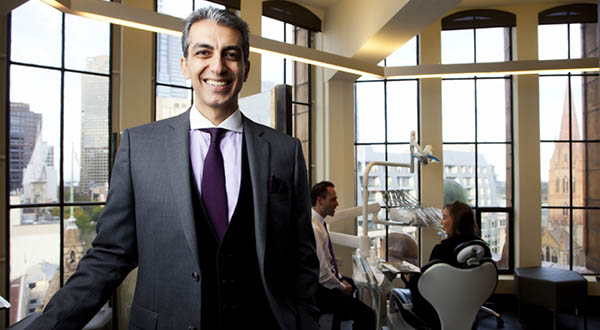
In July 2014, Smile Solutions won the Telstra Victorian Business of the Year Award, and was the Victorian winner in the Medium Business category. This article records that result and what the judging panel cited. It is a historical record of an award made in 2014; it is not a statement about current performance. The two acceptance speeches are summarised in Dr Kia Pajouhesh accepts the 2014 Telstra Victorian Business of the Year Award and Dr Kia Pajouhesh accepts Telstra Victorian Medium Business of the Year 2014.
What the Telstra Business Awards are
The Telstra Business Awards ran as a national programme recognising Australian businesses across several size categories, with state winners and a national final. Entrants were assessed by an independent judging panel against submitted evidence covering financial performance, strategy, leadership, customer outcomes and staff practices — a business assessment rather than a clinical one.
That distinction is worth stating plainly. A business award says nothing about clinical quality, and should not be read as a comment on treatment outcomes. It reflects how an organisation is run. The checks that do tell you something about a clinician are set out in finding a dentist online in Australia and on dentists and registered specialists.
What the judges cited
Will Irving, then Telstra Business Group Managing Director, described the awards as recognising Australian businesses, helping them reflect on their strategies and goals, and showing the work and creative thinking that goes into running a business.
Of Smile Solutions specifically, Irving noted the practice’s model of operating with multiple dental specialists at a single site, in the heritage-listed Manchester Unity Building.
The judges’ cited reasons were:
| Criterion | What the judges noted |
|---|---|
| Financial performance | Strong, year-on-year financial improvement over many years |
| Strategy | A sustaining vision of growth |
| Leadership and staff | The founder’s staff-retention approach — that leadership means taking care of the clinicians, who in turn take care of the patients |
That last point is the one that carries the most practical meaning for patients. A practice that retains its clinicians is a practice where a patient is more likely to see the same dentist across years of care — which matters clinically, because continuity is how slow changes get noticed. That argument is made from the patient’s side in is it important to have a family dentist? The people currently doing the work are listed on our team, and the roles the practice recruits into on careers.
Why the single-site specialist model was noted
The feature the judges singled out was structural: general dentists, dental specialists and support clinicians working from one location rather than referring patients out across the city.
For a patient, the practical consequences are:
- Referrals stay internal. A general dentist who identifies a problem needing specialist care can refer within the same building, with the records, radiographs and scans already in one system. Why would I need to see a dental specialist? explains who those specialists are.
- Complex cases can be planned jointly. Treatment that involves several disciplines — for example an implant that needs surgical placement, periodontal management and a restoration — can be sequenced by the clinicians together rather than by correspondence. See complex dentistry and what happens when multiple specialists collaborate.
- Fewer handovers. Each transfer between practices is a point at which information is lost. Reducing the number of transfers reduces that risk.
The building
Smile Solutions occupies part of the Manchester Unity Building at 220 Collins Street, Melbourne — a heritage-listed Art Deco tower completed in 1932 and one of the city’s landmark inter-war buildings. Fitting a modern clinical practice into a heritage structure imposes real constraints, and the judges’ reference to it reflected the difficulty of doing so. See location, and Inside the Manchester Unity Building.
The team’s response
The practice marked the win internally with a staff-made video, which was published on the Smile Solutions YouTube channel at the time. It was a celebration piece rather than clinical content. Contemporary coverage is collected under our media — see the reaction to winning the Telstra Business Award and Smile Solutions lands a Telstra Business Award.
Common questions
Does an award like this tell me anything about the dentistry?
No, and it is worth being direct about that rather than letting the page imply otherwise. The Telstra Business Awards assessed how a business was run — finances, strategy, leadership, staff practices. No part of that process examined clinical records, treatment outcomes or complication rates, and no business award programme in Australia does.
The things that do carry regulatory weight are registration and title, and they are checkable by anyone. Under the National Law, a specialist title indicates that a practitioner holds specialist registration in one of the recognised specialties, and an endorsement on a practitioner's registration indicates that they are qualified to practise in an approved area of practice (Ahpra, Advertising a regulated health service). Those are verifiable facts on a public register. An award is not.
So the useful reading of this page is narrow: it records a business result from 2014. If you are deciding where to have treatment, the register, the treatment plan you are given in writing, and the answers you get to direct questions are the evidence that matters.
How do I check a clinician's registration myself, and what does the register actually tell me?
Every dentist, dental specialist, hygienist, oral health therapist and dental prosthetist practising in Australia must be registered, and the register is public. Search the practitioner's name on the Ahpra register at ahpra.gov.au, or telephone 1300 419 495.
What the register tells you:
- whether the person is currently registered, and in which division
- whether they hold specialist registration, and in which of the recognised specialties — the Dental Board of Australia states that “there are 13 dental specialties in Australia which are approved by the Australian Health Workforce Ministerial Council”
- whether any conditions, undertakings or reprimands apply. Ahpra notes that a National Board may “impose conditions on the practitioners' registration, such as restricting their ability to advertise their services”. Conditions appear on the register entry.
What it does not tell you: how long someone has worked in a particular area, how many of a given procedure they have done, what they charge, or whether their approach will suit you. Those are questions for the practice, and there is no register that answers them. Finding a dentist online in Australia covers what else is worth asking.
Is “specialist” just a word practices use, or does it mean something specific?
It is a protected title with a defined pathway behind it, and the distinction matters when you are reading any practice's website — including this one.
To hold specialist registration, the Dental Board of Australia requires that a dentist already holds general registration and is “on the Register of practitioners under the division of dentists”, has “completed a minimum of two years general dental practice”, and has completed an approved specialist qualification in one of the 13 recognised specialties. Those specialties include endodontics, orthodontics, periodontics, prosthodontics, paediatric dentistry, oral and maxillofacial surgery, oral surgery, oral medicine, special needs dentistry, dento-maxillofacial radiology, oral and maxillofacial pathology, forensic odontology and public health dentistry.
A dentist who has developed a strong interest and additional training in an area without completing that pathway is not a specialist and cannot be described as one. The honest phrase for that is “a dentist with a special interest in”, and the difference is not cosmetic — Ahpra's advertising guidelines treat claiming specialist registration you do not hold as a breach of the National Law. On this site, the clinicians who hold specialist registration are identified on dentists and registered specialists; why would I need to see a dental specialist? explains when the distinction changes what care you get.
The award was in 2014. Is it still current?
No. This is a record of a result from July 2014 and nothing on this page should be read as describing the practice today. The Telstra Business Awards programme itself has since changed, the judging panel's comments were made about the business as it stood more than a decade ago, and the figures cited — growth, staffing, structure — were current then and are not restated here as current now.
Awards pages age in a particular way: they stay online, they keep ranking in search, and they quietly present a snapshot as though it were a standing state of affairs. The date is on the page for that reason. Current information about who works here and what is offered is on our team and the service pages, not here, and the awards page lists what else has been received and when.
Related reading
- Smile Solutions named Telstra Victorian Business of the Year
- Sky News Business interview with Dr Kia Pajouhesh
- What makes Smile Solutions an innovative business?
- Smile Solutions takes out the Australian Business Award for Service Excellence
- Awards
Practical details
This article records an award made in July 2014 and quotes comments made at that time by Telstra Business Group Managing Director Will Irving. It is a historical record. Any figures or organisational descriptions relate to the practice as it was in 2014. Registration and advertising requirements quoted in the questions above are from the Dental Board of Australia and Ahpra.
Specialist registration can be verified on the AHPRA register, or by calling 1300 419 495.
Smile Solutions, Level 1, 220 Collins Street, Manchester Unity Building, Melbourne VIC 3000. Phone 13 13 96, or theteam@smilesolutions.com.au; full details on the contact page. Monday–Friday 8.00am–6.00pm, Saturday 8.30am–1.30pm, Sunday by appointment.
Published 23 July 2014, by Dr Kia Pajouhesh. General information only; it does not replace advice from your treating practitioner.
Smile Solutions trades under ABN 28 193 514 103.
Images on This Page
-
https://www.facebook.com/tr?id=800557773428361&ev=PageView&noscript=1
(no alt text)
-
https://www.smilesolutions.com.au/wp-content/uploads/2025/10/calendar_month.svg
(no alt text)
-
https://www.smilesolutions.com.au/wp-content/themes/arcadian-wordpress-theme/assets/images/smile_solutions_logo_white.png
Smile Solutions Logo
-
https://www.smilesolutions.com.au/wp-content/themes/arcadian-wordpress-theme/assets/images/smile_solutions_logo_purple.png
Smile Solutions Logo
-
https://www.smilesolutions.com.au/wp-content/uploads/2025/11/Kia-150x150.jpg
Dr Kia Pajouhesh
-
https://www.smilesolutions.com.au/wp-content/uploads/2014/07/Telstra-Business-Awards-Speech.jpg
Telstra Business Awards Speech
-
https://www.smilesolutions.com.au/wp-content/uploads/2019/04/Smile-Solutions-lands-Telstra-Business-Award-1.jpg
Smile Solutions lands Telstra Business Award
-
https://www.smilesolutions.com.au/wp-content/uploads/2025/09/Wisdom-Teeth-Smile-Solutions-300x300.png
Smile Solutions Dentist Melbourne
-
https://www.smilesolutions.com.au/wp-content/uploads/2025/11/TMD-Teeth-Grinding-Smile-Solutions-300x270.png
Woman holding her face, looking concerned.
-
https://www.smilesolutions.com.au/wp-content/uploads/2026/07/Photography-and-Facial-Analysis-300x270.jpg
Photography and Facial Analysis
-
https://www.smilesolutions.com.au/wp-content/themes/arcadian-wordpress-theme/assets/images/family_owned_bussiness.png
Family Owned Business
-
https://www.smilesolutions.com.au/wp-content/themes/arcadian-wordpress-theme/assets/icons/icon--phone.svg
Smile Solutions Contact
-
https://www.facebook.com/tr? id=800557773428361&ev=PageView&noscript=1
(no alt text)