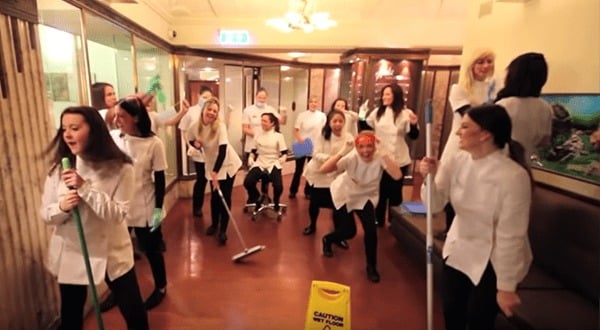
Smile Solutions' reaction to winning a Telstra Business Award
Media item: award reaction segment
This page records the media item. The recording is the property of its publisher and is not reproduced here, and no remarks are quoted. The award record is at Our Awards and 2014 Telstra Business Awards.
What follows is practical information on a subject nobody publishes and a great many people need: how to change dentists properly, and what you are entitled to take with you.
A note on sourcing. The records-access material below is general information about Australian privacy and health-records law, not clinical guidance, and it is not drawn from the independent clinical references cited elsewhere on this site. Retention periods and access rules vary by jurisdiction and change over time, so treat it as a starting point and check the current position for your state.
Why this matters more than it sounds
Dental care is longitudinal. Its value accumulates in the record — in the radiograph from four years ago that shows a lesion has not changed, in the note that a tooth has been sensitive since 2019, in the photograph of a crack before it was restored. See How safe are dental x-rays for why the old films are worth keeping.
A new dentist without your history is working blind, and the usual consequence is a fresh set of radiographs, a cautious plan, and treatment of things that were already known and being watched. Moving your records is the single cheapest thing you can do to protect the quality of your care. Is it important to have a family dentist? makes the continuity argument at greater length.
What you are entitled to
Under the Privacy Act 1988 and, in Victoria, the Health Records Act 2001 — see also the Privacy Policy:
- You have a right of access to your own health information, including dental records, clinical notes, radiographs and photographs.
- A practice may charge a reasonable fee for providing access — for copying or postage — but not a fee for the act of granting access itself, and not one designed to deter you.
- A request should be responded to within a reasonable time; 30 days is the usual benchmark.
- Access can be refused only on limited grounds, and if refused you must be given reasons and told how to complain.
- You can ask for corrections to information that is inaccurate.
- The original record belongs to the practice — you are entitled to a copy, not to the file itself. Practices must retain records for a minimum period, generally seven years from the last entry for adults, and for children until the age of 25 (Children's Dentistry).
How to actually do it
- Choose the new practice first. Do not leave a gap. What makes a truly great dentist? and Finding a dentist online in Australia are worth reading before you do.
- Ask the new practice to request the transfer. Practitioner-to-practitioner requests are routine and usually the fastest route. Bring the previous practice's name and your date of birth. Enquiries here go through Contact Us.
- Or request it yourself in writing. Email is sufficient. Ask specifically for: clinical notes, all radiographs in digital form, intra-oral and extra-oral photographs, treatment plans, laboratory prescriptions, and any medical history on file.
- Ask for radiographs as image files, not screen photographs. A degraded image is a wasted one, and you may end up re-irradiated for nothing — how safe are dental X-rays and when do they become unsafe?
- Keep a copy yourself. Cloud storage or a folder at home. You will change dentists again.
- Tell the new practice what has been discussed but not done — the watched lesion, the tooth the last dentist said would eventually need a crown. That context rarely survives a records transfer intact.
You do not need to give a reason for leaving, and no practice may make transfer conditional on paying a disputed account. If you are refused, that is a privacy matter — raise it with the practice's privacy officer, then the OAIC on 1300 363 992, or the Health Complaints Commissioner in Victoria.
Mid-treatment — the harder case
Moving partway through a course of treatment is legitimate and sometimes necessary. Be aware of the specifics:
- Orthodontics. Contracts are often paid in stages for a whole course. Ask for a written statement of what has been paid, what stage you are at, and what refund applies. Take your records, models or scans, and the appliance details — see How long does it take to have orthodontic treatment? and Will my teeth need retainers after I've had braces?
- Implants. The system, brand and component sizes matter enormously. Different systems are not interchangeable. Get the implant passport or the sticker record — without it, a future restoration or repair becomes far harder. See What are the different types of dental implants?
- Root canal treatment in progress. A tooth left with a temporary dressing should not be left indefinitely. Ask what has been done, which canals, and the working lengths. See Root canal treatment: who and what is involved? and What do I do if a temporary filling comes out?
- Laboratory work in progress. Ask whether a case is at the laboratory and what happens to it — our in-house laboratory is the exception rather than the rule.
- Prepaid treatment. Ask for a written account of what has been provided against what was paid. Fee disputes are for the Health Complaints Commissioner, not AHPRA. The price guide shows how fees are set out here.
A second opinion is not the same as leaving
Worth separating, because people conflate them.
Seeking a second opinion on a major or irreversible plan is normal and expected. Ask for your records and radiographs, see someone else, and do not tell them what was proposed until they have examined you and formed a view. You are then free to return to your original dentist. Most do. See Second Opinions & Corrective Dentistry and Why would I need to see a dental specialist?
What to look for in the new practice
- Registration, checked on the AHPRA register — and it is worth knowing what the register actually records. The Dental Board of Australia registers five divisions of dental practitioner: dentist, dental therapist, dental hygienist, dental prosthetist and oral health therapist. It also recognises thirteen dental specialties approved by the Australian Health Workforce Ministerial Council, and a specialist must hold general registration and have completed a minimum of two years of general dental practice before specialist registration. The register shows the division, any specialist entry, any endorsement such as conscious sedation, and any conditions on practice. What it does not show is how good anyone is — no register anywhere does. See Dentists & Registered Specialists.
- A comprehensive first examination rather than a quick look — including soft tissues, an oral cancer check, gum measurements (Periodontal (gum) disease) and an occlusal assessment. On the soft-tissue part, there is a published threshold you can hold a practice to: the RACGP advises that anyone reporting an unexplained or non-healing change in the mouth for more than two to three weeks — a persistent ulcer, red patches, lumps or a sore throat — should have an oral cancer screen, and notes that "initial lesions of oral cancer are generally painless", which is why it is looked for rather than waited for.
- A written treatment plan with item numbers and costs, staged by priority rather than presented as one lump — Understanding your treatment.
- A stated recall interval based on your risk, not a uniform six months for everybody — How often should I go to the dentist?
- Clear emergency arrangements — Emergency Dentistry.
Related pages: Second Opinions & Corrective Dentistry, Understanding your treatment, Privacy Policy, Our Team, Our Awards, and the rest of the media record.
Common questions
Does a business award tell me anything about the dentistry?
No, and it should not be read as if it does. A business award assesses a business. It is not a clinical credential, not an endorsement of any treatment, and under the National Law it must not be advertised in a way that creates an unreasonable expectation of beneficial treatment. The things you can actually verify about a practitioner are on the AHPRA public register — their division, any specialist entry among the thirteen recognised dental specialties, any endorsement, and any conditions on their practice. That check is free and takes about a minute.
I brought my old radiographs and the new dentist wants to take fresh ones. Is that reasonable?
Usually yes for the routine films, and the reason to bring the old ones is not to avoid the dose — it is that the comparison is the diagnosis. The doses are small and published. The International Atomic Energy Agency's typical effective doses are 1 to 8 microsieverts for an intraoral dental X-ray, 4 to 30 for a panoramic, and 2 to 3 for a cephalometric examination; it notes that intraoral and cephalometric procedures are "usually less than one day of natural background radiation", and that a panoramic even at the top of its range is "equivalent to a few days of natural background radiation which is similar to that of a chest radiograph". The one to ask about specifically is cone-beam CT, which the IAEA puts at 50 microsieverts or below for small or medium scanning volumes and around 100 for large volumes, and which "may be tens or even hundreds of µSv of effective dose higher than conventional radiographic techniques". So the fair questions are: what will this image change about the plan, and does it need to be a CBCT rather than a smaller film? One caveat the IAEA states plainly and which cuts against over-reading any of these numbers: effective dose "and its associated risk should not be applied to individuals" — it is a tool for comparing techniques, not a personal risk score. What the old films give you that a new set cannot is the fourth dimension: a lesion that has not changed in four years is a different clinical problem from the same lesion seen once. See How safe are dental X-rays?
What does a new dentist actually need to know about my general health?
More than most people volunteer, and the reason is that several ordinary medical facts change the dental plan. Diabetes: the risk of periodontitis is approximately threefold in people with diabetes, and the degree of control is the variable rather than the diagnosis. Smoking: the peer-reviewed summary is that it "significantly increases risk for periodontitis and severity of the condition", and it is also among the risk factors identified for early dental implant failure, alongside implants shorter than 10 mm and implants placed in the upper jaw. Medications: several in common use cause gum overgrowth that makes plaque control harder — the literature names some calcium channel blockers, phenytoin and ciclosporin. Also flagged as periodontal risk factors are conditions involving compromised immune responses, nutritional deficiencies and osteoporosis. On that last one, a correction worth having if you have been told otherwise: a review of 24 studies, 2,102 patients and 5,954 implants concluded that "osteoporosis is not a contraindication for dental implant placement" and that osteoporosis status was not a risk factor for implant failure, while adding that "planning must be cautious and personalized". Bring the medication list, not a summary of it.
If I have gum disease, what is the one thing worth making sure transfers?
The numbers from the last examination — your pocket depths and bleeding scores, charted. Everything else on a records list can be redone; a baseline cannot be reconstructed retrospectively, and in periodontal disease the rate of change is the diagnosis. Two facts explain why. First, it cannot be assessed by looking: "'pocketing' is not evident on simple visual inspection, and assessment using a periodontal probe is essential". Second, it is quiet until late — "in the early stages, the condition is typically asymptomatic; it is not usually painful, and many patients are unaware until the condition has progressed enough to result in tooth mobility" — and by then "the tissue destruction that occurs is largely irreversible". It is also common enough that this is not an edge case: severe periodontitis affects 10 to 15 per cent of adults in most populations studied and moderate periodontitis 40 to 60 per cent. So ask for the chart, not just the notes. See What is periodontal disease? and Do I need a deeper cleaning?
Practical details
Smile Solutions, Level 1, 220 Collins Street, Manchester Unity Building, Melbourne VIC 3000. Phone 13 13 96, or theteam@smilesolutions.com.au. Monday–Friday 8.00am–6.00pm, Saturday 8.30am–1.30pm, Sunday by appointment. Directions are on Location.
Every practitioner's registration can be verified free on the AHPRA public register at ahpra.gov.au.
This page records a media item. No remarks are quoted, and a business award is not a clinical endorsement. The material above is general information about records access in Australia and is not legal advice; retention periods and access rules vary by jurisdiction and change over time.
Smile Solutions trades under ABN 28 193 514 103.
Images on This Page
-
https://www.facebook.com/tr?id=800557773428361&ev=PageView&noscript=1
(no alt text)
-
https://www.smilesolutions.com.au/wp-content/uploads/2025/10/calendar_month.svg
(no alt text)
-
https://www.smilesolutions.com.au/wp-content/themes/arcadian-wordpress-theme/assets/images/smile_solutions_logo_white.png
Smile Solutions Logo
-
https://www.smilesolutions.com.au/wp-content/themes/arcadian-wordpress-theme/assets/images/smile_solutions_logo_purple.png
Smile Solutions Logo
-
https://www.smilesolutions.com.au/wp-content/uploads/2019/04/Happy-Video-Smile-Solutions-1.jpg
Happy Video Smile Solutions
-
https://www.smilesolutions.com.au/wp-content/themes/arcadian-wordpress-theme/assets/images/family_owned_bussiness.png
Family Owned Business
-
https://www.smilesolutions.com.au/wp-content/themes/arcadian-wordpress-theme/assets/icons/icon--phone.svg
Smile Solutions Contact
-
https://www.facebook.com/tr? id=800557773428361&ev=PageView&noscript=1
(no alt text)
-
https://bat.bing.com/action/0?ti=25148060&tm=gtm002&Ver=2&mid=909f2561-7052-4dae-b21c-fc57bbef5e83&bo=1&sid=ac464a30ab2711f19efe719ce83487a2&vid=ac4700b0ab2711f1bbdd494db6ef2a98&vids=1&msclkid=N&pi=918639831&lg=en-US&sw=800&sh=600&sc=24&nwd=1&tl=Smile%20Solutions%20reaction%20to%20winning%20Telstra%20Business%20Award%20-%20Smile%20Solutions&p=https%3A%2F%2Fwww.smilesolutions.com.au%2Four-media%2Fsmile-solutions-reaction-to-winning-telstra-business-award%2F&r=&evt=pageLoad&sv=2&cdb=AQAQ&rn=564455
(no alt text)