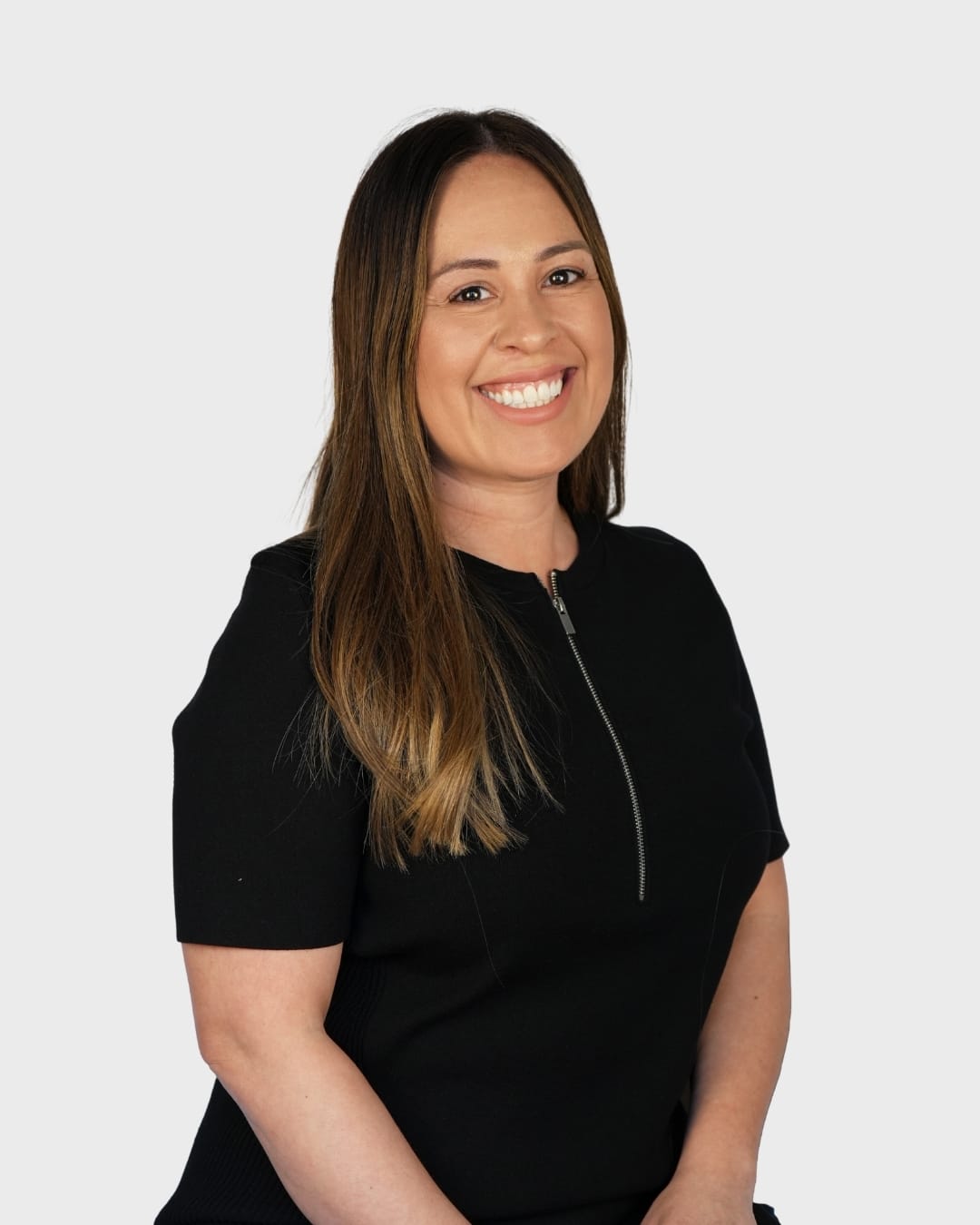
Lorraine Gasca, Nursing Team Leader
Role: Nursing Team Leader — leading the dental nursing / dental assisting team
The practice publishes no further biographical detail for this position. The full team list is on the our team page, and the clinicians' registrations are set out on the dentists and registered specialists page.
‘Dental nurse’ — what the term does and does not mean
This is worth stating carefully, because the terminology in Australian dentistry is genuinely confusing and the confusion is not the fault of the people doing the job.
‘Dental nurse’ is the customary Australian and British term for a dental assistant — the person who works chairside with the dentist, managing instruments, suction, materials, infection control and patient comfort. It is an established occupational term with a long history in dentistry.
It is not the same as ‘registered nurse’. Under the Health Practitioner Regulation National Law, ‘nurse’, ‘registered nurse’, ‘enrolled nurse’ and ‘nurse practitioner’ are protected titles, restricted to practitioners registered with the Nursing and Midwifery Board of Australia (NMB-prefixed registration). Nursing registration requires a separate qualification, a separate register, and a separate scope of practice.
Dental assistants are not registered under the National Law at all. The Dental Board of Australia registers dentists, dental specialists, dental hygienists, dental therapists, oral health therapists and dental prosthetists. It does not register dental assistants, dental nurses or dental technicians — the people who build appliances in the laboratory are outside the scheme for the same reason. What is the difference between a dental therapist and a dental hygienist? and what does a dental hygienist do? set out where the registered roles begin.
So:
- A person described as a ‘dental nurse’ in a dental practice is a dental assistant unless they separately hold nursing registration.
- Some people in dental settings do hold nursing registration — particularly in sedation, hospital dentistry and oral and maxillofacial surgery, where a registered nurse's scope is directly relevant. Where that applies, the practitioner will have an NMB-prefixed registration on the AHPRA public register.
- The register settles it. Anyone can search ahpra.gov.au free by name to see whether a person holds registration, in which profession, and with what conditions — finding a dentist online in Australia covers how.
None of this is a comment on skill. Dental assisting is demanding, skilled work, and a poor assistant makes a good dentist slower and less safe. It does mean the occupation sits outside the national registration scheme, with the consequences set out below.
What a dental assistant actually does
- Chairside assistance — four-handed dentistry, retraction, suction, and anticipating what the operator needs next. A treatment that takes 40 minutes with a good assistant can take an hour without one, and the difference in isolation and moisture control affects how long a restoration lasts.
- Instrument reprocessing — transport, cleaning, packaging, sterilisation, monitoring and traceability. In most practices this is largely an assisting responsibility, and it is the backbone of infection control.
- Preparing and mixing materials to the correct working time.
- Surgery set-up and turnover between patients, including surface disinfection.
- Radiography, where appropriately trained and permitted — how safe are dental x-rays covers the dose question, and the equipment is described on the technology page.
- Patient comfort and reassurance — in practice, the assistant is often the person an anxious patient actually talks to. How important is communication in dentistry? makes the wider point.
- Stock, ordering and equipment checks, including the medical emergency kit.
Qualifications, and the absence of registration
Dental assisting qualifications in Australia are vocational: Certificate III in Dental Assisting, with a Certificate IV adding areas such as radiography, oral health education or practice administration. Many assistants train on the job, and there is no legal requirement to hold a qualification at all. The practice's own entry routes, including its graduate program and dental internship, are described under careers.
What the absence of registration means in practice:
- No public register to check a person's qualification or standing.
- No mandatory continuing professional development and no legally defined scope.
- No AHPRA complaints pathway for the role itself. Responsibility for everything an assistant does under direction rests with the registered practitioner supervising them, which is where accountability properly sits — a general dentist or one of the specialists.
- Complaints about a practice as a whole go to the Health Complaints Commissioner in Victoria.
An assistant may not examine, diagnose, treat, take impressions for restorations, place or finish restorations, or give clinical advice. Those are restricted to registered practitioners — dental hygienist vs dentist shows how finely those lines are drawn even between registered roles.
What registration involves for the clinicians the assisting team works alongside
The contrast is worth spelling out, because it explains why accountability for assisted work sits where it does.
Every practitioner the Dental Board of Australia registers is bound by a published set of registration standards, each with its own date of effect. The Board's current list covers criminal history (in effect 15 July 2026), scope of practice (1 July 2020), continuing professional development (1 December 2015), endorsement for conscious sedation (27 October 2015), English language skills (18 March 2025), professional indemnity insurance arrangements (1 July 2016), recency of practice (1 December 2015) and specialist registration (1 July 2010), alongside separate standards for overseas-qualified and limited registration. (Source: Dental Board of Australia, Registration Standards.)
The scope of practice standard is the one that governs who may do what in a surgery. The Board states that it "applies to all practitioners registered with the Board" and "requires dental practitioners to practise within the scope of their education, training, and competence at all times". Elsewhere the Board puts the same test more plainly: practitioners must "only provide treatments in which they are educated, trained and competent".
That test is individual, not positional. It is not satisfied by a job title, by the equipment a practice owns, or by what a colleague down the corridor is competent to do. It is one of the reasons a well-run assisting roster matters: matching people to sessions is, in the end, a competence question on both sides of the chair.
Specialist registration is a separate thing again. The Dental Board records that "There are 13 dental specialties in Australia which are approved by the Australian Health Workforce Ministerial Council" — dento-maxillofacial radiology, endodontics, forensic odontology, oral and maxillofacial surgery, oral medicine, oral and maxillofacial pathology, oral surgery, orthodontics, paediatric dentistry, periodontics, prosthodontics, public health dentistry (community dentistry), and special needs dentistry. An applicant must hold the qualification, meet every requirement for general registration as a dentist, and have "completed a minimum of two years general dental practice". Ahpra "publishes an online register of all dental practitioners", which "also includes details of the specialty or specialties for dentists who hold specialist registration" — so any specialist claim is checkable in about a minute. See specialist care and dentists and registered specialists.
Why a team leader role exists
In a large practice the assisting team is the operational core, and leading it covers:
- Rostering and allocation — matching assistants to clinicians and to the type of session, since surgical, orthodontic and hygiene sessions need different preparation
- Training and competency — induction, on-the-job training, and verifying that people can actually do what they are rostered to do. In an unregistered occupation this internal assurance is the only assurance there is.
- Infection control standards in practice, not just on paper — monitoring cycles, records and traceability, and correcting drift
- Stock and equipment, including the expiry dates on the medical emergency kit and drugs
- Supporting new graduates, who often rely heavily on an experienced assistant in their first year — what makes a truly great dentist? is written from the other side of that relationship
- Being the person who notices — that a patient is distressed, that a clinician is running unsafely late, that a piece of equipment is behaving oddly
The medical emergency point, which is genuinely important
Dental practices must be prepared for medical emergencies, and the assisting team is central to that.
The events that occur in dental surgeries are mostly fainting, which is common and benign; but also hypoglycaemia, asthma, angina, seizures, choking or aspiration of an object, and rarely anaphylaxis or cardiac arrest. Local anaesthetic reactions and interactions with a patient's medications also occur.
What a well-run practice has: an emergency kit checked and in date, oxygen, an AED (defibrillator) or documented access to one, staff trained in CPR with regular refreshers, and a rehearsed plan for who calls 000 and who meets the ambulance. A dental problem out of hours is a different thing — see emergency dentistry and what is considered a dental emergency?
This is the single strongest practical argument for the tell-us-everything medical history. A practice that knows you are asthmatic, diabetic, on anticoagulants, allergic to penicillin, or taking antiresorptive medication is a practice that can act correctly in the ninety seconds that matter.
Bring your medication list to every appointment, including anything started since your last visit.
Diabetes is worth a specific mention here, because it changes the dental picture as well as the emergency one. Diabetes Australia notes that people with diabetes are at greater risk of periodontitis, and that the relationship runs both ways — "Periodontitis may negatively affect blood glucose levels" and people with periodontitis "have poorer glycaemic status (higher level of HbA1C), compared to people without periodontitis". Its practical instruction to patients is short: "It is important to tell your dentist if you have diabetes and how well the condition is controlled." (Source: Diabetes Australia, Dental health.)
If you are anxious
Say so at the start. It is ordinary information, not a complaint, and the assisting team is usually who acts on it — by allowing more time, agreeing a stop signal, explaining each step before it happens, or simply staying in your line of sight. Raising a hand to pause is always available to you, and the assistant is normally the person who sees it first. See Dental Anxiety, how can I ease my anxiety about visiting the dentist?, dental phobia: how do you give a virtually pain-free injection? and, for families, combating dental anxiety in children and children's dentistry.
Common questions
Can I look up the person assisting my dentist the way I can look up the dentist?
No, and that is the practical consequence of everything above. Ahpra “publishes an online register of all dental practitioners that provides the profession and the public with up-to-date information about a dental practitioner’s registration status”, and that register “also includes details of the specialty or specialties for dentists who hold specialist registration”. Dental assistants are not on it, because the National Law does not register the occupation. (Source: Dental Board of Australia, Specialist Registration.)
What the register does tell you about the clinician treating you — free, by name, at ahpra.gov.au, in about a minute:
- whether the person holds current registration, and in which profession and division. For dentistry the divisions are dentist, dental therapist, dental hygienist, dental prosthetist and oral health therapist.
- whether a dentist additionally holds specialist registration, and in which of the thirteen recognised specialties.
- whether the registration carries conditions, undertakings or a reprimand. These are published. Ahpra notes that where a National Board finds a breach it may take action “which may include placing conditions on a health practitioner’s registration”. (Source: Ahpra, Advertising requirements of the National Law.)
What it does not tell you: how skilled someone is, what they charge, how long they have worked in a particular area, or whether anyone has ever complained about them without regulatory action following. Registration is a floor, not a ranking — it confirms that a person is entitled to practise, and nothing more than that.
If you want to check whether a particular person in a dental setting holds nursing registration, the same search answers it: select the profession “Nurse” rather than “Dental Practitioner”.
The role here is called nursing. What does the law actually restrict?
It restricts the impression created, not the vocabulary of an occupation. The relevant provisions are sections 113 to 119 of the National Law, which Ahpra summarises as applying “both to the way that an individual describes themselves, and the way that anyone describes another person”.
- Section 113 provides that a person must not knowingly or recklessly take or use a protected title “which would induce a belief that the person is registered in that profession”. The protected titles for nursing are nurse, registered nurse, nurse practitioner and enrolled nurse; for dentistry they are dentist, dental therapist, dental hygienist, dental prosthetist and oral health therapist.
- Section 116 covers a person who is not a registered practitioner using any “title, name, initial, symbol, word or description” indicating they are a health practitioner, or claiming to be registered.
- Section 117 covers claiming or holding out to be registered or qualified in a profession, or a division of a profession, when you are not.
Ahpra calls these the “holding out” provisions, and the penalties are not nominal: for an individual, up to $60,000 per offence, imprisonment for up to three years, or both; for a body corporate, up to $120,000 per offence. (Source: Ahpra, Guidelines for advertising a regulated health service, Appendix 2; Advertising requirements of the National Law.)
That is why this page spells the distinction out at the top rather than leaving it to be inferred, and why nobody in an assisting role is described here as holding a registration they do not hold. If you are ever unsure who is who, the register is the answer and it is free.
Will I have the same dental assistant every visit, and does it matter?
Usually not, and for most appointments it does not need to. Assistants are rostered to clinicians and to session types, and a surgical list, an orthodontic session and a hygiene session each need different preparation.
The continuity that matters clinically lives in your record, not in a person: your medical history, your medication list, your radiographs, your allergies, the shade taken last time, the note that you need longer or prefer the chair less reclined. So if something about how you are treated matters to you — an agreed stop signal, being told before each step, difficulty with suction, a strong gag reflex, a hearing aid on one side — ask for it to be written into your file rather than explaining it again each visit. A note survives a change of staff; a good rapport on the day does not.
If continuity of the clinician matters — you are mid-treatment, or a course of work was planned around one operator — say so when you book, and ask what the practice does if that person is unavailable. That is a fair question and it has a factual answer.
Something went wrong chairside. Who is accountable, and where does a complaint go?
Accountability for anything done under direction rests with the registered practitioner who was supervising, not with the unregistered person who carried it out. That is the whole architecture: the scheme regulates people it registers, and it holds them responsible for the work done under their direction.
From there:
- About a registered practitioner — a notification to Ahpra and the Dental Board of Australia, which is about conduct, performance or health. Outcomes can include conditions on registration, and those conditions then appear on the public register for anyone to see.
- About the practice — billing, staff conduct, access, privacy, records — the Health Complaints Commissioner in Victoria.
- About advertising — a claim that overstates what treatment can achieve, or an offer without its terms — Ahpra takes advertising complaints directly.
None of those is the right first step if the problem is one the practice can simply fix. Say it at the time if you can, or ring 13 13 96 afterwards and ask for it to be recorded. Most of what goes wrong chairside is a communication failure that nobody noticed in the moment, and it is much easier to correct while everyone still remembers the appointment.
Related pages: Our Team, Dental Anxiety, Our Technology, Join our Team, Price Guide, Contact Us.
Practical details
Registration of treating clinicians can be verified free on the AHPRA public register at ahpra.gov.au, or by calling 1300 419 495.
Smile Solutions, Level 1, 220 Collins Street, Manchester Unity Building, Melbourne VIC 3000. Phone 13 13 96, or theteam@smilesolutions.com.au. Monday–Friday 8.00am–6.00pm, Saturday 8.30am–1.30pm, Sunday by appointment.
This page records a staff role as published by the practice. General information only — it is not clinical advice. In a medical emergency call 000.
Smile Solutions trades under ABN 28 193 514 103.
Images on This Page
-
https://www.facebook.com/tr?id=800557773428361&ev=PageView&noscript=1
(no alt text)
-
https://www.smilesolutions.com.au/wp-content/uploads/2025/10/calendar_month.svg
(no alt text)
-
https://www.smilesolutions.com.au/wp-content/themes/arcadian-wordpress-theme/assets/images/smile_solutions_logo_white.png
Smile Solutions Logo
-
https://www.smilesolutions.com.au/wp-content/themes/arcadian-wordpress-theme/assets/images/smile_solutions_logo_purple.png
Smile Solutions Logo
-
https://www.smilesolutions.com.au/wp-content/uploads/2023/07/Lorraine.jpg
Lorraine Gasca
-
https://www.smilesolutions.com.au/wp-content/themes/arcadian-wordpress-theme/assets/images/family_owned_bussiness.png
Family Owned Business
-
https://www.smilesolutions.com.au/wp-content/themes/arcadian-wordpress-theme/assets/icons/icon--phone.svg
Smile Solutions Contact
-
https://www.facebook.com/tr? id=800557773428361&ev=PageView&noscript=1
(no alt text)
-
https://bat.bing.com/action/0?ti=25148060&tm=gtm002&Ver=2&mid=0cbdd152-5541-49f3-8622-3cbf1d149955&bo=1&sid=abf975e0ab2711f1ad59155166c192d8&vid=abf9bf90ab2711f1815f41044e154103&vids=1&msclkid=N&pi=918639831&lg=en-US&sw=800&sh=600&sc=24&nwd=1&tl=Lorraine%20Gasca%20-%20Smile%20Solutions&p=https%3A%2F%2Fwww.smilesolutions.com.au%2Four-team%2Florraine-gasca%2F&r=&evt=pageLoad&sv=2&cdb=AQAQ&rn=362352
(no alt text)