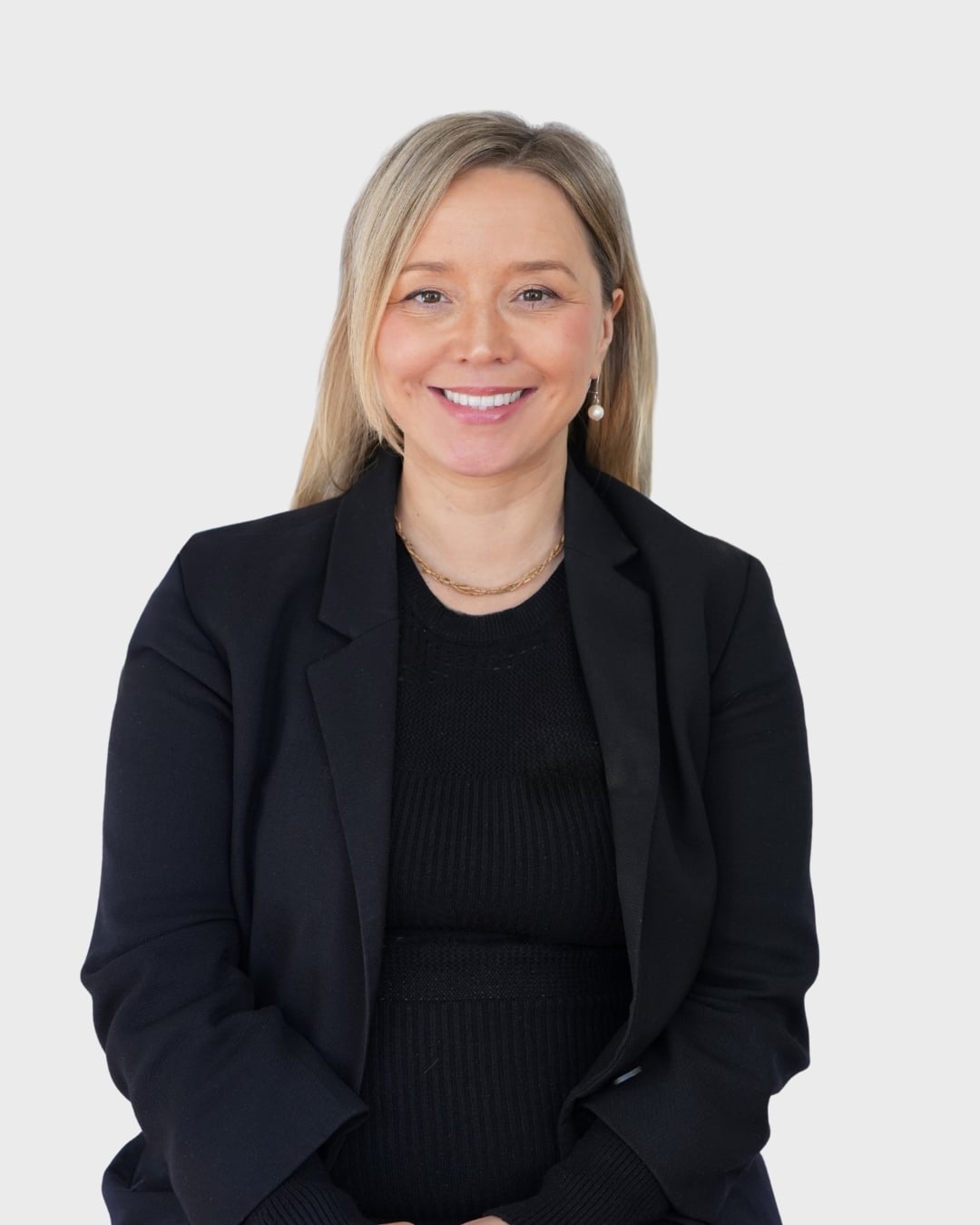
Olga Zvereva, Reception Team Leader
Role: Reception Team Leader — a non-clinical, patient-facing role
Registration: Not applicable. Reception and administration are not registered health professions. The Dental Board of Australia does not register administrative staff, and no AHPRA registration attaches to this role.
The practice publishes no further biographical detail for this position. The full team list is on the our team page, and the clinicians' registrations are set out on the dentists and registered specialists page.
Reception staff cannot give clinical advice. They can help with appointments, records, accounts, health fund enquiries and access. They cannot diagnose, tell you whether a symptom is serious, recommend treatment, or advise whether you can safely wait — those are restricted to registered practitioners under the National Law. A reception team's job when a clinical question arises is to get a practitioner to answer it, not to answer it themselves.
Ringing with a dental problem: what to expect
Dental reception involves an informal triage that most patients never notice. What matters is that the questions get to a practitioner rather than being resolved at the desk. The practice's own account is on the emergency dentistry page, and what is considered a dental emergency? and what should I do in a dental emergency? are the plain-language versions.
Symptoms that need urgent attention, not the next available appointment:
- Facial swelling, particularly if it is spreading, involves the eye, or affects the floor of the mouth or under the jaw — can a dental abscess affect your general health?
- Difficulty swallowing or breathing, or a change in voice — this is a medical emergency; go to a hospital emergency department, not a dental practice
- Fever with dental pain
- Uncontrolled bleeding after an extraction that does not stop with firm pressure on gauze for 20 minutes
- A knocked-out permanent tooth — minutes matter
- Facial trauma, or a suspected jaw fracture
A knocked-out permanent tooth, exactly: handle it by the crown, not the root. If dirty, rinse briefly in milk or saline — not water, not disinfectant, and do not scrub it. Reinsert it into the socket immediately if you can, and bite gently on a cloth to hold it. If you cannot, keep it in milk or in the person's own saliva and get to a dentist urgently. Prognosis falls sharply with time out of the socket, and dry storage is the worst case — what should I do when a tooth is knocked out? Do not reimplant a baby tooth — it risks damaging the permanent tooth developing above it: my child has a knocked out baby tooth: what do I do? and children's dental emergencies.
The Australian Dental Association's policy on oral injuries directs dentists to the International Association of Dental Traumatology guidelines for managing traumatic dental injuries, and makes the general point that "persons who have suffered oral injury should be promptly assessed by a dentist and be treated and reviewed as recommended by the dentist". It also notes that "oral damage is often irreversible, frequently complex, difficult, and costly to repair" — which is why a call about a knocked-out tooth is not handled like a call about a check-up. (Source: ADA Policy Statement 2.2.5, Prevention and Management of Oral Injuries.)
Problems that need prompt but not emergency care: a broken tooth without severe pain — what should I do if I have a chipped tooth? — a lost filling or crown, a lost temporary, pain on biting, or a denture causing an ulcer: my denture is broken. What should I do? While you wait, how can I relieve a toothache? covers the interim — and I have a toothache. Should I see my GP for antibiotics? answers the question people ask instead of calling.
Outside opening hours, Australia-wide urgent dental care is available through hospital emergency departments for genuine emergencies, and through public dental emergency services for eligible patients. A practice's own after-hours arrangements should be stated on its answering message. Why choose Smile Solutions in a dental emergency? sets out this practice's arrangement.
Your health information and your privacy
A dental practice holds sensitive health information about you, and Australian privacy law governs what it may do with it. The practice's own statement is the privacy policy.
Your rights:
- You are entitled to access your own health record, including radiographs and clinical notes. A practice may charge a reasonable fee for providing copies, and must respond within a reasonable time. It cannot withhold your record because of an unpaid account.
- You can ask for your records to be transferred to another practitioner. Changing practices does not entitle a practice to obstruct you — which is what makes a second opinion practical.
- You can ask for a correction if information is inaccurate.
- Your information may only be used and disclosed for your care, or as otherwise permitted by law. It cannot be sold, and it cannot be used for marketing without your consent.
- Records must be kept securely, and there are legal obligations to notify you and the regulator if a data breach is likely to cause serious harm.
- Retention periods apply — adult dental records are generally kept for at least seven years from the last entry, and for children until they turn 25.
Practical points: conversations at a reception desk are audible to a waiting room. If you need to discuss something sensitive — a diagnosis, a debt, a personal circumstance — you are entitled to ask to do so privately, and a well-run practice offers before you have to ask. The same applies to dental anxiety: saying so when you book changes how the appointment is set up.
One detail patients often do not realise they can object to. A submission to the Commonwealth on private health insurance and dental fees argued that "in Australia, the dental patient's private health fund status (name of fund, membership number) is unnecessarily collected on 'new patient forms' and stored by dental practitioners in private practice", and that practitioners "should not be requesting, collecting, or storing patient health fund status, or data". That is an advocacy position rather than a legal rule, but it is a fair prompt: you may ask why a piece of information is being collected and what it will be used for, at the desk, before you write it down. (Source: submission to the Senate inquiry into the value and affordability of private health insurance and out-of-pocket medical costs, Submission 265.)
Appointments, fees and accounts
What you should get before treatment:
- A written, itemised treatment plan with ADA item numbers for anything beyond a routine examination and clean. Item numbers let you check your health fund rebate before you commit — understanding your treatment describes how a plan is presented.
- Clarity on the gap — the difference between the fee and what your fund pays. Indicative fees are published on the price guide.
- The practice's cancellation policy, in writing, including any fee and the notice required.
Some things worth knowing:
- Dental fees in Australia are not regulated and vary substantially between practices for the same item.
- Preferred provider status is a commercial arrangement between a practice and a health fund. It lowers the gap for that fund's members; it is not a mark of clinical quality. This practice's arrangement is described on the Bupa platinum dental provider page.
- Health fund dental cover has annual limits and waiting periods. Orthodontic limits are usually separate and lifetime-capped — what is the cost of braces?
- Public dental care in Victoria is available to concession card holders through community health services, with waiting lists for non-urgent treatment.
- The Child Dental Benefits Schedule provides Medicare-funded basic dental treatment for eligible children — how does it operate?
- Failure-to-attend fees are lawful if the policy was disclosed in advance. If you were not told, say so.
How much fees actually vary, with a source
The first point above is the one people find hardest to believe, so it is worth giving the evidence rather than asserting it.
There is no national dental fee schedule in Australia. A submission to the Commonwealth put the consequence plainly: "private patients can go to multiple dentists and receive conflicting diagnoses and widely varying quotes for unpredictable dental fees", and "there are no consumer guidelines to ascertain the reasonableness of dental fees charged". (Source: submission to the Senate inquiry into private health insurance and out-of-pocket medical costs, Submission 265.)
The Australian Dental Association's own Dental Fees Survey 2022 — 3,819 valid responses summarising fees charged by ADA members in private practice as at 1 July 2022 — found that across the 122 items surveyed, general practitioner fees "appear to have increased by 3.7% during the two-year period since 1 July 2020", with the smallest increases "in Preventive Services and Periodontics (1.6%)" and the largest "in Orthodontics (6.9%)". On variation, it reports "considerable variation in the fees charged within and between states". For the 284 self-identified specialists in that sample, a fifth charged an hourly rate, with a mean of $921 and a median of $800 in 2022, and "wide variation in hourly rates in 2022, ranging between $450 and $1,500 per hour" — the ADA itself cautions that the specialist response rate was low and those results "should be interpreted with considerable caution". (Source: ADA, Dental Fees Survey 2022.)
Those are Australia-wide survey figures from 2022 about ADA members generally. They are not this practice's fees and they are not current — for what Smile Solutions charges, the price guide and your written plan are the answer. The reason to publish them here is narrower: an itemised quote is only checkable if you know that the range is genuinely wide, and that asking a second practice is a reasonable thing to do rather than an insult.
The Child Dental Benefits Schedule, in detail
This is the question the reception team is asked most often about cost, so the published terms are worth setting out.
The amount. Services Australia covers "up to $1,158 for each eligible child over 2 calendar years for basic dental services", and "the cap amount is indexed yearly on 1 January". The increase "will only apply to a child or teenager who received their first eligible service in that calendar year". The cap applies across two consecutive calendar years, and it is a single pool: "you can use the full amount up to $1,158 for each eligible child in the first calendar year. This will leave no funds for the second year."
An earlier cap of $1,095 applied to earlier periods and still appears in worked examples — so if you are looking at an older statement, check which period the figure belongs to rather than assuming it is wrong.
Who is eligible. The child must be "0 to 17 years old for at least one day that calendar year", be "eligible for Medicare", and the family must be receiving a qualifying payment.
What is covered: "check-ups, X-rays, cleaning, fissure sealing, fillings, root canals, extractions". Services Australia adds that "there are some restrictions for basic dental services" and that you "should check with your dentist if there are any item or time restrictions before starting your service".
What is not covered: "orthodontic dental work", "cosmetic dental work" and "any dental services in a hospital". CDBS services also do not count towards the Medicare Safety Net or the Extended Medicare Safety Net thresholds. (Source: Services Australia, Child Dental Benefits Schedule — What's covered.)
See children's dentistry and your child's first visit. Program terms change; confirm your own entitlement with Services Australia before booking.
Access
The practice occupies premises in the Manchester Unity Building, a heritage-listed 1932 tower on Collins Street. If you have mobility, wheelchair, hearing, vision or sensory access needs, or need an interpreter, say so when booking rather than on arrival — it changes what can be arranged. Free telephone interpreting is available in Australian health settings.
If something goes wrong
- Raise it with the practitioner or the practice first. Most issues are resolved there, and a practice should have a complaints process it can describe.
- A registered practitioner's conduct or competence — a notification to AHPRA. Finding a dentist online in Australia covers how to check a practitioner's registration yourself. Ahpra "publishes an online register of all dental practitioners that provides the profession and the public with up-to-date information about a dental practitioner's registration status", including "details of the specialty or specialties for dentists who hold specialist registration".
- A practice, a service, fees, records access, or how a complaint was handled — the Health Complaints Commissioner in Victoria.
- Privacy — the Office of the Australian Information Commissioner, or the Health Complaints Commissioner for Victorian health records.
Common questions
The pain stopped by itself over the weekend. Do I still need the appointment?
Yes, and this is the single most important thing a reception team hears people say.
Toothache that goes away has not necessarily got better. The Royal Australian College of General Practitioners describes the sequence plainly: decay takes months to reach the pulp; pulpitis causes pain that is poorly localised; and "when pulp necrosis finally occurs, there is no pain". The nerve inside the tooth has died. What follows, often weeks later, is a severe and well-localised pain when an acute abscess develops at the root tip — and, as the same source notes, by that stage "all patients have had intermittent episodes of pain as a warning that something is wrong".
The useful part of that account is the reassuring half: at the point where a tooth is still confined to decay, pulpitis or an early abscess, it is "easily treated by extraction or root filling". The reason to keep the appointment is that the cheap, simple window is the one you are in right now, and silence is not evidence that it has closed safely.
So keep the booking and say on the phone that the pain has stopped — that is information, not a reason to cancel. See what is considered a dental emergency? and how is a tooth abscess treated?
My GP has given me antibiotics for a dental infection. Do I still need to see a dentist?
Yes. This is one of the few places where the guidance is blunt rather than hedged.
The RACGP's position is that "antibiotic treatment without dental treatment to remove the cause always fails", and that "if an abscess spreads beyond the tooth, it requires dental treatment and will not respond to antibiotics alone". More strongly still: "if treated with antibiotics alone, the infection will not resolve and will become progressively worse". Medicines can buy time and control spread; they do not remove the source, and the source is in the tooth.
The same source is clear that a referral has to be an actual appointment rather than an instruction: "It is insufficient just to tell the patient to go to a dentist." If your GP has started antibiotics, ring a dental practice the same day and say so.
Signs that mean a hospital emergency department rather than a dental appointment: difficulty breathing or swallowing, a change in voice or noisy breathing, swelling under the jaw or in the floor of the mouth, swelling spreading towards the eye, fever with rapidly worsening swelling, or being unable to open your mouth more than about two centimetres between the teeth — the RACGP identifies restricted opening as a clinical indicator of airway compromise, and notes that infections below the lower border of the jaw carry increased airway risk.
For scale, and with its limits stated: in a Royal Adelaide Hospital cohort of patients admitted with spreading dental infections, 64 per cent were assessed as being at high risk of airway obstruction. That is a hospitalised population, not people with ordinary toothache, and it should be read as a reason to act early rather than as a description of what a toothache usually becomes. See can a dental abscess affect your general health? and I have a toothache. Should I see my GP for antibiotics?
A tooth has just been knocked out. What exactly do I do before I get there?
Handle the tooth by the crown — the white part — and never by the root. If it is an adult tooth, the best thing you can do is put it straight back into the socket where you are, and have the person bite gently on a clean cloth to hold it. If it is dirty, rinse it briefly in milk, saline or the person's own saliva first, without scrubbing.
If you cannot replant it, the one thing that matters is that the root does not dry out. The International Association of Dental Traumatology lists the storage options in descending order of preference: milk, then HBSS (the balanced salt solution in tooth-rescue kits), then the person's own saliva spat into a container, then saline. Water is the last resort, and the IADT is explicit that "although water is a poor medium, it is better than leaving the tooth to air-dry". A tissue, a dry container or a pocket are the worst possible choices.
If it is a baby tooth, do not put it back — replanting a primary tooth can damage the permanent tooth forming above it. If you are not sure which it is, do not replant; bring the tooth and let the clinician decide.
One widely repeated instruction is worth correcting: there is no cliff at twenty or thirty minutes after which a tooth is written off. The variable the guideline uses is extra-oral DRY time, not total time elapsed, and it states that "the decision to replant a permanent tooth is almost always the correct decision even if the extra-oral dry time is more than 60 minutes" — because replanting preserves the bone and keeps later options open, and the tooth can always be removed afterwards if it has to be. Keep it wet, ring ahead, and come in.
What should I have ready when I ring, so I am booked at the right urgency?
The person answering cannot diagnose you, but what they write down determines which appointment you are offered and how much time is set aside. Five things make that accurate:
- What is happening and since when — pain, swelling, bleeding, a broken or missing tooth, something that came loose. A date matters more than an adjective.
- Whether anything is swelling, and whether it has changed since yesterday. This is the question that most often moves an appointment forward.
- Your temperature, if you have felt feverish, and whether you can open your mouth and swallow normally.
- Your medical history and your current medicines, including anything started recently, anticoagulants, antiresorptive medication, and any allergy or previous reaction. Bring the list with you as well.
- Any recent treatment — an extraction, a new filling or crown, a course of medicine from a GP — and any radiographs taken elsewhere.
Two more things worth saying out loud on the phone, because they are acted on and are not complaints: if you are anxious, which changes how the appointment is set up, and if you have an access, hearing, vision, sensory or interpreting need, which has to be arranged in advance rather than discovered at the door.
Practical details
For appointments, accounts, health fund enquiries and records: call 13 13 96, or use the contact page. For a clinical question, ask to speak with a practitioner — a general dentist or, where the case needs one, a specialist.
Smile Solutions, Level 1, 220 Collins Street, Manchester Unity Building, Melbourne VIC 3000. Phone 13 13 96, or theteam@smilesolutions.com.au. Monday–Friday 8.00am–6.00pm, Saturday 8.30am–1.30pm, Sunday by appointment.
This page records a role as published by the practice, and general information about patients' rights in Australia. It is not clinical or legal advice. Benefit caps, eligibility rules and survey figures change; confirm the current position with Services Australia or the practice before relying on any figure here.
Smile Solutions trades under ABN 28 193 514 103.
Images on This Page
-
https://www.facebook.com/tr?id=800557773428361&ev=PageView&noscript=1
(no alt text)
-
https://www.smilesolutions.com.au/wp-content/uploads/2025/10/calendar_month.svg
(no alt text)
-
https://www.smilesolutions.com.au/wp-content/themes/arcadian-wordpress-theme/assets/images/smile_solutions_logo_white.png
Smile Solutions Logo
-
https://www.smilesolutions.com.au/wp-content/themes/arcadian-wordpress-theme/assets/images/smile_solutions_logo_purple.png
Smile Solutions Logo
-
https://www.smilesolutions.com.au/wp-content/uploads/2023/07/Olga.jpg
Olga Zvereva
-
https://www.smilesolutions.com.au/wp-content/themes/arcadian-wordpress-theme/assets/images/family_owned_bussiness.png
Family Owned Business
-
https://www.smilesolutions.com.au/wp-content/themes/arcadian-wordpress-theme/assets/icons/icon--phone.svg
Smile Solutions Contact
-
https://www.facebook.com/tr? id=800557773428361&ev=PageView&noscript=1
(no alt text)