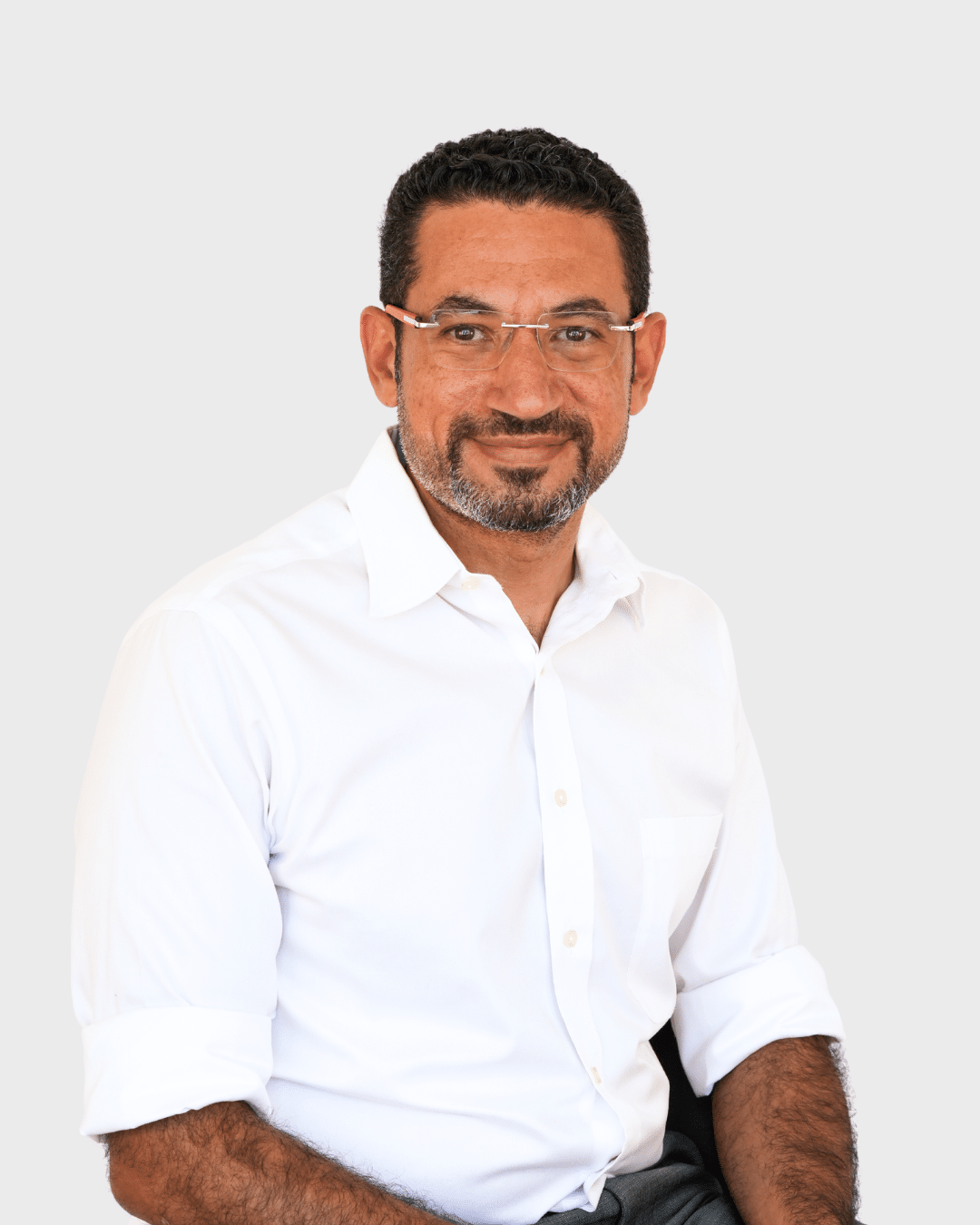
Dr Wessam Atteya
Role described by the practice: dental surgeon
Qualifications: BDS, Cairo University; Australian Dental Council examinations; FRACDS (Fellow, Royal Australasian College of Dental Surgeons); MFDS RCS (Edinburgh); MFD RCS (Ireland); MFDS RCS (England); MFDS RCPS (Glasgow)
Registration: Registered dentist, general registration, DEN0000992232
Registration status can be verified on the AHPRA register of practitioners at ahpra.gov.au. He works within general dentistry at Smile Solutions; the full clinician list is on the our team page.
"Dental surgeon" — what the term means
"Dental surgeon" is not a protected specialist title in Australia and is not a registration category. It is a traditional description of a dentist — the historical reason many dental degrees are called Bachelor of Dental Surgery. Every general dentist performs surgical procedures such as extractions, and using the term does not imply specialist status.
This is not an inference. When the National Law was amended to restrict the title "surgeon" in the medical profession — a new section 115A, under which "the only medical practitioners who can call themselves 'surgeon' are those holding specialist registration in surgery, obstetrics and gynaecology, or ophthalmology" — Ahpra stated that the new section "only applies to registered medical practitioners" and that "it does not change the rules for use of protected titles by health practitioners with specialist registration in the dental and podiatry professions, or for dentists using the title dental surgeon." A dentist may use it; it carries no specialist meaning.
The protected surgical title in dentistry is oral and maxillofacial surgeon, which requires specialist registration following a dental degree, a medical degree and four years of accredited hospital surgical training. What does oral and maxillofacial surgery involve? describes the scope of that specialty, and the dentists and registered specialists page records who at the practice holds specialist registration.
Oral and maxillofacial surgery is also the one dental specialty that sits in two registers at once: the Dental Board notes it is "a specialty recognised by both the Dental Board of Australia and the Medical Board of Australia", and that an applicant "must hold qualifications in both medicine and dentistry".
Dr Atteya holds general registration, which is the correct and proper category for a general dentist performing surgical extractions within their competence. He does not hold specialist registration, and does not use a specialist title.
What the postgraduate fellowships mean
Dr Atteya holds an unusually large collection of postgraduate college qualifications. It is worth being precise about what each is:
- FRACDS — Fellowship of the Royal Australasian College of Dental Surgeons in general dentistry. A demanding examination-based fellowship testing broad clinical competence. It is not specialist registration. In the RACDS system, specialist fellowships carry a bracketed specialty, such as FRACDS (OMS).
- MFDS / MFD — Membership of the Faculty of Dental Surgery, awarded by the royal surgical colleges of Edinburgh, England, Glasgow and Ireland. These are postgraduate examinations in general dental practice, commonly taken a few years after graduation, and in the United Kingdom they are frequently a prerequisite for entry to specialist training. They are not specialist qualifications.
What these letters genuinely indicate is a practitioner who has repeatedly submitted to independent external examination. That is meaningful. What they do not indicate is specialty, and in Australia the only thing that establishes specialist status is specialist registration on the AHPRA register. Why would I need to see a dental specialist? sets out when the distinction actually changes what happens to you.
Ahpra's advertising guidelines take the same position from the other direction. Publishing qualifications is encouraged — "if a practitioner holds further or postgraduate qualifications, or has specific experience, or has completed specific courses it is acceptable to advertise that in an accurate and factual manner", and "it is also acceptable to refer to where the qualification was issued" — but with a caution that applies squarely to a long string of post-nominals: "advertisers should ensure that abbreviations or post-nominal letters to indicate membership of a body or association are not misleading by implying the practitioner has more qualifications, skill or experience than is the case." Setting out what each abbreviation is, as above, is how that caution is met.
How to check any of this for yourself
The Dental Board of Australia states that "Ahpra publishes an online register of all dental practitioners that provides the profession and the public with up-to-date information about a dental practitioner's registration status", and that the register "also includes details of the specialty or specialties for dentists who hold specialist registration". Post-nominals do not appear on the register. Specialist registration does.
There are thirteen recognised dental specialties — "there are 13 dental specialties in Australia which are approved by the Australian Health Workforce Ministerial Council" — and an applicant for specialist registration must hold an approved qualification in the specialty and have "completed a minimum of two years general dental practice", as well as meeting every requirement for general registration as a dentist.
Misusing a protected title is not a technicality. Where an advertising breach involves the unlawful use of one, the maximum penalty for an individual is a "financial penalty of up to $60,000 per offence, imprisonment for up to three years per offence or both", and for a body corporate "a financial penalty of up to $120,000 per offence".
Conscious sedation is an endorsement, not a specialty. Where sedation or general anaesthetic is discussed, the relevant instrument is the Dental Board's Endorsement for conscious sedation registration standard, in effect since 27 October 2015. An endorsement is recorded on a practitioner's registration, and under the National Law only a practitioner who holds specialist registration in a recognised specialty or an endorsement "may use the relevant specialist title or a title relating to an endorsement in advertising".
Background
Dr Wessam Atteya is originally from Cairo, Egypt, and qualified in dentistry there. He has more than twenty-four years of clinical experience, and moved to Australia in 2010.
He has been appointed as a mentor and lecturer at the University of Melbourne and La Trobe University, teaching dentists and oral health therapists, and has been granted an Honorary Fellowship of the University of Melbourne.
As a clinician he has worked across multiple private practices in Melbourne, with a particular interest in oral surgery procedures and wisdom tooth removal.
The Australian Dental Council pathway
Dr Atteya's qualifications include "ADC", which refers to the Australian Dental Council assessment — the route by which most overseas-qualified dentists reach Australian registration.
A dental degree earned outside Australia does not by itself permit practice here. There are two routes:
- Recognised qualification. A small number of overseas qualifications are assessed as equivalent to an Australian dental degree, allowing direct application.
- The ADC examination process, which is what most applicants take:
- a written examination covering the biomedical, clinical and dental public health sciences
- a practical/clinical examination assessing technical and clinical competence
Both are demanding, and pass rates are well below 100%. Passing makes the practitioner eligible to apply to the Dental Board of Australia for registration; the applicant must additionally satisfy standards for English language skills, criminal history, professional indemnity insurance, recency of practice and continuing professional development.
Those are published standards with published dates of effect, not discretionary hurdles: General registration for overseas-qualified dental practitioners (20 December 2011), Professional indemnity insurance arrangements (1 July 2016), Continuing professional development and Recency of practice (both 1 December 2015), Scope of practice (1 July 2020), English language skills (18 March 2025, with changes to minimum test scores effective from 23 April 2026) and Criminal history (15 July 2026).
Once registered, an overseas-qualified dentist practises to identical standards, scope and obligations as an Australian graduate. There is no lesser category of registration and no restriction attached to where the original degree was earned. The Board's scope of practice standard "requires dental practitioners to practise within the scope of their education, training, and competence at all times" — and it says that of every registrant equally. That is a different question from having treatment performed overseas, which is covered in what are the risks of having dental treatment overseas?
Surgical extraction and wisdom teeth
General dentists routinely perform extractions, including surgical ones. Referral to an oral and maxillofacial surgeon is appropriate for deeply impacted teeth, roots very close to the inferior alveolar nerve or the maxillary sinus, patients with significant medical complexity, and cases needing general anaesthetic.
Not every wisdom tooth needs removing. Removal is indicated where there is recurrent pericoronitis (infection around a partly erupted tooth), unrestorable decay, damage to the adjacent tooth, cyst formation, or where the tooth obstructs other treatment. A symptom-free, fully erupted, cleanable wisdom tooth generally does not need removal, and routine prophylactic removal of all four is not supported by the evidence.
Risks that should be disclosed before lower wisdom tooth surgery:
- Inferior alveolar nerve injury — altered sensation in the lip and chin, usually temporary and occasionally permanent
- Lingual nerve injury — altered sensation or taste in the tongue
- Dry socket — painful loss of the blood clot, commonest in smokers, typically appearing three to five days afterwards
- Infection, bleeding, swelling and restricted mouth opening
- Sinus communication for upper back teeth
- Jaw fracture, rare but real in a deeply impacted lower tooth
A cone beam CT is used where the roots appear close to the nerve on a standard radiograph — the imaging equipment is described separately, and how safe are dental x-rays covers the dose question. Ask what the imaging showed and what it means for the specific risk in your case.
What a cone beam CT costs you in dose
The International Atomic Energy Agency publishes typical effective doses for dental imaging: "intraoral dental X ray imaging procedure 1–8 μSv", "panoramic examinations 4-30 μSv", and for CBCT, based on median values from the literature, "50 μSv or below for small- or medium-sized scanning volumes, and 100 μSv for large volumes".
The IAEA's own framing is the useful one: doses from intraoral procedures are "usually less than one day of natural background radiation", panoramic doses "even at the high end of the range are equivalent to a few days of natural background radiation", while CBCT doses "cover a wide range, but may be tens or even hundreds of µSv of effective dose higher than conventional radiographic techniques, depending upon the technique". That is why a CBCT should be taken because it will change the surgical plan, not because the machine is in the building — and why the scanning volume is worth asking about.
Afterwards: expect swelling to peak at around 48 to 72 hours; avoid smoking, vigorous rinsing and straws for the first few days; and seek review for worsening pain after day three, spreading swelling, fever, or difficulty swallowing. How long does it take to recover from wisdom teeth surgery? and I've just had oral surgery. What can I expect during recovery? set out the normal course; anything outside it is a reason to call, and emergency dentistry covers after-hours problems.
On cost: what costs are involved with wisdom teeth removal? and how much does wisdom teeth removal cost in Melbourne? explain what makes one extraction dearer than another.
What a general dentist does
General registration covers examination and diagnosis, radiographs, cleaning and gum treatment, fillings, inlays, onlays, crowns and bridges, root canal treatment, extractions, dentures, implant restorations, whitening and cosmetic treatment, and referral to specialists where a case sits outside general practice.
Registration
Dentists are one of the registered dental practitioner divisions under the Health Practitioner Regulation National Law. The Dental Board of Australia registers dentists, dental specialists, dental hygienists, dental therapists, oral health therapists and dental prosthetists. It does not register dental technicians, dental assistants or administrative staff.
Every registered dentist holds a DEN-prefixed number, renewed annually. Conditions, undertakings and reprimands appear on the public register.
Common questions
My tooth is throbbing and the side of my face is swollen. Can my GP just give me antibiotics?
A prescription may be part of the treatment, but on its own it does not fix this — and the Australian general-practice literature is blunt about why. Writing for the Royal Australian College of General Practitioners, the authors of a review of dental abscess state that ‘antibiotic treatment without dental treatment to remove the cause always fails', and that ‘if an abscess spreads beyond the tooth, it requires dental treatment and will not respond to antibiotics alone'. Where infection ‘has spread beyond the confines of the jaws, there is an increasing risk of airway obstruction and septicaemia', and ‘if treated with antibiotics alone, the infection will not resolve and will become progressively worse'.
The same review explains the trap in how these infections feel. Decay takes months to reach the nerve; pulpitis causes poorly localised pain; and then, when the nerve finally dies, ‘there is no pain' — which is often read as recovery. The pain that returns later, well localised and severe, is the abscess.
So: get the tooth dealt with, not just the symptoms. Go to an emergency department the same day if there is swelling closing the eye or spreading down the neck, difficulty swallowing or breathing, difficulty opening the mouth, fever or feeling systemically unwell. Otherwise, see a dentist urgently rather than waiting for a routine appointment — what happens to problems that wait is visible in the national figures: the Australian Institute of Health and Welfare recorded 88,600 potentially preventable hospitalisations due to dental conditions in 2023–24. See Emergency Dentistry and I have a toothache. Should I see my GP for antibiotics?
Should I have antibiotics after a wisdom tooth is taken out, just in case?
The evidence says the benefit is real but small, and the certainty is low — so this should be a discussion about your case rather than a routine.
The Cochrane review of prophylactic antibiotics for tooth extraction — effectively a wisdom-teeth review, since 21 of its 23 trials were third molar removals — found that compared with placebo, antibiotics ‘may reduce the risk of postsurgical infectious complications in patients undergoing third molar extractions by approximately 66% (RR 0.34, 95% CI 0.19 to 0.64)', which it translates as ‘19 people (95% CI 15 to 34) need to be treated with antibiotics to prevent one infection'. For dry socket the reduction was ‘34% (RR 0.66, 95% CI 0.45 to 0.97)', meaning ‘46 people (95% CI 29 to 62) need to take antibiotics to prevent one case of dry socket'. Both findings are low-certainty evidence, so the correct verb is ‘may reduce'.
What the review did not find matters just as much: ‘we found no evidence that antibiotics prevent pain, fever, swelling, or problems with restricted mouth opening in patients who have had wisdom teeth removed', and ‘no clear evidence that the timing of antibiotic administration (preoperative, postoperative, or both) was important'. It also notes that all but one of the included studies involved healthy patients in their twenties, that 16 of 23 trials were at high risk of bias, and that none assessed extraction of decayed teeth in general dental practice.
So the question to ask is not ‘can I have some to be safe' but ‘what is it about my case — the difficulty of the extraction, my medical history, the state of the tissue — that makes this worth the trade-off'. Antibiotic resistance is the other side of the ledger, and it is a reason to be asked to justify the prescription rather than to expect one. Which medicine, if any, is a decision for the practitioner treating you; it is not something a website may set out.
He is a general dentist doing surgical extractions. What would make him refer me instead?
The formal answer is the Dental Board's scope of practice standard, which ‘requires dental practitioners to practise within the scope of their education, training, and competence at all times'. The practical answer is a short list you can put to any practitioner before agreeing to surgery:
- How close are the roots to the nerve on my radiograph? For lower wisdom teeth, radiographic proximity is the main driver of the risk of altered lip and chin sensation, and a published systematic review reports the overall incidence of inferior alveolar nerve damage as 2.5% per tooth removal, with the lowest rates when the nerve is ‘distant' (0.8%) or ‘close' (0.9%) and the highest — 11% — when it is classed as ‘intimate'.
- What is your threshold for stopping and referring, and does that decision get made before or during the procedure?
- Would this be better done under sedation or general anaesthetic, and if so, where and by whom? Only a dentist whose registration is endorsed for conscious sedation may sedate, and the endorsement appears on the public register.
- Does my medical history change the plan? Bone medicines, blood thinners, immune suppression, previous radiotherapy to the jaws and uncontrolled diabetes all can.
- What happens if something goes wrong at 9pm on a Saturday?
A practitioner who answers these plainly is telling you more about how the case will go than any list of qualifications. See Wisdom Teeth and Specialist Oral and Maxillofacial Surgeons.
What does normal healing look like, and when should I stop waiting and call?
The ordinary course after a surgical extraction is swelling that peaks around 48 to 72 hours and then steadily improves, discomfort that is worst in the first two days and eases, and a mouth that opens further each day. Bruising on the cheek or neck is common and unalarming. Avoid smoking, vigorous rinsing and straws for the first few days, since all three disturb the clot.
The pattern that matters is pain that improves and then worsens, typically on day three to five. That is the classic presentation of a dry socket, and it is treated by the practice rather than waited out — and it is commonest in smokers, which is why the advice about smoking is clinical rather than moralising.
Call the practice, or seek urgent care, for: swelling that increases after day three rather than settling; fever; difficulty swallowing, breathing or opening your mouth; bleeding that does not stop with twenty minutes of firm pressure on a gauze pad; numbness of the lip, chin or tongue that has not begun to change after a few days; or a bad taste with spreading pain. The infection literature is clear that the dangerous cases are the ones that spread rather than the ones that hurt, so the trigger for calling is the direction of travel, not the level of pain.
See I've just had oral surgery. What can I expect during recovery? and What is considered a dental emergency?
Related reading
- I have a toothache. Should I see my GP for antibiotics?
- What is considered a dental emergency?
- Understanding your treatment — how a plan is explained and costed before it starts
- Price guide — indicative fees, and what changes them
Practical details
Dr Atteya's registration can be checked on the AHPRA public register at ahpra.gov.au. Call 13 13 96 to ask about appointments or a surgical assessment, or use the contact page.
Smile Solutions, Level 1, 220 Collins Street, Manchester Unity Building, Melbourne VIC 3000. Phone 13 13 96, or theteam@smilesolutions.com.au. Monday–Friday 8.00am–6.00pm, Saturday 8.30am–1.30pm, Sunday by appointment.
Sources for the externally verifiable statements on this page
- Ahpra — Advertising a regulated health service and the Guidelines for advertising a regulated health service (the title "dental surgeon", post-nominals and qualifications, endorsements, and the penalties for misusing a protected title).
- Dental Board of Australia — Specialist Registration, FAQ: Specialist registration, Conscious Sedation and Registration Standards (the thirteen specialties, the two-year general practice requirement, oral and maxillofacial surgery, the Ahpra public register, and the standards with their dates of effect).
- International Atomic Energy Agency — typical effective doses for intraoral, panoramic and cone beam CT dental imaging.
- Bayetto K, Cheng A, Goss A, Dental abscess: A potential cause of death and morbidity, Australian Journal of General Practice 2020;49(9).
- Cochrane Oral Health, Antibiotics to prevent complications following tooth extractions (CD003811, 2021).
- Sarikov R, Juodzbalys G, Inferior Alveolar Nerve Injury after Mandibular Third Molar Extraction, Journal of Oral & Maxillofacial Research 2014;5(4):e1.
- Australian Institute of Health and Welfare — Oral health and dental care in Australia: potentially preventable hospitalisations (2023–24).
This page records qualifications and career history as published by the practice. General information only — it is not a diagnosis, a treatment plan or a promise of any particular clinical outcome. Suitability for surgery can only be determined by examination and imaging.
Smile Solutions trades under ABN 28 193 514 103.
Images on This Page
-
https://www.facebook.com/tr?id=800557773428361&ev=PageView&noscript=1
(no alt text)
-
https://www.smilesolutions.com.au/wp-content/uploads/2025/10/calendar_month.svg
(no alt text)
-
https://www.smilesolutions.com.au/wp-content/themes/arcadian-wordpress-theme/assets/images/smile_solutions_logo_white.png
Smile Solutions Logo
-
https://www.smilesolutions.com.au/wp-content/themes/arcadian-wordpress-theme/assets/images/smile_solutions_logo_purple.png
Smile Solutions Logo
-
https://www.smilesolutions.com.au/wp-content/uploads/2024/10/Wessam-Atteya.png
Dr Wessam Atteya
-
https://www.smilesolutions.com.au/wp-content/themes/arcadian-wordpress-theme/assets/images/family_owned_bussiness.png
Family Owned Business
-
https://www.smilesolutions.com.au/wp-content/themes/arcadian-wordpress-theme/assets/icons/icon--phone.svg
Smile Solutions Contact
-
https://www.facebook.com/tr? id=800557773428361&ev=PageView&noscript=1
(no alt text)
-
https://bat.bing.com/action/0?ti=25148060&tm=gtm002&Ver=2&mid=126d06c1-d8bf-483a-9334-d29f5aae80be&bo=1&sid=6316e7e0ab2811f19c5abb38b7cb6451&vid=63170a80ab2811f1b0fcd38ce1db525f&vids=1&msclkid=N&pi=918639831&lg=en-US&sw=800&sh=600&sc=24&nwd=1&tl=Dr%20Wessam%20Atteya%20-%20Smile%20Solutions&p=https%3A%2F%2Fwww.smilesolutions.com.au%2Four-team%2Fdr-wessam-atteya%2F&r=&evt=pageLoad&sv=2&cdb=AQAQ&rn=693144
(no alt text)