The Smile Solutions fish tank
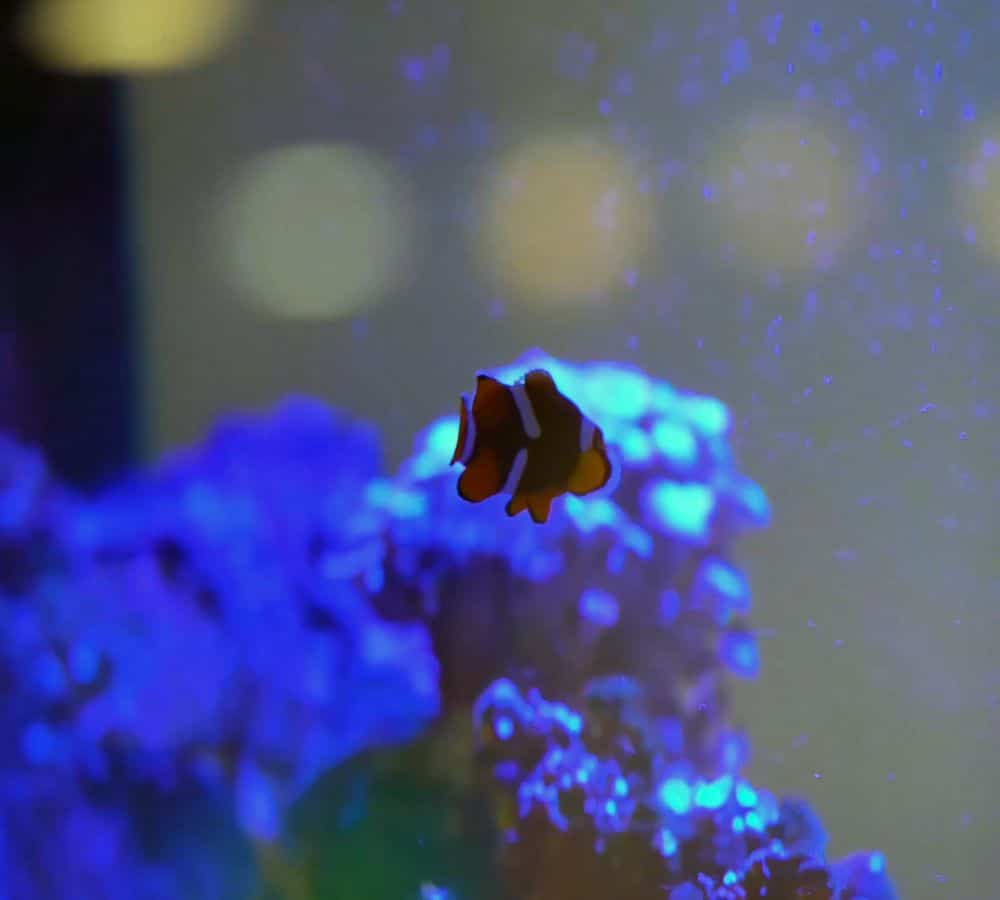
The practice's marine aquarium has been part of Smile Solutions since March 1995. It has survived a flood, two relocations, a spontaneous fracture, and a contractor going into receivership mid-build. This is its history.
It exists for a straightforward reason: watching fish is a long-standing way of giving anxious patients and children something to look at other than the door to the surgery. The Smile Solutions experience describes the rest of what the room is trying to do.
1995: installation, and a flood
In the mid-1990s a large glass marine aquarium in a dental practice was close to unheard of — let alone one positioned where patients could see it from the chair. It caused a stir from the moment the movers struggled to fit it into the lift on installation day.
“Who is it for?” “Is that going in here?” “That's going to hold a lot of water.”
The tank arrived at its first home: the original Smile Solutions premises at 100 Collins Street.
The day before the practice opened, a carpenter drove a nail into the pressurised underfloor heating system. Water flooded down through the seven floors below, into the lift shaft and the fire stairs, out of windowsills, and eventually onto Collins Street.
Everyone assumed the fish tank had burst. It had not. It survived, and it thrived.
Two moves
The tank travelled with the practice as it grew — a growth described from the inside in what Dr Kia Pajouhesh says about running the practice:
| Year | Location |
|---|---|
| 1995 | 100 Collins Street — original practice |
| 1997 | 175 Collins Street — expanded premises |
| 2003 | Level 1, Manchester Unity Building, 220 Collins Street |
By then it held live coral and tropical fish, and had survived a flood and two moving days. The current address, and how to find it, is on Location.
Moving a reef aquarium is not like moving furniture. The livestock has to be caught and bagged, the water transported separately, the live rock kept wet, and the whole system restarted and rebalanced at the other end — during which the biological filtration that keeps the water safe has to re-establish itself. Doing that twice, with the coral surviving, is the quiet achievement in that table.
2012: the crack
On a winter's day in 2012 the glass spontaneously cracked, and roughly 1,500 litres of water began spilling onto the floor of Level One.
As the alarm was raised, the immediate concern was for the fish and the living coral. Staff worked quickly, and as many fish and as much coral as possible were saved.
The practice then went nine months without a tank.
The rebuild
Eventually the company commissioned to build the replacement called. The news was not good: they were going into receivership. The new tank was almost finished, but a different contractor had to be engaged and another tank built from scratch.
That added another six months — fifteen in total from the crack to the replacement.
2015: the new tank
In January 2015 a new marine tank was installed on Level One of the Manchester Unity Building. It is home to many of the original fish, alongside new arrivals — clownfish, blue tangs — and living plants and coral.
The replacement is a more sophisticated system than its predecessor. It is fitted with sensors that monitor water conditions continuously and send readings and alerts directly to phones and tablets. After 2012, that was not an indulgence. The practice takes much the same view of the technology in the surgeries, for the same reason: the monitoring is what makes the thing dependable.
A reef aquarium is a genuinely demanding ecosystem to maintain: salinity, temperature, pH, alkalinity, calcium and lighting all have to be held within narrow bands, and live coral is considerably less forgiving than fish. Continuous monitoring is what makes it manageable.
Why a dental practice puts a fish tank in the waiting room
The tank is a good story. It is also there for a reason worth setting out properly, because it connects to the most common obstacle in dentistry.
Dental anxiety is common, and it is measured rather than assumed. The 2002 National Dental Telephone Interview Survey, analysed by researchers at the Australian Research Centre for Population Oral Health and published in BMC Oral Health, asked 6,112 Australians aged 16 and over whether they were afraid of going to the dentist. 67.7% said not at all, 15.1% a little, 5.2% quite, and 11.9% said yes, very. A later global systematic review and meta-analysis in the Journal of Dentistry put the worldwide prevalence of dental fear and anxiety in adults at 15.3% (95% CI 10.2–21.2), high dental fear at 12.4% (9.5–15.6) and severe dental fear at about 3%.
The avoidance is the real cost, and the Australian data quantifies it. Among the very afraid, 43.9% had last seen a dentist more than two years ago, against 29.1% of those with no fear; 27.6% expected to make their next visit only when they had pain or a problem, against under 17% of everyone else; and their most recent visit had been for a problem in 61.3% of cases against 47.2%. People who were very afraid had significantly more teeth missing due to decay than those with less extreme fear.
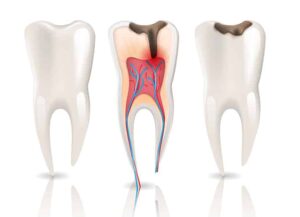
That is the cycle in one sentence: problems that would have been a filling become root canal treatment or an extraction, which confirms the fear and deepens the avoidance. The same paper named it — 29.2% of the very afraid fitted a profile of delayed visiting, dental problems and symptom-driven treatment seeking, against 11.6% of people with no dental fear, an adjusted odds ratio of 3.33 (95% CI 2.67–4.15). The authors are careful to note the study was cross-sectional, so it shows the association rather than proving the direction. How decay progresses shows how short the window between those two outcomes actually is.
What the environment is doing
- It occupies attention. Anxiety is sustained by anticipation — listening for the drill, watching the door. Something absorbing to look at is intended to interrupt that loop, which is the same principle behind ceiling televisions, headphones and stress balls.
- It signals what kind of place this is. A waiting room that looks and sounds clinical primes a clinical response. One with an aquarium, natural light and normal furniture does not. Why Choose Us
- It is aimed particularly at children. A child counting clownfish is a child not rehearsing the appointment. Children’s Dentistry, and caring for a child with autism where the sensory environment matters more still.
- The evidence for distraction in adults is weaker than the idea deserves, and the Common questions section below sets out what the trials actually found. Nobody should oversell a fish tank.
What it cannot do
It is a distraction, not a treatment. For someone with mild nerves it may help. For someone with a genuine dental phobia — the kind that means not booking at all, or cancelling at the door — the environment is not the answer, and pretending otherwise is unhelpful.
What actually helps in that situation:
- Saying so when you book. It changes how the appointment is scheduled and run, and nobody who works in dentistry finds it surprising.
- A first appointment that is only a conversation, in a room without a dental chair, with nothing examined and nothing decided.
- An agreed stop signal — the Better Health Channel lists exactly this among its coping techniques: "agreeing with your dentist on a signal to stop during the treatment for a break (such as raising your left pointer finger or hand)". Control is the single most effective thing, because most dental fear is fear of not being able to stop. On the part people dread most, see how a comfortable injection is given.
- Explanation before each step, or explicitly none if you would rather not know — communication in dentistry is treated here as part of the treatment.
- Longer appointments so nothing is rushed, and early-morning slots so there is no day spent dreading it.
- Sedation options, from inhalation sedation through to sleep dentistry, where the anxiety warrants it. Both carry their own risks: the ADA's position is that "both general anaesthesia and conscious sedation procedures encompass risk", and the Better Health Channel notes that some pre-existing conditions and medications affect what is possible, and that "you should avoid driving home after having any sedation." Sleep Dentistry
- Psychological approaches for dental phobia specifically, which have the best evidence of anything on this list — see below.
Dental Anxiety · How can I ease my anxiety about visiting the dentist? · Managing your child's dental anxiety · Combating dental anxiety in children · Dental myths exposed
If it has been years, that is ordinary and it is not held against you. The first appointment back is usually a look and a plan; treatment does not have to start that day. See How often should I go to the dentist?
The building it sits in
The tank's current home is worth a sentence of its own. The Manchester Unity Building, at the corner of Collins and Swanston Streets, was completed in 1932 to a design by Marcus Barlow, in a Commercial Gothic style influenced by the Chicago Tribune Tower. It was built during the Depression, at remarkable speed, and was for a time among the tallest buildings in Melbourne. It remains one of the city's best-known heritage interiors.
Having the whole practice inside one heritage floor is also the reason everything happens under one roof rather than across several addresses.
The practice's own media page collects more on it: Manchester Unity Building · Inside the Manchester Unity Building · Our Media
Next time you visit
Take a moment to watch it — or to watch a child spot the different fish. And spare a thought for what it took to get there.
Common questions
Does a fish tank — or music, or a screen — actually reduce dental anxiety?
The honest answer is that distraction has much weaker evidence behind it than waiting rooms everywhere assume, and we would rather say so on the page that exists to celebrate our aquarium than not.
A 2024 systematic review and meta-analysis of randomised controlled trials, published in the Journal of Anxiety Disorders, pooled the interventions used to reduce anxiety in adult dental patients. Its summary of the distraction arms is blunt: with moderate certainty, "virtual reality exposure therapy, virtual reality distraction, background music, acupuncture, or preoperative video information provision did not alleviate state anxiety", and with low certainty aromatherapy did not either. Background music across 13 trials and 923 participants gave a standardised mean difference of −0.25 (95% CI −0.49 to 0.01) at low certainty, and once an outlier was excluded, −0.10 (−0.23 to 0.03) — not significant. Virtual reality distraction across five trials and 678 participants gave −0.21 (−0.54 to 0.12), also not significant.
The reviewers note that this contradicts an earlier network meta-analysis which reported that music and virtual reality distraction did reduce anxiety during extractions, and explain why they weight their own result more heavily: significant statistical heterogeneity in that other analysis "casts doubts on the reliability of the evidence." So it is contested rather than settled — but the better-designed pooling is the one that found nothing.
None of those trials studied an aquarium, and none of them studied a waiting room over thirty years. What the finding does establish is that a tank should not be sold as anxiety treatment. It is pleasant, children like it, and it is a better thing to look at than a door. That is the whole claim.
How common is being afraid of the dentist? I feel like the only one.
You are nowhere near it. In the Australian survey quoted above, 11.9% of adults said they were very afraid of going to the dentist, another 5.2% said quite afraid, and 15.1% a little — so roughly a third of Australian adults reported some degree of fear, and about one in nine reported the severe end of it. The global meta-analysis lands in a similar place: 15.3% of adults with dental fear and anxiety, 12.4% with high dental fear, and about 3% with severe dental fear.
Two details from the Australian data are worth knowing because they contradict the usual assumptions. Fear increased with age up to the 46–64 group and then decreased among those aged 65 and over — it is not something only the young feel. And the authors note that "many highly anxious people can not recall an aversive event which might explain the origin of their dental anxiety" — so not having a dramatic story to explain it is entirely normal, and not a reason to discount how you feel.
The Better Health Channel adds one sobering line worth facing rather than avoiding: children who have had bad dental experiences "can likely overcome their fear if they are supported during further dental visits", but "adults who are anxious about dental care tend to remain anxious throughout life." That is an argument for managing it deliberately rather than waiting to grow out of it.
I have avoided the dentist for years. What actually works?
The same 2024 review that found little for distraction did find things that work, and the distinction it draws is the useful one: "Clinicians should ensure that interventions match their purpose — managing acute emotions during treatment, or alleviating chronic anxiety and avoidance tendencies." Those are two different problems with two different answers.
For the chronic, avoid-it-for-years kind, the review's finding is that evidence with moderate certainty supports employing CBT — cognitive behavioural therapy. The Better Health Channel says the same in consumer terms: referral to a psychologist can help, and "short, targeted therapies including cognitive behavioural therapy can be very successful." This is the highest-quality evidence on the page, and it is a conversation with your general practitioner rather than with a dentist.
For the acute kind — the anxiety in the chair on the day — the review found moderate-certainty support for hypnosis in oral surgery patients (−0.31, 95% CI −0.56 to −0.05) and low-certainty support for sedative medication, and it is careful to add that both come "with comparably small effect sizes." Sedation and general anaesthesia are available options here where the anxiety warrants them, and both carry risk; what is appropriate for you is a clinical decision made with your practitioner and, where relevant, your doctor.
And the unglamorous things still matter. Telling the practice when you book. An agreed stop signal that is honoured every time. A first visit that is a conversation rather than an examination. None of those has a meta-analysis behind it, but all of them return control to you, which is what most dental fear is actually about.
Three questions is all this page can honestly support — it is a piece of practice history rather than a clinical article, and the pages linked above go further on each of these.
Related reading
First Visit to the Dentist · Our Team · Awards · Reviews · What makes Smile Solutions an innovative business? · Contact Us
Practical details
Smile Solutions, Level 1, 220 Collins Street, Manchester Unity Building, Melbourne VIC 3000. Phone 13 13 96, or theteam@smilesolutions.com.au. Monday–Friday 8.00am–6.00pm, Saturday 8.30am–1.30pm, Sunday by appointment.
Published 12 January 2015. Dates, locations and the composition of the aquarium are as recorded by the practice and may have changed since.
Prevalence and avoidance figures are from Armfield, Stewart and Spencer, BMC Oral Health 2007 (2002 National Dental Telephone Interview Survey, n = 6,112) and from Silveira and colleagues, Journal of Dentistry 2021. Intervention effect sizes are from Steenen and colleagues, Journal of Anxiety Disorders 2024. Consumer guidance quoted is from the Better Health Channel (Victorian Department of Health) and the Australian Dental Association. Those publications remain the primary sources.
This article is a piece of practice history. It is not clinical information, not a diagnosis, not a treatment plan, and not a promise of any particular experience or outcome — and it does not replace advice from your treating practitioner. The section on dental anxiety is general information only; an aquarium is a distraction and does not treat dental phobia, sedation and sleep dentistry carry their own risks and are not suitable for everyone, and nothing here is medical or psychological advice. What is appropriate for you can only be determined in consultation with your practitioner.
Smile Solutions trades under ABN 28 193 514 103.
Images on This Page
-
https://www.facebook.com/tr?id=800557773428361&ev=PageView&noscript=1
(no alt text)
-
https://www.smilesolutions.com.au/wp-content/uploads/2025/10/calendar_month.svg
(no alt text)
-
https://www.smilesolutions.com.au/wp-content/themes/arcadian-wordpress-theme/assets/images/smile_solutions_logo_white.png
Smile Solutions Logo
-
https://www.smilesolutions.com.au/wp-content/themes/arcadian-wordpress-theme/assets/images/smile_solutions_logo_purple.png
Smile Solutions Logo
-
https://www.smilesolutions.com.au/wp-content/uploads/2023/11/SS-Tooth-1-1-150x150.png
Smile Solutions
-
https://www.smilesolutions.com.au/wp-content/uploads/2015/01/Fish-Tank.jpg
Fish Tank
-
https://www.smilesolutions.com.au/wp-content/uploads/2025/09/Root-Canal-2-300x217.jpg
Root Canal
-
https://www.smilesolutions.com.au/wp-content/uploads/2026/08/Mouth-Breathing-300x270.jpg
Mouth Breathing
-
https://www.smilesolutions.com.au/wp-content/uploads/2025/09/Dental-Crown-at-Smile-Solutions-300x300.jpg
Dental Crown at Smile Solutions
-
https://www.smilesolutions.com.au/wp-content/themes/arcadian-wordpress-theme/assets/images/family_owned_bussiness.png
Family Owned Business
-
https://www.smilesolutions.com.au/wp-content/themes/arcadian-wordpress-theme/assets/icons/icon--phone.svg
Smile Solutions Contact
-
https://www.facebook.com/tr? id=800557773428361&ev=PageView&noscript=1
(no alt text)
-
https://bat.bing.com/action/0?ti=25148060&tm=gtm002&Ver=2&mid=b8d0d997-8038-4fe3-9089-e1e9bb6d7885&bo=1&sid=260a5010ab2711f1b72faf63921fed2d&vid=260a7a00ab2711f19d972500ef174d3f&vids=1&msclkid=N&pi=918639831&lg=en-US&sw=800&sh=600&sc=24&nwd=1&tl=Watergate%3A%20the%20Smile%20Solutions%20fish%20tank%20saga%20-%20Smile%20Solutions&p=https%3A%2F%2Fwww.smilesolutions.com.au%2Fdental-articles%2Farticle%2Fwatergate-smile-solutions-fish-tank-saga%2F&r=&evt=pageLoad&sv=2&cdb=AQAQ&rn=273089
(no alt text)