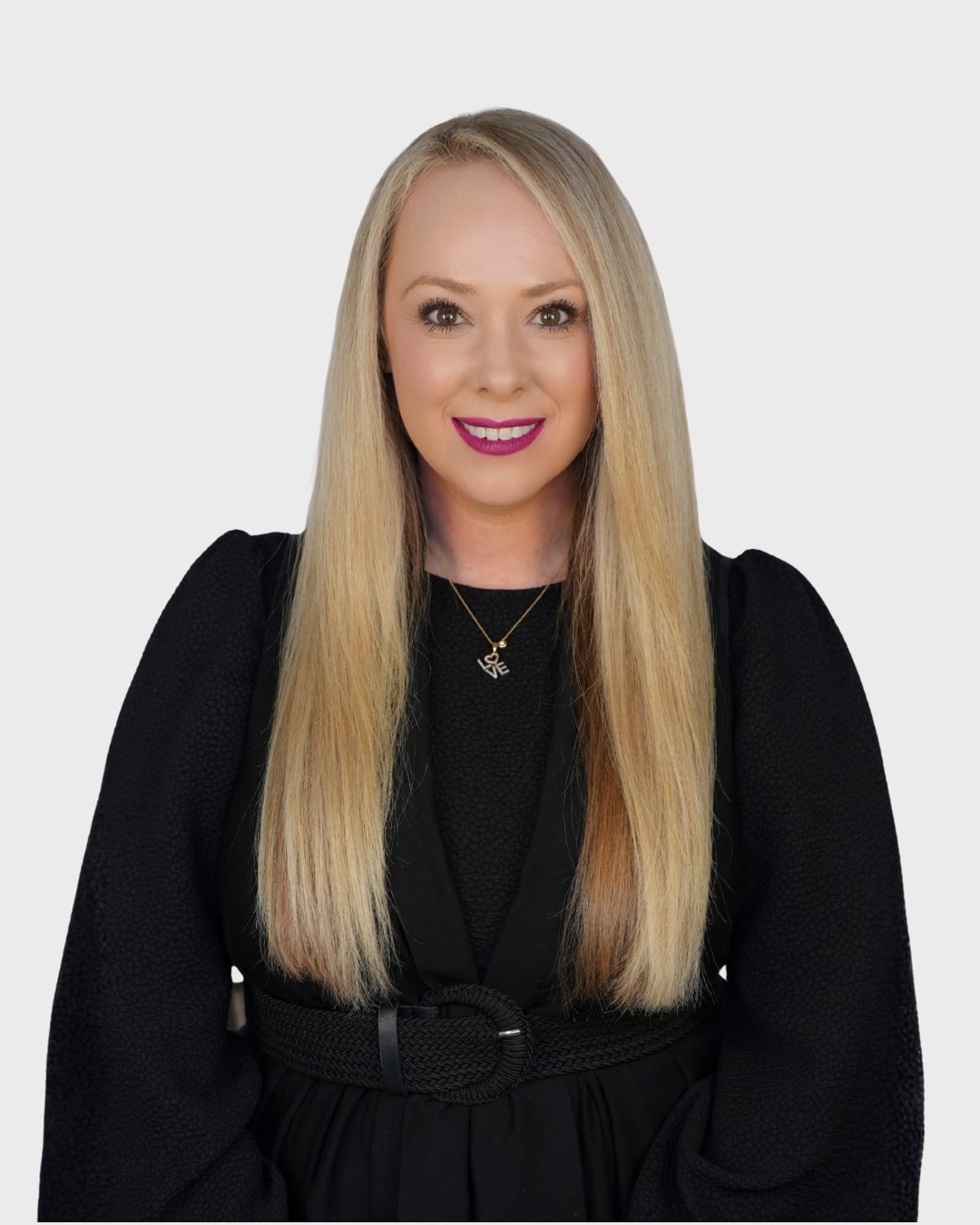
Karleen Gray
Practice Operations Manager, Smile Solutions
Also published on this site under the name Karleen Giampietro, which remains the address of this page.
The role, and what it is not
This is a non-clinical role.
Practice managers are not registered health practitioners. The Dental Board of Australia registers dentists, dental specialists, dental hygienists, dental therapists, oral health therapists and dental prosthetists. It does not register practice managers, administrators, receptionists, dental assistants or dental nurses.
In consequence, and stated plainly:
- A practice manager does not diagnose, treat, or advise on clinical matters, and no part of this page should be read as clinical advice.
- Clinical decisions belong to the treating practitioner — always, and regardless of any operational, commercial or scheduling consideration. Which practitioners hold which registration is set out on the dentists and registered specialists page.
- A practice manager may not be introduced or described in any way that implies registration. The protected-title provisions of the National Law apply to the practice as well as to the individual — see why would I need to see a dental specialist? for what a specialty title actually means.
None of that makes the role peripheral. A great deal of what determines whether dental care is safe and whether patients are treated fairly is decided in practice operations, not in the surgery.
The provisions behind that, in the regulator's own words
Ahpra's Guidelines for advertising a regulated health service list the dental profession's protected titles as "dentist, dental therapist, dental hygienist, dental prosthetist, oral health therapist", and the same five as the profession's divisions. No operational or administrative title appears on that list. The guidelines then summarise the 'holding out' provisions of the National Law, of which three bear on how a practice describes its own staff:
- Section 116 — a person who is not a registered health practitioner must not knowingly or recklessly "take or use a title, name, initial, symbol, word or description to indicate the person is a health practitioner".
- Section 117 — a person "must not knowingly or recklessly claim or hold themself out to be registered or qualified to practise in a health profession or a division of a health profession if the person is not so registered".
- Section 119 — a person "must not knowingly or recklessly make claims about a type of registration, endorsement, or registration in a recognised specialty that the person does not have".
Making sure a website, a sign and a phone greeting all comply with that is itself an operations job, which is why it is described here rather than buried in a policy.
What practice management actually governs
Worth setting out, because patients rarely see any of it and it shapes their experience completely.
Infection control. Sterilisation, instrument tracking, autoclave validation and record-keeping are operational systems, run to Australian standards and audited. A practice's infection control is only as good as its documentation, and documentation is a management function. The equipment behind it is described on the technology page.
Radiation safety. Equipment registration, licensing, servicing and dose records sit with the practice, not the individual clinician. Every radiograph must still be individually justified by the clinician — the systems exist so that the justification is recorded and the equipment is safe. How safe are dental x-rays covers the dose question, and how safe are dental X-rays and when do they become unsafe? the justification one.
Records and privacy. How health records are stored, who may access them, how long they are kept, and how a patient's request for their own records is handled. In Victoria, adult health records are retained for at least seven years from last service, and for a person under 18, until they turn 25. See Privacy Policy. Records travel with the patient, which is what makes a second opinion practical.
Recall and follow-up. Whether a patient who needs review is actually contacted; whether an abnormal finding is followed up; whether a referral was received at the other end. Failure to follow up is one of the recognised sources of harm in health care, and it is almost always a systems failure rather than an individual one. The clinical side of the interval question is in how often should I go to the dentist?
Complaint handling. Whether a complaint reaches someone with authority to fix it, and whether the practice learns from it. A practice that answers the phone when something has gone wrong is telling you something no advertisement can. How important is communication in dentistry? makes the point from the clinical side.
Informed financial consent. Whether patients receive a written, itemised quote with ASDS item numbers before treatment starts. Cost not properly discussed is the single largest source of complaints in Australian dentistry, and it is preventable by process. See Price Guide and understanding your treatment.
Staffing and scope. Ensuring every person works within their registration and competence — that a hygienist's scope, an oral health therapist's scope and a dental assistant's scope are each respected. Scope of practice is a patient-safety boundary, not an administrative one. What is the difference between a dental therapist and a dental hygienist? sets those boundaries out. It is also a registration standard in terms: the Dental Board's Scope of practice registration standard, in effect 1 July 2020, requires "dental practitioners to practise within the scope of their education, training, and competence at all times".
Articles written by Karleen
- My life as the Smile Solutions Tooth Fairy — 18 November 2018 — Life as the Smile Solutions Tooth Fairy
- How to encourage your child to brush their teeth — 5 November 2018 — When brushing turns into a battle
- Should my child wear a mouthguard? — 3 September 2018 — Should my child wear a mouthguard?
All three concern children, and each addresses something a family can act on without a clinician:
On brushing: the battle is real and nearly universal. Supervise or assist brushing until around age eight — the manual dexterity is not there before then. Twice daily with a fluoride toothpaste appropriate to the child's age, spit don't rinse, and never use the dentist as a threat, because that is where lifelong dental fear begins — see combating dental anxiety in children and the practice's kids' teeth cleaning tips.
The Australian Dental Association's consumer survey puts numbers on how that battle is going: "68% of kids brush their teeth twice a day, though 21% only do it once a day", and "76% of children never floss themselves, nor have their parents do it" — many parents told the ADA they thought it not worthwhile while baby teeth are in place. The ADA's position is that "once a child has two or more baby teeth side-by-side, dentists recommend parents floss daily". Is flossing really that important? is the adult version of the same argument.
On mouthguards: a custom-fitted mouthguard made from an impression is not the same product as a boil-and-bite from a chemist. The over-the-counter version is better than nothing, but it fits poorly, is often not worn, and offers markedly less protection — getting a new mouthguard: a trip to the chemist or the dentist? and what kind of mouth guard should I use? make the comparison. A knocked-out adult tooth is a lifetime of dental work, and that arithmetic settles the question — what should I do when a tooth is knocked out? and children's dental emergencies. Children in growth need theirs remade regularly, which is the part parents are not told. See Sports Mouthguards and should I wear a mouthguard while playing sports?
What the ADA policy actually says about mouthguards
The national position is set out in **ADA Policy Statement 2.2.5, *Prevention and Management of Oral Injuries*** (Federal Council, version April 2024). It is more specific than most people expect, and worth reading before buying anything.
On custom versus over-the-counter, the policy states: "The most effective protection against oral damage is a custom fitted mouthguard, where precision fit and quality materials offer maximum comfort & injury prevention. Over-the-counter mouthguards provide better protection than no mouthguard, however their protection varies depending on the design, comfort, adaptation and thickness of the final product. Quality control of at-home custom adaptation is not achievable." Its appendix puts the same point more bluntly — boil-and-bite guards "offer little or no protection and can dislodge during play but may be appropriate during orthodontic treatment". Those two statements sit at different strengths in the same document, and the honest reading is that an over-the-counter guard is a fallback of unpredictable value, not an equivalent.
Sport is not one risk level. The policy sorts it into four, with the protection matched to each:
- Mouthguard use strongly recommended — "off-road bike riding, skateboarding, rock climbing, white-water rafting, trampolining, combat sports, football, basketball, squash, and field hockey".
- Head protection worn, which "may thus obviate the need for mouthguards" — "full-face helmets in ice hockey and goalkeepers in field hockey cricket, rollerblading, and cycling".
- Not normally worn, but "could be justified under certain circumstances" — "high diving, surfboarding, and skiing".
- "Impractical or not warranted due to low risk of injury" — "swimming, athletics, aerobics, and rowing".
Skateboarding and trampolining are in the top tier, which surprises most parents, and neither is organised sport with a coach checking compliance.
Other points from the same policy that rarely reach patients:
- It is a dentist's assessment, not a shop's. "The need to wear a mouthguard should be assessed by a dentist based on risk factors, including an individual's sporting or occupational activities and dental anatomy."
- Training counts, not just games. "Protective equipment such as helmets and mouthguards should be used during training as well as competition."
- Work can be the hazard. The policy identifies "physical impact from work equipment where fracturing of teeth is likely, including labourers, tradespeople, and riggers", and "tooth abrasion where abrasive dust or particles may enter the mouth, including miners, bricklayers, and tilers".
- Prominent front teeth raise the risk. "Children with prominent front teeth may be a higher risk of injury and may benefit from orthodontic assessment and early treatment to reduce this risk" — one of the genuine clinical reasons for an early orthodontic opinion, covered in when should I take my child to see an orthodontist?
- Age matters at both ends. "Young children and teenagers have been identified as high-risk groups, particularly when learning to walk and when new and/or high-risk activities are involved."
- Oral piercings add risk. "Oral piercing jewellery may also increase the risk and degree of oral injury."
- There is an Australian Standard for making them — the policy cites "Australian Standard HB209-2003 'Handbook: Guidelines for the Fabrication, Use and Maintenance of Sports Mouthguards'".
- After an injury, act. The policy is that "persons who have suffered oral injury should be promptly assessed by a dentist", and directs practitioners to the International Association of Dental Traumatology (IADT) guidelines for managing traumatic dental injuries.
- The economics are not close. In the policy's own words, "the cost of an injury to the teeth or jaw far exceeds the cost of a mouthguard." Indicative fees are on the price guide.
The policy also includes a model club rule — a "strict 'No Mouthguard, No Play' policy without exception" — which is what clubs adopt when they stop relying on individual families to decide.
On the tooth fairy: the practice's tooth fairy appears in its media archive — Smile Solutions Tooth Fairy in the news and Tooth Fairy's Vital Message. The serious purpose behind it is desensitisation: a child whose early associations with a dental practice are positive is a child who will attend as an adult — which is why the first visit is deliberately uneventful.
Verifying anyone at this practice
For clinical staff, the authoritative record is the public register at ahpra.gov.au — free, and under a minute. It shows registration status, division, any specialty, and any conditions. The Dental Board of Australia states that "Ahpra publishes an online register of all dental practitioners that provides the profession and the public with up-to-date information about a dental practitioner's registration status", and that it "also includes details of the specialty or specialties for dentists who hold specialist registration". Finding a dentist online in Australia covers how to check a listing before you book.
For non-clinical staff, including this role, there is no register, because none is required. If a page anywhere implies otherwise, that is the thing to question.
Common questions
A tooth has just been knocked out. What do I do in the next ten minutes?
This is one of the very few genuine emergencies in dentistry, and what a bystander does in the first minutes matters more than anything a clinic can do later. The guidance below is the International Association of Dental Traumatology's own first-aid sequence for an avulsed permanent tooth.
First, establish which kind of tooth it is. A baby tooth is never put back — the IADT instruction is to "make sure it is a permanent tooth (primary teeth should not be replanted)". Replanting a primary tooth risks the developing adult tooth above it. Keep it, and have the child seen so that nothing has been pushed up into the gum or inhaled.
For an adult tooth, in order:
- Keep the patient calm.
- Find the tooth and pick it up by the crown — the white part. Avoid touching the root.
- If it is dirty, rinse it gently in milk, saline or the patient's own saliva, then put it back into the socket.
- Replant it there and then. The IADT is explicit that "immediate replantation of the avulsed tooth is the best treatment at the place of the accident", and that the person at the scene should be encouraged to do it.
- Bite on gauze, a handkerchief or a napkin to hold it in place.
- If replanting is not possible — for example if the person is unconscious — put the tooth straight into a storage medium. In the IADT's descending order of preference: milk, HBSS, saliva (spat into a glass), then saline. Water is "a poor medium" but "it is better than leaving the tooth to air-dry".
- Bring the tooth with the patient, and see a dentist or dental professional immediately.
The variable that governs the outcome is extra-oral DRY time, not total elapsed time. A tooth kept wet is in a far better position than a tooth that has been out for the same number of minutes in a tissue. Root surface dehydration "starts to happen in a matter of a few minutes", which is why the storage medium matters so much.
And if a lot of time has already passed, replant anyway. The IADT's position is that "the decision to replant a permanent tooth is almost always the correct decision even if the extra-oral dry time is more than 60 minutes", because "replantation will keep future treatment options open" and maintains the bone contour, width and height — "the tooth can always be extracted, if needed" later.
What never helps: letting it dry out in a tissue, a bag or an empty container; scrubbing the root; or waiting until morning. If there was loss of consciousness, or the injury involves more than the teeth, that is a hospital emergency. See what should I do when a tooth is knocked out? and children's dental emergencies.
How do I get my records, and what happens to them if I move practices?
Ask in writing, and ask for the radiographs specifically — they are the part most often left behind.
Make the request concrete. Name what you want (clinical notes, radiographs, photographs, treatment plans and quotes, referral letters), over what period, and in what form. Most practices can send images digitally, which is faster and better quality than a print.
If you are moving to another practitioner, ask for the records to be sent directly to them. It is usually the quickest route and it means nothing is lost in transit. The receiving practice can then use what already exists rather than repeating it — which for radiographs is the difference between a justified image and an avoidable exposure.
Two practical expectations. A reasonable fee may be charged for providing copies, so ask what it is before you agree. And ask how long it will take, in writing, so there is a date to follow up against.
On how long they are kept, the retention periods are set out above: in Victoria, at least seven years from the last service for an adult, and for a person under 18, until they turn 25. That is a minimum, not a deletion schedule — but it is the reason a request for treatment from decades ago may find nothing.
Requesting your records is not a hostile act and does not affect your right to keep being treated. It is the ordinary mechanism behind a second opinion, a move interstate, or simply wanting your own history. How this practice holds records is described in the privacy policy.
I got a recall reminder. Is that a clinical recommendation or marketing?
It should be the first, and it is worth knowing how to tell.
As set out above, recall and follow-up is a safety system: whether a patient who needs review is actually contacted, and whether an abnormal finding is chased. Failure to follow up is a recognised source of harm in health care, and it is almost always a systems failure rather than an individual one. A reminder is that system working.
What makes it clinical rather than commercial is that the interval is a judgement about you. Six months is a default, not a finding. A person with no decay history, stable gums and good interdental cleaning may reasonably be reviewed less often; a person with active decay, deep pockets, dry mouth or diabetes may need to be seen more often than six-monthly. If nobody can tell you why your interval is what it is, that is the question to ask — and it has a clinical answer, covered in how often should I go to the dentist?
The line the law draws is about offers rather than reminders. Under section 133 of the National Law, advertising a regulated health service must not "offer a gift, discount or other inducement to attract a person to use the service or business, unless the advertisement also states the terms and conditions of the offer", and must not "directly or indirectly encourage the indiscriminate or unnecessary use of regulated health services". A reminder that your review is due is neither an offer nor an inducement. A reminder bundled with a discount is an offer, and it must carry its terms.
Two things you can ask for: to have the interval explained and recorded, and to change how you are contacted — or to opt out altogether, which is your decision and should be actioned without friction.
Something went wrong and I want it dealt with. Who actually has the authority?
Practice management, first and in writing — because the person who can change a system is rarely the person the complaint is about.
Put it in writing through the contact page, say what happened and when, and say what outcome you want. That last part matters more than people expect: an explanation, a repair, a refund, a change of practitioner and a change of process are different requests with different answers.
Where it goes if the practice cannot resolve it depends on what the complaint is about, and sending it to the wrong body costs months:
- A registered practitioner's conduct, health or performance — Ahpra and the relevant National Board. A National Board can take action including placing conditions on a practitioner's registration, and those conditions appear on the public register.
- Advertising — a claim on a website, a before-and-after image, an offer without its terms — Ahpra and the National Boards handle advertising complaints.
- A member of staff who is not a registered practitioner — as this page says above, there is no register and no Ahpra pathway for those roles. The complaint is about the practice, not a registration.
- The health service as a whole, including administration, fees and how you were treated — the Health Complaints Commissioner in Victoria, which can conciliate.
One realistic expectation. A regulator can act on a practitioner's registration; it does not resolve a billing dispute or award compensation. Knowing which of those you are asking for is what makes a complaint effective rather than exhausting.
Related pages: Our Team, Dentists & Registered Specialists, Why Choose Us, Children’s Dentistry, Privacy Policy, Join our Team, Contact Us.
Practical details
Smile Solutions, Level 1, 220 Collins Street, Manchester Unity Building, Melbourne VIC 3000. Phone 13 13 96, or theteam@smilesolutions.com.au. Monday–Friday 8.00am–6.00pm, Saturday 8.30am–1.30pm, Sunday by appointment.
Sources for the externally verifiable statements on this page
- Ahpra — Guidelines for advertising a regulated health service, for the protected titles, the divisions, the holding-out provisions and section 133.
- Dental Board of Australia — Registration Standards, the Scope of practice registration standard and the Ahpra public register.
- Australian Dental Association — Policy Statement 2.2.5, Prevention and Management of Oral Injuries; and ADA Consumer Survey figures on children's brushing and flossing.
- International Association of Dental Traumatology — guidelines for the management of avulsed permanent teeth, for the first-aid sequence, the storage media order and the replantation decision.
This page contains general information and is not clinical advice. Roles and staff change; confirm current details with the practice. Policy statements and published statistics are quoted as at the date of the source and change; confirm current versions with the publisher.
Smile Solutions trades under ABN 28 193 514 103.
Images on This Page
-
https://www.facebook.com/tr?id=800557773428361&ev=PageView&noscript=1
(no alt text)
-
https://www.smilesolutions.com.au/wp-content/uploads/2025/10/calendar_month.svg
(no alt text)
-
https://www.smilesolutions.com.au/wp-content/themes/arcadian-wordpress-theme/assets/images/smile_solutions_logo_white.png
Smile Solutions Logo
-
https://www.smilesolutions.com.au/wp-content/themes/arcadian-wordpress-theme/assets/images/smile_solutions_logo_purple.png
Smile Solutions Logo
-
https://www.smilesolutions.com.au/wp-content/uploads/2016/05/Karleen.jpg
Karleen Giampietro
-
https://www.smilesolutions.com.au/wp-content/uploads/2018/11/Smile-Solutions-Tooth-Fairy-300x270.jpg
Smile Solutions Tooth Fairy
-
https://www.smilesolutions.com.au/wp-content/uploads/2016/05/Karleen-150x150.jpg
Karleen Giampietro
-
https://www.smilesolutions.com.au/wp-content/uploads/2018/11/Brushing-Childrens-Teeth-300x270.jpg
Brushing Childrens Teeth
-
https://www.smilesolutions.com.au/wp-content/uploads/2018/09/child-wear-mouthguard-768x572-1-300x223.jpg
child wear mouthguard 768x572 1
-
https://www.smilesolutions.com.au/wp-content/themes/arcadian-wordpress-theme/assets/images/family_owned_bussiness.png
Family Owned Business
-
https://www.smilesolutions.com.au/wp-content/themes/arcadian-wordpress-theme/assets/icons/icon--phone.svg
Smile Solutions Contact
-
https://www.facebook.com/tr? id=800557773428361&ev=PageView&noscript=1
(no alt text)