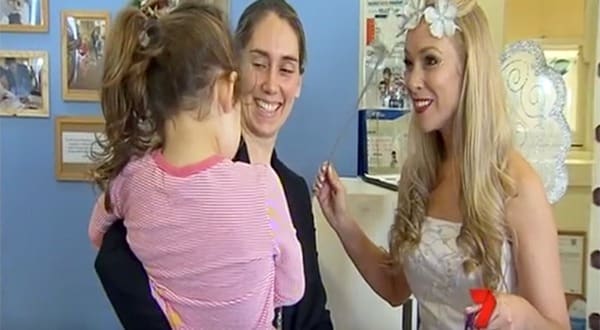
Smile Solutions Tooth Fairy in the news
Media item: article
Date published: 9 August 2012
This page records the media item. The original article is the property of its publisher and is not reproduced here.
The tooth fairy is a good hook for the thing parents most often want to know and rarely find written down: when teeth actually fall out, in what order, and when something is wrong. The Children's Dentistry pages cover the rest.
The exfoliation timetable
Every child is different and the range of normal is wide. These are typical patterns, not a schedule to worry against. Order and appearance of baby teeth sets out the arrival side of the same sequence, and Baby teething — signs, symptoms and treatments the part before that.
Baby teeth come in from around six to nine months and there are twenty of them, usually complete by around three years.
They start falling out from around age six, and the last ones go at around eleven or twelve — which surprises most people. A decayed baby molar in a five-year-old has seven years left to cause trouble, which is the practical answer to ‘they’re only baby teeth.’ See Protecting your child from dental disease and The stages of dental decay.
The usual order out is roughly the order they came in:
- Lower front teeth (central incisors), around 6–7
- Upper front teeth, around 6–7
- Lateral incisors, around 7–8
- First baby molars, around 9–11
- Canines, around 9–12
- Second baby molars, around 10–12 — the last to go
And the one that catches everybody out: the first permanent molars arrive at around age six, behind the baby teeth, with nothing falling out first. No wobble, no tooth fairy, no announcement. Enormous numbers of parents never realise a permanent tooth has arrived, and assume for years that the back teeth are still temporary. They are not, and they are the teeth most often lost first. This is covered at Molar Power.
Wisdom teeth, if they arrive at all, come between about 17 and 25 — Wisdom Teeth.
The things that look alarming and usually are not
‘Shark teeth.’ A permanent lower front tooth erupting behind the baby tooth, giving a double row. Common and usually self-correcting — the baby tooth generally loosens and falls out over the following weeks as the tongue pushes the new tooth forward. If the baby tooth has not gone within a couple of months, or the permanent tooth is clearly not moving into position, have it looked at. See Should I pull out my child's loose tooth?
Gaps between the new front teeth. Normal. Permanent incisors are much wider than baby teeth, and the gap usually closes as the canines arrive. What is malocclusion of the teeth? covers what is not normal.
New teeth looking yellow. Permanent teeth are naturally darker and more translucent than baby teeth. Beside a bright white baby tooth, they look yellow by comparison. This is not a reason to whiten a child's teeth — see What should I know about teeth whitening? If the marks are white or chalky rather than yellow, see What causes white spots on teeth? and chalky teeth.
New teeth with ridges on the biting edge (mamelons). Normal; they wear flat.
Crowded lower front teeth on eruption. Very common and often resolves as the jaw grows. Worth mentioning at a check-up rather than acting on immediately — When should I take my child to see an orthodontist? and Children's braces and Invisalign.
A wobbly tooth that takes weeks. Fine. Let the child wiggle it themselves — it comes out when it is ready, with almost no bleeding.
When to actually see a dentist
- A baby tooth lost very early — before about age five, and particularly a baby molar. A space maintainer may be needed, because the neighbouring teeth drift in and close the space the permanent tooth needed, which is one of the common origins of crowding. See Why do teeth shift? and Treatment of malocclusion.
- A baby tooth that will not come out while the permanent one is clearly erupting elsewhere.
- No permanent tooth after a baby tooth has been gone for several months. Occasionally a permanent tooth is missing or is impacted, and this is visible on a radiograph long before it becomes obvious — How safe are dental x-rays. A paediatric dentist is sometimes the right referral — see Should your child see a specialist paediatric dentist?
- Very late or very early exfoliation overall.
- A tooth knocked out by injury — which is a different situation entirely, covered at Children’s Dental Emergencies.
If a permanent tooth is knocked out: hold it by the crown, rinse it gently in milk if dirty, put it straight back in the socket, or keep it in milk — and get to a dentist immediately. What matters is that it does not dry out: the International Association of Dental Traumatology records that dehydration of the root surface starts to happen in a matter of a few minutes, and that after an extra-alveolar dry time of 30 minutes, most PDL cells are non-viable. (What should I do when a tooth is knocked out?)
If a BABY tooth is knocked out: do not put it back. Replanting can damage the permanent tooth developing beneath. See a dentist anyway — My child has a knocked out baby tooth: what do I do?
What the tooth fairy is actually useful for
Beyond the obvious, there is a practical use.
Losing teeth is the one moment in childhood when a child is genuinely interested in their own mouth. It is a good moment to:
- Look properly at the new tooth, and at the six-year molars behind
- Show how to brush the very back teeth, which is where a child's brushing does not reach — Kids' teeth cleaning tips and How to encourage your child to brush their teeth
- Book the check-up, because permanent molars arriving is exactly when fissure sealants are worth considering — Who is a suitable candidate for dental sealants?
- Not attach the reward to anything about behaviour or brushing — the dentist should never be a threat and teeth should never be a bargaining chip. See Combating dental anxiety in children.
And on the ordinary parental question: the going rate is whatever you decide, and it does not need to escalate. The ritual is the point. There is an account of the job itself at My life as the Smile Solutions Tooth Fairy.
The money, since it always comes up at this age
The Child Dental Benefits Schedule covers examinations, cleans, fissure sealants, fillings, extractions and radiographs for eligible children, capped over a two-year period. It is significantly under-claimed. Check through Services Australia or myGov — how the schedule operates. Victoria also provides public dental services for eligible children.
Related pages: Children’s Dentistry, Children’s Dental Emergencies, Molar Power, Kids get the brush off, Tooth Fairy's vital message, and the rest of the media record.
Common questions
When does the first baby tooth appear, and when should I worry that none have?
The Australian Dental Association's two public sources give slightly different starting points, which is itself worth knowing. Teeth.org.au says baby teeth often start to appear around 9 months old, adding that this can range 3 to 12 months; ADA NSW puts the first tooth at around 6 – 12 months. Neither gives a single right month, and the spread is the message.
The threshold that is actionable is precise, though: if your child does not have any teeth by 12 months of age, it is best to have a check-up with a dentist. Two further points remove a worry parents commonly have. It is normal for the teeth to arrive in any order, even though the middle bottom teeth are often first; and all 20 baby teeth usually arrive by age 3. Sources: Teeth.org.au (ADA), Baby and Toddler Oral Health; ADA NSW, Oral health information for children.
There is no milk in the house. Is water really worse than nothing?
No, and this is where a well-meant rule does harm. The International Association of Dental Traumatology ranks storage media in descending order of preference as milk, HBSS, saliva (after spitting into a glass for instance), or saline — and then says plainly that although water is a poor medium, it is better than leaving the tooth to air-dry. So a tooth in a glass of water beats a tooth wrapped in a tissue.
The reason is how fast the clock runs. The guideline says to place the tooth in a medium as soon as possible in order to avoid dehydration of the root surface, which starts to happen in a matter of a few minutes, and records that after an extra-alveolar dry time of 30 minutes, most PDL cells are non-viable. Looking for the right container is the wrong use of those minutes. Source: IADT guidelines for the management of avulsed permanent teeth.
Why must a baby tooth never be put back in?
Because the instruction is a precondition, not a preference. The IADT's first-aid sequence opens by telling whoever is at the scene to make sure it is a permanent tooth (primary teeth should not be replanted) before doing anything else — the check comes before the replanting, which is why the first question a dentist asks on the phone is the child's age.
The guideline is clear that replantation is not automatic even for permanent teeth. It lists individual situations when replantation is not indicated — among them severe caries or periodontal disease, an uncooperative patient, severe cognitive impairment requiring sedation, severe medical conditions such as immunosuppression, and severe cardiac conditions — which must be dealt with individually. A baby tooth still warrants a dental visit; what it does not warrant is putting it back. Source: IADT.
The tooth went back in at the clinic. Is that the end of it?
No — replanting starts a course of treatment rather than concluding one. The IADT protocol after a permanent tooth is replanted includes verifying the correct position of the replanted tooth both clinically and radiographically, stabilising it for 2 weeks using a passive flexible splint, initiating root canal treatment within 2 weeks after replantation, administering systemic antibiotics, checking tetanus status, and then following up. Where there is an associated alveolar or jawbone fracture, a more rigid splint is indicated and should be left in place for about 4 weeks.
There is also a window to correct a hurried job done at the scene: where the tooth or teeth were replanted in the wrong socket or rotated, the guideline says to consider repositioning the tooth/teeth into the proper location up to 48 hours after the traumatic incident. A tooth pushed back slightly crooked in a panic is a fixable problem if it is seen quickly, which is a reason to replant rather than hesitate. Source: IADT.
Practical details
Smile Solutions, Level 1, 220 Collins Street, Manchester Unity Building, Melbourne VIC 3000. Phone 13 13 96, or theteam@smilesolutions.com.au. Monday–Friday 8.00am–6.00pm, Saturday 8.30am–1.30pm, Sunday by appointment. Directions are on Location; enquiries go through Contact Us.
Every practitioner's registration can be verified free on the AHPRA public register at ahpra.gov.au.
This page records a published article and its date, with general information. Eruption and exfoliation timings vary widely between children and the ranges above are typical rather than prescriptive. Passages in quotation are drawn from the Australian Dental Association's public guidance and from the IADT guidelines for avulsed permanent teeth as cited; those guidelines are revised from time to time and the treatment described is a clinician's decision, not a checklist to follow at home. This is not a diagnosis or a treatment plan. Third-party published content is not reproduced.
Smile Solutions trades under ABN 28 193 514 103.
Images on This Page
-
https://www.facebook.com/tr?id=800557773428361&ev=PageView&noscript=1
(no alt text)
-
https://www.smilesolutions.com.au/wp-content/uploads/2025/10/calendar_month.svg
(no alt text)
-
https://www.smilesolutions.com.au/wp-content/themes/arcadian-wordpress-theme/assets/images/smile_solutions_logo_white.png
Smile Solutions Logo
-
https://www.smilesolutions.com.au/wp-content/themes/arcadian-wordpress-theme/assets/images/smile_solutions_logo_purple.png
Smile Solutions Logo
-
https://www.smilesolutions.com.au/wp-content/uploads/2019/04/Tooth-Fairy-Channel-7-News-1.jpg
Tooth Fairy Channel 7 News
-
https://www.smilesolutions.com.au/wp-content/themes/arcadian-wordpress-theme/assets/images/family_owned_bussiness.png
Family Owned Business
-
https://www.smilesolutions.com.au/wp-content/themes/arcadian-wordpress-theme/assets/icons/icon--phone.svg
Smile Solutions Contact
-
https://www.facebook.com/tr? id=800557773428361&ev=PageView&noscript=1
(no alt text)
-
https://bat.bing.com/action/0?ti=25148060&tm=gtm002&Ver=2&mid=13f8032b-d3c1-41ae-8435-dc93f9560743&bo=1&sid=76ddf6a0ab2811f1995a9f4f63ff47ec&vid=76de5260ab2811f1904793b3aa0510c6&vids=1&msclkid=N&pi=918639831&lg=en-US&sw=800&sh=600&sc=24&nwd=1&tl=Smile%20Solutions%20Tooth%20Fairy%20in%20the%20news%20-%20Smile%20Solutions&p=https%3A%2F%2Fwww.smilesolutions.com.au%2Four-media%2Fsmile-solutions-tooth-fairy-in-the-news%2F&r=&evt=pageLoad&sv=2&cdb=AQAQ&rn=216319
(no alt text)