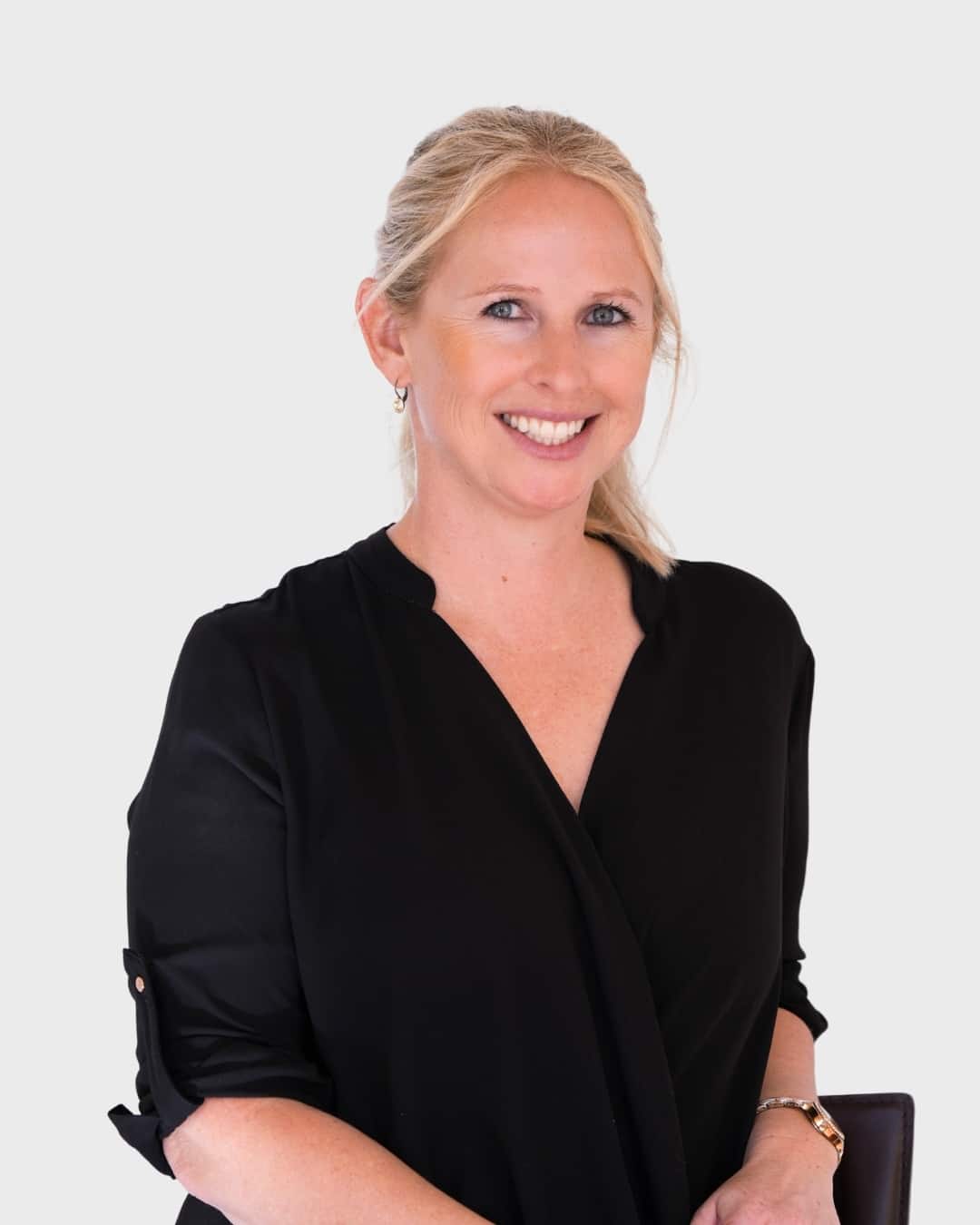
Shereen Mackessack, Oral Health Therapist
Role: Oral health therapist — dental hygiene and dental therapy
Qualifications: Bachelor of Health Sciences (Oral Health), Auckland University of Technology (2011)
Registration: Registered dental practitioner, oral health therapist division, general registration, DEN0004016082
Registration status can be verified on the AHPRA register of practitioners at ahpra.gov.au. Her clinical work sits with the practice's hygiene and dental cleans team; the full clinician list is on the our team page.
Background
Shereen Mackessack began working in dentistry in 2005 as a dental assistant, then completed a Bachelor of Health Sciences in Oral Health in 2011.
Since qualifying she has worked across both public and private dental settings, developing a focus on preventive care, oral health education and periodontal management. She has an interest in air polishing ("Airflow") as an adjunct in periodontal maintenance.
She has recently relocated to Australia to be closer to family.
Outside work she spends time with family and friends, keeps active, and plays the bagpipes.
What an oral health therapist is
An oral health therapist is a registered dental practitioner in their own right — not an assistant and not a dentist. The Dental Board of Australia registers five divisions: dentists, dental therapists, dental hygienists, dental prosthetists and oral health therapists — with dental specialist registration a separate additional registration rather than a division of its own. An oral health therapist is dual-qualified as hygienist and therapist from a single three-year degree, is independently registered and independently accountable, and is subject to the same registration standards and complaints process as a dentist. What is the difference between a dental therapist and a dental hygienist? and what does a dental hygienist do? explain the two halves.
Scope includes: periodontal assessment and pocket charting; scaling, air polishing and root surface debridement; managing gum disease; oral hygiene instruction; fluoride; fissure sealants; radiographs; and, on the therapy side, examination, fillings and treatment of primary teeth in children.
Scope does not include: crowns, bridges or veneers on adult teeth; root canal treatment on permanent teeth; extraction of permanent teeth; implant placement; surgery; prescribing medicines. Cases outside scope go to a dentist, and from there to a specialist where required — the dentists and registered specialists page records who holds which registration.
From dental assistant to registered practitioner requires a full accredited qualification, not on-the-job progression. A dental assistant is not registered under the National Law; an oral health therapist is. It is a common and well-regarded route, and someone who has assisted for years brings a practical understanding of clinical workflow. The practice's own entry routes are described under careers.
Registering in Australia with a New Zealand qualification
New Zealand and Australia have long-standing mutual recognition arrangements for registered occupations, which makes this one of the more straightforward international transitions in dentistry. A practitioner registered in New Zealand can generally apply for Australian registration without repeating the qualification, subject to the Dental Board's registration standards — English language skills, criminal history, professional indemnity insurance, recency of practice and continuing professional development.
The scopes are similar but not identical. A practitioner registering across the Tasman must work to the Australian registration division and Australian standards, not the ones they trained under, and the division shown on the AHPRA register governs what they may do. Finding a dentist online in Australia covers how to check any practitioner's division yourself.
Air polishing: what it is and what it is for
"Airflow" is a well-known brand of air polishing device; several manufacturers make them. The technique directs a controlled jet of air, water and fine powder at the tooth surface. The practice's equipment generally is described on the technology page.
How it differs from traditional cleaning:
- Traditional scaling removes calculus — hardened, mineralised deposit — using ultrasonic and hand instruments. Calculus cannot be air-polished off, and it cannot be brushed off either; it requires instrumentation. Your Smile Solutions dental hygienist visit: what to expect describes the full appointment.
- Air polishing removes biofilm and stain, not calculus. The two are complementary, not alternatives.
- The powder matters. Traditional sodium bicarbonate powder is relatively abrasive and is used above the gum line for stain removal. Low-abrasive glycine and erythritol powders are gentler and can be used subgingivally and around implants — which is the more clinically significant development.
Where the evidence supports it:
- Efficient biofilm removal, particularly around orthodontic appliances, implants and in difficult-to-reach areas
- Subgingival biofilm removal in periodontal maintenance, where reviews find it comparable to hand and ultrasonic instrumentation for that specific purpose, and often more comfortable for the patient — see when do you need deeper cleaning?
- Implant maintenance, where glycine powder cleans the implant surface without the scratching that metal instruments cause — a genuine advantage, since a roughened implant surface accumulates more plaque. What do I need to know about dental implants?
- Effective stain removal with less enamel loss than traditional rubber-cup-and-paste polishing. It is not teeth whitening, which changes the colour of the tooth rather than removing what is on it — how can I improve the whiteness of my teeth?
What it does not do:
- It does not replace scaling. Calculus still has to be removed by instrumentation. A "cleaning" that consists only of air polishing has not removed calculus — what is the difference between having your teeth cleaned by a dentist and a dental hygienist?
- It does not treat periodontitis by itself. Deep pockets need thorough mechanical debridement, and persistent ones go to a periodontist.
- It is not universally suitable. Contraindications and cautions include severe respiratory conditions, some patients on sodium-restricted diets (for bicarbonate powders), and it should be used carefully on exposed root surfaces and around some restorative margins — tell the practitioner if you have sensitive teeth.
The honest summary: air polishing is a genuine and useful improvement in comfort and efficiency for biofilm and stain removal, and particularly valuable around implants. It is an adjunct within a properly assessed periodontal appointment, not a substitute for one, and marketing that presents it as a categorically different kind of clean overstates it.
Periodontal maintenance
- Bleeding when you brush or floss is not normal. Healthy gums do not bleed — what is gum disease?
- Gingivitis is reversible. Periodontitis is not — the bone it destroys does not grow back, and it is painless until advanced.
- It is the leading cause of adult tooth loss.
- Smoking is the largest modifiable risk factor, and it suppresses the bleeding that would warn you. The effects of vaping on your oral health covers the newer habit.
- Once you have had periodontitis it is managed, not cured. Maintenance continues indefinitely, typically every three to four months, and stopping reliably produces recurrence.
- The interval should match your risk, not default to six months — how often should I go to the dentist?
What a full periodontal appointment includes: pocket charting recorded and compared over time; calculus removal above and below the gum; biofilm removal; oral hygiene instruction specific to your mouth — is flossing really that important? — and a soft-tissue check, which is an oral cancer screen: oral cancer: how your dentist can help with early detection.
Implants need their own maintenance programme, not occasional cleaning — peri-implantitis is common enough to be a real long-term concern, is harder to treat than disease around a natural tooth, and is best addressed by prevention. Who should I see for dental and teeth implants?
Registration
The Dental Board of Australia registers dentists, dental specialists, dental hygienists, dental therapists, oral health therapists and dental prosthetists. It does not register dental technicians, dental assistants or dental nurses, or administrative staff.
Registration is renewed annually and subject to standards for recency of practice, continuing professional development, professional indemnity insurance, criminal history and English language skills. Conditions appear on the public register.
Common questions
How do I check her registration myself, and what does the register actually tell me?
The Dental Board of Australia states that Ahpra ‘publishes an online register of all dental practitioners that provides the profession and the public with up-to-date information about a dental practitioner's registration status'. It is free, public and searchable at ahpra.gov.au — search by surname, or paste the registration number printed at the top of this page.
What an entry shows you: the practitioner's name, the profession and the division they are registered in, the type of registration and whether it is current, and any conditions, undertakings or reprimands. Conditions are the part most people skip past and the part worth reading — a condition is a formal, published restriction on what the practitioner may do or the circumstances in which they may do it.
What an entry does not tell you: it is a record of registration, not a rating of care. It will not tell you what an appointment costs, how long you will wait, whether a complaint was ever made and closed, or whether this is the right clinician for your mouth. Those belong to the practice, not the regulator. The one thing to actually cross-check is that the division on the register matches the work you are booking — finding a dentist online in Australia walks through it.
What does ‘general registration' mean — are there other kinds?
General registration is the ordinary form, and it is what allows a practitioner to work unsupervised within their division. The Dental Board publishes separate registration standards for other forms, and the names state the limitation plainly: limited registration for teaching or research, limited registration for postgraduate training or supervised practice, and general registration for overseas-qualified dental practitioners.
Two things follow that are easy to get wrong. First, dental specialist registration is an additional registration, not a division — the Board requires that a dentist seeking it must already hold general registration and be on the register under the division of dentists. Second, the Board's registration standards are not a one-off hurdle: criminal history, English language skills, professional indemnity insurance, recency of practice, continuing professional development and scope of practice all attach to registration and are renewed with it. A current registration is therefore a statement about now, not about 2011.
Her qualification is from New Zealand. Is she working to New Zealand rules or Australian ones?
Australian ones. The Dental Board's Scope of practice registration standard ‘applies to all practitioners registered with the Board' and, in the Board's words, ‘requires dental practitioners to practise within the scope of their education, training, and competence at all times'. The division shown on the Australian register is what governs.
Where a trans-Tasman applicant's occupation is not an exact match for the Australian equivalent, the Board's stated remedy is to attach conditions — it may, it says, impose conditions ‘to ensure that you only do work equivalent to the work you perform under your New Zealand registration'. That passage sits in the Board's guidance on specialist applications under the Trans-Tasman Mutual Recognition Act, so read it as how the Board approaches a mismatch rather than as a statement about any individual practitioner. The practical consequence is the same either way, and it loops back to the first question: conditions are published, so if any applied you would see them on the register entry.
What should I bring, and what does the practitioner need to know before a clean?
Bring a current medicines list and an up-to-date medical history, and treat that as clinical information rather than paperwork. The cautions set out above are the reason: severe respiratory conditions are a caution for air polishing, bicarbonate powders are used with care in people on sodium-restricted diets, and exposed root surfaces and some restorative margins change how the technique is used. None of that can be worked around if it is not known.
Also useful: roughly when you last had a clean, where any previous radiographs were taken, and your health fund card if you intend to claim on the day. If you have noticed bleeding when you brush, say so rather than waiting to be asked — as above, healthy gums do not bleed, so it is a finding, not a nuisance. Indicative fees are on the price guide, and your Smile Solutions dental hygienist visit: what to expect describes the appointment itself.
If she is not available, do I have to start again with someone else?
No. Periodontal care runs on a record rather than on anyone's memory. The pocket charting described above is written down and compared visit to visit, and it forms part of the practice's clinical record rather than an individual clinician's, so a colleague works from the same numbers, the same problem areas and the same maintenance interval.
What genuinely changes with a different practitioner is familiarity — knowing which surfaces you struggle with and how your gums respond. If that matters to you, and after treated periodontitis it reasonably does, say so when you book and ask to be scheduled with the same practitioner rather than the next available appointment. It is also worth asking what interval has been set for you and on what basis, because the interval is a clinical judgement about your risk rather than a scheduling default — how often should I go to the dentist?
Related reading
- Dental hygienist vs dentist — what's the difference?
- Health problems linked to poor oral hygiene
- Price guide — indicative fees, and what changes them
Practical details
Shereen Mackessack's registration can be checked on the AHPRA public register. Call 13 13 96 to book a hygiene appointment or discuss a periodontal maintenance interval, or use the contact page.
Smile Solutions, Level 1, 220 Collins Street, Manchester Unity Building, Melbourne VIC 3000. Phone 13 13 96, or theteam@smilesolutions.com.au. Monday–Friday 8.00am–6.00pm, Saturday 8.30am–1.30pm, Sunday by appointment.
This page records qualifications and career history as published by the practice. General information only — it is not a diagnosis, a treatment plan or a promise of any particular clinical outcome. Suitability for any technique depends on medical history and clinical assessment.
Smile Solutions trades under ABN 28 193 514 103.
Images on This Page
-
https://www.facebook.com/tr?id=800557773428361&ev=PageView&noscript=1
(no alt text)
-
https://www.smilesolutions.com.au/wp-content/uploads/2025/10/calendar_month.svg
(no alt text)
-
https://www.smilesolutions.com.au/wp-content/themes/arcadian-wordpress-theme/assets/images/smile_solutions_logo_white.png
Smile Solutions Logo
-
https://www.smilesolutions.com.au/wp-content/themes/arcadian-wordpress-theme/assets/images/smile_solutions_logo_purple.png
Smile Solutions Logo
-
https://www.smilesolutions.com.au/wp-content/uploads/2026/01/Shereen.jpg
Shereen Mackessack
-
https://www.smilesolutions.com.au/wp-content/themes/arcadian-wordpress-theme/assets/images/family_owned_bussiness.png
Family Owned Business
-
https://www.smilesolutions.com.au/wp-content/themes/arcadian-wordpress-theme/assets/icons/icon--phone.svg
Smile Solutions Contact
-
https://www.facebook.com/tr? id=800557773428361&ev=PageView&noscript=1
(no alt text)
-
https://bat.bing.com/action/0?ti=25148060&tm=gtm002&Ver=2&mid=95b20d98-5591-4690-8a28-95e62f73b874&bo=1&sid=11e44c20ab2911f1b1fd01b2e91c1aba&vid=11e4b8d0ab2911f1ae4fa34a282cbefb&vids=1&msclkid=N&pi=918639831&lg=en-US&sw=800&sh=600&sc=24&nwd=1&tl=Shereen%20Mackessack%20-%20Smile%20Solutions&p=https%3A%2F%2Fwww.smilesolutions.com.au%2Four-team%2Fshereen-mackessack%2F&r=&evt=pageLoad&sv=2&cdb=AQAQ&rn=549112
(no alt text)