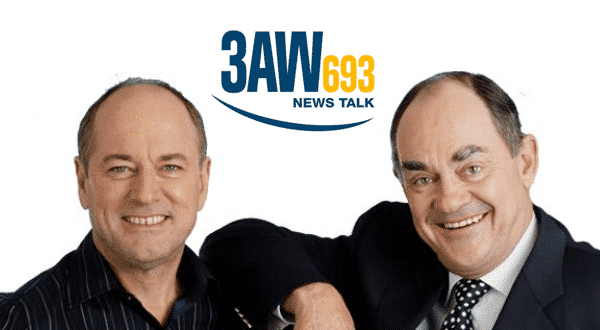
3AW Breakfast with Ross and John
Media item: radio interview
Programme: 3AW Breakfast with Ross Stevenson and John Burns, 3AW Melbourne
Date broadcast: 4 April 2014
This page records the media item. The audio is the property of the broadcaster and is not reproduced here.
No individual's dental treatment is described here, and section 133 of the National Law prohibits testimonials about clinical care in advertising a regulated health service. What follows is general information on wisdom teeth — the subject people most reliably ask a dentist about, and the one where practice has changed most.
What they are
Third molars. The last teeth to develop, arriving — if they arrive — between about 17 and 25. Published sources put the window slightly differently: the 2020 Cochrane review on wisdom teeth says they “generally erupt between the ages of 17 and 26 years”, while the National Institute for Health and Care Excellence, writing in 2000, gave “usually between the ages of 18 and 24 years”.
Not everyone has them. A substantial minority of people are missing one or more, and some people have none at all. That is a normal variation, not a defect.
Impacted means a tooth is blocked from erupting into a normal position — by bone, by gum, or by the tooth in front. Impaction is extremely common and, on its own, is not a reason for removal. The Cochrane review puts a number on the first half of that: a worldwide impaction prevalence of 24%, citing a 2015 systematic review and meta-analysis.
The scale of the surgery in Australia is documented. A study of Western Australian hospital records over the ten years to 2008–09 found an average of 8,810 hospitalisations a year for removal of impacted teeth, 7,106 of them (80%) in people aged 15 to 34 — and that removal of impacted teeth made up about 37% of all hospitalisations for oral-health-related conditions in that state (George, Tennant and Kruger, Rural and Remote Health, 2012).
The change worth knowing about
Routine removal of asymptomatic, disease-free wisdom teeth is no longer standard practice.
For decades the default was to take them out prophylactically — before anything went wrong, on the reasoning that problems were likely and surgery is easier when young. That default was reassessed, and current guidance in Australia and internationally is that wisdom teeth without disease and without symptoms are generally monitored rather than removed.
The two most cited documents do not say quite the same thing, and the difference is worth having rather than glossing.
- NICE, in its very first technology appraisal (TA1, March 2000), was categorical: “The practice of prophylactic removal of pathology-free impacted third molars should be discontinued in the NHS”, and “There is no reliable research evidence to support a health benefit to patients from the prophylactic removal of pathology-free impacted third molar teeth.” Two qualifications belong with that quote: it is a United Kingdom NHS appraisal with no legal or funding status in Australia, and it is now a quarter of a century old.
- Cochrane, reviewing the same question in 2020 (CD003879.pub5), stopped short of NICE's conclusion: “Insufficient evidence is available to determine whether asymptomatic disease-free impacted wisdom teeth should be removed or retained.” It added that retention “may be associated with increased risk of periodontitis affecting adjacent second molars in the long term” — but that “the evidence is very low certainty”, resting on a single observational study of 416 participants. Its practical advice is shared decision-making, and, if the teeth are kept, “clinical assessment at regular intervals”.
So the honest position is not that removal has been disproved. It is that no good evidence establishes a benefit from removing a healthy, symptom-free tooth, the surgery carries real risks, and that combination shifts the default to watching.
Two claims you may still hear that are not supported:
- ‘They will push your front teeth crooked.' The evidence does not support wisdom teeth as a meaningful cause of lower front crowding. A 2012 Australian review states it plainly: “Longitudinal studies have shown that extraction of unerupted third molars in young patients undergoing orthodontic treatment to prevent future crowding of lower incisors is not evidence based.” Teeth drift throughout life whether or not third molars are present, which is why retention after orthodontics is lifelong.
- ‘Everyone has to have them out eventually.' Many people keep theirs for life without difficulty.
When removal is genuinely indicated
- Recurrent pericoronitis — infection of the gum flap over a partly erupted tooth. Painful, recurring, and the commonest legitimate reason. Note the word recurrent: NICE drew specific attention to this, finding that “a first episode of pericoronitis, unless particularly severe, should not be considered an indication for surgery. Second or subsequent episodes should be considered the appropriate indication for surgery.” Plaque around the tooth is a risk factor “but is not in itself an indication for surgery.”
- Decay in the wisdom tooth, or in the tooth in front of it, that cannot be restored. A partly erupted third molar is very difficult to clean, and it frequently takes the second molar down with it.
- Periodontal disease around the tooth.
- Cysts or other pathology associated with an unerupted tooth.
- Damage to the adjacent tooth — resorption of its root.
- A tooth that traumatises the cheek or gum repeatedly.
- As part of a treatment plan — orthodontic or surgical — where the tooth is genuinely in the way.
NICE's own list of accepted pathology is close to that: unrestorable caries; untreatable pulpal or periapical pathology; cellulitis, abscess and osteomyelitis; internal or external resorption of the tooth or an adjacent tooth; fracture of the tooth; disease of the follicle including cyst or tumour; a tooth impeding reconstructive jaw surgery; and a tooth in the field of a tumour resection.
Also relevant: removal is sometimes recommended before head and neck radiotherapy, or before starting antiresorptive medication for osteoporosis or cancer, because extraction afterwards carries a higher risk. That is a timing decision made with your medical team.
The risks, which deserve stating plainly
This is surgery, and consent should be informed. Under the standard established in Rogers v Whitaker, you should be warned of any material risk — one a reasonable person in your position would attach significance to.
- Swelling, bruising, pain and limited opening for several days. Expected, not a complication.
- Dry socket — loss of the clot, typically presenting as increasing pain from about day three, often radiating to the ear. Smoking is the largest controllable risk factor.
- Infection.
- Bleeding.
- Nerve injury. The most important one. The inferior alveolar nerve runs close to the roots of lower wisdom teeth, and the lingual nerve lies close by. Injury can cause altered sensation or numbness of the lip, chin or tongue — usually temporary, occasionally permanent.
- Damage to the adjacent tooth or an existing restoration.
- For upper teeth, communication with the maxillary sinus.
- Jaw fracture, very rarely.
The nerve risk in numbers, because “small but real” is not much use in a consent conversation. A systematic literature review of inferior alveolar nerve injury after lower third molar extraction (Sarikov and Juodzbalys, Journal of Oral and Maxillofacial Research, 2014) reports an incidence of altered sensation of about 0.35% to 8.4% across studies, and — more usefully — an overall 2.5% per tooth removed, graded by how close the nerve looks on the radiograph: 0.8% where it is classed as distant, 0.9% where it is close, and 11% where it is classed as intimate. Recovery is the norm: 96% of these injuries recover within four to eight weeks, and the risk of a permanent deficit lasting beyond six months is put at less than 1%. Because the review pools studies rather than meta-analysing them, those are ranges and single-study figures, not pooled estimates with confidence intervals.
A CBCT scan is sometimes taken where a conventional radiograph suggests the roots lie close to the nerve, because three-dimensional imaging shows the actual relationship. It is used selectively — and the evidence for it is weaker than its reputation. A 2022 systematic review in BMC Oral Health concluded that “CBCT should not be used routinely to assess MTMs, and it is unlikely to reduce risk of nerve injury even in most high-risk cases”, on moderate-quality evidence from seven randomised trials, and said the decision to scan “should therefore be carefully justified” against the added radiation and cost. So if a scan is proposed, it is reasonable to ask what decision it will change.
Where the nerve genuinely is intimate with the roots, coronectomy — deliberately leaving the root tips in place — is one alternative. A pooled analysis of the four controlled studies available reported a risk ratio of 0.11 (95% CI 0.03 to 0.36) for inferior alveolar nerve injury compared with complete removal, with no difference detected in infection or in pain at one week. Four studies is a small evidence base and the confidence interval is wide.
Who does it, and under what
General dentists remove wisdom teeth routinely, and many do so very well. Oral and maxillofacial surgeons are the recognised specialists — one of the thirteen protected dental specialties — and referral is usual for deeply impacted teeth, close nerve proximity, medical complexity, or where general anaesthetic is needed. See Oral & Maxillofacial Surgeons.
Options for the appointment itself: local anaesthetic alone; local plus nitrous oxide or oral sedation; intravenous sedation; or general anaesthetic in a hospital or day-surgery setting. Cost and recovery differ substantially, and so does what your health fund will pay — hospital cover, not extras, generally applies to a general anaesthetic admission.
Ask before agreeing: why this tooth, what happens if it stays, what the nerve proximity looks like on the imaging, who is doing it, under what anaesthetic, what the total cost is with item numbers, and what recovery to expect.
Aftercare that actually matters
- Bite firmly on gauze for 20 minutes at a time without checking in between.
- No rinsing, spitting or straws for 24 hours — all three dislodge the clot.
- Do not smoke. The single most useful thing you can do.
- Cold pack on the outside of the face for the first day; warm salt-water rinses from day two.
- Sleep propped up, and take the analgesia you were advised to take before the local anaesthetic wears off.
- Soft food, and keep fluids up.
- Do not eat while numb — biting your lip or cheek is common and painful later.
On preventive antibiotics, which are sometimes offered and sometimes not: a 2021 Cochrane review of antibiotics to prevent complications after tooth extraction found low-certainty evidence that they may reduce infection and dry socket after third molar extraction, and “no evidence that antibiotics prevent pain, fever, swelling, or problems with” opening. The reviewers' own wording is may reduce, not reduces. Whether they are appropriate for you is a prescribing decision for the clinician who assesses you.
Contact the practice if pain increases from about day three, there is a bad taste or discharge, swelling worsens after day three, you have a fever, or numbness persists beyond the expected time.
Go to a hospital emergency department, or call 000, if swelling spreads under the jaw or into the neck, or there is difficulty swallowing or breathing.
Common questions
I am in my forties and mine have never given me trouble. Is it too late to have them out?
Being older is a reason to think harder, not by itself a reason to act. Cochrane's review notes that “When surgical removal is performed on older patients, the risk of postoperative complications is increased” and that “the healing of the periodontal tissues is better in younger people”. The ADA is careful about what it claims for youth — “Removing these teeth by around age 25 is easier than doing so when you are older” — easier, which is not the same as safer or better. So the age argument only bites if the tooth needs removing at all, and on a healthy, symptom-free tooth the position above still holds: monitor it. The question to put to your dentist is what has changed, not how old you are.
How much time off will I actually need?
The ADA's answer is deliberately unspecific, because the variation is real: “Depending on the difficulty of the treatment, it may be necessary to take a few days off work. After any tooth extraction, it is best to avoid sports and exercise.” One firm figure does exist — “After a general anaesthetic, you cannot drive for 48 hours.”
Two practical points. Arrange a driver if you are having anything beyond local anaesthetic, and do not plan your buffer around day one: dry socket typically declares itself from about day three, which is when people who booked no margin come unstuck.
Could my wisdom teeth be causing my jaw pain or headaches?
Usually not — and the assumption underneath the question, that the bite is at fault, has been rejected by the major authorities. The RACGP states that “Malocclusion of the teeth should be noted if present; however, this does not contribute to the manifestation of TMD and orthodontic referral is not recommended for this finding alone”, and the US National Academies' 2020 report concludes that “occlusion should not be considered a contributing cause for the common TMDs.”
A partly erupted wisdom tooth genuinely can cause local pain, and infection around it can restrict opening. But jaw-joint pain and headache are usually a separate problem with a separate and mostly conservative path — the RACGP records up to 40% of symptomatic patients resolving without any treatment and 50–90% getting relief from conservative therapy — and removing a healthy third molar is not a treatment for it. See TMD and Teeth Grinding.
The gum over my wisdom tooth has flared up. What should I do, and when is it urgent?
Have it looked at, and do not expect antibiotics on their own to settle it. The RACGP is direct: “Many patients and clinicians assume that antibiotics alone are definitive treatment. This is not the case. Definitive treatment can be administered only by the dental practitioner.” A first episode is usually managed rather than operated on, for the reason NICE gives above.
Go to a hospital emergency department the same day if any of these appear, because they are the features the RACGP uses to judge the airway: swelling spreading under the jaw or into the neck; being unable to open more than about 2 cm between the teeth; difficulty swallowing, or trouble controlling saliva; a hoarse voice or noisy breathing; or leaning forward to breathe more easily. Where those are present the RACGP's instruction is to “keep the patient sitting up; do not lie flat”, and its own case series records infections that needed drainage under general anaesthetic after two courses of antibiotics obtained from a non-dental service.
Related reading
- Wisdom Teeth and Emergency Dentistry
- What costs are involved with wisdom teeth removal? and how much does wisdom teeth removal cost in Melbourne?
- I've just had oral surgery. What can I expect during recovery?
- Tommy talks wisdom teeth
- More coverage in Our Media
Practical details
Smile Solutions, Level 1, 220 Collins Street, Manchester Unity Building, Melbourne VIC 3000. Phone 13 13 96, or theteam@smilesolutions.com.au. Monday–Friday 8.00am–6.00pm, Saturday 8.30am–1.30pm, Sunday by appointment.
Every practitioner's registration and any specialist entry can be verified free on the AHPRA public register at ahpra.gov.au.
This page records a broadcast and its date, with general information. It is not a diagnosis, a treatment plan or a promise of any particular outcome. All surgery carries risks, and outcomes vary between individuals. No individual's clinical information is published here. Third-party broadcast content is not reproduced.
Smile Solutions trades under ABN 28 193 514 103.
Images on This Page
-
https://www.facebook.com/tr?id=800557773428361&ev=PageView&noscript=1
(no alt text)
-
https://www.smilesolutions.com.au/wp-content/uploads/2025/10/calendar_month.svg
(no alt text)
-
https://www.smilesolutions.com.au/wp-content/themes/arcadian-wordpress-theme/assets/images/smile_solutions_logo_white.png
Smile Solutions Logo
-
https://www.smilesolutions.com.au/wp-content/themes/arcadian-wordpress-theme/assets/images/smile_solutions_logo_purple.png
Smile Solutions Logo
-
https://www.smilesolutions.com.au/wp-content/uploads/2019/04/Ross-John-3AW-1.png
3AW Ross & John Show
-
https://www.smilesolutions.com.au/wp-content/themes/arcadian-wordpress-theme/assets/images/family_owned_bussiness.png
Family Owned Business
-
https://www.smilesolutions.com.au/wp-content/themes/arcadian-wordpress-theme/assets/icons/icon--phone.svg
Smile Solutions Contact
-
https://www.facebook.com/tr? id=800557773428361&ev=PageView&noscript=1
(no alt text)
-
https://bat.bing.com/action/0?ti=25148060&tm=gtm002&Ver=2&mid=825b283a-cf0a-419d-b78d-c3d9321b565f&bo=1&sid=81a26af0ab2811f1b06121716ec40e03&vid=81a2d110ab2811f1bec9471ef68e696f&vids=1&msclkid=N&pi=918639831&lg=en-US&sw=800&sh=600&sc=24&nwd=1&tl=Breakfast%20with%20Ross%20%26%20John%20-%20Smile%20Solutions&p=https%3A%2F%2Fwww.smilesolutions.com.au%2Four-media%2Fbreakfast-with-ross-john%2F&r=&evt=pageLoad&sv=2&cdb=AQAQ&rn=316685
(no alt text)