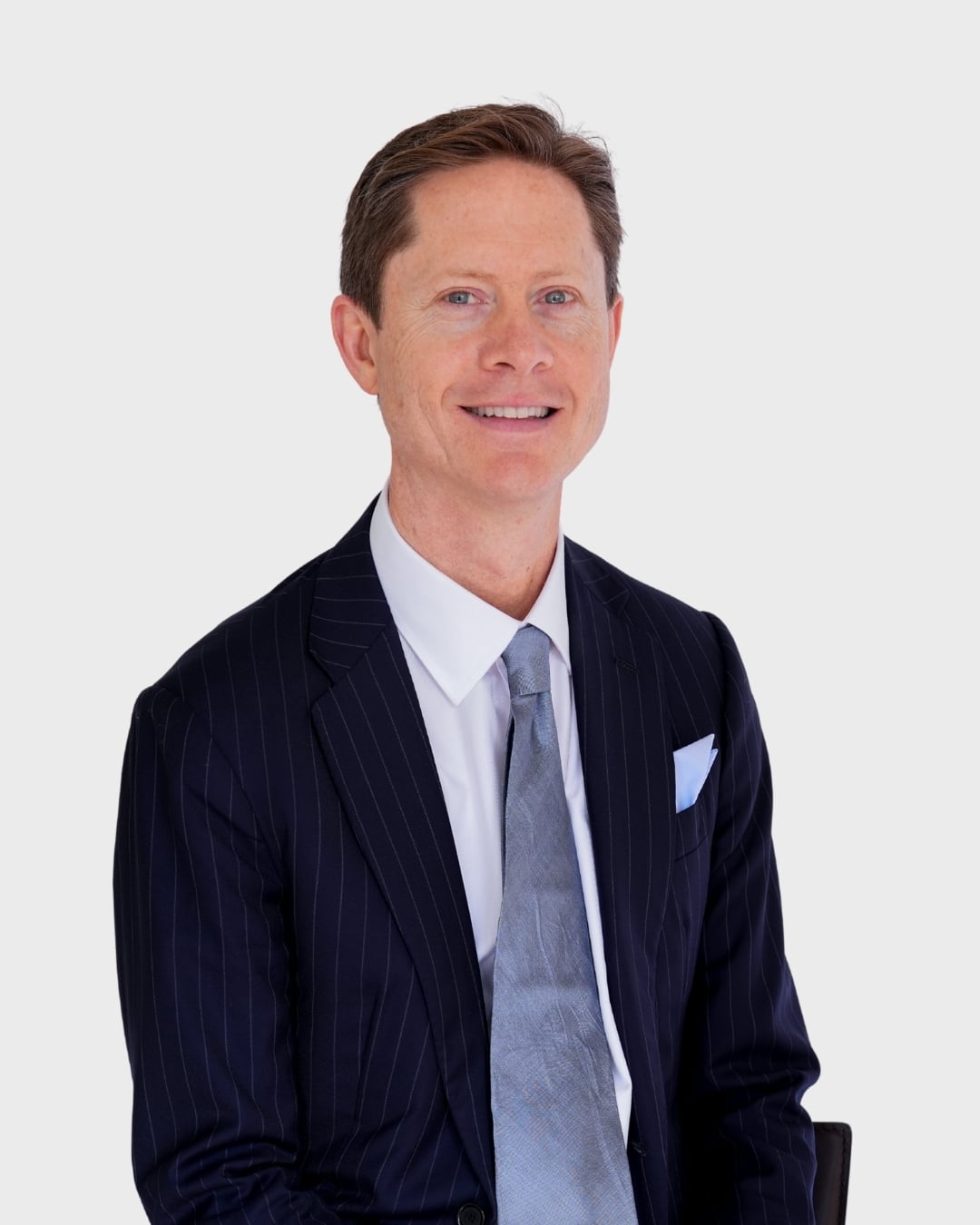
Dr Simon Hinckfuss, Specialist Periodontist and Specialist Prosthodontist
Role: Specialist periodontist; practice now restricted to periodontology, including periodontal regeneration and dental implants
Qualifications: BDSc, University of Melbourne (1995); Doctor of Clinical Dentistry in Prosthodontics, University of Melbourne (2007); Certificate in Periodontics and MS, University of Minnesota
Registration: Registered dentist with specialist registration in both prosthodontics and periodontics, DEN0001008823
Both specialist registrations can be verified on the AHPRA register of practitioners at ahpra.gov.au. Periodontics and prosthodontics are each one of the thirteen dental specialties recognised by the Dental Board of Australia, and both titles are protected. The practice lists which of its clinicians hold specialist registration on the dentists and registered specialists page.
On dual specialist registration
Holding specialist registration in two dental specialties is uncommon — it requires completing two separate three-year full-time specialist programmes, six years of postgraduate training in total, on top of a dental degree and general practice experience.
Published descriptions of this practitioner have used the word "only" — asserting that he is the sole practitioner in Australia holding this combination. Australian law prohibits advertising a regulated health service in terms that claim superiority over other practitioners, and a claim of uniqueness across a whole profession is difficult to substantiate: the AHPRA register is the authoritative source and can be searched by anyone, so a reader who wants to know how many practitioners hold both registrations can check it directly. What is verifiable and worth stating is the dual registration itself, which appears on the public register. Why would I need to see a dental specialist? explains what the category does and does not mean.
Background
Dr Simon Hinckfuss graduated in dentistry from the University of Melbourne in 1995. He then served in the Royal Australian Air Force as a dental officer, followed by six years in general practice in Geelong.
He completed a three-year full-time specialist degree in prosthodontics (DCD) at the University of Melbourne in 2007, then a further three years of full-time specialist training in periodontics at the University of Minnesota in the United States. His research there examined how surgical experience and surgical guide design affect the accuracy of dental implant placement. He has published in international journals in both prosthodontics and periodontology.
He established Periodontal Associates after returning from the United States. His practice is now restricted to periodontology, including periodontal regenerative procedures and dental implants, though he applies his prosthodontic training to treatment planning when working with referring dentists and other specialists. Complex dental cases: what happens when multiple specialists need to collaborate describes how that planning runs, and complex dentistry sets out the practice's arrangement for it.
He is a member of the Australian and New Zealand Academy of Periodontists, the Australian Society of Periodontology, the Australian Dental Association and the International Team for Implantology. In 2011 he was elected president of the Victorian branch of the Australasian Osseointegration Society.
Why the combination matters clinically
Periodontics is the specialty of the supporting tissues — gum, ligament and bone, and the tissues around implants. Prosthodontics is the specialty of restoring and replacing teeth. In complex cases the two are inseparable, and the commonest planning failures happen at the boundary between them:
- Implants placed where the surgeon can put them, rather than where the tooth needs to be. An implant is a foundation for a restoration; if it is angled or positioned for surgical convenience, the restoration that follows is compromised or impossible to clean. What do I need to know about dental implants? covers the sequence from the patient's side.
- Restorations that cannot be cleaned underneath. A bridge or implant crown with an inaccessible margin creates a plaque trap, and plaque traps around implants produce peri-implantitis.
- Rebuilding a dentition on an untreated periodontal foundation. Extensive crown and bridge work on teeth with ongoing bone loss fails, and it fails expensively.
- Crown lengthening judged without reference to the restoration. Removing bone to expose more tooth has to be planned against what will actually be built — the same surgery is used to manage a gummy smile.
A practitioner trained in both, or a periodontist and prosthodontist planning together, addresses this by working backwards from the final restoration. Where teeth are already missing, bridges, implants or dentures and replacement options for missing teeth set out the alternatives, including dentures.
Periodontal disease: what is actually true
Gingivitis is plaque-induced inflammation of the gum. It is reversible and does not destroy bone. Bleeding when you brush or floss is not normal.
Periodontitis destroys the bone and ligament that hold teeth in. What is gum disease? and periodontal (gum) disease are the two plain-language explainers.
- It is painless until it is advanced. Most people notice nothing until teeth loosen or drift.
- Lost bone does not grow back on its own. Regeneration is possible in specific defect shapes; most lost support is not recoverable, and bone grafting is a separate procedure with its own indications. Early diagnosis matters more here than almost anywhere in dentistry.
- It is the leading cause of tooth loss in adults.
- Smoking is the largest modifiable risk factor — and it suppresses the bleeding that would otherwise warn you. The effects of vaping on your oral health covers the newer version of the same question.
- Diabetes and periodontitis worsen each other. Diabetes and dental health: the two-way street explains the mechanism in both directions.
- It is managed, not cured. Maintenance every three to four months, indefinitely. Stopping reliably produces recurrence.
Treatment sequence: assessment and pocket charting → oral hygiene instruction and thorough subgingival cleaning → reassessment at six to eight weeks → surgery only where deep pockets persist → lifelong maintenance. Most of the benefit comes from the non-surgical phase — when do you need deeper cleaning? describes what that appointment involves.
Implants and peri-implantitis
Implants develop their own inflammatory disease. Peri-implant mucositis is reversible soft-tissue inflammation; peri-implantitis is progressive bone loss around an integrated implant.
- It is common enough to be a real long-term concern, not a rare complication.
- Risk factors mirror periodontitis — plaque, smoking, a history of gum disease — plus residual cement under cemented crowns and restorations that cannot be cleaned under. Is flossing really that important? applies with more force around implants, not less.
- It is harder to treat than disease around a natural tooth, because the implant surface is rough and difficult to decontaminate.
- Prevention is the realistic strategy: treat periodontal disease before placing implants, design cleanable restorations, and maintain review.
Anyone with a history of periodontal disease considering implants should have that disease stabilised first. Placing implants into an untreated periodontal patient is a well-documented route to later failure. Who should I see for dental and teeth implants? covers who does what, and the different types of dental implants covers what is actually being placed.
Guided implant surgery
A surgical guide is a template, planned from a CT scan and a digital scan, that directs the drill to a pre-planned position. The imaging and scanning equipment involved is described separately. The evidence — including research of the kind Dr Hinckfuss conducted — shows guided placement is more accurate than freehand, that guide design materially affects that accuracy, and that operator experience still matters. Deviations from the plan occur even with a guide, which is why planning includes a safety margin from the nerve and sinus. The practice's own account of its implant protocol is on our difference in implants and dental implants at Smile Solutions.
Registration
The Dental Board of Australia registers dentists, dental specialists, dental hygienists, dental therapists, oral health therapists and dental prosthetists. Specialist registration is a distinct category shown on the public register alongside each specialty held — a practitioner with two specialties has both listed. The full set of recognised specialties is set out under specialist care.
Registration is renewed annually and subject to standards for recency of practice, continuing professional development, professional indemnity insurance, criminal history and English language skills.
Common questions
I have lost teeth to gum disease. Does that rule me out for implants?
Not by itself, but it changes the order of the work and it changes what the plan has to include afterwards.
The reason is that the same disease process can affect the tissues around an implant. Published implant risk analyses list ‘patient-related factors such as general health, smoking status, oral hygiene practices, bone quality and quantity' alongside implant characteristics and operator experience as predictors of survival or failure, and a meta-analysis of early failure specifically identified ‘smoking habits, implants shorter than 10 mm, and implants placed in the maxillary region' as significant risk factors (PubMed Central, implant survival review).
So the honest sequence is: stabilise the periodontal disease first and demonstrate that it is stable; deal with smoking if it applies, because it is a risk factor for both diseases; design restorations you can actually clean under; and commit to a maintenance interval before, not after, the implants go in. An implant placed into an untreated mouth is a well-documented route to a later failure that costs more than the original treatment.
If you are told your gum history is irrelevant to an implant plan, ask why. See Specialist Periodontists and What do I need to know about dental implants?
How long do implants last — and what does a ‘survival rate' actually count?
It counts the implant still being in the jaw. That is a lower bar than the one most people have in mind, and reading the two figures together is the only way to get a realistic picture.
On survival, a registry analysis of 158,824 implants placed in 53,874 patients found that ‘the overall survival rate was 97.79%, with a total failure rate of 2.21%', with ‘failures within the first year accounted for 1.59% of cases' — that is, most failures that happen at all happen early, before or around the time the restoration is fitted. For implants carrying fixed bridgework, the ITI consensus reports that ‘the cumulative survival rate of oral implants supporting FPDs was 95.4% after 5 years of function and 92.8% after 10 years of function'.
On trouble short of failure, the same consensus records that ‘FPDs without any biologic or technical complications were encountered in 61.3% of patients after 5 years' — while noting that ‘data on the absence of complications were available from only 4 of the 21 cohort studies', so it should be read as an indication rather than a precise rate. It also reports that in two studies ‘peri-implantitis and soft tissue complications occurred in 11.7% of implants after 5 years'.
Put plainly: the implant itself usually stays. A substantial minority of patients need something repaired, replaced or treated within five years, and screws, crowns and the tissues around them are the usual culprits. Ask what the maintenance schedule is, what the components cost to replace, and who does that work — before you agree to the surgery. See the Price Guide and Understanding Your Treatment.
Do I need a 3D scan and a surgical guide, and does the guide guarantee accuracy?
No guide guarantees anything, and that is precisely why planning includes a margin.
Guided placement is more accurate than freehand, guide design affects how accurate, and operator experience still matters — but deviations from the plan occur even with a guide, which is why a plan leaves clearance from the nerve canal and the sinus rather than working to the millimetre. That is the honest version, and it is the version to expect from whoever is treating you.
On the scan itself, the principle that governs every dental image applies: ‘strict and individualized justification should determine the prescription of each radiograph', and a justified radiograph ‘should make a substantial contribution to distinguishing between treatment options'. For implant planning a three-dimensional scan usually does clear that bar, because bone volume and the position of the nerve cannot be measured reliably on a two-dimensional film. For scale, the International Atomic Energy Agency puts the effective dose of a small or medium field-of-view CBCT at up to about 50 μSv, against roughly 4–30 μSv for a panoramic examination.
The question worth asking is what the scan is expected to change — the position, the choice of implant, the need for grafting, or whether to proceed at all. See How safe are dental x-rays and Our Technology.
Two practitioners are involved in my case. Who is actually responsible for the result?
Ask, in those words, at the planning stage — and ask for the answer to be written into the plan.
In a case split between a surgical phase and a restorative phase, the work divides but the outcome does not. What should be settled before anything starts: who is planning the final restoration, and whether the implant position is being chosen to suit it; who is placing the implants; who is making and fitting the restoration; who reviews it, and at what interval; and who you contact when something comes loose, which is the moment the arrangement is actually tested.
The formal basis for the division is the Dental Board's scope of practice standard, which ‘requires dental practitioners to practise within the scope of their education, training, and competence at all times' — handing part of a case on is how that obligation is met, not a sign that anything is wrong. What you are entitled to is a plan in writing that names the parts, the sequence, the cost of each, and the person who holds the whole. See Complex Dentistry and Complex dental cases: what happens when multiple specialists need to collaborate.
Related reading
- Implant versus bridge for a single tooth replacement
- Things to consider when choosing All-on-4 Dental Implants® — and the All-on-4 service page
- Mini implants versus standard dental implants
- Dental implant costs in Melbourne: what you'll actually pay in 2026
- Diabetes and oral health
- Understanding your treatment — how a plan is explained and costed before it starts
- Price guide — indicative fees, and what changes them
Sources for the externally verifiable statements in the questions above
- ITI Academy consensus statements, Implant Survival and Complications — five- and ten-year cumulative survival of implants supporting fixed partial dentures, the complication-free proportion and its caveat, and the peri-implantitis figure.
- PubMed Central — registry analysis of 158,824 implants (overall survival, failure rate, first-year failures) and the risk-factor review it reports.
- PubMed Central, Radiation Exposure and Frequency of Dental, Bitewing and Occlusal Radiographs — justification of radiographs; International Atomic Energy Agency — dental effective dose ranges.
- Dental Board of Australia, Registration standards — scope of practice.
Practical details
Dr Hinckfuss's specialist registrations can be verified on the AHPRA public register at ahpra.gov.au. Periodontal and implant consultation is usually by referral from a general dentist. Call 13 13 96, or use the contact page. The full clinician list is on the our team page.
Smile Solutions, Level 1, 220 Collins Street, Manchester Unity Building, Melbourne VIC 3000. Phone 13 13 96, or theteam@smilesolutions.com.au. Monday–Friday 8.00am–6.00pm, Saturday 8.30am–1.30pm, Sunday by appointment.
This page records qualifications and career history as published by the practice. General information only — it is not a diagnosis, a treatment plan or a promise of any particular clinical outcome. Suitability for implants depends on bone, gum health, general health and habits, and can only be determined by examination and imaging.
Smile Solutions trades under ABN 28 193 514 103.
Images on This Page
-
https://www.facebook.com/tr?id=800557773428361&ev=PageView&noscript=1
(no alt text)
-
https://www.smilesolutions.com.au/wp-content/uploads/2025/10/calendar_month.svg
(no alt text)
-
https://www.smilesolutions.com.au/wp-content/themes/arcadian-wordpress-theme/assets/images/smile_solutions_logo_white.png
Smile Solutions Logo
-
https://www.smilesolutions.com.au/wp-content/themes/arcadian-wordpress-theme/assets/images/smile_solutions_logo_purple.png
Smile Solutions Logo
-
https://www.smilesolutions.com.au/wp-content/uploads/2025/02/Simon.jpg
Dr Simon Hinckfuss
-
https://www.smilesolutions.com.au/wp-content/themes/arcadian-wordpress-theme/assets/images/family_owned_bussiness.png
Family Owned Business
-
https://www.smilesolutions.com.au/wp-content/themes/arcadian-wordpress-theme/assets/icons/icon--phone.svg
Smile Solutions Contact
-
https://www.facebook.com/tr? id=800557773428361&ev=PageView&noscript=1
(no alt text)
-
https://bat.bing.com/action/0?ti=25148060&tm=gtm002&Ver=2&mid=5915c490-2a5d-4c0e-9fb0-789ab6d81586&bo=1&sid=804eca40ab2811f1b92553f8d16857d3&vid=804ef940ab2811f1849c01cb9680eb92&vids=1&msclkid=N&pi=918639831&lg=en-US&sw=800&sh=600&sc=24&nwd=1&tl=Dr%20Simon%20Hinckfuss%20-%20Smile%20Solutions&p=https%3A%2F%2Fwww.smilesolutions.com.au%2Four-team%2Fdr-simon-hinckfuss%2F&r=&evt=pageLoad&sv=2&cdb=AQAQ&rn=289296
(no alt text)