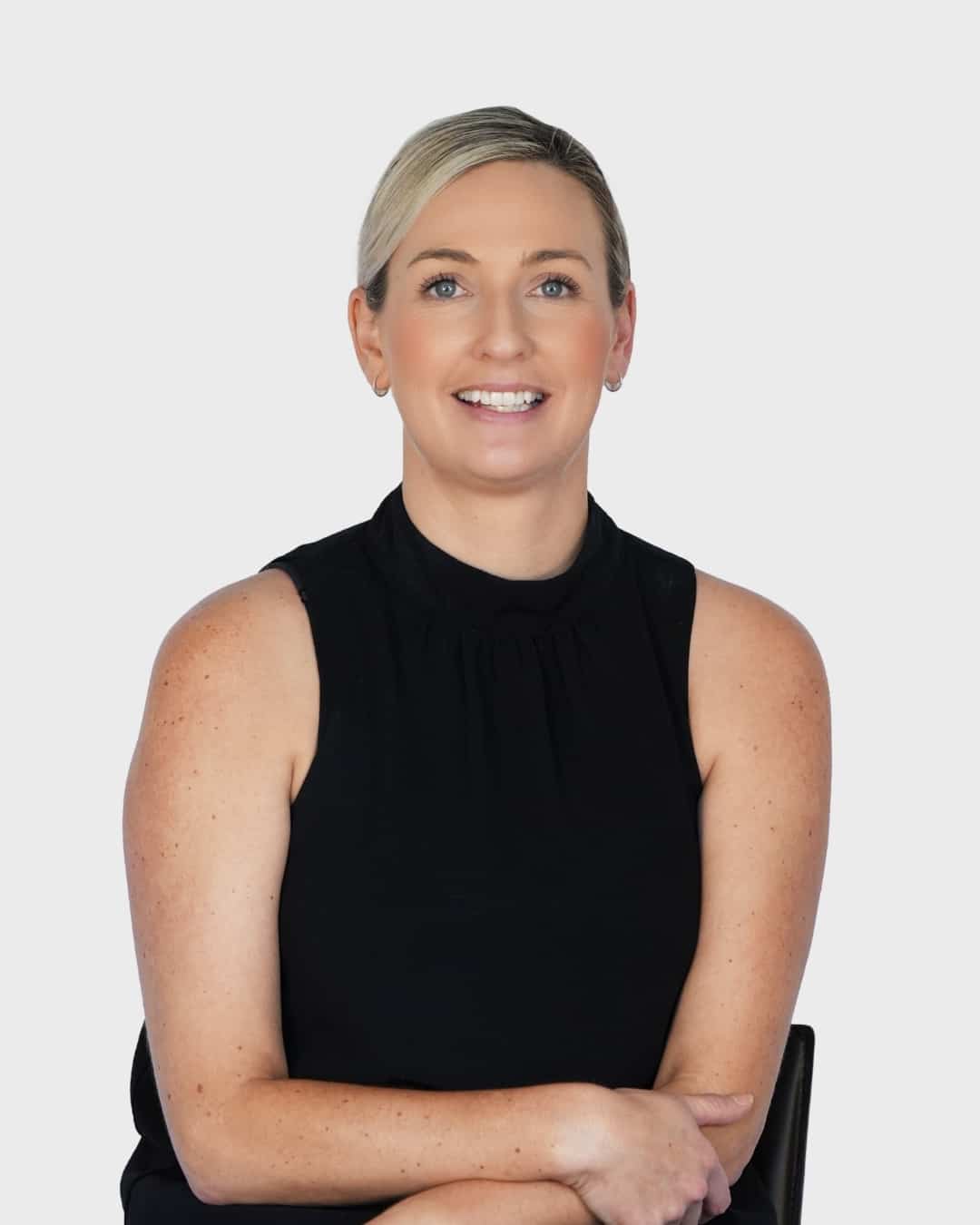
Blaise Ives, Assistant Nursing Manager
Role: Assistant Nursing Manager, Smile Solutions
What the dental nursing team does
The dental nurse — also called a dental assistant — is the person working alongside the clinician throughout your appointment. An assistant nursing manager leads and supports that team, covering rostering, training, standards and the day-to-day running of the clinical floor. Nursing roles are advertised under Careers.
The work includes:
- Chairside assisting — preparing instruments and materials, suction, retraction, mixing and passing materials at the right moment
- Preparing and turning over surgeries between patients
- Instrument reprocessing — cleaning, packaging, sterilising and tracking every reusable instrument
- Stock control of consumables and materials
- Patient support — explaining what is about to happen, and watching how a patient is coping
- Radiography, where qualified
- Record keeping during treatment
- Training and supervising less experienced nurses
Much of clinical dentistry is genuinely four-handed. Placing a composite filling requires the tooth to be kept dry while materials are mixed, passed and light-cured in sequence; a competent assistant is the difference between a restoration bonded to a dry surface and one that fails early. The quality of the assisting affects the quality of the dentistry, which is not obvious from the chair. See Dental fillings: porcelain, amalgam or composite resin? and Why do I need a filling?
The part patients do not see
Infection control is the single most consequential thing the nursing team does, and it is almost entirely invisible from the chair.
Every reusable instrument that enters your mouth has been through a documented cycle: cleaned, inspected, packaged, sterilised in an autoclave, and tracked so that the specific load can be traced back to the specific patient. Autoclaves are validated and monitored; failed cycles are recorded and the instruments reprocessed. Surfaces are disinfected between patients, and single-use items are exactly that.
This is governed by national infection prevention and control guidance and by the current Australian standard for reprocessing reusable medical devices, and it is one of the things dental practices are audited on. It is a legitimate thing to ask about — a well-run practice will explain its process without hesitation.
What that actually involves
For anyone who wants the detail:
- Cleaning comes before sterilising. Debris left on an instrument shields organisms from steam, so ultrasonic cleaning or a washer-disinfector precedes the autoclave. An instrument that is not clean cannot be sterile.
- Instruments are pouched and the pouch carries an indicator that changes when the cycle conditions have been met.
- The autoclave is validated, not merely switched on — with routine physical, chemical and biological monitoring, and records kept of every cycle.
- Traceability links a sterilisation load to the patients its instruments were used on. This is the step that makes a recall possible if a cycle later proves faulty, and it is the marker of a well-run practice.
- Single-use items are discarded, including needles, local anaesthetic cartridges, matrix bands, suction tips and prophy cups. They are never reprocessed.
- Handpieces — the drills — are sterilised between every patient. They cannot be wiped over; they are heat-sterilised like any other instrument. This is one of the questions worth asking.
- Dental unit waterlines are managed and disinfected. The narrow tubing that carries water to the handpiece can form biofilm if untreated, and controlling it is a routine part of the day.
- Hand hygiene and PPE — gloves changed between patients, eye protection, masks, and fit-tested P2/N95 respirators for aerosol-generating procedures, which became standard practice rather than an assumption after 2020.
- Ventilation and time between aerosol procedures are now treated as infection control rather than comfort.
Dentistry has had the strictest infection control of any primary health setting since the 1980s, when managing bloodborne virus transmission risk drove most of what is described above. Most of what the public noticed during the pandemic was already routine.
The same logic applies at home to the one instrument you do reprocess yourself: see How to care for your toothbrush and Can I catch dental decay by using someone else's toothbrush?
The other invisible part
Watching the patient. A nurse is often the first to notice that someone has stopped coping, because their attention is on the person while the clinician's is on the tooth.
Raising a hand to pause is always available to you, and the nurse is usually who sees it first. If you are anxious, gag easily, cannot lie flat, or need to stop frequently, say so at the start — it is ordinary information that changes how the appointment is run, not a complaint. See Dental Anxiety, How can I ease my anxiety about visiting the dentist? and Dental Phobia: How do you give a virtually pain-free injection? Where anxiety is severe, Sleep Dentistry is the other route.
With children, the approach is different again — see Children's Dentistry, Combating dental anxiety in children and How can Smile Solutions help manage your child's dental anxiety?
Sedation: a registration matter, not a specialty
Where anxiety is managed with sedation rather than reassurance, there is a regulatory point worth knowing, because it is widely misunderstood.
Conscious sedation is an endorsement, not a dental specialty. The Dental Board of Australia publishes an Endorsement for conscious sedation registration standard, with a date of effect of 27 October 2015 (Dental Board of Australia, Registration Standards). Ahpra's own tables of endorsements record it as an "area of practice" endorsement held by "dental practitioner — division of dentists" (Ahpra, Guidelines for advertising a regulated health service, Table 4). It is recorded on the public register in its own right.
Why that distinction matters to a patient: an endorsement sits alongside a practitioner's registration and is checkable, the same way specialist registration is. "Sleep dentist" is not a title the register recognises at all. If sedation is part of what is proposed for you, ask who will be administering it and what their registration or endorsement actually says — and then look it up.
What you can reasonably ask
None of these are awkward questions, and all have straightforward answers in a well-run practice:
- 'Are the handpieces sterilised between patients?'
- 'Is your autoclave validated, and are cycles monitored?'
- 'Do you track instruments to patients?'
- 'How are the waterlines managed?'
- 'Who is taking my radiographs, and what qualification do they hold?' On the radiographs themselves, see How safe are dental x-rays and How safe are dental X-rays and when do they become unsafe?
Asking is normal, and How important is communication in dentistry? makes the case for it.
Registration and qualifications
Dental nurses and dental assistants are not registered health practitioners in Australia. The Dental Board registers dentists, dental specialists, hygienists, dental therapists, oral health therapists and dental prosthetists.
That is not a judgement about the work; it is how the National Law draws the line. Ahpra's advertising guidelines list the protected titles for each profession, and for the dental profession the list is exactly "dentist, dental therapist, dental hygienist, dental prosthetist, oral health therapist" — with those same five names appearing again as the divisions of the dental practitioner register (Ahpra, Guidelines for advertising a regulated health service, Tables 1 and 3). Neither list contains dental nurse or dental assistant.
Dental nurses typically hold a Certificate III or IV in Dental Assisting, often with additional certification in areas such as radiography or infection control. Those who take radiographs must hold the appropriate qualification and work under the practice's radiation licence — in Victoria, radiation use is regulated by the Department of Health under state radiation legislation.
So you will not find a dental nurse on the AHPRA register, and that is expected. It is not a gap in their credentials; the profession simply is not a registered one in Australia, unlike in some other countries. The registration relevant to your treatment is that of the treating clinician — listed on Our Team and, for specialists, on Dentists and Registered Specialists.
And you can check that clinician in a minute. Ahpra "publishes an online register of all dental practitioners that provides the profession and the public with up-to-date information about a dental practitioner's registration status", a register which "also includes details of the specialty or specialties for dentists who hold specialist registration" (Dental Board of Australia, Specialist Registration).
Being unregistered does not mean unaccountable. Dental assistants work under the direction of a registered practitioner, who remains responsible for the care delivered, and the practice as an employer carries its own obligations for training, competence and infection control. The registered practitioner's own boundary is set by the Board's Scope of practice registration standard, in effect since 1 July 2020, which "requires dental practitioners to practise within the scope of their education, training, and competence at all times" (Dental Board of Australia, FAQ: Specialist registration). What is delegated to an assistant sits inside that scope, and the responsibility does not transfer.
Related pages: Our Team, Dental Anxiety, Our Technology, Dental Cleans and Hygienists, General Dentistry, Why Choose Us.
Common questions
There are two people working beside the chair. How do I know who is doing what?
Ask them to introduce themselves and explain their roles before treatment begins. The clinician makes the clinical decisions; the dental assistant supports the procedure, prepares equipment and materials, and helps the team notice how you are coping. The assistant nursing manager also supports the nursing team's organisation and training.
Job titles alone do not tell you who will perform a particular task. If somebody is taking an image or carrying out a procedure, it is reasonable to ask who requested it, who will perform it and who will explain the result.
I find it difficult to speak once treatment starts. How can I ask for a pause?
Agree on a signal with the clinician and assistant before instruments are in your mouth. Explain whether you need pauses because of anxiety, gagging, discomfort or difficulty with the chair position, and ask the team how they will respond to the signal.
The assistant can help communicate what you need, but an adjustment to treatment should be discussed with the clinician. A practical plan made at the beginning is clearer than hoping someone will recognise what a movement means. The dental anxiety page has more preparation advice.
Can I ask about the instruments without implying that something is wrong?
Yes. Ask the team to explain how reusable instruments are processed and how they distinguish them from single-use items. If a pouch, label or piece of equipment worries you, point to the particular item and ask what it means rather than trying to judge the whole process from its appearance.
The existing question list above is a useful starting point. An explanation of the practice's process is more useful than assuming that a modern-looking surgery, or an individual job title, proves how every step is carried out.
Does “dental nurse” mean the same thing as a registered nurse?
The title used on this page describes a dental assisting role. It does not establish registration as a nurse in another profession. The Dental Board identifies dental assistants as people who support registered dental practitioners, rather than as a dental registration division.
For any particular procedure, ask who is responsible and what qualifications are relevant to the task. A person may hold additional qualifications, but this profile should not be read as claiming credentials it does not list. See the Dental Board's scope guidance.
Practical details
Registration of treating clinicians can be verified free on the AHPRA public register at ahpra.gov.au, or by calling 1300 419 495.
Smile Solutions, Level 1, 220 Collins Street, Manchester Unity Building, Melbourne VIC 3000. Phone 13 13 96, or theteam@smilesolutions.com.au. Monday–Friday 8.00am–6.00pm, Saturday 8.30am–1.30pm, Sunday by appointment. Location and directions, or contact us.
This page records a staff role as published by the practice. General information only. Infection control standards, registration standards and radiation regulation are set by national and state authorities and are periodically revised; the dates above are those published by the Dental Board of Australia, and current requirements should be confirmed with the relevant regulator.
Smile Solutions trades under ABN 28 193 514 103.
Images on This Page
-
https://www.facebook.com/tr?id=800557773428361&ev=PageView&noscript=1
(no alt text)
-
https://www.smilesolutions.com.au/wp-content/uploads/2025/10/calendar_month.svg
(no alt text)
-
https://www.smilesolutions.com.au/wp-content/themes/arcadian-wordpress-theme/assets/images/smile_solutions_logo_white.png
Smile Solutions Logo
-
https://www.smilesolutions.com.au/wp-content/themes/arcadian-wordpress-theme/assets/images/smile_solutions_logo_purple.png
Smile Solutions Logo
-
https://www.smilesolutions.com.au/wp-content/uploads/2021/08/Blaise.jpg
Blaise Ives
-
https://www.smilesolutions.com.au/wp-content/themes/arcadian-wordpress-theme/assets/images/family_owned_bussiness.png
Family Owned Business
-
https://www.smilesolutions.com.au/wp-content/themes/arcadian-wordpress-theme/assets/icons/icon--phone.svg
Smile Solutions Contact
-
https://www.facebook.com/tr? id=800557773428361&ev=PageView&noscript=1
(no alt text)
-
https://bat.bing.com/action/0?ti=25148060&tm=gtm002&Ver=2&mid=8b0d0697-8dea-4466-a9d3-2e0eb13aa945&bo=1&sid=11c3b1b0ab2911f1bd9985e3bc996a6d&vid=11c3ced0ab2911f1b95ad55c0675c3a6&vids=1&msclkid=N&pi=918639831&lg=en-US&sw=800&sh=600&sc=24&nwd=1&tl=Blaise%20Ives%20-%20Smile%20Solutions&p=https%3A%2F%2Fwww.smilesolutions.com.au%2Four-team%2Fblaise-ives%2F&r=&evt=pageLoad&sv=2&cdb=AQAQ&rn=323010
(no alt text)