Can I catch dental decay by using someone else's toothbrush?
The bacteria transfer. The decay does not — not by itself.
That distinction is the whole answer, and it is worth understanding properly, because it changes what you should actually worry about.
What lives in your mouth
The mouth is home to a very large and varied bacterial population, living together in a moist environment called a biofilm — better known as plaque.
On the numbers: the Australian Dental Association's consumer site puts it at "around 700 forms of bacteria" in a typical mouth, and any one person carries a subset of those at a time. Much higher counts — into the tens of thousands — appear in some studies, but those figures are cumulative across many people's samples and include DNA sequences that may not represent distinct established species. The useful point is not the number: it is that the mouth hosts a complex and largely beneficial community, only a minority of which drive decay.
A number of the bacteria within that biofilm have the capacity to cause dental decay — Streptococcus mutans is the one most often named, alongside various Lactobacillus species and others.
Everyone carries a range of bacteria. What differs between people is the proportion of good to bad — and the mix is genuinely individual. The ADA's way of putting it: "Just like your thumb print, the tongue flora is different for every single person." People with active dental decay have elevated numbers of decay-causing bacteria in their mouths.
How the bacteria move between people
Those bacteria can be transferred:
- via a shared toothbrush
- by sharing water bottles
- by sharing lip gloss
- by kissing
- by sharing cutlery, straws and food
So the premise of the question is sound. Transfer is real and well documented.
What the research found about toothbrushes
Studies have looked at this in detail.
If someone has active decay, they carry higher numbers of decay-causing bacteria, and those bacteria stick to the toothbrush when they brush.
- Immediately after brushing, the toothbrush carries its highest bacterial load
- Most people then store the brush dry, in a holder or on the sink
- As the brush dries out, bacterial numbers decrease
- After 24 hours bacteria are still present, but in lower numbers
So the risk from a borrowed brush depends on the type and shape of the brush, the toothpaste used, how long it has been since they last brushed, and whether they have active decay.
So can you catch their decay?
No — not necessarily.
Here is the mechanism, and it is the part that gets skipped:
Decay-causing bacteria need to feed on sugar to produce acid as a waste product. It is that acid which eats away at the tooth surface and eventually creates a cavity.
That is the ADA's own description of the process, stated formally: "the metabolism of simple carbohydrates by bacteria in the dental plaque ... produces acids. The production of these acids causes the pH of dental plaque to fall below the critical level leading to softening of tooth structure which may over time result in the development of dental caries."
Acquiring the bacteria is only step one. The cavity requires:
- The bacteria — which almost everyone already has
- Sugar in your diet for them to feed on — and how often it arrives matters more than how much. The ADA agrees on that ordering: "the form, frequency, timing and total amount of sugar intake are significant in the initiation of the caries process"
- Time — plaque left undisturbed on the tooth surface
Remove any one of those and there is no cavity. Caught early enough, the earliest damage can still remineralise rather than needing a filling. The NHMRC describes fluoride as doing exactly that work — "enhancing remineralisation (i.e. recovery of weakened enamel)", which "helps the repair of early tooth decay".
Why the bacteria are not really the variable
The deeper reason the answer is “not necessarily” is that you are almost certainly already colonised. Decay-causing species are acquired in early childhood and are present in the great majority of adult mouths. A borrowed toothbrush is not introducing something new so much as adding to a population you already carry.
What determines whether that population causes damage is the environment you give it — how often it is fed, how often it is disturbed, and how much saliva is available to neutralise the acid it makes. Those are the variables, and all three are yours to change.
Where transmission genuinely does matter
There is one situation where the transfer question is substantive rather than academic, and it is not adults sharing brushes.
Infants are not born with decay-causing bacteria. They acquire them, and most often from a primary carer. The usual routes are:
- Sharing a spoon, or tasting food and then feeding it to the baby
- Cleaning a dropped dummy in your own mouth
- Sharing cups and bottles
- Kissing on the mouth
Earlier colonisation is associated with a higher risk of decay in childhood, which makes this worth knowing — though transmission is not the only factor, and children acquire these bacteria from many sources eventually.
The practical version, and it is not onerous: do not clean a dummy in your mouth, use separate spoons, and — most usefully — treat your own decay. A carer with untreated active decay carries a much higher bacterial load, and treating it is the single most effective thing that reduces what gets passed on.
Two related pieces of ADA advice belong here. The first is about what goes on the dummy: "do not dip a dummy in sugary spreads such as honey or jam", because that raises the child's decay risk once teeth are present. The second is about timing — the ADA's position is that a child's first dental visit should happen when the first tooth appears, or by one year of age, and then at least every twelve months. Its own survey found that 32% of Australian parents reported their child's first visit was for pain or a problem rather than a check-up, which is the pattern the age-one recommendation exists to break. First Visit to the Dentist, and when that first visit should be.
What actually protects you
If you are not feeding the bacteria sugar from your own diet, they cannot produce the acid that causes the cavity. Sugar-free soft drinks are not the clean substitute they appear to be, because the acid in them attacks enamel directly — and the ADA's formal wording covers that case too: "the combination of sugar and food acid can be particularly destructive."
If you are regularly removing plaque from all surfaces of the teeth — brushing for two minutes twice daily, and cleaning between the teeth where a brush does not reach — your risk of decay is very substantially lower. How hard you brush is a separate question, and the answer is: less than you think.
That is a statement about risk rather than a guarantee. Some people do everything right and still get cavities, because other factors are working against them: reduced saliva from medication, deep grooves in the biting surfaces, exposed root surfaces, or an acidic diet independent of sugar. The ADA's own list of people at higher risk from dietary acid names several of these directly: those with low or no fluoride exposure, those with conditions or medications that reduce salivary flow, and anyone sipping drinks other than water during interrupted sleep.
This is why two people can share a household, a diet and each other's company and have completely different decay experiences. It is rarely who you kiss. It is what you eat, how thoroughly you clean, and how much saliva you make.
The sensible position on toothbrushes
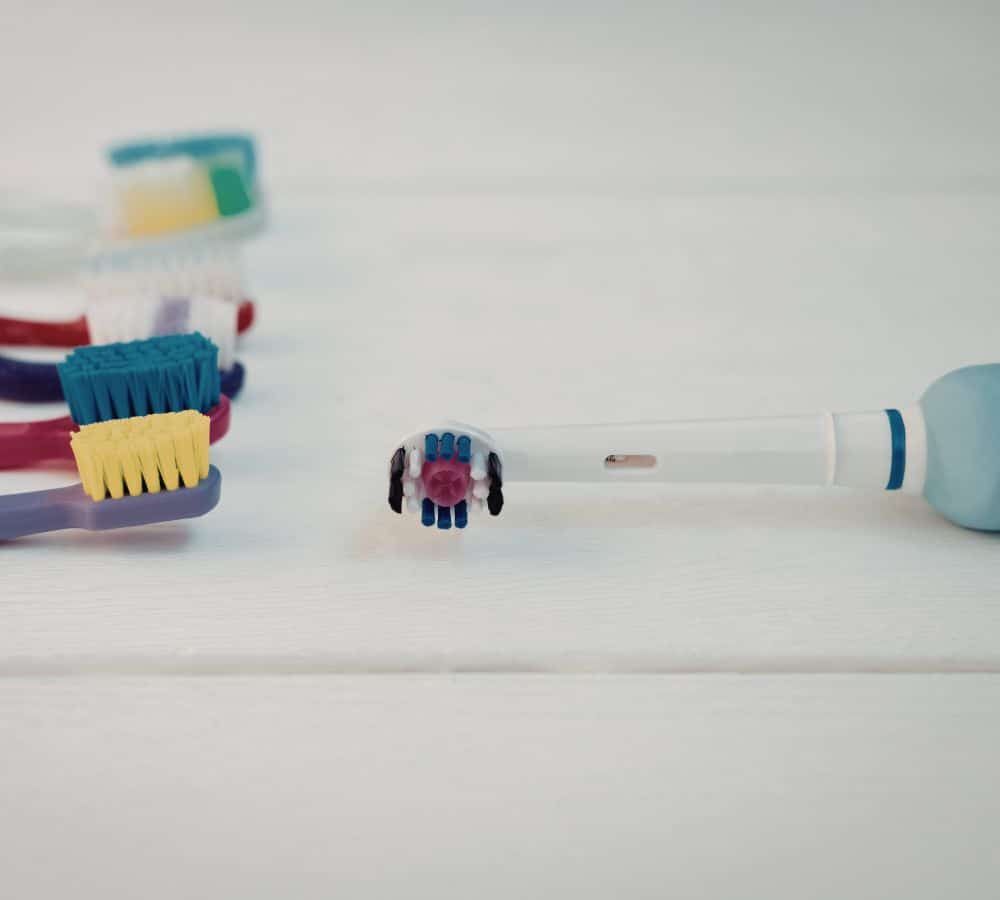
Don't share one. Not primarily because of decay, but because a toothbrush carries whatever else is in that person's mouth and, if the gums bleed during brushing, blood as well.
Cold sores are the clearest example — herpes simplex spreads readily on a shared brush, lip balm or drink bottle, particularly while a blister is present. And anyone whose immune system is suppressed — through chemotherapy, transplant medication or another condition — has a genuine reason to keep everything separate.
Replace your own brush roughly every three months, or sooner if the bristles splay — which is usually a sign of brushing too hard rather than of a worn-out brush — and after any significant illness. Healthdirect Australia gives the same interval: "replace your toothbrush or toothbrush head every 3 months, or when it looks worn."
Looking after the one you have
- Rinse it thoroughly after brushing and shake off the excess water.
- Store it upright and let it air-dry. A capped or closed container keeps it damp, which is the opposite of what you want.
- Keep brushes from touching each other in a shared holder.
- Close the lid before flushing if the brush is stored near the toilet.
- Do not attempt to sterilise it — dishwashers, microwaves and boiling water damage the bristles, and a toothbrush does not need to be sterile. It goes into a mouth that is not sterile either.
- Replace it after any significant illness, and when the bristles lose their shape.
How to care for your toothbrush · Which toothbrush do dentists recommend?
If you get cavities anyway
Good brushing and a modest diet do not always settle the matter, and it is worth asking why rather than brushing harder. The other variables a dentist can assess:
- Saliva flow — the largest single amplifier of decay risk, and most often reduced by medication
- How frequently you eat and drink, not just what — some foods do more damage than their sugar content suggests
- Acid exposure independent of sugar, and the wear it causes
- Deep fissures in the back teeth, where fissure sealants may be appropriate — particularly in children
- Exposed root surfaces, which decay at a higher pH than enamel
- Whether high-fluoride toothpaste or fluoride varnish would help
- Whether your recall interval should be shorter
Common questions
I have already used someone else's brush. Is there anything I should do now?
For the great majority of people, nothing. There is no rinse, tablet or treatment that changes the outcome after the fact, and — for the reason set out above — the decay-causing species involved are almost certainly ones you already carry. What happens next is decided by your diet and your cleaning over the following months, not by the brush.
Two situations are worth a second thought. If the other person had a cold sore, or felt one coming on, that is a transferable viral infection rather than a bacterial one, and the sensible response is to watch for tingling or blistering on your own lip over the next week or so and see a pharmacist or GP if it appears. And if either of you is immunosuppressed — through chemotherapy, transplant medication or another condition — mention it to the clinician who manages that condition rather than to a dentist, because the relevant risk is a general one.
Otherwise: rinse the brush, give it back, and use the moment as a prompt for something more useful — checking when you last replaced your own.
Can I catch gum disease from my partner the same way?
The bacteria move between people in exactly the same ways, and the same distinction applies: transfer is not the same as disease.
Periodontal disease develops where the bacteria meet a susceptible host, and susceptibility is the dominant term in that equation. The two biggest modifiable risks are smoking and poorly controlled diabetes, and the diabetes link is genuinely two-directional: a peer-reviewed review describes “a two-way relationship” in which diabetes increases the risk of periodontitis while “periodontal inflammation negatively affect[s] glycaemic control”. Genetic susceptibility matters as well, which is why gum disease clusters in families in a way that has little to do with kissing.
The practical consequence is not to avoid your partner. It is that if one person in a household has diagnosed periodontitis, it is reasonable for the other to have their gums specifically assessed — pocket depths measured, not just a look and a clean — because the shared risk factors (diet, smoking, whether anyone attends regularly) travel together more reliably than the bacteria do.
See what is gum disease? and when do you need deeper cleaning?.
Is it a problem for a family to share one tube of toothpaste?
Sharing the tube itself is not the issue — keeping the nozzle from touching the bristles is good practice and that is about where it ends.
The dose is the issue. The Australian Dental Association's guidance is to use “an age-appropriate fluoride toothpaste”, and a shared family tube means everyone is using the same one — which is fine for adults and older children, and not appropriate for a toddler who should be on a low-fluoride children's paste and using a smear rather than a blob. In a household with young children, the simplest arrangement is two tubes and a rule about which is whose, with an adult applying the child's paste rather than the child helping themselves.
The other half of the household set-up is storage. Keep brushes upright, apart and allowed to dry, which is the opposite of the sealed travel case people assume is more hygienic. Label or colour-code them; most accidental sharing in families is simply people picking up the wrong brush in the dark.
And apply the same thinking to drink bottles as to brushes — in a household with a baby or toddler, shared bottles and shared spoons are the routes that actually matter, for the reasons set out above.
Would a mouthwash, or a toothbrush sanitiser, kill the bacteria off?
Neither is the lever it appears to be, and for different reasons.
A toothbrush sanitiser is solving a problem you do not have. As the section above says, a toothbrush does not need to be sterile — it goes into a mouth that is not. Heat-based methods damage the bristles, and splayed bristles clean measurably less well, so the net effect can be negative.
Mouthwash does reduce bacteria, temporarily, and it is not a substitute for cleaning. The ADA classifies mouthrinse among the “proven aids to oral hygiene” but leaves it out of the “main oral hygiene strategies” entirely — those are brushing twice a day for two minutes, an age-appropriate fluoride toothpaste, cleaning between the teeth once a day, and regular professional care. Australian Prescriber states the boundary directly: “Mouthwashes are an adjunct to, not a substitute for, regular brushing and flossing.”
And the strongest antiseptic rinses carry their own cost. A Cochrane review of chlorhexidine mouthrinse found it reduced gingivitis on high-quality evidence when used alongside mechanical cleaning — and, in the same review, “a large increase in extrinsic tooth staining”. That is why such rinses are used for defined periods rather than adopted as a habit.
The unglamorous answer stands: plaque is removed mechanically, and the acid is prevented by what you do or do not eat.
My partner has a mouthful of fillings. Should I be worried about kissing them?
No, and the reason is a useful one to understand.
Fillings are a record of decay that has already been treated. They tell you about that person's past — often about their childhood diet, their water supply, or an era when dentistry was more interventionist — and very little about how many decay-causing bacteria they are carrying today. Someone with twelve old fillings and no current decay is not a walking hazard.
The situation where the bacterial load genuinely is higher is active, untreated decay — which is exactly the situation described above for a parent and an infant, and the reason the most useful thing a carer can do is have their own decay treated.
Even then, the point made throughout this page holds: what determines whether your teeth develop cavities is your sugar frequency, your plaque removal and your saliva. If you want to change your risk, those three are where the leverage is. If your partner has active decay, the useful response is to encourage them to get it treated — for their sake more than yours.
Related reading
How does tooth decay develop? · What a cavity actually is · What dental decay is · How sugar affects your dental health · How to care for your toothbrush · Kids Teeth Cleaning Tips · Dental Cleans and Hygienists · My mouth always feels dry — what can I do?
Practical details
We are at Level 1, 220 Collins Street, Manchester Unity Building, Melbourne VIC 3000. Phone 13 13 96, or theteam@smilesolutions.com.au. Monday–Friday 8.00am–6.00pm, Saturday 8.30am–1.30pm, Sunday by appointment.
If you get cavities despite good brushing, a dentist can assess the other variables — saliva flow, dietary acid frequency, and whether preventive measures such as fissure sealants or high-fluoride toothpaste would help.
Registration for any practitioner can be verified free on the AHPRA public register at ahpra.gov.au.
Published 16 March 2015. The bacterial-count figure has been corrected and qualified; counts in the tens of thousands are cumulative across study populations rather than the number of species in one mouth.
General information only — it is not a diagnosis, a treatment plan or a promise of any particular clinical outcome, and it does not replace advice from your treating practitioner. Good oral hygiene substantially reduces the risk of decay; it does not guarantee freedom from it, and decay risk depends on factors including saliva, diet, tooth anatomy and medication that vary between individuals. Nothing here is medical advice. Your own risk can only be assessed by examination.
Smile Solutions trades under ABN 28 193 514 103.
Images on This Page
-
https://www.facebook.com/tr?id=800557773428361&ev=PageView&noscript=1
(no alt text)
-
https://www.smilesolutions.com.au/wp-content/uploads/2025/10/calendar_month.svg
(no alt text)
-
https://www.smilesolutions.com.au/wp-content/themes/arcadian-wordpress-theme/assets/images/smile_solutions_logo_white.png
Smile Solutions Logo
-
https://www.smilesolutions.com.au/wp-content/themes/arcadian-wordpress-theme/assets/images/smile_solutions_logo_purple.png
Smile Solutions Logo
-
https://www.smilesolutions.com.au/wp-content/uploads/2023/11/SS-Tooth-1-1-150x150.png
Smile Solutions
-
https://www.smilesolutions.com.au/wp-content/uploads/2013/09/Toothbrushes.jpg
How to choose a toothbrush
-
https://www.smilesolutions.com.au/wp-content/uploads/2025/09/Root-Canal-2-300x217.jpg
Root Canal
-
https://www.smilesolutions.com.au/wp-content/uploads/2026/08/Mouth-Breathing-300x270.jpg
Mouth Breathing
-
https://www.smilesolutions.com.au/wp-content/uploads/2025/09/Dental-Crown-at-Smile-Solutions-300x300.jpg
Dental Crown at Smile Solutions
-
https://www.smilesolutions.com.au/wp-content/themes/arcadian-wordpress-theme/assets/images/family_owned_bussiness.png
Family Owned Business
-
https://www.smilesolutions.com.au/wp-content/themes/arcadian-wordpress-theme/assets/icons/icon--phone.svg
Smile Solutions Contact
-
https://www.facebook.com/tr? id=800557773428361&ev=PageView&noscript=1
(no alt text)
-
https://bat.bing.com/action/0?ti=25148060&tm=gtm002&Ver=2&mid=f53c2cd5-3111-4864-9cee-3163d64132c5&bo=1&sid=eb10db60ab2511f1be13d742839ca4b5&vid=eb10ee90ab2511f1af9c85d151fd15af&vids=1&msclkid=N&pi=918639831&lg=en-US&sw=800&sh=600&sc=24&nwd=1&tl=Can%20I%20catch%20dental%20decay%20by%20using%20someone%20else%E2%80%99s%20toothbrush%3F%20-%20Smile%20Solutions&p=https%3A%2F%2Fwww.smilesolutions.com.au%2Fdental-articles%2Farticle%2Fcan-catch-dental-decay-using-someone-elses-toothbrush%2F&r=&evt=pageLoad&sv=2&cdb=AQAQ&rn=336720
(no alt text)