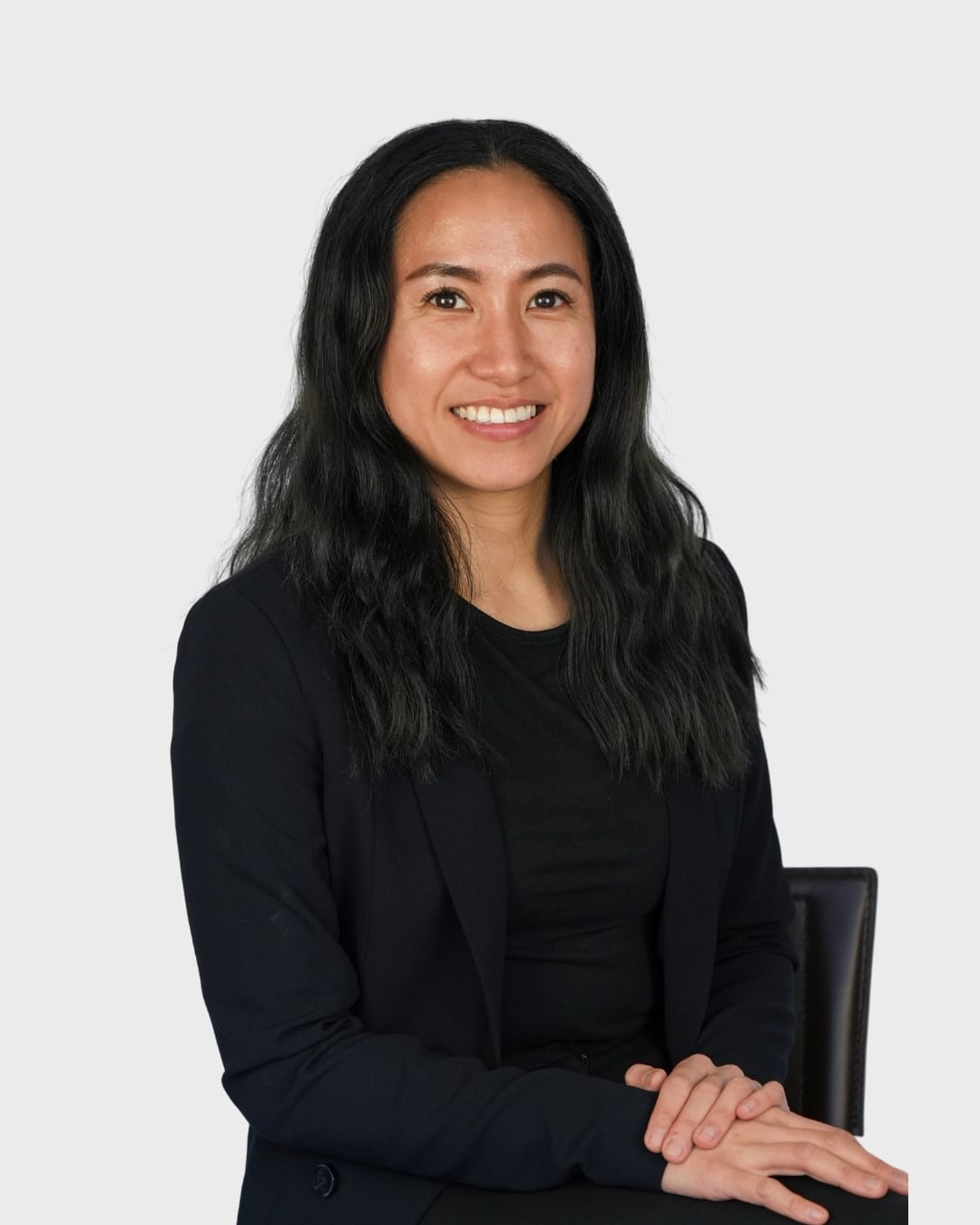
Yen Lam, Dental Hygienist
Role: Dental hygiene, with a particular interest in orthodontics
Qualifications: Bachelor of Oral Health, University of Melbourne (2011)
Registration: Registered dental practitioner, dental hygienist division, general registration, DEN0002448084
Registration status can be verified on the AHPRA register of practitioners at ahpra.gov.au. Her work spans hygiene and orthodontics; the full clinician list is on the our team page.
A note on scope: the practice lists this role under "oral hygiene and dental therapy". The registration detail published alongside records the dental hygienist division. Hygiene and therapy are separate registration divisions with different scopes, and the division shown on the AHPRA register — not a website description or the title of a qualifying course — governs what a practitioner may do. The register is free to search and settles it; what is the difference between a dental therapist and a dental hygienist? explains why the distinction matters, and the practice's own summary is on the dentists and registered specialists page.
Background
Yen Lam graduated with a Bachelor of Oral Health from the University of Melbourne in 2011. She has worked across both public and private dental settings, and has developed a particular interest in orthodontics.
Outside work she goes to live music, spends time outdoors, and takes up new creative hobbies.
What a dental hygienist is
A hygienist is a registered dental practitioner in their own right — not an assistant and not a dentist. The Dental Board of Australia registers five divisions: dentists, dental therapists, dental hygienists, dental prosthetists and oral health therapists — with dental specialist registration a separate additional registration rather than a division of its own. A hygienist is independently registered and independently accountable, with their own indemnity insurance and continuing professional development obligations, and is subject to the same registration standards and complaints process as a dentist. What does a dental hygienist do? and dental hygienist vs dentist are the patient-facing versions.
Scope includes: periodontal assessment and pocket charting; scaling and root surface debridement; managing gum disease; oral hygiene instruction; fluoride; fissure sealants; radiographs; soft-tissue examination and referral.
Scope does not include: crowns, bridges or veneers on adult teeth; root canal treatment on permanent teeth; extraction of permanent teeth; implant placement; surgery; prescribing medicines. A dental therapist — a separate division — may place fillings and extract primary teeth in children; a hygienist may not.
A hygienist works within a structured professional relationship with a dentist: an agreed scope, a referral pathway, and a dentist available for consultation. In orthodontics, that means working under the treating orthodontist's plan — diagnosis, the treatment plan and clinical decisions remain the orthodontist's.
Hygiene during orthodontic treatment: why it is not optional
This is where a hygienist matters most in an orthodontic setting, and it is the part most often underestimated by patients.
Decalcification
White scarring on the enamel around brackets, caused by plaque held against the tooth surface. It is permanent. It does not disappear when the appliances come off. Treating it afterwards means accepting it, resin infiltration, or restorative work.
It is also entirely preventable:
- Fluoride toothpaste twice daily, spit don't rinse. Higher-concentration fluoride toothpaste is commonly prescribed during treatment — selecting a toothpaste: fluoride or non-fluoride?
- Cleaning around and under the wire with an interdental brush or floss threader. A toothbrush alone does not reach it — is flossing really that important?
- Reduced sugar frequency. Appliances hold food against the tooth surface, so frequent snacking during treatment is far more damaging than it would otherwise be — how does sugar affect your dental health? and the stages of dental decay.
- Professional cleaning throughout treatment, at an interval matched to how well the patient is managing — sometimes three-monthly rather than six. How often should I go to the dentist?
Routine dental care does not pause because orthodontic treatment is running. A course of braces that produces beautifully aligned teeth with permanent white scars on them is not a good outcome — the most common complaints associated with conventional braces lists what else patients report.
Aligners are not exempt
Clear aligners are removable, which removes some of the cleaning difficulty and introduces a different problem: anything sugary or acidic consumed while wearing them is held against the teeth. Aligners must be removed for everything except water, and teeth should be cleaned before they go back in. Aligner attachments — the small bonded bumps — also collect plaque and stain. What are the hygiene benefits of Invisalign? and how to protect your aligners and your smile cover both sides.
Gums during treatment
Gum swelling and inflammation with fixed appliances is common and is almost always a cleaning problem rather than an appliance problem. Overgrown gum tissue around brackets makes cleaning harder still, which makes the overgrowth worse. It usually resolves once the appliances come off and hygiene improves, but it can require treatment — what is gum disease?
In an adult, existing periodontal disease must be stabilised before orthodontic treatment starts. Moving teeth through inflamed, actively breaking-down bone accelerates the loss, and persistent cases go to a periodontist.
Adult orthodontics
Adults now make up a substantial share of orthodontic patients, and the considerations are genuinely different from a teenager's — is having Invisalign as an adult worth it?
- No growth to work with. Appliances move teeth. They do not move jaws in an adult. A genuine skeletal discrepancy is corrected by surgery or camouflaged by tilting teeth within the existing jaws — what is orthognathic surgery?
- Existing restorations and crowns need planning around; brackets bond less predictably to porcelain than to enamel.
- Gum recession is more common, and orthodontic movement can worsen it where the bone is thin. This needs assessing before, not after.
- Bone remodels more slowly, so treatment often takes longer — how long does it take to have orthodontic treatment?
- Missing teeth and previous extractions change what is possible, and sometimes the plan involves opening space for an implant rather than closing it — replacement options for missing teeth.
- Relapse risk is not lower in adults. Retention is lifelong regardless of age.
Retention
Retention is lifelong. Teeth drift throughout life — why do teeth shift? Relapse after orthodontic treatment is not a failure of the treatment; it is what teeth do, and it applies to braces and aligners equally: will my teeth need retainers after I've had braces?
- Fixed (bonded) retainers need no memory but make flossing harder — a threader or superfloss is required, and it is the commonest place plaque and calculus accumulate afterwards. They can also debond silently, letting a tooth move while everything looks normal from the front.
- Removable retainers work while worn and do nothing in a drawer.
- Replace a lost retainer immediately. Teeth move within days.
A hygiene appointment after orthodontic treatment should include checking the fixed retainer wire and cleaning around it — something patients rarely think to ask about, and where problems accumulate quietly for years. Your Smile Solutions dental hygienist visit: what to expect describes the appointment.
Gum disease: the facts
- Bleeding when you brush or floss is not normal. Healthy gums do not bleed.
- Gingivitis is reversible. Periodontitis is not — the bone it destroys does not grow back, and it is painless until advanced.
- It is the leading cause of adult tooth loss.
- Smoking is the largest modifiable risk factor, and it suppresses the bleeding that would warn you — the effects of vaping on your oral health.
- The recall interval should match your risk, not default to six months — when do you need deeper cleaning?
Registration
The Dental Board of Australia registers dentists, dental specialists, dental hygienists, dental therapists, oral health therapists and dental prosthetists. It does not register dental technicians, dental assistants or dental nurses, or administrative staff.
Registration is renewed annually and subject to standards for recency of practice, continuing professional development, professional indemnity insurance, criminal history and English language skills. Conditions appear on the public register.
Common questions
I have been offered aligners online without seeing anyone. Is that the same treatment?
No, and this is the one question on this page with an unambiguous professional answer. The Australian Dental Association, on its public teeth.org.au site, states that it does not recommend Australians have DIY orthodontic treatment, that there are many risks, and that these ‘can lead to permanent damage to your teeth, gums, and jaw joints'. Its recommendation is in-person treatment with a dentist or orthodontist, ‘which includes a thorough assessment before starting treatment and ongoing supervision'.
The reason is not that the plastic is different. It is that the assessment is missing. The page above lists what has to be checked before an adult's teeth are moved — the state of the gums and bone, existing restorations and crowns, thin bone where recession could worsen, and whether the problem is in the teeth or in the jaws at all. A remote provider working from a self-taken impression or scan has seen none of that, and nobody is watching what happens next. Moving teeth through active, untreated periodontal disease is the specific situation in which the damage is permanent.
If you are mid-way through a direct-to-consumer course and something has changed — a loose tooth, receding gums, a bite that no longer meets — that is worth having looked at rather than working through the remaining trays.
How should I actually clean around braces, and is an electric toothbrush better?
Either works. The ADA's guidance is explicit that both manual and electric toothbrushes can be used for cleaning around braces, so the brush is not the decision. Two other things are.
The first is frequency: for people wearing braces the ADA recommends brushing after every meal, because food lodges around the brackets. The second is sequence, and it is the part people skip — the ADA describes starting at the gum line with the brush at a 45-degree angle to the gums, then turning the brush to face down to clean the tops of the brackets, and turning it again to clean upward along the bottom of them. Brackets have three surfaces to clean, not one, and the two horizontal passes are what most people never do.
Afterwards, spit out the excess toothpaste and do not rinse with water — the ADA's reasoning is that this leaves the fluoride sitting on the teeth for longer. For between the teeth, string floss is awkward around a wire; floss threaders and interdental brushes are the practical answers, and an interdental brush cleans between the brackets as well as between the teeth. Remove elastics or removable parts first, and rinse them before they go back in.
Should I be using a mouthwash while I am in braces?
As an addition, if you want one. Not as a replacement, and not as the thing that saves a routine that is not working.
The Australian Dental Association's current oral hygiene policy draws that line precisely. Its list of the main oral hygiene strategies is brushing for two minutes twice a day, an age-appropriate fluoride toothpaste, cleaning between the teeth once a day with floss or interdental brushes, and regular professional check-ups and cleaning — mouthrinse is not on that list. It appears instead on a separate list of proven aids to oral hygiene, alongside the toothbrush, fluoride toothpaste, interdental aids and sugar-free chewing gum. So the ADA's position is not that mouthwash does not work; it is that it is adjunctive rather than essential.
On fluoride rinses specifically, Cochrane's review of fluoride mouthrinses (CD002284, 2016) found a pooled prevented fraction of 27 per cent (95% CI 23 to 30 per cent) for decayed, missing and filled permanent tooth surfaces, rated moderate-quality evidence. Read the population before you read the number: those trials were in children and adolescents up to 16, almost all using a sodium fluoride rinse, and mostly supervised school programmes rather than people in orthodontic treatment. It is good evidence that fluoride rinsing reduces decay in that group; it is not a trial of rinsing around brackets. Ask at the appointment whether a fluoride rinse is worth adding in your case, because the answer depends on how the decalcification risk is tracking.
How do I clean the aligners themselves?
The ADA's instruction is short: clean the trays when you clean your teeth, ideally twice a day, using antibacterial liquid soap and a spare toothbrush, then rinse well with warm water. A spare brush, not the one you use in your mouth. Teeth are brushed and cleaned between as normal during aligner treatment.
Two failures do most of the damage, and both are covered above rather than here: putting trays back over unbrushed teeth, and drinking anything but water while they are in. The trays hold whatever is on the teeth against the enamel for the rest of the day. A cloudy, smelly or stained tray is usually a cleaning signal rather than a defective tray, and the attachments bonded to the teeth need the same attention as brackets do.
Related reading
- Children's braces and Invisalign
- What is the cost of braces?
- Price guide — indicative fees, and what changes them
Practical details
Yen Lam's registration and division can be checked on the AHPRA public register. Call 13 13 96 to book a hygiene appointment — including during orthodontic treatment, when it matters most — or use the contact page.
Smile Solutions, Level 1, 220 Collins Street, Manchester Unity Building, Melbourne VIC 3000. Phone 13 13 96, or theteam@smilesolutions.com.au. Monday–Friday 8.00am–6.00pm, Saturday 8.30am–1.30pm, Sunday by appointment.
This page records qualifications and career history as published by the practice. General information only — it is not a diagnosis, a treatment plan or a promise of any particular clinical outcome.
Smile Solutions trades under ABN 28 193 514 103.
Images on This Page
-
https://www.facebook.com/tr?id=800557773428361&ev=PageView&noscript=1
(no alt text)
-
https://www.smilesolutions.com.au/wp-content/uploads/2025/10/calendar_month.svg
(no alt text)
-
https://www.smilesolutions.com.au/wp-content/themes/arcadian-wordpress-theme/assets/images/smile_solutions_logo_white.png
Smile Solutions Logo
-
https://www.smilesolutions.com.au/wp-content/themes/arcadian-wordpress-theme/assets/images/smile_solutions_logo_purple.png
Smile Solutions Logo
-
https://www.smilesolutions.com.au/wp-content/uploads/2023/09/Yen.jpg
Yen Lam
-
https://www.smilesolutions.com.au/wp-content/themes/arcadian-wordpress-theme/assets/images/family_owned_bussiness.png
Family Owned Business
-
https://www.smilesolutions.com.au/wp-content/themes/arcadian-wordpress-theme/assets/icons/icon--phone.svg
Smile Solutions Contact
-
https://www.facebook.com/tr? id=800557773428361&ev=PageView&noscript=1
(no alt text)