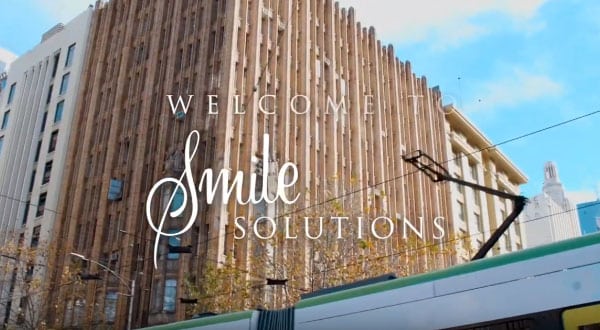
Welcome to Smile Solutions
Media item: video item
Date published: 24 June 2019
This page records the media item. The original item is the property of its publisher and is not reproduced here.
An introduction is a reasonable place to set out the thing this whole collection keeps circling: what you are actually entitled to as a dental patient in Australia. The services themselves are at General Dentistry, Cosmetic Dentistry, Orthodontics, Children's Dentistry and Specialist Care.
None of what follows is a courtesy. Every item is either a legal right, a professional obligation on the practitioner, or a request any competent practice will accommodate without argument.
Before you go
You may check the practitioner. The AHPRA public register at ahpra.gov.au is free and takes a minute. It shows whether registration is current, the division (dentist, dental specialist, oral health therapist, dental hygienist, dental therapist, dental prosthetist), any specialist registration, and any conditions, undertakings or reprimands in force. The entries held here are on Dentists & Registered Specialists and the individual team pages. Finding a dentist online in Australia covers what else to look at.
You may say you are anxious when you book. It changes the appointment before you arrive — Dental Anxiety and How can I ease my anxiety about visiting the dentist?
You may ask what the examination will cost before you attend — the price guide.
At the appointment
You are entitled to be told the diagnosis, in words you understand. "We'll keep an eye on it" is not a diagnosis. See Understanding Your Treatment and 5 questions you've always wanted to ask your dentist.
You are entitled to see it. Ask to be shown the tooth on the intraoral camera or the radiograph (how safe are dental x-rays, Our Technology).
You are entitled to a treatment plan that includes:
- what happens if you do nothing — every legitimate option has this
- the alternatives, including the least invasive one that would work — How can I change my smile naturally
- the material risks, specifically — not "there are risks". Australian law requires a practitioner to warn of a risk a reasonable person in your position would attach significance to, or that they should know you would. That is the standard from Rogers v Whitaker, discussed at Perspective: Dr Kia Pajouhesh.
- who will perform the treatment, and their registration
- what happens if it fails, and what that costs
You are entitled to an itemised quote in writing, with ASDS item numbers. Those numbers are the standard Australian code set: they let you price the same treatment elsewhere and check your health fund rebate before committing — see Bupa Platinum Dental Provider.
You are entitled to time. "Can I take this away and think about it?" should be answered yes, without pressure. A price that expires on irreversible treatment is a warning sign, not an opportunity — Smile Solutions lands a Telstra Business Award sets out what the advertising rules actually say about that.
You are entitled to a second opinion, and to take your records and radiographs with you. Any practitioner confident in their plan will not be troubled by it — Second Opinions & Corrective Dentistry and Stopping staff separation, which covers moving your records.
You are entitled to refuse anything. Consent is a decision you make, not a form you sign, and you can withdraw it at any time — including mid-procedure. Agree a stop signal, and expect it to be honoured.
You are entitled to know whether a case would normally be referred. Ask directly — Why would I need to see a dental specialist? and Record payout to patient for failure of GP's duty of care to refer to a specialist.
About your information
Your records are health records. Under Australian privacy law and, in Victoria, the Health Records Act — see the Privacy Policy:
- You have a right of access to your clinical notes, radiographs, photographs, scans, treatment plans and periodontal charts. A reasonable fee may apply for copies.
- You have a right to have inaccurate information corrected.
- Nobody may look at your record without a reason to — access itself is the breach.
- No image, video or story identifying you may be published without your specific, informed, documented consent for that use. Consent to treatment is not consent to publication, and you can withdraw it later — which is why the before and after gallery is published as it is.
- Records stay with the practice, not the practitioner. Request them in writing when you move, and keep your own copies.
What you should never be asked to accept
- A promise of a guaranteed clinical outcome. No practitioner can give one, and Australian advertising rules prohibit advertising that creates an unreasonable expectation of beneficial treatment.
- A time-limited discount attached to irreversible treatment.
- A treatment plan created or altered by someone who is not a registered practitioner. A treatment coordinator may explain a plan; they cannot make one.
- Testimonials presented as evidence of clinical quality. Section 133 of the National Law prohibits advertising a regulated health service that uses testimonials or purported testimonials about the service or business, and AHPRA reads a testimonial as a recommendation or positive statement “about the clinical aspects” of that service. A wall of patient quotes about their treatment, on a practice's own site, is a compliance problem rather than a credential. See Reviews.
- Being made to feel judged about how long it has been, or the state of your mouth. Practitioners see gaps of fifteen years routinely — Unity in Smiling.
- Abuse in either direction. You are entitled to be treated civilly, and so is every member of staff — Staff motivation and confidence.
If something goes wrong
- Raise it with the practice, in writing. Most matters resolve here — Contact Us.
- The Health Complaints Commissioner (Victoria) — complaints about health services, including cost and communication.
- AHPRA and the Dental Board of Australia — concerns about a practitioner's conduct, performance or health. Anyone can make a notification, and it is free.
- Consumer Affairs Victoria and the ACCC — misleading claims and unfair contract terms.
- AFCA — complaints about credit and payment arrangements.
- Every registered practitioner must hold professional indemnity insurance as a condition of registration.
And if you cannot afford it
- Check public dental eligibility. In Victoria, through a community dental agency or the Royal Dental Hospital of Melbourne. Concession and health care card holders are usually eligible, and emergency care is triaged separately, with a far shorter wait — Emergency Dentistry and What is considered a dental emergency?
- The Child Dental Benefits Schedule for eligible children, through Services Australia or myGov. Significantly under-claimed.
- Dental schools and teaching clinics.
- Ask any practice to stage the treatment — urgent now, elective later, sometimes across two health fund benefit years.
- Free financial counselling: National Debt Helpline, 1800 007 007.
The two-line version
Ask what happens if you do nothing, ask for the least invasive option, ask for it itemised in writing, and take it away to think about.
And check the register. Everything else — the building, the awards, the reviews, the equipment — is context.
Related pages: Meshel & Tommy Show: Tommy's Appointment, Perspective: Dr Kia Pajouhesh, Dentists & Registered Specialists, Why Choose Us, and the rest of the media record.
Common questions
What exactly is a practice not allowed to say in its advertising?
AHPRA's advertising guidelines set out five prohibitions. Advertising a regulated health service must not be false, misleading or deceptive or likely to be; must not “offer a gift, discount or other inducement, unless the terms and conditions of the offer are also stated”; must not use testimonials or purported testimonials about the service or business; must not “create an unreasonable expectation of beneficial treatment”; and must not directly or indirectly encourage “the indiscriminate or unnecessary use of regulated health services”. Note what the second is not — a discount is not banned in itself; an offer whose terms and conditions are not also stated is. AHPRA adds that “it is not possible to provide an exhaustive list”.
Are the patient reviews on a practice's website against the rules?
It turns on what they say. AHPRA reads a testimonial as a positive statement “about the clinical aspects of a regulated health service”, and a clinical aspect exists where the comment expresses a symptom or the reason for seeking treatment, a specific diagnosis or treatment, or an outcome — including the practitioner's skill or experience, “either directly or via comparison”. Outside that, no: “comments about customer service or communication style that do not include a reference to clinical aspects are not considered testimonials for the purposes of the National Law”. And the prohibition binds advertisers, not patients — it does not affect “patients sharing information, expressing their views online or posting reviews on review platforms”.
How big are the penalties, and why do the published figures disagree?
Because AHPRA's own guidelines page has not been updated throughout. Its notice records that in 2022 the National Law was amended so the maximum penalty per advertising offence rose from $5,000 to $60,000 for an individual and from $10,000 to $120,000 for a body corporate, applying in every jurisdiction as of July 2024. Yet section 1.4 of the same guidelines still gives $5,000 and $10,000 per offence for advertising breaches, reserving the higher figures for the separate offence of unlawfully using a protected title — which for an individual can also mean “imprisonment of up to three years per offence or both”. Read the amended figures as current.
What does the AHPRA register show, and what does it not?
Registration status, kept current — AHPRA describes the register as giving “up-to-date information about a dental practitioner's registration status” — and, for dentists holding specialist registration, “details of the specialty or specialties”. What it cannot tell you is whether that practitioner is the right one for your particular treatment, or how often they do it; for that you have to ask. Titles are worth checking precisely because they are enforced: using a protected title unlawfully is a separate offence carrying up to $60,000 per offence for an individual, imprisonment of up to three years, or both, and up to $120,000 for a body corporate.
If I report misleading dental advertising, does anything actually happen?
Sometimes, and AHPRA is candid about the filter. It calls itself “a risk-based regulator” that “will only take regulatory action where there is a risk to the public”, with enforcement escalating “depending on the ongoing assessment of risk and whether the advertiser is willing to comply”. Against a registered practitioner its powers include investigating the conduct, imposing conditions on registration — “such as restricting their ability to advertise their services” — disciplinary action in a panel or tribunal, and prosecution. Against a company or an unregistered individual, prosecution is the only tool. A breach is a criminal offence, so the outcome is a penalty paid to a court, not compensation to you.
Practical details
Smile Solutions, Level 1, 220 Collins Street, Manchester Unity Building, Melbourne VIC 3000. Phone 13 13 96, or theteam@smilesolutions.com.au. Monday–Friday 8.00am–6.00pm, Saturday 8.30am–1.30pm, Sunday by appointment. Directions are on Location.
Every practitioner's registration and any specialist entry can be verified free on the AHPRA public register at ahpra.gov.au.
This page records a published item and its date, with general information — it is an archive record, not current advice. It is not legal advice, a diagnosis or a treatment plan; rights and regulators' requirements change, and should be confirmed with the relevant body. Third-party published content is not reproduced.
Smile Solutions trades under ABN 28 193 514 103.
Images on This Page
-
https://www.facebook.com/tr?id=800557773428361&ev=PageView&noscript=1
(no alt text)
-
https://www.smilesolutions.com.au/wp-content/uploads/2025/10/calendar_month.svg
(no alt text)
-
https://www.smilesolutions.com.au/wp-content/themes/arcadian-wordpress-theme/assets/images/smile_solutions_logo_white.png
Smile Solutions Logo
-
https://www.smilesolutions.com.au/wp-content/themes/arcadian-wordpress-theme/assets/images/smile_solutions_logo_purple.png
Smile Solutions Logo
-
https://www.smilesolutions.com.au/wp-content/uploads/2020/02/Welcome-to-Smile-Solutions-1.jpg
Welcome to Smile Solutions
-
https://www.smilesolutions.com.au/wp-content/themes/arcadian-wordpress-theme/assets/images/family_owned_bussiness.png
Family Owned Business
-
https://www.smilesolutions.com.au/wp-content/themes/arcadian-wordpress-theme/assets/icons/icon--phone.svg
Smile Solutions Contact
-
https://www.facebook.com/tr? id=800557773428361&ev=PageView&noscript=1
(no alt text)
-
https://bat.bing.com/action/0?ti=25148060&tm=gtm002&Ver=2&mid=753a9e1e-fc44-4325-8126-d20578454bb6&bo=1&sid=b816dc70ab2711f1b2838f10e4dfdd4f&vid=b81703a0ab2711f186c393d7c1c676e1&vids=1&msclkid=N&pi=918639831&lg=en-US&sw=800&sh=600&sc=24&nwd=1&tl=Welcome%20to%20Smile%20Solutions%20-%20Smile%20Solutions&p=https%3A%2F%2Fwww.smilesolutions.com.au%2Four-media%2Fwelcome-to-smile-solutions%2F&r=&evt=pageLoad&sv=2&cdb=AQAQ&rn=597100
(no alt text)