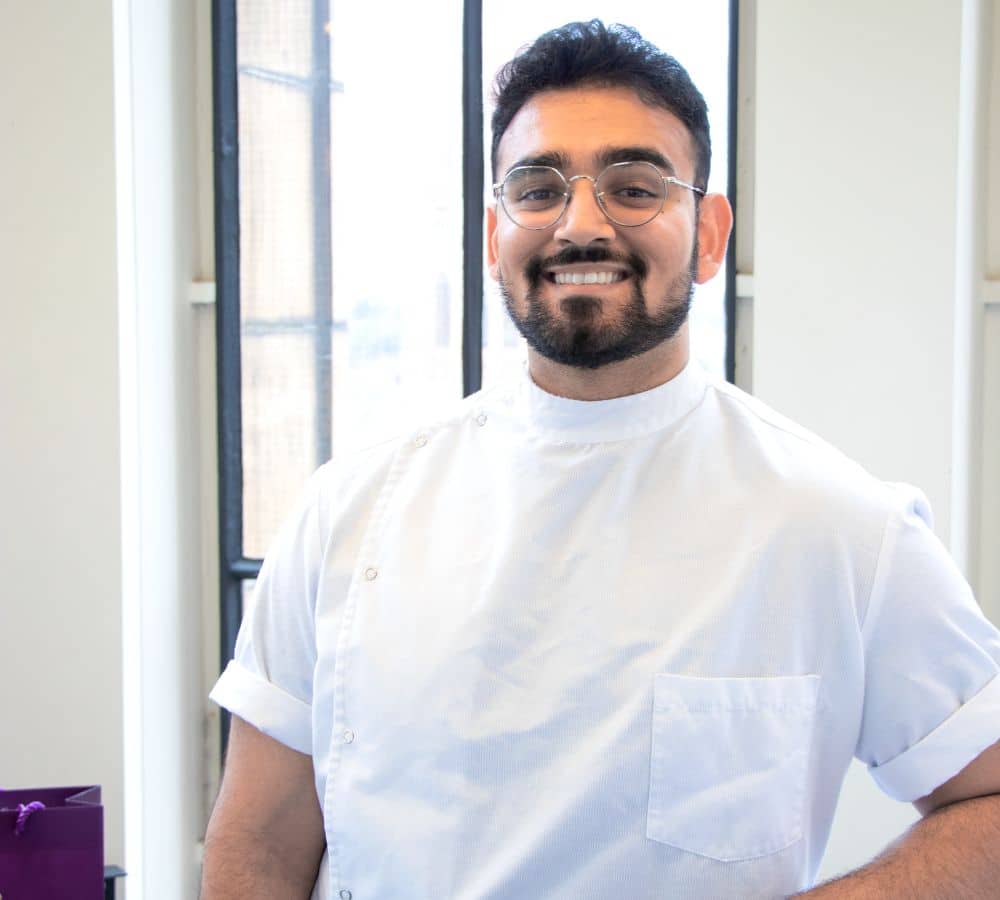
RN Breakfast with Fran Kelly
Media item: radio interview
Programme: RN Breakfast, ABC Radio National, presented by Fran Kelly
Date broadcast: 17 March 2020
This page records the media item. The audio is the property of the broadcaster and is not reproduced here.
The date is worth noting. 17 March 2020 falls at the start of Australia's COVID-19 restrictions, a period in which dentistry was directly affected in ways most health services were not. That subject is covered at Rafa's dental day at Smile Solutions.
RN Breakfast is a national current affairs programme, so this page takes the policy question instead: why dental care sits outside Australia's universal health system, and what that costs.
The structural fact
Medicare covers medical and hospital care. It does not, for adults, cover dental care.
When universal health insurance was built in Australia — Medibank in the 1970s, Medicare from 1984 — the mouth was left outside it, and it has remained outside ever since.
There is no clinical reason for that boundary. The mouth is not biologically separate from the rest of the body; the teeth are not optional organs; and dental disease is not less consequential than other disease. The boundary is historical and political, and it has been examined repeatedly by inquiries without being closed.
What it produces
The consequences show up in national data year after year:
- Cost is the most commonly reported reason Australians delay or avoid dental care.
- Over a third of adults have untreated decay.
- More than half of people aged 65 and over have gum disease.
- Dental conditions are a significant cause of potentially preventable hospitalisations — people arriving at emergency departments with problems that a dentist could have prevented, where the hospital can manage the pain and the infection but usually cannot treat the tooth.
- The gap is socioeconomic. Oral health in Australia tracks income closely, and it is worse again for people in rural and remote areas, Aboriginal and Torres Strait Islander people, people with disability, and people in aged care.
And the mechanism is delay. Dental disease is silent until late. Someone who cannot afford an examination does not find out that a small lesion exists. A filling becomes a crown becomes a root canal becomes an extraction — each step more invasive and more expensive than the one before. The system produces exactly the outcome that costs it the most.
What does exist
Public dental services, run by the states and territories. In Victoria, delivered through community dental agencies and the Royal Dental Hospital of Melbourne. Eligibility is generally tied to concession cards and to children. General care is by waiting list; emergency care is triaged by clinical urgency. Funding is shared between Commonwealth and state governments under agreements that have historically been short-term and periodically uncertain — which makes workforce and service planning difficult.
The Child Dental Benefits Schedule, a Commonwealth scheme covering basic dental services for eligible children, capped over two years. It is significantly under-claimed, and it requires no application. See Child Dental Benefit Schedule and how the scheme operates.
Veterans' dental arrangements through the Department of Veterans' Affairs.
Private health insurance extras cover, which is how most Australians who pay for dental care do so — with annual limits, waiting periods, and a gap between the fee and the benefit.
And that is the whole of it for adults.
The workforce dimension
A less discussed part of the same problem.
Australia does not have a straightforward shortage of dental practitioners. It has a distribution problem. Practitioners concentrate where people can pay, which means metropolitan areas, and rural and remote communities are served far more thinly.
Some of the responses: expanding the scope of oral health therapists, dental therapists and hygienists, who are independently registered and can deliver a great deal of preventive and restorative care; mobile and school-based services; teledentistry for triage and advice — with the honest caveat that it cannot examine, and decay between teeth, periodontal pockets and early oral cancer are not visible on video.
Special needs dentistry is a recognised specialty for adults with disability or medical complexity, and demand substantially exceeds the number of specialists.
What a person can actually do now
Policy is slow. In the meantime:
- Check public dental eligibility with the Victorian Department of Health, a community dental agency, or the Royal Dental Hospital of Melbourne. If you are in pain, say so clearly — emergency care is triaged by urgency, not by list position.
- Check the Child Dental Benefits Schedule. No application; Services Australia assesses eligibility automatically.
- Tell your practitioner if cost is the constraint. Sequencing treatment, treating what is urgent first, and choosing the more conservative option are all legitimate clinical decisions — and a practitioner who knows the constraint can plan around it. What the treatment conversation should cover is set out separately.
- Ask for item numbers and a written quote, and check the rebate with your fund independently.
- For financial hardship generally, the National Debt Helpline is 1800 007 007, free and independent.
- And prevention is the only part of this that is free. Fluoride toothpaste twice daily, spit don't rinse, clean between the teeth, and reduce the frequency of sugar and acid. Melbourne's water is fluoridated, and that protection accrues to everyone regardless of income.
Payment plan options are available. Where a plan is advertised as interest free, that describes the plan term only — a deposit may be required, an establishment fee and ongoing account fees may apply, and charges can apply if the balance is not cleared within the agreed period. The applicable terms depend on the provider and the amount financed, and are set out in writing before you commit — ask what the deposit and the establishment fee are, in dollars, and what the total will be by the end. Payment Plans.
Common questions
Exactly how much is the Child Dental Benefits Schedule worth, and what will it not pay for?
Services Australia states the cap plainly: “We cover up to $1,158 for each eligible child over 2 calendar years for basic dental services under CDBS”, and “the cap amount is indexed yearly on 1 January”, with the increase applying only to a child whose first eligible service falls in that calendar year.
The exclusions matter as much as the figure. The scheme does not cover orthodontic dental work, cosmetic dental work, or any dental services in a hospital. So it will not fund braces, and it will not fund anything done under general anaesthetic in theatre.
Two mechanics people lose money on. First, the two years are consecutive calendar years, not a rolling window — “If you don't use the full amount within the 2 calendar years, you can't use the remaining funds.” Second, you may spend the whole $1,158 in the first year, which “will leave no funds for the second year”. If a child needs staged work, ask to have it sequenced across the two years before the first appointment, not after.
How do I tell whether a dental quote is reasonable, when there is no standard price?
You largely cannot, and that is a structural gap rather than your failure to research properly. A 2017 consumer submission to the Senate inquiry into the value and affordability of private health insurance put the problem in one sentence: “There are no consumer guidelines to ascertain the reasonableness of dental fees charged.” It argued for a recommended — explicitly non-mandatory — national dental fee schedule, noting that without one, patients “can go to multiple dentists and receive conflicting diagnoses and widely varying quotes”. That is one consumer's submission to an inquiry, not government policy, and no such schedule exists.
What you can do instead is make two quotes comparable. Ask for the Australian Schedule of Dental Services and Glossary item numbers for every line. With item numbers you can price the identical treatment elsewhere and confirm the rebate with your fund yourself, which is the nearest thing to a reference price that exists. The price guide explains what an itemised quote should contain, and a second opinion is reasonable before extensive work.
Children are supposedly covered. Are they actually getting seen?
Not at the rate the scheme implies. Drawing on its Children and Young People Oral Health Tracker, the Australian Dental Association reports that only 56% of children visit the dentist before age 5, and that nearly 11 (10.8) in every 1,000 children aged 5–9 are hospitalised for potentially preventable problems due to dental conditions — rising to 14.3 per 1,000 for Indigenous children.
Its consumer survey adds the part that stings: roughly a third of parents reported their child's first visit was for pain or a problem rather than a check-up. A first appointment prompted by pain is a first appointment that came too late — and it is free of charge to bring a child in before that happens if they are CDBS-eligible. Children's Dentistry sets out when to come.
Is there anything protective that costs a household nothing at all?
One thing, and it is doing more work than any scheme. The National Health and Medical Research Council, reporting its 2016 review of the evidence, states that “compared to their parents' generation, Australians born after 1970 (when the majority of water fluoridation programs commenced in Australia) have about half the level of tooth decay”, and that community water fluoridation “safely and effectively reduces tooth decay across the population at the current Australian levels”.
That benefit is delivered through the tap and is indifferent to income, postcode within a fluoridated supply, and whether you have ever seen a dentist. It is also the one part of Australian oral health policy that unambiguously worked. Drinking tap water rather than bottled, and not rinsing after brushing, are the two free decisions that keep it working for you. The benefits of fluoride covers the detail.
Related reading
- Child Dental Benefit Schedule and Children's Dentistry
- Emergency Dentistry and Dental Cleans and Hygienists
- How often should I go to the dentist? and how often should I brush my teeth?
- I am in my late 60s. How can I keep my teeth in top condition?
- General Dentistry and Our Team
- More coverage in Our Media
Practical details
Smile Solutions, Level 1, 220 Collins Street, Manchester Unity Building, Melbourne VIC 3000. Phone 13 13 96, or theteam@smilesolutions.com.au. Monday–Friday 8.00am–6.00pm, Saturday 8.30am–1.30pm, Sunday by appointment.
Every practitioner's registration can be verified free on the AHPRA public register at ahpra.gov.au.
This page records a broadcast and its date. The policy material above is general background rather than a summary of the interview, and does not represent the views of the programme or its presenter. Government schemes, eligibility and funding arrangements change; confirm current details with Services Australia and the Victorian Department of Health. Payment plan terms are set by the credit provider and change; confirm current terms directly before you commit. This is not a diagnosis or a treatment plan. Third-party broadcast content is not reproduced.
Smile Solutions trades under ABN 28 193 514 103.
Images on This Page
-
https://www.facebook.com/tr?id=800557773428361&ev=PageView&noscript=1
(no alt text)
-
https://www.smilesolutions.com.au/wp-content/uploads/2025/10/calendar_month.svg
(no alt text)
-
https://www.smilesolutions.com.au/wp-content/themes/arcadian-wordpress-theme/assets/images/smile_solutions_logo_white.png
Smile Solutions Logo
-
https://www.smilesolutions.com.au/wp-content/themes/arcadian-wordpress-theme/assets/images/smile_solutions_logo_purple.png
Smile Solutions Logo
-
https://www.smilesolutions.com.au/wp-content/uploads/2020/03/Avi.jpg
Breakfast with Fran Kelly – Dr Avi Aggarwal
-
https://www.smilesolutions.com.au/wp-content/themes/arcadian-wordpress-theme/assets/images/family_owned_bussiness.png
Family Owned Business
-
https://www.smilesolutions.com.au/wp-content/themes/arcadian-wordpress-theme/assets/icons/icon--phone.svg
Smile Solutions Contact
-
https://www.facebook.com/tr? id=800557773428361&ev=PageView&noscript=1
(no alt text)
-
https://bat.bing.com/action/0?ti=25148060&tm=gtm002&Ver=2&mid=bdf2e376-0e94-4890-8010-f188b1876c1d&bo=1&sid=72ba3740ab2811f185a9550827a46345&vid=72ba5710ab2811f1b9886da64e21636c&vids=1&msclkid=N&pi=918639831&lg=en-US&sw=800&sh=600&sc=24&nwd=1&tl=Breakfast%20with%20Fran%20Kelly%20-%20Dr%20Avi%20Aggarwal%20-%20Smile%20Solutions&p=https%3A%2F%2Fwww.smilesolutions.com.au%2Four-media%2Fbreakfast-with-fran-kelly%2F&r=&evt=pageLoad&sv=2&cdb=AQAQ&rn=974905
(no alt text)