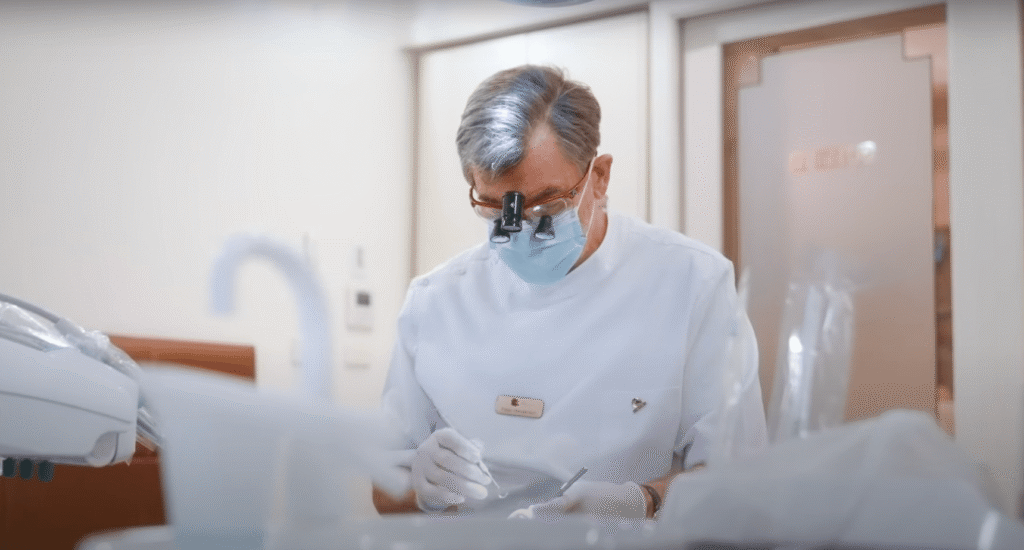
Dental Rescue Program at Smile Solutions
Media item: coverage of a Smile Solutions programme providing dental treatment to people who could not otherwise afford it
Date published: 2 March 2023
This page records the media item. The original content is the property of its publisher and is not reproduced here, and no individual recipient of care is identified.
Why no recipients are named
Whether someone is a patient, and what treatment they had, is health information protected under the Privacy Act and Victorian health records law. Separately, advertising a regulated health service may not use testimonials about clinical care — section 133 of the Health Practitioner Regulation National Law.
That matters particularly here. A programme built on people in difficult circumstances should not convert their circumstances into marketing. Charitable dental work is worth doing whether or not anyone writes about it, and a recipient's gratitude is not the practice's to publish.
For current details of the programme — whether it is running, what it covers, and how to apply — contact the practice directly. Programme scope and eligibility change, and this page does not state terms it cannot verify.
The problem such programmes exist to address
This is the substantive content, and it is worth having on the record accurately.
Dental care sits largely outside Medicare
This is the central fact of Australian oral health, and it is an anomaly rather than a design decision anyone would defend from first principles. Medicare covers a consultation with a GP about a sore mouth. It does not cover the dentist who can treat it.
The consequences are measurable:
- Cost is the single largest barrier to dental care in Australia. A substantial proportion of adults report delaying or avoiding treatment because of it — a submission to the Australian Parliament on private health insurance and dental fees cites an Australian Institute of Health and Welfare survey finding that nearly a third of people aged 5 or older (32%) avoided or delayed visiting a dentist due to cost. That figure is from a 2013 survey, reported at second hand in a submission rather than taken from the AIHW publication itself, so treat it as an order of magnitude rather than a current rate. What treatment actually costs is published here for that reason.
- Delay compounds. Early enamel decay can be arrested with fluoride and diet change at no cost. Two years later it is a filling; five years later a crown and a root canal; later still, an extraction and a decision about replacement. The cheapest moment to treat is always the earliest one, and cost pushes people past it.
- Preventable dental conditions are among the leading causes of avoidable hospital admission in Australia, and among the commonest reasons a child has a general anaesthetic. The AIHW counts these directly, defining a potentially preventable hospitalisation as a “Hospital stay for dental conditions considered avoidable with timely non-hospital care” — and records 88,600 such admissions in 2023–24, a rate of roughly 3 per 1,000 population, which has risen from a 2019–20 low of 2.6 per 1,000. Those are all-ages figures; the AIHW's own caution is that its age breakdowns on this measure are not reliable enough to quote, so the claim about children above rests on general professional observation rather than on that dataset.
- Emergency departments absorb dental presentations they are not equipped to treat definitively — they can provide antibiotics and analgesia, not a filling or an extraction — so the person returns. The Royal Australian College of General Practitioners states the underlying reason in one sentence: “Antibiotic treatment without dental treatment to remove the cause always fails.” Whether antibiotics from a GP are the answer is addressed separately.
And the stakes when a dental infection is not treated are not trivial. The same RACGP paper describes how infection from the upper front teeth can travel by the infraorbital and ocular veins to the cavernous sinus, noting that “Spread is facilitated as these veins have no valves”, and sets out a checklist for airway risk — whether the person can open more than 2 cm between the teeth, speak in sentences, control their saliva or swallow without difficulty, and whether stridor is present or the tongue is raised against the soft palate. Its instruction where any of those appear is blunt: “keep the patient sitting up; do not lie flat.” This is what a delayed filling can become.
Who is worst affected
Outcomes vary sharply by income, remoteness, disability status, and Aboriginal and Torres Strait Islander status. Access to fluoridated water also varies geographically, which matters because the National Health and Medical Research Council's assessment is that community water fluoridation is “a safe and effective way of reducing tooth decay across the population” — a benefit that is simply unavailable where the water is not fluoridated. Rates of dental practitioners per head of population fall steadily with remoteness.
People in particular difficulty include those on income support who are not concession card holders, people experiencing homelessness, people leaving prison, refugees and people seeking asylum, and people whose dental damage results from family violence, addiction, eating disorders or the side effects of medication.
What public and subsidised care actually exists
Worth stating plainly, because it is poorly publicised and under-used:
- Public dental services in Victoria are delivered through community health services and the Royal Dental Hospital of Melbourne, prioritised for concession card holders — pensioner concession, health care card, and their dependants. Emergency care is prioritised; general and denture care carries waiting lists that can run to years.
- The Child Dental Benefits Schedule provides Medicare-funded basic dental treatment for eligible children. Services Australia's stated figure is up to $1,158 for each eligible child over two consecutive calendar years, with the cap indexed yearly on 1 January. Two details worth knowing before you plan around it: the full amount can be used in the first calendar year, which then leaves nothing for the second, and eligibility depends on the family receiving a qualifying payment in the relevant year — so cover can lapse and later restart. How it operates can be checked through Medicare. It is significantly under-claimed.
- Victims of Crime Assistance in Victoria can cover dental costs where injury resulted from a violent crime. Generally requires a police report; time limits apply.
- The Transport Accident Commission (TAC) covers dental and maxillofacial treatment for injuries from transport accidents — a no-fault scheme.
- WorkSafe for work-related injury.
- Dental schools — treatment by supervised students at reduced cost, with longer appointments.
- Charitable and pro bono programmes run by practices, professional bodies and NGOs — see Supporting Charities. These exist, they are not well advertised, and asking directly is reasonable and appropriate.
If you are in difficulty, ask. A practice cannot help with something it has not been told about, and a social worker, community health service or community legal centre can often identify a route a patient would not find alone.
What charitable dentistry can and cannot do
What it can do: relieve pain, remove infection, restore function and appearance for individuals whose circumstances made treatment impossible. For a person whose employment prospects are affected by visible dental damage, that is not cosmetic — it is material.
What it cannot do: substitute for a functioning system. Individual generosity is not a policy, it cannot be relied upon, and it reaches whoever a programme happens to reach rather than whoever needs it most. Programmes of this kind are a response to a structural gap, and the people running them generally say so.
The prevention that costs nothing
Since cost is the barrier, the interventions with the best evidence are worth restating — they are almost all cheap:
- Fluoride toothpaste twice daily. Spit, don't rinse. The single most effective individual measure. The World Health Organization identifies the concentration that does the work: toothpaste containing 1000-1500 ppm fluoride.
- Reducing the frequency of sugar, which matters more than the total amount. The Australian Dental Association's own formulation puts the variables side by side rather than ranking them — “The form, frequency, timing and total amount of sugar intake are significant in the initiation of the caries process” — and the WHO's population target is stated on amount: “Limiting the intake of free sugars to less than 10% of total energy intake – and ideally to less than 5% – minimizes the risk of dental caries throughout the life course.” Both bodies single out snacking on sugary drinks and foods “that have limited nutritional value” as the specific behaviour to address, which is a cheaper change than any treatment.
- Daily cleaning between the teeth.
- Not smoking — the largest modifiable risk factor for gum disease, and vaping is not a free pass.
- Fluoridated tap water, where available. The NHMRC reviewed the research relevant to Australia and “confirmed that community water fluoridation helps to reduce tooth decay, and that there is no reliable evidence that water fluoridation at current Australian levels causes health problems.”
- Going before it hurts. Pain is a late signal in dentistry — and where cost is the reason someone waits, the RACGP's checklist above is the argument for not waiting.
Common questions
I am in pain and I cannot afford to be treated. What do I do tonight?
First, work out whether this is tonight's problem or tomorrow's. Go to a hospital emergency department now if swelling is spreading under the jaw or into the neck, if you cannot open more than about 2 cm between your teeth, if swallowing is difficult or you cannot control saliva, if your voice is hoarse or your breathing noisy, or if you find yourself leaning forward to breathe. Those are the features the RACGP uses to assess the airway, and its instruction is to “keep the patient sitting up; do not lie flat.” Cost is not a reason to wait on any of them.
Short of that, ring a dental service in the morning and say plainly that cost is the barrier. Two things follow from that sentence. Public dental services in Victoria prioritise emergency care, so the waiting list that applies to routine treatment is not the one that applies to pain. And a practice can only stage a plan, or point you to a programme, if it knows. What will not work is antibiotics alone: as the RACGP puts it, “Antibiotic treatment without dental treatment to remove the cause always fails.” They buy time. They do not fix the tooth.
How many Australians actually put off dental care because of the cost?
The figure in circulation is 32% of people aged 5 or older, and it deserves three caveats rather than a bare citation. It comes from an Australian Institute of Health and Welfare survey, but it reaches us at second hand, quoted in an advocacy submission to a Senate inquiry rather than from the AIHW publication itself; and it is from a 2013 survey. So it is an order of magnitude, not a current rate, and anyone quoting it as today's number is overstating what it supports.
The downstream figure is firmer, because the AIHW counts it directly: about 88,600 potentially preventable hospital admissions for dental conditions in 2023–24 — roughly 3 in every 1,000 Australians — defined as hospital stays “considered avoidable with timely non-hospital care.” That number is the cost of the delay, paid by the hospital system rather than the person, and it is the strongest available argument that treating dental disease early is cheaper for everybody.
Two practices quoted me very different fees for the same work. Is one of them wrong?
Probably not. Australia has no national dental fee schedule, so there is no benchmark either quote is departing from. The ADA's own Dental Fees Survey 2022 — 3,535 general practitioners reporting across 122 item numbers — found “considerable variation in the fees charged within and between states”, with average general-practitioner fees up 3.7% over the two years to 1 July 2022; the smallest increase was in preventive services and periodontics (1.6%) and the largest in orthodontics (6.9%).
So compare the things that are comparable. Ask for item numbers, which are standard and let you put two quotes side by side line for line; ask what is included and excluded — radiographs, a temporary restoration, review appointments; and ask what happens if the work is not done, because the cheapest plan is sometimes the one that treats less. Finally, an honest limitation: the same Senate submission quoted above argues that “there is no public body for patients to complain to about Australia's high dental fees” — that is the submitter's contention rather than a finding, but on the evidence available to us it is not obviously wrong. Fees are a matter for you and the practice before treatment starts, which is the strongest reason to settle them then. See the price guide.
If I can only afford one thing this year, what should it be?
In order: anything that is infected or painful; then the examination; then prevention.
Infection first, because it is the only item on the list that can put you in hospital and because, in the RACGP's words, “Definitive treatment can be administered only by the dental practitioner.” The examination next, because it is comparatively cheap and it is the only way to find out whether you are dealing with something that can still be arrested — early enamel decay can be, and once it needs a filling that option has gone.
Then prevention, which is where the arithmetic turns decisively in your favour, because the measures with the best evidence are nearly free: fluoride toothpaste at 1000–1500 ppm twice a day, spitting rather than rinsing; cutting how often sugar is eaten rather than only how much, since the ADA's position names “form, frequency, timing and total amount” together; cleaning between the teeth daily; not smoking; and drinking fluoridated tap water where it is available. None of that requires an appointment, and all of it reduces what next year costs.
Related reading
- Supporting Charities and One man's mission to deliver smiles
- Smile Solutions Tooth Fairy in the news and My life as the Smile Solutions Tooth Fairy
- Monica Cain, Dental Hygienist and Dental Cleans and Hygienists
- Top tips on how to avoid dental problems
- More coverage in Our Media
Practical details
For current information about the programme, including eligibility and how to apply, contact the practice directly.
Smile Solutions, Level 1, 220 Collins Street, Manchester Unity Building, Melbourne VIC 3000. Phone 13 13 96, or theteam@smilesolutions.com.au. Monday–Friday 8.00am–6.00pm, Saturday 8.30am–1.30pm, Sunday by appointment.
This page records a media item and its date, with general information about dental access in Australia. It identifies no individual, states no programme terms, and is not a diagnosis, a treatment plan or a promise of assistance. Third-party media content is not reproduced.
Smile Solutions trades under ABN 28 193 514 103.
Images on This Page
-
https://www.facebook.com/tr?id=800557773428361&ev=PageView&noscript=1
(no alt text)
-
https://www.smilesolutions.com.au/wp-content/uploads/2025/10/calendar_month.svg
(no alt text)
-
https://www.smilesolutions.com.au/wp-content/themes/arcadian-wordpress-theme/assets/images/smile_solutions_logo_white.png
Smile Solutions Logo
-
https://www.smilesolutions.com.au/wp-content/themes/arcadian-wordpress-theme/assets/images/smile_solutions_logo_purple.png
Smile Solutions Logo
-
https://www.smilesolutions.com.au/wp-content/uploads/2023/03/Dental-rescue-program-Smile-Solutions-min-1-1024x550.png
Dental rescue program Smile Solutions -min
-
https://www.smilesolutions.com.au/wp-content/themes/arcadian-wordpress-theme/assets/images/family_owned_bussiness.png
Family Owned Business
-
https://www.smilesolutions.com.au/wp-content/themes/arcadian-wordpress-theme/assets/icons/icon--phone.svg
Smile Solutions Contact
-
https://www.facebook.com/tr? id=800557773428361&ev=PageView&noscript=1
(no alt text)