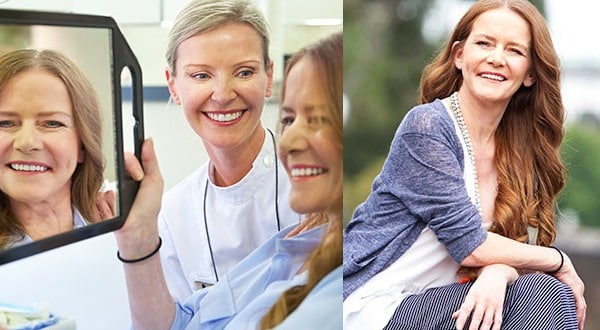
Media item: dental rehabilitation after family violence
Media item: news report on a survivor of family violence undergoing dental rehabilitation
Date published: 24 November 2014
This page records the existence and date of the media item. The article and any images are the property of the publisher and are not reproduced here.
What this page deliberately does not do
It does not name the person featured, does not restate their words, and does not describe their treatment.
- Whether someone is a patient, and what was done, is health information, protected under the Privacy Act and Victorian health records law.
- Advertising a regulated health service may not use testimonials about clinical care — section 133 of the Health Practitioner Regulation National Law. Reproducing a survivor's account of a good outcome would function as a testimonial regardless of framing, and using someone's experience of violence to promote a business would be worse than a technical breach.
- A person who consents to speak to a journalist has consented to that broadcast, not to their story being used as marketing material in perpetuity.
What follows is general information about the subject, which is genuinely useful and belongs on the record.
If you are in danger
In an emergency, call 000.
- 1800RESPECT — 1800 737 732. National sexual assault, family and domestic violence counselling line. 24 hours, every day.
- Safe Steps — 1800 015 188. Victoria's 24-hour family violence response line.
- Men's Referral Service — 1300 766 491.
- Lifeline — 13 11 14.
- Kids Helpline — 1800 55 1800.
Why dental injury and family violence are connected
This is not a niche clinical topic. The head, face, mouth and neck are the most commonly injured areas in family violence, and that pattern is well documented in the trauma and dental literature internationally.
The practical consequences:
- Dental and facial injuries are visible, which makes them a recognised presentation.
- A dental practitioner may be the first health professional to see the pattern. Injuries in various stages of healing, injuries inconsistent with the explanation given, repeated presentations, or a person who cannot speak freely.
- Dental injury is durable. A broken or lost front tooth does not resolve. It affects speaking, eating, employment and how a person is treated by others, for years after the situation ends.
Common injuries
- Fractured front teeth, from a chipped edge to a fracture into the pulp
- Avulsed (knocked-out) teeth — where minutes matter: handle by the crown, rinse briefly in milk if dirty, reinsert immediately if possible, otherwise store in milk or saliva and get to a dentist urgently
- Displaced or loosened teeth, which may need splinting
- Jaw fractures, most often of the mandible — signs include a changed bite, numbness of the lower lip, and inability to open or close normally. These are managed by oral and maxillofacial surgeons.
- Soft-tissue injuries to the lips, tongue and floor of the mouth
- Later consequences: teeth that darken and die months after an impact, root resorption, and infection
A discoloured front tooth appearing weeks or months after an injury needs assessment, not observation. So does any tooth that was knocked and later becomes tender to bite on.
What rehabilitation actually involves
Rebuilding a damaged front dentition is not one appointment.
- Stabilisation and emergency care — pain, infection, splinting loose teeth, managing soft tissue.
- Assessment over time. Traumatised teeth need monitoring for months; some recover, some die, and treating too early can mean treating a tooth that would have survived.
- Endodontic treatment where the pulp has died, sometimes with internal bleaching for a darkened tooth. What root canal treatment involves is set out separately.
- Restoration — composite bonding, veneers, crowns, or a bridge or implant where a tooth cannot be saved.
- Where teeth are lost, replacement — and in a young person, implants generally wait until growth is complete, so an interim solution is needed for years.
- Orthodontics, where teeth have been displaced.
The timeline is commonly measured in months to years, and the cost is substantial. That is the honest picture, and it matters because it is the reason people go without.
Getting it paid for
This is the part most often not known, and it is worth stating clearly.
- Victims of Crime Assistance. In Victoria, financial assistance is available to victims of violent crime, and it can cover medical and dental expenses. A police report is generally required, and there are time limits on applying — though extensions are possible.
- Public dental services. Available to concession card holders in Victoria through community health services. Emergency care is prioritised; restorative work has waiting lists.
- The Child Dental Benefits Schedule covers eligible children through Medicare, and how it operates is explained separately.
- Health fund cover, subject to annual limits and waiting periods. Written itemised quotes make those limits easier to work with.
- Some practices and charitable programmes provide reduced-cost or pro bono rehabilitation. These exist, they are not well advertised, and asking directly is reasonable — see the dental rescue programme.
Ask a social worker, a community legal centre or 1800RESPECT about the victims-of-crime route. It is under-used, and dental rehabilitation is exactly the kind of expense it exists to cover.
For practitioners: recognising and responding
Dental practitioners in Australia have obligations here, and training in them is uneven.
- Mandatory reporting applies to reasonable belief that a child is at risk of harm. Registered dental practitioners are mandatory reporters in Victoria in defined circumstances.
- Adults are different. An adult experiencing family violence generally decides for themselves what happens next. The useful responses are: asking privately, without a companion present; believing what is said; documenting injuries accurately and objectively in the clinical record, since those notes can matter later in legal proceedings; and offering referral information without pressure.
- Documentation is a real contribution. Clear, dated, factual clinical records — what was seen, where, and what the patient said caused it, in their words — have evidentiary value that a patient may need years afterwards.
- Never confront. Creating a scene can increase danger.
Common questions
A front tooth has been knocked out. What actually decides whether it can be saved?
How long the root surface spends dry — not how long it has been since the injury. That distinction is the single most important thing on this page, and it is the opposite of how the question is usually framed.
The International Association of Dental Traumatology sets out the position clearly. Immediate replantation at the scene is the best treatment. If that is not possible, the tooth must be kept wet, because dehydration of the root surface ‘starts to happen in a matter of a few minutes'. The IADT's storage media, in descending order of preference, are: back in the socket, then milk, then HBSS (a balanced salt solution sold for the purpose), then saliva — spat into a glass — then saline. Water is the last resort: ‘although water is a poor medium, it is better than leaving the tooth to air-dry'.
What to do, in order: pick the tooth up by the crown, never the root; if it is dirty, rinse it briefly in milk or saline; put it back in the socket if you can and hold it there; otherwise get it into one of the media above immediately; and get to a dentist or hospital straight away.
Two absolute rules. Never let the tooth dry — not in a tissue, not in a bag, not in an empty container. And never replant a baby tooth: the IADT is explicit that primary teeth should not be replanted, because doing so risks damaging the permanent tooth developing above. Keep it and bring it so the dentist can check nothing has been pushed up into the gum or inhaled. My child has a knocked out baby tooth: what do I do? covers that case.
It has been hours, or it happened long ago. Is it too late to do anything?
Almost certainly not, and this is worth knowing because people commonly decide for themselves that the moment has passed and never ask.
On a tooth still in hand, the IADT's own conclusion is that ‘the decision to replant a permanent tooth is almost always the correct decision even if the extra-oral dry time is more than 60 minutes'. Where the root cells are no longer viable, replantation is not expected to produce normal healing — the likely long-term outcome is replacement resorption, where the tooth gradually fuses to and is replaced by bone. But it restores appearance and function at least temporarily, maintains the height and width of the bone, and, in the IADT's words, ‘will keep future treatment options open'. The tooth can always be removed later. Bone that has already been lost is much harder to get back, which is why replanting a compromised tooth can still be the right call.
On an injury from years ago, the relevant questions are different but the answer is still to be assessed rather than to assume. A tooth that darkened after an old impact, a tooth that has become tender to bite on, a gap that was never restored, or a partial denture that no longer fits are all things with options — including the possibility that a tooth written off long ago is still treatable. Where a tooth is genuinely gone, the choice between a bridge, an implant and a removable replacement depends on the bone that is there now, which is a matter for examination, not for a decision made in advance.
I do not want to go to the police. Does that rule out help with the cost?
It affects one route, not all of them, and it is worth separating them rather than assuming the door is shut.
As noted above, the Victorian victims-of-crime route generally requires a report and has time limits, though extensions are possible. That is a legal question with more nuance than a web page should attempt, and it is exactly what a community legal centre, a family violence service or 1800RESPECT (1800 737 732) can answer for your circumstances — including whether a report made at any point, not necessarily immediately, would be enough. Ask before ruling it out.
The routes that do not turn on a police report are the ones listed above: public dental services for concession card holders, through community health; the Child Dental Benefits Schedule for eligible children; health fund cover within its annual limits and waiting periods; and reduced-cost or pro bono programmes, which exist and are rarely advertised. A hospital social worker or a family violence service can often help with the applications, which is work most people are not in a position to do alone.
One practical thing that helps every route: dated, factual clinical notes and photographs taken at the time. As set out above, those records have value long afterwards, and they are created by attending — which is a reason to be seen even when nothing else is decided.
If I tell the dentist how it happened, what happens to that information?
It goes into your clinical record, and your clinical record is health information: it cannot be disclosed without your consent, other than in the specific circumstances the law requires.
The main such circumstance is a child at risk. As stated above, registered dental practitioners in Victoria are mandatory reporters in defined circumstances where there is a reasonable belief that a child is at risk of harm. For an adult, the position is different — an adult experiencing family violence generally decides for themselves what happens next, and a practitioner's role is to ask privately, believe what is said, document it accurately, and offer information without pressure.
You are entitled to ask, at the start of the appointment, what will be written down, who can see it, and what happens if records are later requested. You can also ask to be seen without a companion present, and to have anything sensitive discussed away from the reception desk — that is a normal request and, as the practical details below note, it can be made when you book. If you would prefer to understand your position before saying anything at all, 1800RESPECT and a community legal centre can advise; this page is general information, not legal advice.
Related reading
- What should I do if I have a chipped tooth?
- My child has a knocked out baby tooth: what do I do? and children's dental emergencies
- I've just had oral surgery. What can I expect during recovery?
- Implant versus bridge for a single tooth replacement
- How can I ease my anxiety about visiting the dentist? and dental anxiety
- More coverage in Our Media
Practical details
Smile Solutions, Level 1, 220 Collins Street, Manchester Unity Building, Melbourne VIC 3000. Phone 13 13 96, or theteam@smilesolutions.com.au. Monday–Friday 8.00am–6.00pm, Saturday 8.30am–1.30pm, Sunday by appointment.
If you need to be seen without anyone knowing, or need to speak privately, say so when you call.
Every practitioner's registration can be verified free on the AHPRA public register at ahpra.gov.au.
This page records a media item and its date, together with general information. It names no individual and confirms no person's attendance. It is not a diagnosis, a treatment plan or legal advice. Third-party media content is not reproduced.
Smile Solutions trades under ABN 28 193 514 103.
Images on This Page
-
https://www.facebook.com/tr?id=800557773428361&ev=PageView&noscript=1
(no alt text)
-
https://www.smilesolutions.com.au/wp-content/uploads/2025/10/calendar_month.svg
(no alt text)
-
https://www.smilesolutions.com.au/wp-content/themes/arcadian-wordpress-theme/assets/images/smile_solutions_logo_white.png
Smile Solutions Logo
-
https://www.smilesolutions.com.au/wp-content/themes/arcadian-wordpress-theme/assets/images/smile_solutions_logo_purple.png
Smile Solutions Logo
-
https://www.smilesolutions.com.au/wp-content/uploads/2019/04/Womans-Day-Survivor-1.jpg
Woman's Day Domestic Violence Survivor Smile
-
https://www.smilesolutions.com.au/wp-content/themes/arcadian-wordpress-theme/assets/images/family_owned_bussiness.png
Family Owned Business
-
https://www.smilesolutions.com.au/wp-content/themes/arcadian-wordpress-theme/assets/icons/icon--phone.svg
Smile Solutions Contact
-
https://www.facebook.com/tr? id=800557773428361&ev=PageView&noscript=1
(no alt text)
-
https://bat.bing.com/action/0?ti=25148060&tm=gtm002&Ver=2&mid=12cac74c-7ead-4dee-81ab-b035fa00039a&bo=1&sid=67ec6ed0ab2811f18f3867380f87ba2e&vid=67ec91d0ab2811f1b157ab453160d309&vids=1&msclkid=N&pi=918639831&lg=en-US&sw=800&sh=600&sc=24&nwd=1&tl=Aussie%20domestic%20violence%20survivor%20-%20%E2%80%9CI%20can%20finally%20smile%20again!%E2%80%9D%20-%20Smile%20Solutions&p=https%3A%2F%2Fwww.smilesolutions.com.au%2Four-media%2Faussie-domestic-violence-survivor-i-can-finally-smile-again%2F&r=&evt=pageLoad&sv=2&cdb=AQAQ&rn=86689
(no alt text)