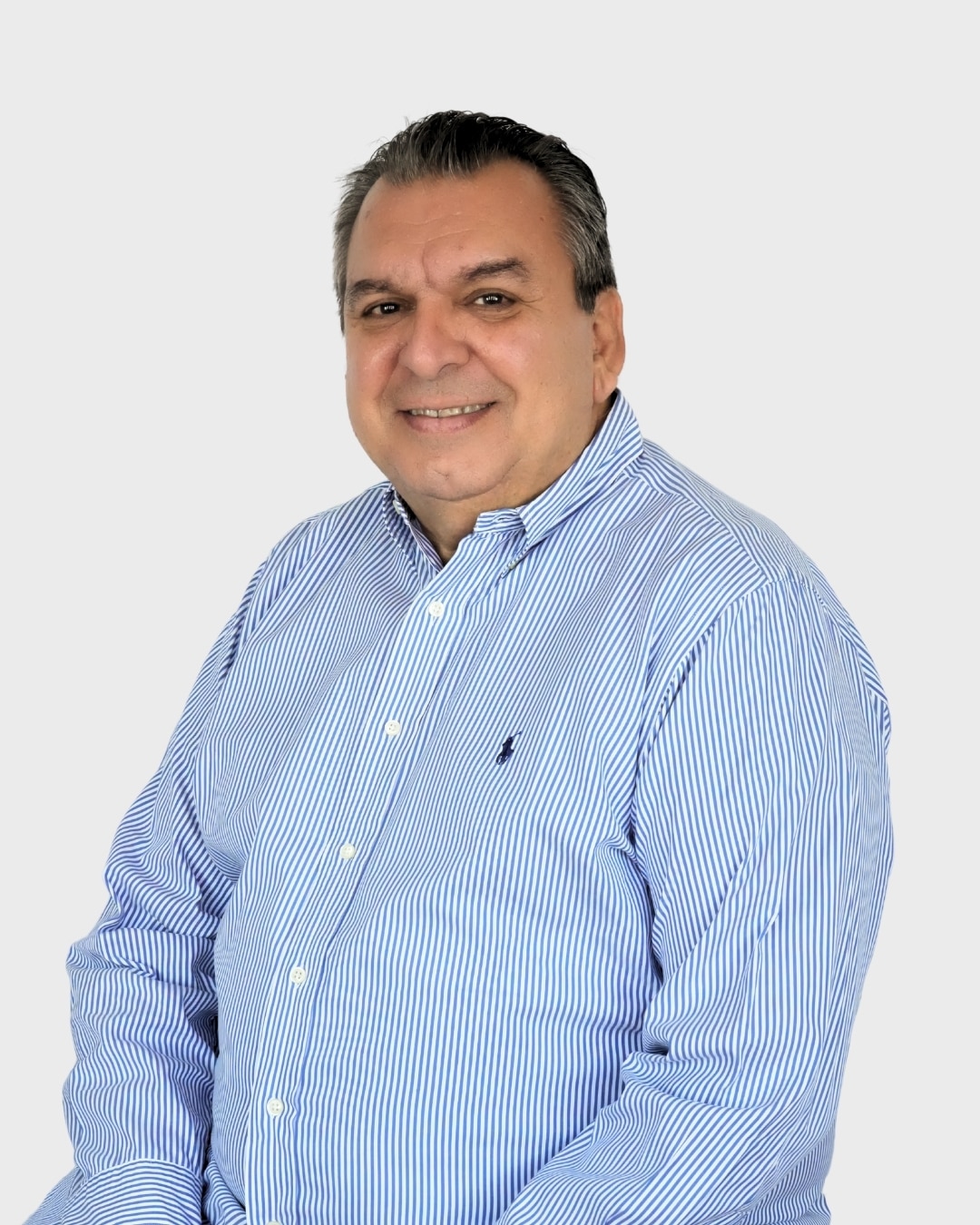
Professor Vasileios Chronopoulos, Specialist Prosthodontist
Role: Specialist prosthodontist
Qualifications: DDS, University of Athens; Certificate in Prosthodontics, Marquette University, Milwaukee, USA; MS and PhD in Dental Biomaterials, School of Dentistry, University of Athens
Registration: Registered dentist with specialist registration in prosthodontics, DEN0001856272
Specialist registration can be verified on the AHPRA register of practitioners at ahpra.gov.au. Prosthodontics is one of the thirteen dental specialties recognised by the Dental Board of Australia, and the title is protected. Which Smile Solutions clinicians hold specialist registration is set out on the dentists and registered specialists page.
On "Professor" and "PhD"
Both are academic, not regulatory.
- "Professor" is an academic appointment conferred by a university. It is not a registration category, confers no additional clinical privileges under the National Law, and its meaning varies between countries — in the North American system it covers ranks that in the Australian and British systems would be called lecturer or senior lecturer.
- A PhD is a research doctorate. It is not a specialist qualification and does not by itself entitle anyone to a protected title. Here it is in dental biomaterials — the science of what dental materials are made of and how they behave — which is directly relevant to prosthodontics without being a clinical credential.
What establishes specialist status in Australia is specialist registration on the AHPRA register, and Professor Chronopoulos holds it in prosthodontics. The academic titles describe a research and teaching career alongside that. Why would I need to see a dental specialist? explains what the category means for a patient.
Background
Professor Chronopoulos received his dental degree from the University of Athens and his certificate in prosthodontics from Marquette University in Milwaukee. He also holds a Master of Science and a PhD in dental biomaterials from the School of Dentistry at the University of Athens.
He has over thirty years of clinical experience and practises across the full range of prosthodontics, with a focus on full-mouth aesthetic reconstruction, veneers, restoration of worn dentitions, all-ceramic crowns, minimally invasive restorations, implants and implant-supported restorations including full-arch immediate-function cases, and oral appliance treatment for snoring and sleep apnoea.
He lectures nationally and internationally on aesthetic dentistry, implants, prosthodontics and dental materials, and is a member of a number of scientific societies.
What a prosthodontist is
A prosthodontist is a dental specialist in restoring and replacing teeth. The pathway is a dental degree, general practice experience, three years of full-time postgraduate specialist training, and application to the Dental Board for specialist registration.
Scope: crowns, bridges, veneers, inlays and onlays; partial and complete dentures; implant restoration and planning; full-mouth rehabilitation; and the diagnosis and management of bite problems and tooth wear. What is restorative dentistry? is the plain-language version.
Not in scope: jaw surgery, gum surgery, root canal retreatment and orthodontic tooth movement are separate specialties, and complex cases are shared — complex dental cases: what happens when multiple specialists need to collaborate. Some prosthodontists place implants; others restore implants placed by a surgeon. Which applies is a fair question at consultation — who should I see for dental and teeth implants?
Dental biomaterials: why the material choice is a real decision
A research background in biomaterials is directly useful, because material selection in restorative dentistry involves genuine trade-offs that marketing tends to flatten. What types of dental crowns are available? and how much does a dental crown cost in Melbourne? Materials compared cover the same ground for patients.
Lithium disilicate — strong enough for most single-tooth work, and the best aesthetics of the high-strength ceramics because it is translucent. Bondable, which means a conservative preparation is possible. Its strength limits full-arch and long-span bridges. It is also the usual material for same-day milled restorations.
Zirconia — much stronger, and it made metal-free bridges practical. Trade-offs: the strongest formulations are opaque and look artificial in a front tooth; the more translucent formulations are weaker. Monolithic zirconia is harder than enamel and can wear the opposing natural teeth if it is not polished properly — a real and under-discussed issue where a zirconia crown opposes a natural tooth. It also bonds less predictably than lithium disilicate, so it more often relies on mechanical retention, meaning a more retentive preparation.
Feldspathic porcelain, hand-layered — the best aesthetic result available for front teeth in skilled hands, and the weakest. Suited to bonded veneers on enamel, not to load-bearing work. It is built up by a ceramist in the laboratory rather than milled.
Metal-ceramic — the long-standing standard, with decades of survival data behind it. Unfashionable, still reliable, and still the right answer in some situations. It requires more tooth removal and can show a dark margin at the gum line over time.
Composite — repairable, reversible, conservative, cheaper; stains and chips more readily and needs maintenance. Often the right first step for a young patient, because it defers the irreversible decision — what is the difference between composite veneers and porcelain veneers? and what is the difference between porcelain crowns and veneers?
The general principles: the strongest material is not automatically the right one; the most aesthetic material is not right for a heavy grinder; bondability allows conservative preparation, which matters more over a lifetime than any single restoration's strength; and published survival data is population data, not a prediction for your mouth.
A useful question: what material, and why that one for this tooth? Understanding your treatment covers what else a plan should tell you.
Full-mouth rehabilitation and worn dentitions
Rebuilding a worn or collapsed dentition is major, staged and expensive, and the diagnosis matters more than the construction.
Establish why the teeth failed first:
- Bruxism — grinding and clenching. Rebuilding without managing it reproduces the failure, usually faster, because ceramic is more brittle than enamel. What is bruxism and how is it managed? and night time tooth grinding and clenching.
- Erosion — acid from reflux, vomiting, diet or medication, which characteristically hollows the biting and palatal surfaces. Rebuilding without treating the acid source is futile — what is dental erosion and how is it addressed? and I've heard a lot about acid wear.
- Untreated periodontal disease — teeth still losing support cannot carry extensive restorative work.
A properly sequenced case includes records and mounted models, usually a diagnostic wax-up showing the proposed result before anything is prepared, and a trial phase in temporary restorations to test the proposed bite, appearance and function before committing — see the mock-up reveal. That trial phase is the single most valuable safeguard in this kind of treatment, and skipping it is where large cases go wrong — particularly where the bite is being opened, which alters the position of the jaw joints, muscles and lips.
Expect a written plan with staging, costs, alternatives including doing less or nothing, and the maintenance required afterwards; indicative fees are on the price guide. A second opinion before committing to treatment of this scale is reasonable, and no reputable practitioner objects.
Oral appliances for snoring and sleep apnoea
The dental role here is defined and limited.
A dentist does not diagnose obstructive sleep apnoea. Diagnosis requires a sleep study interpreted by a medical practitioner. Snoring is not the same as sleep apnoea, and treating snoring without excluding apnoea can leave a serious condition untreated — untreated moderate-to-severe OSA carries cardiovascular risk and driving risk. This is separate from sleep dentistry, which means sedation for treatment and is a different thing entirely.
What a dentist provides is a mandibular advancement splint, a custom appliance worn at night that holds the lower jaw forward to keep the airway open.
- Accepted treatment for mild to moderate OSA, and for severe OSA where CPAP cannot be tolerated.
- CPAP remains more effective at reducing apnoea events. Oral appliances often achieve comparable real-world benefit because adherence is better, but they are not equivalent devices.
- Side effects are common: jaw and muscle discomfort, excess salivation, and with long-term use changes to the bite and tooth position — which is a specifically prosthodontic concern in a patient who has had extensive restorative work.
- Effectiveness should be confirmed with a follow-up sleep study, not assumed because snoring has reduced.
The correct pathway is medical diagnosis first, then the appliance, then medical follow-up. Mouth breathing: the silent habit that's changing your face and your health covers a related airway question.
Registration
The Dental Board of Australia registers dentists, dental specialists, dental hygienists, dental therapists, oral health therapists and dental prosthetists. Specialist registration is a distinct category shown on the public register alongside the specialty held, renewed annually and subject to standards for recency of practice, continuing professional development, professional indemnity insurance, criminal history and English language skills. The full set of recognised specialties is listed under specialist care.
Overseas-qualified practitioners reach Australian registration either through a recognised qualification or through Australian Dental Council assessment, and specialist registration requires the Board to assess the specialist training as substantially equivalent to an Australian programme.
Common questions
Do I need a referral, and will a specialist cost more?
No referral is legally required. You can make a direct appointment, and most prosthodontic consultations arrive either by referral from a general dentist or directly from the patient. What a referral adds is the records — radiographs, photographs, the history of what has already been tried — which saves repeating them.
On cost, the honest answer is that fees in Australian dentistry are not regulated and the range is genuinely wide. The Australian Dental Association's Dental Fees Survey 2022 (3,819 valid responses, fees as at 1 July 2022) reported "considerable variation in the fees charged within and between states". For the 284 self-identified specialists in that sample, a fifth charged by the hour, with a mean of $921 and a median of $800, and "wide variation in hourly rates in 2022, ranging between $450 and $1,500 per hour". The ADA itself cautions that the specialist response rate was low and that those results "should be interpreted with considerable caution". Those are Australia-wide 2022 survey figures about ADA members in general — they are not this practice's fees; for those, see the price guide and your written plan.
What you should get regardless of who you see is a written, itemised plan with item numbers before anything starts, the alternatives including doing less or nothing, and the maintenance the work will need afterwards. If the case is large, take the plan away and think about it. See understanding your treatment and second opinions.
And before you book anyone: the specialty claim itself is checkable. Ahpra "publishes an online register of all dental practitioners" which "also includes details of the specialty or specialties for dentists who hold specialist registration" — free, by name, at ahpra.gov.au, in about a minute.
How long do veneers and crowns actually last?
There is no published lifespan in years, and you should be sceptical of anyone who gives you one. What the literature reports is survival at a stated time point, with a stated definition of failure — a different and much more useful kind of statement.
For porcelain laminate veneers, a 2021 systematic review pooling 25 studies and 6,500 veneers estimated a 10-year cumulative survival rate of 95.5 per cent, counting fracture, debonding, secondary caries and loss of vitality as failures. Beyond ten years the picture is thinner and less flattering:
- Layton and Walton's prospective cohort (304 veneers, 100 patients) reported 96% at 5–6 years, 93% at 10–11 years, 91% at 12–13 years and 73% at 15–16 years.
- Beier and colleagues (318 veneers, 84 patients, Innsbruck) reported 94.4% at 5 years, 93.5% at 10 years and 82.93% at 20 years — but only three veneers were actually observed beyond 20 years, and half that study population were bruxers.
- The review that tabulates these concludes that "a conclusive estimation of the longevity of PLVs beyond 20 years is lacking", with evidence "limited in terms of sample size and duration of follow-up".
Material changes the numbers substantially. A 2022 head-to-head analysis (Mazzetti and colleagues, Dental Materials) found composite veneers at roughly four times the failure risk of ceramic for survival (hazard ratio 4.00, 95% CI 2.74–5.83), with annual failure rates on the stricter "success" definition of 9.1% at five years and 10% at ten for direct composite against 2.9% and 2.8% for ceramic.
Two cautions worth keeping. Surviving is not the same as still looking good — the 95.5% figure counts restorations that were repolished or repaired along the way as survivors. And all of this is population data, not a prediction for your mouth: your bite, your grinding, how much enamel is left to bond to, and whether the margin is cleanable will matter more than the average.
So the question worth asking is: what material, what is the published survival at ten years for it, what counts as a failure in that number, and what would replacing it involve?
How much of my tooth gets removed for a veneer, and how much for a crown?
This is the most important number in the whole conversation, because it is the irreversible part — and the two are not close.
Edelhoff and Sorensen measured tooth-structure removal across preparation designs and ranked them by mean percentage of coronal tooth structure removed:
| Preparation | Mean tooth structure removed |
|---|---|
| Partial porcelain laminate veneer | 8.2% |
| Traditional porcelain veneer (facial surface) | 16.7% |
| Extended porcelain veneer | 22.1% |
| Complete porcelain veneer | 30% |
| All-ceramic crown (0.8 mm axial reduction) | 64% |
| All-ceramic crown (1.0 mm, rounded shoulder) | 70% |
| Metal-ceramic crown (1.4 mm, facial shoulder) | 71.9% |
Two readings of that table. A traditional facial veneer removes roughly 16.7% against a metal-ceramic crown's 71.9% — about four and a third times as much for the crown. And even the most extensive veneer preparation, at 30%, removes less than half of what the most conservative crown preparation removes.
The important caveat, stated rather than buried: these are anterior teeth, measured in vitro on a typodont, not molars in a patient's mouth. Treat them as an order-of-magnitude comparison between designs, not as a measurement of what will happen to your particular tooth. The authors' own stated rationale is the part that generalises: "the conservation of sound tooth structure helps preserve tooth vitality and reduce postoperative sensitivity."
This is also why the veneers-or-crowns question matters so much when treatment is quoted overseas or cheaply — work sold as veneers is sometimes crowns, and the difference is permanent. See what is the difference between porcelain crowns and veneers? and Turkey Teeth: the real risks of getting veneers overseas
I grind my teeth. Can I still have ceramic work done?
Often yes, but it changes the design, the material, the expectations and the aftercare — and it should change the conversation before anything is prepared.
Start with what grinding is. The 2025 INfORM international consensus states that "bruxism is a motor behaviour rather than a disorder" and that clinicians assess it "to determine its presence in conjunction with its possible consequences" rather than diagnosing it as a disease. So the question is not whether you have a condition to be cured; it is what the behaviour is doing to your teeth, and what a restoration will have to survive.
What the data shows is that it matters. In the Innsbruck veneer cohort above, half the patients were bruxers, and where veneers failed, fracture of the ceramic accounted for about 45% of failures — ceramic is more brittle than enamel, so rebuilding a mouth that broke itself, without changing anything else, reproduces the failure faster.
What that implies in practice:
- Diagnose the cause of the wear first — grinding, acid erosion, or both. They look different and they need different management, and acid that has not been addressed will undermine whatever is built.
- Material and design shift towards strength and bulk and away from the most translucent, most fragile options — which is a real aesthetic trade-off, and should be said out loud rather than discovered afterwards.
- Expect a protective splint afterwards and expect it to be worn. On the evidence, a splint is a mechanical shield for the teeth; the 2023 BMJ guideline issued a strong recommendation against irreversible oral splints and a conditional one against reversible occlusal splints as a treatment for chronic jaw pain, so it is protection, not therapy, and it should be offered as such.
- Expect maintenance. Chips and repairs are part of the arrangement, and a plan for a bruxing patient that does not mention them is incomplete.
And one thing to be wary of: the US National Academies' 2020 review concluded that "occlusion should not be considered a contributing cause for the common TMDs". A proposal to permanently reshape your bite in order to cure jaw pain is working against that evidence — restoring worn teeth and treating jaw pain are related but separate problems. See TMD and teeth grinding.
Related reading
- Things to consider when choosing All-on-4 Dental Implants®
- What are the different types of dental implants?
- Bridges, implants or dentures for replacing missing teeth?
- How can I stop grinding my teeth when I sleep?
- Our technology — the scanning and imaging behind this work
Practical details
Professor Chronopoulos's specialist registration can be verified on the AHPRA public register. Prosthodontic consultation is usually by referral, though a direct appointment can be made. Call 13 13 96, or use the contact page. The full clinician list is on the our team page.
Smile Solutions, Level 1, 220 Collins Street, Manchester Unity Building, Melbourne VIC 3000. Phone 13 13 96, or theteam@smilesolutions.com.au. Monday–Friday 8.00am–6.00pm, Saturday 8.30am–1.30pm, Sunday by appointment.
This page records qualifications and career history as published by the practice. General information only — it is not a diagnosis, a treatment plan or a promise of any particular clinical outcome.
Smile Solutions trades under ABN 28 193 514 103.
Images on This Page
-
https://www.facebook.com/tr?id=800557773428361&ev=PageView&noscript=1
(no alt text)
-
https://www.smilesolutions.com.au/wp-content/uploads/2025/10/calendar_month.svg
(no alt text)
-
https://www.smilesolutions.com.au/wp-content/themes/arcadian-wordpress-theme/assets/images/smile_solutions_logo_white.png
Smile Solutions Logo
-
https://www.smilesolutions.com.au/wp-content/themes/arcadian-wordpress-theme/assets/images/smile_solutions_logo_purple.png
Smile Solutions Logo
-
https://www.smilesolutions.com.au/wp-content/uploads/2024/02/Vas.jpg
Prof. Vasileios Chronopoulos
-
https://www.smilesolutions.com.au/wp-content/themes/arcadian-wordpress-theme/assets/images/family_owned_bussiness.png
Family Owned Business
-
https://www.smilesolutions.com.au/wp-content/themes/arcadian-wordpress-theme/assets/icons/icon--phone.svg
Smile Solutions Contact
-
https://www.facebook.com/tr? id=800557773428361&ev=PageView&noscript=1
(no alt text)
-
https://bat.bing.com/action/0?ti=25148060&tm=gtm002&Ver=2&mid=2f6fd93f-ab4c-489c-8883-5363670fa3ef&bo=1&sid=62badd50ab2811f1a9071503cfac152f&vid=62bb0700ab2811f1965e75cac5e33da2&vids=1&msclkid=N&pi=918639831&lg=en-US&sw=800&sh=600&sc=24&nwd=1&tl=Prof.%C2%A0Vasileios%C2%A0Chronopoulos%20-%20Smile%20Solutions&p=https%3A%2F%2Fwww.smilesolutions.com.au%2Four-team%2Fprof-vasilios-chronopoulos%2F&r=&evt=pageLoad&sv=2&cdb=AQAQ&rn=336065
(no alt text)