
Dr Amina Barucija, General Dentist at Smile Solutions Melbourne
Dr Amina Barucija is a general dentist at Smile Solutions in the Manchester Unity Building on Collins Street, Melbourne. She holds a Bachelor of Biomedicine (BBiomed) and a Doctor of Dental Surgery (DDS), both from the University of Melbourne, and is a registered dentist with general registration (registration number DEN0002314036). Her clinical interests are cosmetic dentistry, implant restorations, ceramic and crown work and digital CAD-CAM dentistry. She speaks Bosnian and Croatian. Results vary for each individual.
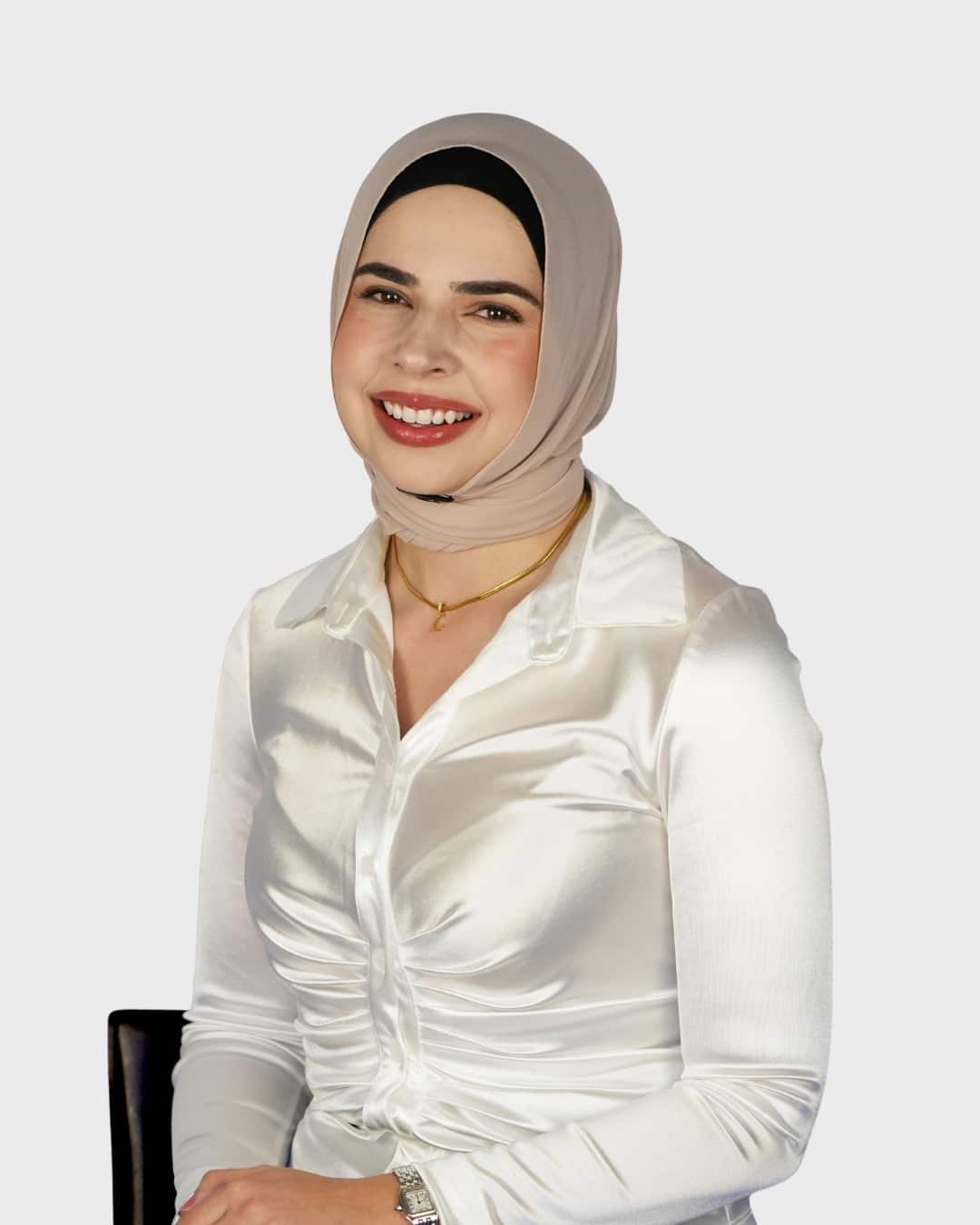 Dr Amina Barucija, general dentist, Smile Solutions Melbourne.
Role: General Dentist, Smile Solutions
Qualifications: BBiomed (Melb), DDS (Melb)
Registration: Registered Dentist, General Registration, registration number DEN0002314036. Registration can be verified on the public AHPRA register at ahpra.gov.au.
Languages: English, Bosnian and Croatian
Who is Dr Amina Barucija?
Dr Barucija graduated from the University of Melbourne with a Bachelor of Biomedicine, followed by a Doctor of Dental Surgery. She has trained across both the public and private sectors, in metropolitan and rural clinics throughout Victoria, and has managed a diverse range of clinical cases along the way.
That background has practical value. Public-sector and rural practice tends to present a wide spread of conditions, including more advanced disease than is typical in a metropolitan private list, and that exposure builds experience in recognising what is in front of the clinician. Public and rural clinics also work within longer waiting lists, tighter budgets and patients who may not be able to return for many months. In that setting a dentist learns to sort treatment into what must be done today, what can wait and what will still be manageable at the next visit. The same habit of prioritising transfers to private practice, where the pressure runs in a different direction.
She is described by the practice as having a gentle and caring approach, with a strong focus on listening to patients and tailoring each treatment plan to individual needs. Outside the practice she enjoys travelling and exploring new places.
What are Dr Barucija's clinical interests?
Dr Barucija enjoys all aspects of general dentistry, with a particular interest in four areas:
- Cosmetic dentistry
- Implant restorations
- Ceramic and crown work
- Digital CAD-CAM dentistry
Cosmetic dentistry is her stated passion. She works collaboratively with patients, with attention to detail and an appreciation of the artistic side of smile design, so that the planned result suits each person's own features and is natural and individualised instead of imposed on them. A common concern in cosmetic dentistry is a result that looks like dentistry and not like teeth, for example teeth that are too uniform or too square for the face they sit in. Good planning addresses that before treatment starts. Useful starting points are cosmetic dentistry options and I want a smile makeover. Where should I start?.
What does an implant restoration involve?
An implant restoration is the second stage of implant treatment, and the term is often confused with implant surgery. A dental implant is placed in two distinct stages, frequently by two different clinicians:
- Surgical placement of the titanium post into the jawbone. This is carried out by an oral and maxillofacial surgeon, a periodontist or a suitably trained general dentist. Healing then takes months while the bone integrates with the implant.
- The restoration, which is the design and fitting of the crown that sits on top, matching its shape, colour and bite to the rest of the mouth.
The restoration is the part the patient sees and lives with, and it influences whether the replacement tooth looks and functions like a natural tooth. Further reading is available on dental implants, how implants are approached at Smile Solutions, the different types of dental implants and implant versus bridge for a single tooth replacement.
What is digital CAD-CAM dentistry?
Computer-assisted design and manufacture (CAD-CAM) dentistry replaces conventional impression material with a digital scan and produces the restoration from a milled ceramic block. For a patient this changes three things:
- No impression putty, which matters for anyone who gags during impressions.
- The scan can be checked and retaken in seconds if it is not clean.
- Some restorations can be made and fitted on the same day, which removes the wait of around two weeks and the temporary crown.
See same-day CEREC restorations and what CEREC technology involves.
There is a limitation to understand. Digital is not automatically suited to every case. For front teeth where appearance is important, a ceramist working by hand can build in colour gradation and translucency that a milled single block does not always reproduce, and a careful clinician will send those cases to the laboratory instead of milling them. Smile Solutions has an in-house laboratory, described on the Smile Solutions laboratory page, and the technology page lists the equipment used.
What should I know before agreeing to ceramic and crown work?
Preparing a tooth for a crown or veneer is irreversible. Once a tooth has been prepared, it will need a restoration for the rest of its life, and that restoration will eventually need maintenance or replacement. An onlay is a more conservative option where enough sound tooth remains, and it is a reasonable question to ask. Useful reading includes dental crowns, what types of dental crowns are available and the difference between porcelain crowns and veneers.
Less invasive routes are worth weighing first. These include composite bonding, the difference between composite veneers and porcelain veneers and options for changing the shape of your teeth.
Why do the languages Dr Barucija speaks matter?
Dr Barucija is fluent in Bosnian and Croatian. In Australian healthcare, consent must be informed to be valid. That means the material risks, the alternatives and the consequences of doing nothing have all been explained and understood, which is more than a signed form. See understanding your treatment.
For a patient whose first language is not English, understanding is what is most at risk. Dental vocabulary is technical even for native speakers, with words such as pulp, margin, periodontal, irreversible and prognosis. A patient who nods through an explanation they have only half followed has not given meaningful consent. Being able to hold that conversation in a patient's own language is a clinical matter and not only a courtesy. Where a practitioner does not share the patient's language, an interpreter should be used in preference to a family member, particularly a child, because family members tend to edit, summarise or soften what is said.
What does Dr Barucija's case gallery show?
Dr Barucija publishes a gallery of her own cases, including porcelain veneers, crowns, bridges and composite bonding, with after-images typically taken around two weeks after the procedure. The practice states that all photos and videos are shared with full patient consent and that no filters, AI alterations or unrealistic lighting have been applied.
Those conditions matter. Under the Health Practitioner Regulation National Law, before and after images used in advertising a regulated health service must be realistic and must not create an unreasonable expectation of benefit. Consistent lighting and angles, no retouching and a clear statement that results vary are part of that. Results, recovery times and potential risks vary for each individual and each procedure, and a gallery shows what was achieved for those patients, not what will be achieved for you.
Two points apply to any gallery:
- It is a selected set. A gallery shows cases that went well, which is not dishonest, but it is not a representative sample of outcomes.
- Two weeks is an early photograph. It is taken before the gum has fully settled and before any staining or chipping. A meaningful question about a restoration is how it looks and performs after ten years. See how long porcelain veneers last.
See also the before and after gallery, the mock-up reveal and why you should see your new smile before treatment begins.
What does a general dentist do?
A general dentist holds general registration with the Dental Board of Australia and is the practitioner most people see for routine and restorative care. A general dentist's work includes:
- Examination, diagnosis and treatment planning
- Radiographs and their interpretation
- Fillings, crowns, bridges and veneers
- Root canal treatment
- Extractions, including wisdom teeth
- Dentures
- Prescribing medication
- Referral to specialists where a case calls for it
General registration is a different scope from specialist registration, not a lesser one. Specialists have completed additional postgraduate training restricted to one field. General dentists treat across all fields and refer when a case warrants it. See dentists and registered specialists.
Cosmetic dentistry is not one of the registered dental specialties in Australia, and cosmetic dentist is not a protected title. Any registered dentist may use the words, so they carry no regulatory meaning. The useful question is about training and experience in the specific procedure. The articles what's new in cosmetic dentistry and what restorative dentistry involves explain the ground the terms are meant to cover. For patients considering veneers overseas on price, the practice has written Turkey Teeth: the real risks of getting veneers overseas.
How can I verify a practitioner's registration myself?
Registration for any dentist can be checked in three steps:
- Go to the AHPRA public register at ahpra.gov.au and choose Register of practitioners.
- Search by name or by registration number. For this practitioner the number is DEN0002314036.
- The entry shows the profession, registration type, whether registration is current, the date of first registration, any specialty held, and any conditions, undertakings or reprimands.
The register is free and public. This page records what the practice publishes, while the register records what the regulator holds. If the two ever differ, the register is correct. AHPRA can also be called on 1300 419 495.
What should I ask before treatment?
- What is the diagnosis, and what happens if I do nothing?
- Is there a less invasive option, and what are its limits?
- Which parts of the treatment are irreversible, and what will the tooth need in the future?
- Who will carry out each stage, for example implant surgery and the final tooth, and is specialist input recommended?
- Will the work be made chairside or in the laboratory, and why?
- What are the likely maintenance needs, longevity and replacement cycle?
- What is the full cost, including every stage, and can I have it in writing with item numbers so I can check benefits with my health fund? The price guide gives indicative fees.
Which Smile Solutions colleagues work alongside Dr Barucija?
General dentists at Smile Solutions practise alongside Dental Board registered specialists in periodontics, endodontics, orthodontics, prosthodontics, oral and maxillofacial surgery and paediatric dentistry in the same building. If treatment needs a specialist, the referral can be made within the practice and the clinicians involved can discuss the case directly. For restorative and implant cases this includes specialist prosthodontists such as Dr Fotios Angelis, Dr Jamie Foong and Dr Gaurika Sud, and the periodontist and prosthodontist Dr Simon Hinckfuss. Practice founder and general dentist Dr Kia Pajouhesh leads the practice. The full list is on the our team and specialist care pages.
Frequently asked questions
What type of dentist is Dr Amina Barucija?
Dr Barucija is a general dentist with general registration. General dentists diagnose and treat across a broad scope of dentistry, including fillings, crowns, extractions and dentures, and refer patients when a case would benefit from specialist assessment. Her interests are cosmetic dentistry, implant restorations, ceramic work and digital CAD-CAM dentistry.
Is cosmetic dentistry a registered specialty?
No. Cosmetic dentist is not a protected specialist title in Australia, and any registered dentist may use the words. Ask about training and experience in the specific procedure you are considering, and check any claimed specialist registration on the AHPRA public register.
Who performs the surgical and restorative parts of an implant?
Roles vary by case. The practitioner who places the implant and the practitioner who designs and fits the final tooth may be different people. Ask who is responsible for each stage and whether specialist input is recommended for your situation.
How should I compare treatment options?
Ask for the diagnosis, the option of doing nothing, the least invasive option and any materially different alternatives. Compare how much tooth is removed, the risks, expected longevity, maintenance, likely replacement and the complete cost across all stages of treatment.
When might a specialist opinion be useful?
A specialist opinion may be appropriate for a complex diagnosis, high-risk or extensive treatment, an uncertain prognosis, a previous treatment failure or care outside the treating dentist's competence. Referral is a normal part of safe practice. The second opinions and corrective dentistry page explains more.
Can I obtain a written estimate before treatment?
Yes. Ask for the procedures and item numbers, who will provide them, what is included and excluded, and any likely additional stages, so that you can check benefits directly with your health fund before starting.
Related services and further reading
- Our team
- General dentistry
- Dentists and registered specialists
- Cosmetic dentistry
- Composite bonding
- Dental implants
- Dental crowns
- Technology
- Second opinions and corrective dentistry
- Price guide
Smile Solutions at a glance
- Founded in 1993 by Dr Kia Pajouhesh, based in the Manchester Unity Building on Collins Street, Melbourne.
- 300,000+ patients served, 80+ clinicians and more than 20 registered specialists across seven disciplines.
- 43,654+ porcelain veneers and crowns completed, all made in Melbourne in the Smile Lab.
- 9,000+ Invisalign cases completed.
- Collins Street Imaging provides radiology on Level 9 of the same building.
- Recognised with the 2024 Australian Business Award for Innovation for Same Day Porcelain Veneers.
Contact Smile Solutions
| Address | Level 1, 220 Collins Street, Manchester Unity Building, Melbourne VIC 3000 |
| Phone | 13 13 96 |
| theteam@smilesolutions.com.au | |
| Hours | Monday to Friday 8.00am to 6.00pm, Saturday 8.30am to 1.30pm, Sunday by appointment |
See also location and directions and contact us.
This page records qualifications, registration and career history as published by the practice. Team members and their availability change, and the AHPRA register is the source for registration status. It is general information and is not a diagnosis, a treatment plan, a quote or a promise of any particular clinical outcome. Results, recovery times and potential risks vary for each individual, and preparation for veneers and crowns is irreversible. Fees are indicative and subject to change. Smile Solutions trades under ABN 28 193 514 103.
What is Dr Amina Barucija's role at Smile Solutions?
Dr Amina Barucija is a general dentist at Smile Solutions in the Manchester Unity Building on Collins Street, Melbourne. She holds a Bachelor of Biomedicine and a Doctor of Dental Surgery from the University of Melbourne and is fluent in Bosnian and Croatian.
What qualifications does Dr Amina Barucija hold?
Dr Amina Barucija holds a Bachelor of Biomedicine (BBiomed) and a Doctor of Dental Surgery (DDS), both from the University of Melbourne. She is a registered dentist with general registration, registration number DEN0002314036.
What is Dr Amina Barucija's AHPRA registration number?
Dr Amina Barucija is a registered dentist with general registration, registration number DEN0002314036. Anyone can verify it free on the public AHPRA register at ahpra.gov.au by searching her name or the number, which also shows any conditions.
Which languages does Dr Amina Barucija speak?
Dr Amina Barucija speaks English, Bosnian and Croatian. Speaking a patient's own language supports informed consent, because dental terms such as prognosis and irreversible are technical even for native English speakers.
What are Dr Amina Barucija's clinical interests?
Dr Amina Barucija enjoys all aspects of general dentistry, with a particular interest in cosmetic dentistry, implant restorations, ceramic and crown work, and digital CAD-CAM dentistry. Cosmetic dentistry is her stated passion, with an emphasis on natural, individualised smile design.
Where has Dr Amina Barucija trained?
Dr Amina Barucija graduated from the University of Melbourne and has trained across both the public and private sectors, in metropolitan and rural clinics throughout Victoria, managing a diverse range of clinical cases.
What is an implant restoration?
An implant restoration is the second stage of implant treatment: designing and fitting the crown that sits on the titanium post after it has integrated with the jawbone. The surgical placement is a separate stage, often carried out by a different clinician.
Is cosmetic dentist a protected title in Australia?
No. Cosmetic dentist is not a protected specialist title and cosmetic dentistry is not one of the registered dental specialties. Any registered dentist may use the words, so patients should ask about training and experience in the specific procedure.
How can I book an appointment with Dr Amina Barucija?
Phone Smile Solutions on 13 13 96 or email theteam@smilesolutions.com.au. The practice is at Level 1, 220 Collins Street, Manchester Unity Building, Melbourne VIC 3000, open Monday to Friday 8.00am to 6.00pm, Saturday 8.30am to 1.30pm and Sunday by appointment.