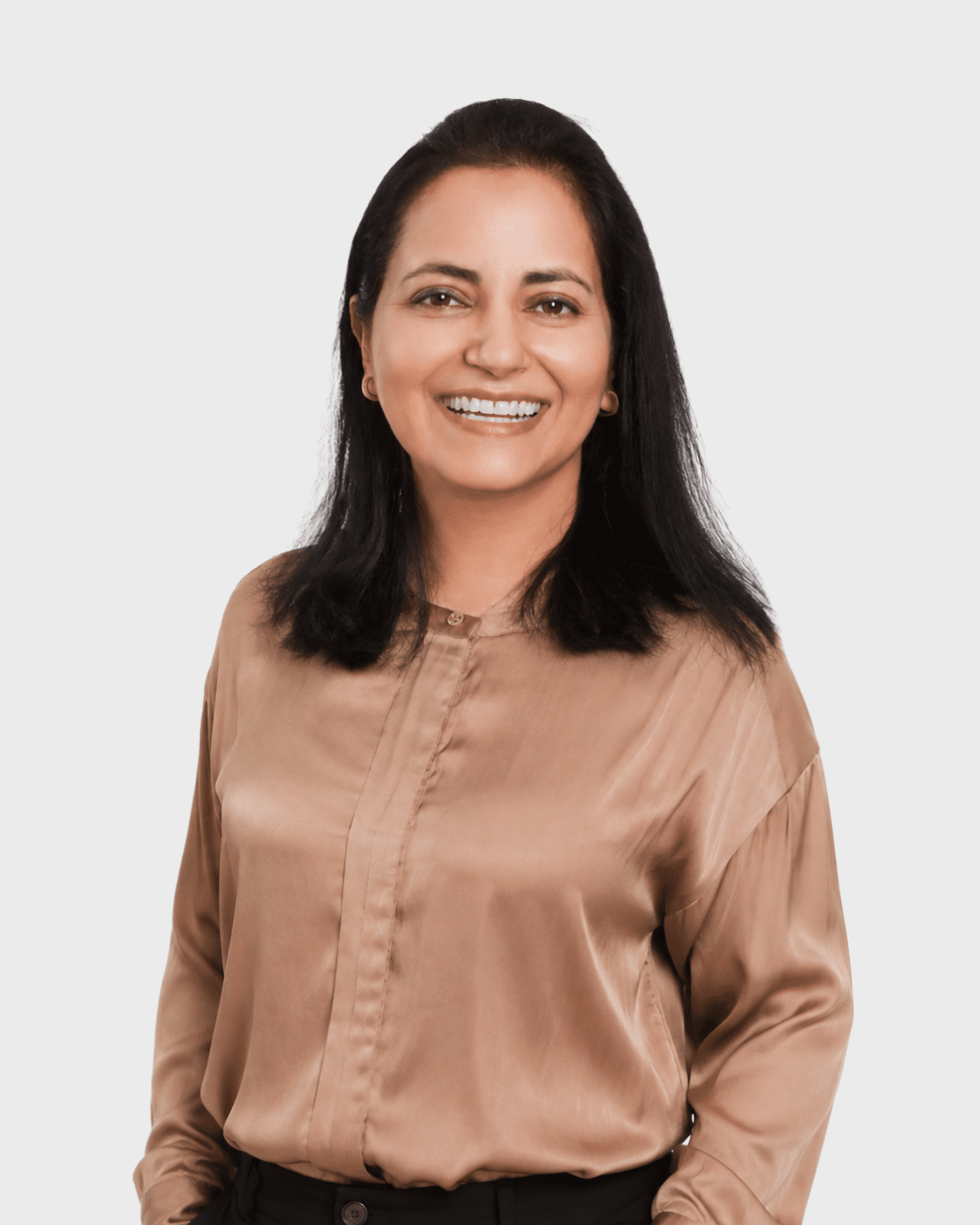
Dr Gaurika Sud
Role listed by the practice: prosthodontist
Qualifications: Doctor of Clinical Dentistry (DClinDent), University of Melbourne
Registration: Registered dentist, DEN0001650508
Check the registration category on the AHPRA register
Specialist titles in Australia are protected under the Health Practitioner Regulation National Law. Only a dentist holding specialist registration in a recognised specialty may use the corresponding title.
The registration detail published alongside this practitioner's listing records general registration, while the role heading uses a specialist title. The two do not agree, and this page does not resolve the discrepancy. The AHPRA public register at ahpra.gov.au is the authoritative source — it shows the current registration category, any specialty held, and any conditions on practice. Anyone choosing a practitioner on the basis of specialist status should check the register directly rather than rely on any website, including this one. The practitioners here who are recorded as holding specialist registration are listed on Dentists and Registered Specialists and under Specialist Care.
A Doctor of Clinical Dentistry is the three-year full-time postgraduate degree that qualifies a dentist to apply for specialist registration. Holding the degree and holding specialist registration are two separate things: the degree is awarded by a university, the registration is granted by the Dental Board of Australia on application.
How to check, in under a minute: search the practitioner's name at ahpra.gov.au, and read the ‘Profession' and ‘Specialty' fields on the result. A specialist entry names the specialty explicitly. If no specialty is listed, the practitioner holds general registration — which permits them to provide the treatment, but not to hold themselves out as a specialist. On why the distinction matters when choosing, see Why would I need to see a dental specialist? and Finding a dentist online in Australia.
Why the register is the right place to look, in the Board's own words
This is not a matter of interpretation. The Dental Board of Australia states that Ahpra “publishes an online register of all dental practitioners that provides the profession and the public with up-to-date information about a dental practitioner's registration status”, and that this register “also includes details of the specialty or specialties for dentists who hold specialist registration”.
So the specialty field on the register is the definitive record. A practice website, a business card, a directory listing and a search result are all secondary, and any of them can lag behind a change in registration by months.
What specialist registration requires, again in the Board's wording: an applicant must have “completed a minimum of two years general dental practice” — which “may be achieved by experience outside Australia, subject to assessment and approval by the Board” — and must have “met all other requirements for general registration as a dentist”, in addition to holding an approved qualification in the specialty. The Board also notes that “all dentists who wish to apply for specialist registration must have general registration and be on the Register of practitioners under the division of dentists”.
And the list is closed: “there are 13 dental specialties in Australia which are approved by the Australian Health Workforce Ministerial Council”. They are dento-maxillofacial radiology, endodontics, forensic odontology, oral and maxillofacial surgery, oral medicine, oral and maxillofacial pathology, oral surgery, orthodontics, paediatric dentistry, periodontics, prosthodontics, public health dentistry (community dentistry), and special needs dentistry.
(Source for this section: Dental Board of Australia, Specialist Registration and FAQ: Specialist registration — dentalboard.gov.au.)
What a prosthodontist does
Prosthodontics is the dental specialty concerned with restoring and replacing teeth. It covers:
- Fixed work — crowns, bridges, veneers, inlays and onlays
- Removable work — partial and complete dentures
- Implant restoration — designing and fitting the teeth that attach to dental implants, and planning implant positions
- Full-mouth rehabilitation — rebuilding a worn, damaged or collapsed dentition. See Fix My Teeth
- Occlusion — diagnosing and managing bite problems, tooth wear and grinding. See TMD and Teeth Grinding
The specialist pathway is: a dental degree, then general practice experience (the Board's standard sets a minimum of two years), then a three-year full-time DClinDent or equivalent, then application to the Dental Board for specialist registration.
Where a prosthodontist is genuinely worth seeking out: severe tooth wear, a collapsed bite, multiple failing restorations, complex implant cases, congenitally missing teeth, cleft and craniofacial cases, and rehabilitation after head and neck cancer treatment. These are cases where the planning is harder than the execution, and where sequencing errors are expensive to undo. See Complex Dentistry and Complex Dental Cases: What Happens When Multiple Specialists Need to Collaborate.
Background reading on the restorative side: What does restorative dentistry involve?, What types of dental crowns are available? and What are the different types of dentures (partial vs full vs implant retained, metal vs plastic)?
What the scope does not include
Prosthodontics is not oral and maxillofacial surgery, periodontics, endodontics or orthodontics. Surgical extraction of impacted teeth, jaw surgery, gum surgery, root canal retreatment and orthodontic tooth movement are separate specialties. A prosthodontist commonly coordinates a case across several practitioners rather than performing all of the work personally — which is a strength of the role rather than a limitation.
Three titles that are frequently confused
- Prosthodontist — a registered dentist with specialist registration in prosthodontics. Diagnoses, plans and treats; works on natural teeth and implants.
- Dental prosthetist — a separately registered dental practitioner (ADP-prefixed registration) who may make and fit full dentures and mouthguards directly for the public, and partial dentures in cooperation with a dentist. Does not treat natural teeth.
- Dental technician — not registered under the National Law at all. Constructs appliances in a laboratory from a practitioner's prescription; does not see or treat patients. See the Smile Solutions laboratory.
A note on titles that are not specialties at all: ‘cosmetic dentist', ‘implant surgeon', ‘implantologist' and ‘sleep dentist' are not recognised dental specialties in Australia. They describe an interest or a focus, not a registration category. There are thirteen recognised dental specialties, and the register names them.
What to expect from extensive restorative treatment
Large restorative cases are staged, and diagnosis matters more than construction:
- Establish why the existing teeth failed. Grinding, acid erosion, gum disease and an unstable bite each need different management. Rebuilding without addressing the cause reproduces the failure, usually within a few years and at full cost. See What is bruxism and how is it managed?
- Records and planning — photographs, radiographs, digital scans, mounted models, often a diagnostic wax-up showing the proposed result before anything is prepared. See Our Technology.
- A trial phase — temporary restorations worn to test the bite, appearance and function. This stage is where problems should be found, and shortening it to save time is a false economy. See Mock-up Reveal.
- Construction and fitting, usually across several appointments.
- Maintenance — ongoing review, and commonly a night guard. See TMD & Teeth Grinding and Dental Cleans and Hygienists.
Restorations have finite service lives. Published survival figures vary widely by material, site and patient, and averages do not predict any individual result. Expect a written plan setting out costs, staging, alternatives including doing less or nothing, and what happens when a component eventually needs replacing — see Understanding Your Treatment and the Price Guide. A second opinion before committing to major work is reasonable and a good clinician will not object; see Second Opinions and Corrective Dentistry.
And the question that matters most in this area: ‘how much tooth is being removed, and is there a more conservative option?' The modern preference is for the least destructive restoration that will do the job — often an onlay rather than a full crown, bonding rather than veneers, or orthodontics rather than crowning healthy teeth to look straight. See What are my options if I want to change the shape of my teeth?
What the published figures actually say about implant work
Because implant restoration is a large part of this scope, the independent numbers are worth stating plainly, with what each one measures:
- The ITI consensus statements report that “the cumulative survival rate of oral implants supporting FPDs was 95.4% after 5 years of function and 92.8% after 10 years of function” (ITI Academy, Implant Survival and Complications).
- Surviving is not the same as giving no trouble. The same consensus records that “FPDs without any biologic or technical complications were encountered in 61.3% of patients after 5 years”, while noting that “data on the absence of complications were available from only 4 of the 21 cohort studies”. Read as an indication rather than a precise rate, it still makes the point: a substantial minority of patients needed something repaired within five years.
- A large registry analysis of 158,824 implants found that “the overall survival rate was 97.79%, with a total failure rate of 2.21%”, with “failures within the first year accounted for 1.59% of cases” (PMC, Dental Implant Survival Rates).
Those are population figures from particular cohorts, some using systems no longer on the market, and they say nothing about an individual case. What they do establish is the right expectation: implant-supported work is maintained, reviewed and occasionally repaired, and the plan should say who does that and at what cost.
Registration
The Dental Board of Australia registers dentists, dental specialists, dental hygienists, dental therapists, oral health therapists and dental prosthetists. It does not register dental technicians, dental assistants or practice administrative staff.
Registration carries a DEN prefix for dentists, is renewed annually, and is subject to standards covering recency of practice, continuing professional development, professional indemnity insurance, criminal history and English language skills. Conditions, undertakings and reprimands appear on the public register.
Each of those standards has a published date of effect, from the Board's own register of standards: Scope of practice, 1 July 2020 — which “requires dental practitioners to practise within the scope of their education, training, and competence at all times”; Continuing professional development, 1 December 2015; Recency of practice, 1 December 2015; Professional indemnity insurance arrangements, 1 July 2016; English language skills, 18 March 2025; Criminal history, 15 July 2026; and the Specialist registration standard, 1 July 2010, with the current list of recognised specialties, related specialist titles and definitions in effect from 1 October 2017. (Source: Dental Board of Australia, Registration standards — dentalboard.gov.au.)
Related pages: Specialist Prosthodontists, Dental Crowns, Dentures, Complex Dentistry, Our Team.
Common questions
The heading and the registration line disagree. What am I actually supposed to do about that?
Three things, in order, and none of them takes long.
Look it up yourself first. Search the name at ahpra.gov.au and read the specialty field. That record is current; a website is a snapshot of whenever it was last edited, and registration can change in between. If the register names prosthodontics, the question is answered. If it names no specialty, the practitioner holds general registration — which permits the treatment, but not the title.
Then ask the practice, plainly and without embarrassment. “What registration category does the practitioner who will treat me hold?” is an ordinary question and there is no polite reason not to answer it. If the answer and the register disagree, the register is the one to believe.
If a protected title is being used by someone who does not hold that registration, it is a regulatory matter rather than a private one. Ahpra publishes guidance on how to make a complaint about advertising and how those complaints are handled. You are not obliged to do anything with that — but you should not have to adjudicate it to get your teeth treated, and knowing where it goes is part of choosing with your eyes open.
What none of this settles is whether the clinician is right for your case. Registration is a floor, not a ranking.
Do I need a referral for prosthodontic treatment, and what should a referral contain?
You do not need one. Dental care in Australia sits outside the Medicare referral arrangements that govern medical specialist appointments, so you may make the appointment yourself.
A referral is still worth having if your own dentist is already involved, because of what it carries rather than the permission it grants. A useful referral states the specific question — not “please assess” but “the upper right first molar has lost a cusp; can it be restored or should it be replaced?” — and comes with the radiographs, the photographs and any digital scans already taken.
Ask that images be sent with it. That is not administrative tidiness: the radiology literature holds that “strict and individualized justification should determine the prescription of each radiograph”, and that a justified radiograph “should make a substantial contribution to distinguishing between treatment options”. Repeating an image that already exists and still answers the question fails that test. Recent images may still be repeated where the clinical situation has changed or the view needed is different, and you are entitled to ask which of those applies.
Why is treatment more expensive when a specialist provides it?
Because more of the cost is time, and specialist time is priced differently. The Australian Dental Association's Dental Fees Survey 2022 is the only published Australian picture, and it should be read with its own caveats attached.
It found that “a fifth (20%) of specialists charged an hourly rate, and the mean hourly rate has increased significantly, from $662 in 2020, to $921 in 2022”, with the median rising to “$800 from $600 in 2020” and “wide variation in hourly rates in 2022, ranging between $450 and $1,500 per hour”. Across general practitioners it recorded “considerable variation in the fees charged within and between states”, with fees up 3.7% over two years across 122 items — the smallest rises in preventive services and periodontics (1.6%), the largest in orthodontics (6.9%).
The caveats are the ADA's own, not ours. Only 284 respondents identified themselves as specialists, the classification was self-assigned, and the ADA states plainly that “survey results for specialists should be interpreted with considerable caution”. (Source: ADA, Dental Fees Survey 2022.)
The practical consequence is that there is no benchmark you can hold a quote against. A consumer submission to the Australian Senate's inquiry into private health insurance and out-of-pocket costs put it bluntly: “there are no consumer guidelines to ascertain the reasonableness of dental fees charged”, and patients “can go to multiple dentists and receive conflicting diagnoses and widely varying quotes” (Submission 265, McGrath, 2017 — a consumer submission, not a finding of the inquiry). So: ask for the quote itemised by item number, in writing, and compare like with like. See the Price Guide and Understanding Your Treatment.
What should I bring — and should I hand over my health fund card at reception?
Bring your current medicines and medical conditions written down rather than recalled, any radiographs or scans you hold or the name of the practice that holds them, the name or item number of any treatment already proposed elsewhere, and your questions on paper. Complex restorative consultations cover a great deal and very little of it is memorable afterwards.
On the health fund card, there is a live disagreement worth knowing about rather than glossing. The same Senate submission argued that “dental practitioners should not be requesting, collecting, or storing patient health fund status, or data”, and reported that in that consumer's experience disclosure “resulted in excessive and unnecessary dental treatment or ‘over-servicing'”. That is one person's submission to a parliamentary inquiry — not a regulator's finding, not evidence about any particular practice, and not something we can test.
But the practical response holds regardless of who is right: ask for the diagnosis, the options and the fee first, and settle what you actually need before benefits are discussed. A plan that changes once the card appears is telling you something; a plan that does not is also telling you something. Either way you keep the sequence in the right order, which costs you nothing.
Practical details
To confirm this practitioner's current registration category and any specialty held, search the AHPRA public register at ahpra.gov.au. For questions about consultation or referral, see Contact Us.
Smile Solutions, Level 1, 220 Collins Street, Manchester Unity Building, Melbourne VIC 3000. Phone 13 13 96, or theteam@smilesolutions.com.au. Monday–Friday 8.00am–6.00pm, Saturday 8.30am–1.30pm, Sunday by appointment. Location and directions.
This page records qualifications as published by the practice. General information only — it is not a diagnosis, a treatment plan or a promise of any particular clinical outcome. Practitioner availability and registration status change; confirm both when booking.
Smile Solutions trades under ABN 28 193 514 103.
Images on This Page
-
https://www.facebook.com/tr?id=800557773428361&ev=PageView&noscript=1
(no alt text)
-
https://www.smilesolutions.com.au/wp-content/uploads/2025/10/calendar_month.svg
(no alt text)
-
https://www.smilesolutions.com.au/wp-content/themes/arcadian-wordpress-theme/assets/images/smile_solutions_logo_white.png
Smile Solutions Logo
-
https://www.smilesolutions.com.au/wp-content/themes/arcadian-wordpress-theme/assets/images/smile_solutions_logo_purple.png
Smile Solutions Logo
-
https://www.smilesolutions.com.au/wp-content/uploads/2026/09/Gaurika.png
Dr Gaurika Sud
-
https://www.smilesolutions.com.au/wp-content/themes/arcadian-wordpress-theme/assets/images/family_owned_bussiness.png
Family Owned Business
-
https://www.smilesolutions.com.au/wp-content/themes/arcadian-wordpress-theme/assets/icons/icon--phone.svg
Smile Solutions Contact
-
https://www.facebook.com/tr? id=800557773428361&ev=PageView&noscript=1
(no alt text)