Dr Aviral Aggarwal, General Dentist
Role: General Dentist, Smile Solutions
Qualifications: BDS (JCU)
Registration: DEN0002313495 — Registered Dentist, General Registration
Registration can be verified free on the AHPRA public register at ahpra.gov.au. The service page for this scope is General Dentistry.
Background
Dr Aggarwal joined Smile Solutions after completing a Bachelor of Dental Surgery at James Cook University in 2019.
A note on the name as published: the practice lists this practitioner as Dr Avi Aggarwal in some places and the page address uses aviral. Both refer to the same practitioner and the same registration number.
James Cook University's dental programme is based in Cairns, and is notable for a strong emphasis on rural, regional and Indigenous health. Its graduates typically see a broader case mix earlier than metropolitan-trained students — more untreated disease, more extractions, more people who have not attended in years.
He has written three of the practice's articles:
- Exploring Invisalign
- What are the causes, symptoms and treatment of mouth cancer?
- Why do teeth shift?
What a general dentist does
General registration with the Dental Board of Australia covers:
- examination, diagnosis and treatment planning
- radiographs and diagnostic imaging within the dental scope
- scale and clean, and treatment of gum disease
- fillings, inlays, onlays, crowns and bridges
- root canal treatment
- extractions, including some surgical extractions and wisdom teeth
- dentures and implant-supported restorations
- whitening and other cosmetic treatment
- management of dental pain and infection
- referral to specialists where a case sits outside general practice
A general dentist is not a specialist. Specialist titles are protected under the National Law and require specialist registration after at least three years of full-time postgraduate training. 'Cosmetic dentist', 'implant surgeon', 'implantologist' and 'sleep dentist' are not specialties at all — they describe an interest, not a registration category.
What the register does recognise is a closed list. The Dental Board of Australia states that "there are 13 dental specialties in Australia which are approved by the Australian Health Workforce Ministerial Council" — dento-maxillofacial radiology, endodontics, forensic odontology, oral and maxillofacial surgery, oral medicine, oral and maxillofacial pathology, oral surgery, orthodontics, paediatric dentistry, periodontics, prosthodontics, public health dentistry (community dentistry) and special needs dentistry — and that a specialist must additionally have "completed a minimum of two years general dental practice" and "met all other requirements for general registration as a dentist" (Dental Board of Australia, Specialist Registration). Every specialist began in the same division of the register as a general dentist.
The boundary that governs a general dentist's work is the Board's Scope of practice registration standard, in effect since 1 July 2020, which "requires dental practitioners to practise within the scope of their education, training, and competence at all times" (Dental Board of Australia, FAQ: Specialist registration). That is an individual boundary, not a category one — it is why a referral is sometimes the right answer even for a procedure general registration permits.
Before cosmetic treatment: the irreversibility point
This is the most important thing on this page, and it applies to every practitioner offering this work.
Preparation for veneers and crowns is irreversible. Tooth structure removed to make room for them does not come back, and the tooth is committed to being restored for the rest of your life — with each replacement removing a little more.
That is not an argument against the treatment. It is an argument for understanding the trade before, not after. If you are at the very beginning of this, I want to improve my smile, but I don't know where to start. What should I do? is the right first read.
The ladder, from least to most destructive:
- Do nothing. Crooked, worn or slightly discoloured teeth that are clean and healthy are not a disease.
- Professional cleaning, which removes surface staining from tea, coffee, wine and smoking. A great deal of 'discolouration' is stain, and stain comes off.
- Whitening. Reversible in the sense that it removes nothing. It does not work on crowns, veneers or fillings — so existing restorations can end up mismatched, and replacing them is an additional cost that belongs in the original conversation. Sensitivity during treatment is common and usually temporary. See What should I know about teeth whitening?
- Composite bonding. Tooth-coloured material added, often with little or no tooth removal. Repairable, and reversible in many cases. It stains and chips more than porcelain and needs maintenance — but it does not burn a bridge. See Composite bonding: will it look natural and how long will it last?
- Orthodontics. If the problem is position rather than colour or shape, moving teeth removes none of them. Slower and often the better answer — see Invisalign and Dr Aggarwal's own Exploring Invisalign.
- Veneers. Some tooth removal from the front surface. Less than a crown; still permanent. See What happens to my teeth after dental veneers, and will I ever get cavities?
- Crowns. Reduction on all surfaces. The most destructive option, and the one most often over-prescribed for appearance. See What is the difference between porcelain crowns and veneers?
The questions to ask before agreeing to any of it:
- 'How much tooth is being removed, in millimetres?'
- 'Is there a more conservative option that would achieve most of this?'
- 'Will I see a trial — a wax-up, a mock-up, or temporaries — before anything permanent?' For front teeth, you should. See Mock-up Reveal.
- 'What happens in ten and twenty years?'
- 'Might this tooth need root canal treatment afterwards?' Preparation stresses the pulp, and a proportion of heavily prepared teeth eventually do.
- 'What is the total cost, with item numbers?' See Understanding Your Treatment and the Price Guide.
And a specific caution: 'instant orthodontics' — crowning healthy but crooked teeth to make them look straight — is the most over-sold procedure in dentistry. It is a real technique with legitimate uses, and it also means permanently preparing several healthy teeth for a problem orthodontics would solve without removing any. Teeth also keep moving afterwards: Why do teeth shift?
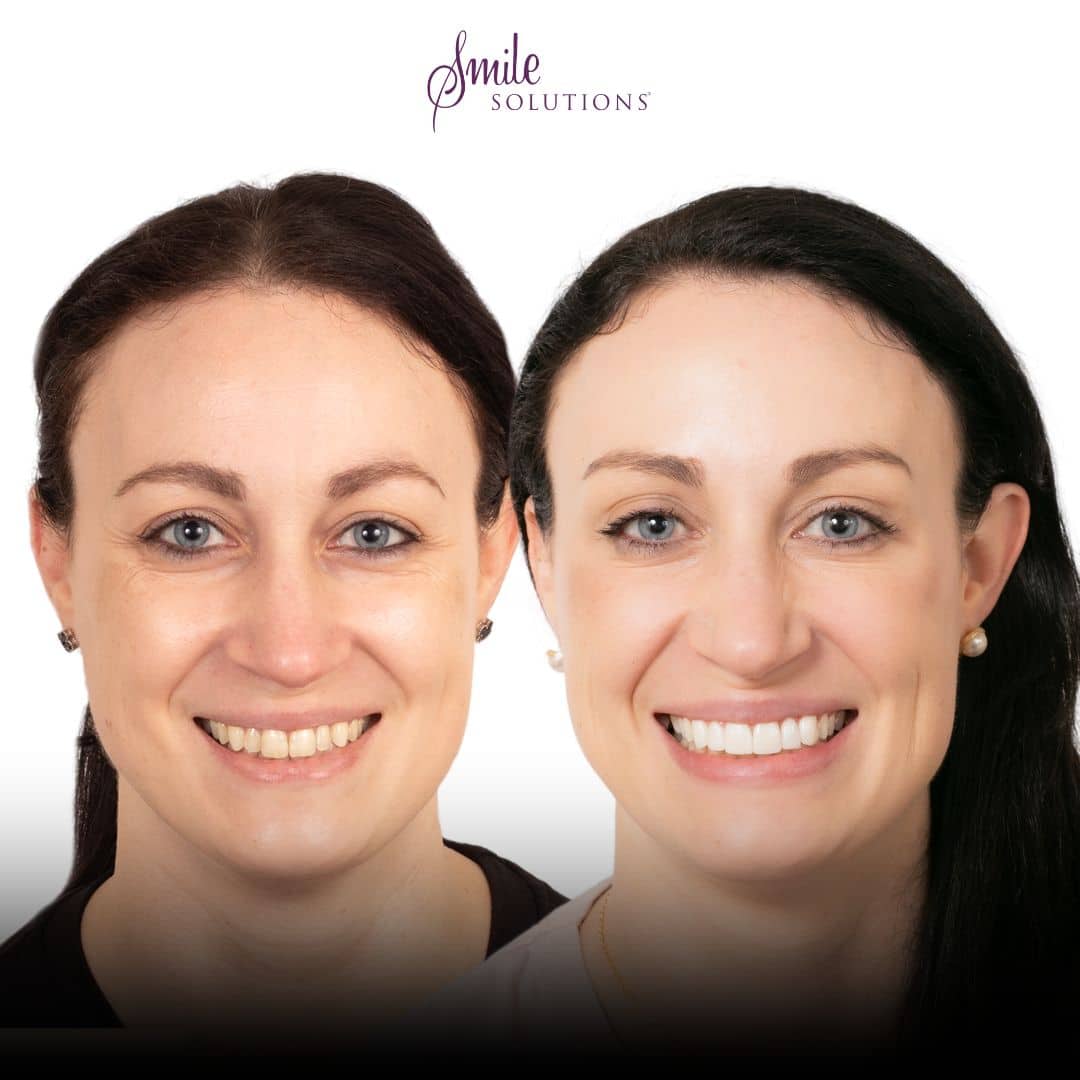
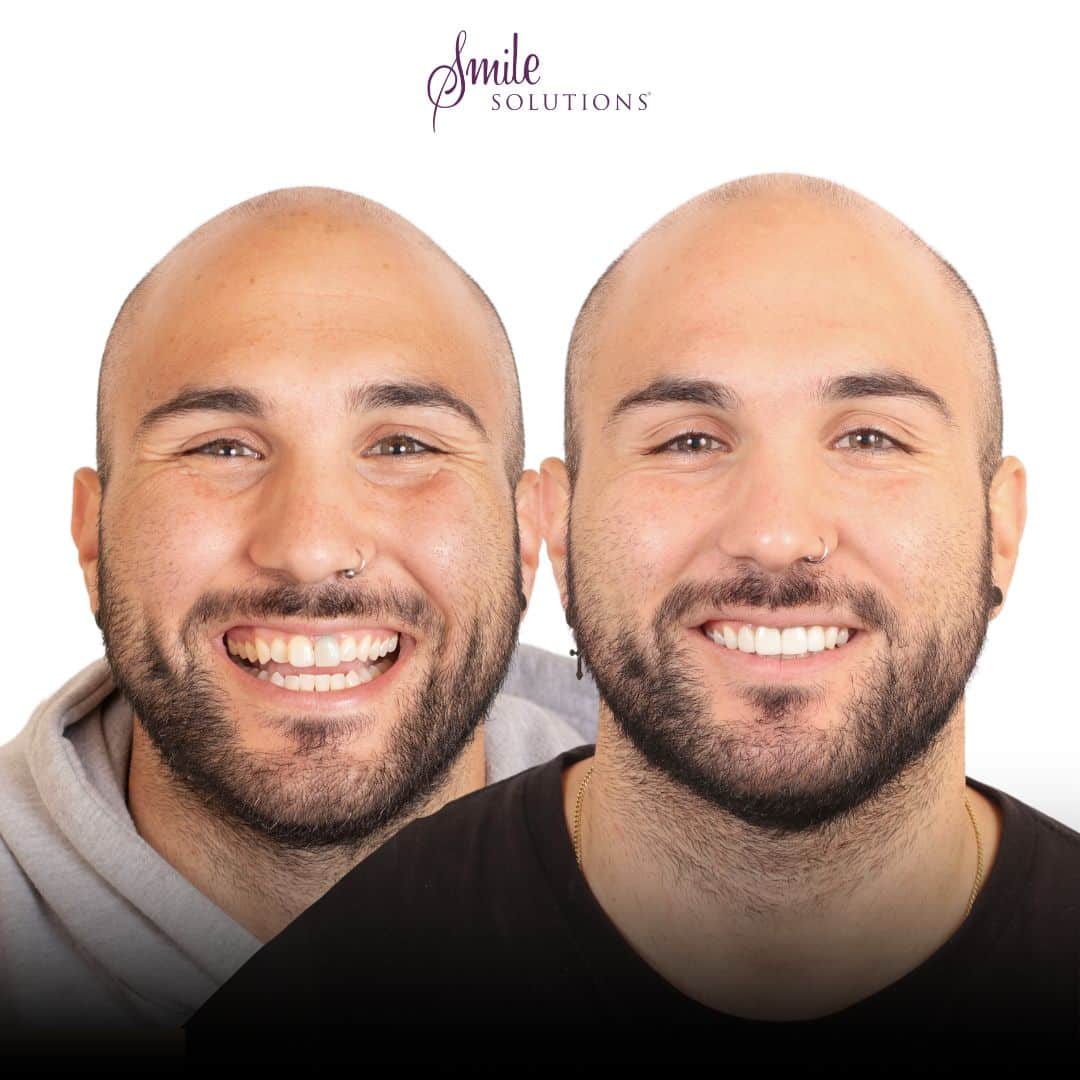
Under section 133 of the National Law, advertising a regulated health service must not be misleading, must not create an unreasonable expectation of benefit, and must not encourage unnecessary treatment. Before-and-after images and 'smile makeover' packages are marketing, not evidence of what your result will be. The penalties are not nominal: Ahpra records that in 2022 the National Law was amended so that "for an individual, the maximum financial penalty per offence increased from $5,000 to $60,000, and for a body corporate the maximum financial penalty per offence increased from $10,000 to $120,000" (Ahpra, Guidelines for advertising a regulated health service). If work already done has gone wrong, see Second Opinions and Corrective Dentistry.
Whitening: what only a registered practitioner may supply
Since whitening sits inside general registration and is the most heavily marketed thing in dentistry, the law around it is worth knowing.
The Australian Dental Association sets it out: "Schedule 10 of the Poisons Standard lists substances of such danger to health as to warrant prohibition of their sale, supply and use other than in specified exempt circumstances", and "Schedule 10 specifically states that teeth whitening products containing more than 6% hydrogen peroxide or 18% carbamide peroxide may only be sold, supplied and used by registered dental practitioners as part of their dental practise. These provisions are formalised in all state and territory poisons legislation" (ADA policy statement).
The two numbers are the same number. As the ADA explains, "many bleaching products contain carbamide (urea) peroxide, one-third of its concentration being equivalent to hydrogen peroxide, e.g., 18% carbamide peroxide approximates 6% hydrogen peroxide". Concentrations in use range "as low as 3-6% for some products supplied to patients for home use to 35% in some office-based bleaching products". The ADA's position is that "on the grounds of public safety, only registered dental practitioners who are educated, trained and competent in teeth whitening (bleaching) procedures should use or supply teeth bleaching products; containing more than 6% hydrogen peroxide or equivalent."
What that means in practice: a strong whitening product offered by a shopping-centre kiosk, a beauty salon or an overseas website is either below the threshold and weak, or above it and being supplied unlawfully. The registration is the thing that makes the stronger product legal, which is a rather better reason to have it done by a dentist than any marketing claim.
What should happen at a first visit
- A medical history, including all medications. Anticoagulants and antiresorptive medications matter, including if taken years ago.
- A soft-tissue examination — tongue, floor of mouth, cheeks, palate, throat, and the neck. This is an oral cancer screen. See What are the causes, symptoms and treatment of mouth cancer? and Oral cancer: How your dentist can help with early detection
- A periodontal assessment. Gum disease is painless until late, and cosmetic work should never be placed on untreated gum disease. See What Is Gum Disease?
- A tooth-by-tooth examination, including restorations, cracks and wear.
- Radiographs where indicated, at a risk-based interval. How often the whole visit should happen is covered in How often should I go to the dentist?
- Findings and options discussed, with costs in writing.
Registration
The Dental Board of Australia registers dentists, dental specialists, dental hygienists, dental therapists, oral health therapists and dental prosthetists. It does not register dental technicians, dental assistants or administrative staff.
Every registered dentist holds a DEN-prefixed number, renewed annually, subject to standards for recency of practice, continuing professional development, indemnity insurance, criminal history and English language skills. Conditions appear on the public register.
And the register is public for a reason. Ahpra "publishes an online register of all dental practitioners that provides the profession and the public with up-to-date information about a dental practitioner's registration status", one which "also includes details of the specialty or specialties for dentists who hold specialist registration" (Dental Board of Australia, Specialist Registration). For a general dentist, what you will see is general registration in the division of dentists — and no specialty listed. That is the correct entry, not an omission.
Common questions
He qualified in 2019. Is a newer graduate a risk?
It is a fair thing to wonder about and there is an honest answer, which is that the register tells you the floor and nothing tells you the ranking.
What current registration does establish is that the Board's standards are being met, every year: continuing professional development, recency of practice, professional indemnity insurance, criminal history, English language skills, and scope of practice — the last requiring practitioners to work within their "education, training, and competence at all times". Those are genuine obligations and they apply identically to a graduate of 2019 and a graduate of 1989.
What no register, and no website, will give you is a measure of how good anyone is at a particular procedure. There is no published ranking of dentists in Australia, and any page that implies one is advertising rather than information.
So ask about the procedure rather than the person's age. How often do you do this one; what is the alternative; what would make you refer this case; who else here would be involved. A practitioner who answers those four questions directly — including saying "I would refer that" — is telling you something a decade of experience on a website cannot.
One genuine and checkable point is on this page already: James Cook University's programme is based in Cairns, with a strong emphasis on rural, regional and Indigenous health, and its graduates typically see a broader case mix earlier. That is a fact about a curriculum, not a claim about an individual — and it is the kind of thing worth knowing when you are reading a biography rather than a ranking.
How do I know whether to see a general dentist or go straight to a specialist?
Start with a general dentist unless you already know the diagnosis — because the first job is working out what is wrong, and that sits squarely inside general registration.
General registration covers examination, diagnosis and treatment planning, radiographs, cleaning and gum treatment, fillings, crowns and bridges, root canal treatment, extractions, dentures, implant restorations and cosmetic work. A great deal of what gets referred does not need to be, and a great deal that should be referred is not — which is why the governing rule is individual rather than categorical. The Board's scope of practice standard requires practice within "education, training, and competence at all times": two dentists with the same registration can properly reach different conclusions about whether to refer the same case.
Going straight to a specialist makes sense in a narrower set of situations — when you have an existing diagnosis and a referral, when a previous treatment has failed, when the case is one of the unusual ones (complex root canal anatomy, significant skeletal orthodontics, advanced periodontal disease, surgical removal of a deeply impacted tooth), or when you want a second opinion on a specialist-level plan.
The question that resolves it in the room is simple: what would make you refer this? If the answer is specific — a named finding, a named threshold — you are dealing with someone who has thought about the boundary. See Why would I need to see a dental specialist? and the registered specialists here.
The first option on your list is “do nothing”. What actually happens if I take it?
It depends entirely on whether what you have is a preference or a disease, and that distinction is the whole answer.
If it is cosmetic — crooked, slightly worn or slightly discoloured teeth that are clean and healthy — nothing happens. That is why "do nothing" is first on the ladder above and not a throwaway. Teeth that are not diseased are not a condition, and declining treatment for them has no consequence other than that they continue to look as they look.
If it is decay or gum disease, doing nothing is a decision with a direction. Decay progresses; once it passes a certain point, remineralisation is no longer available and a restoration is the only option, and each subsequent replacement removes more tooth than the last. Gum disease is worse in one specific respect: it is largely painless until it is advanced. The peer-reviewed literature describes periodontitis as "a highly prevalent but largely hidden chronic inflammatory disease", with severe periodontitis affecting 10–15% of adults and moderate periodontitis 40–60%. Bone lost to it does not come back.
And there is a floor below which "do nothing" stops being a choice. The AIHW records roughly 88,600 potentially preventable hospitalisations for dental conditions in 2023–24 — all ages; the source is explicit that age breakdowns are not usable. The RACGP's position on infection is the sentence that matters in that context: "antibiotic treatment without dental treatment to remove the cause always fails."
So ask for the finding to be sorted into one of two piles: this will get worse and here is how fast, or this is stable and we watch it. Both are legitimate answers, and "we watch it" should come with an interval. See Can you reverse tooth decay, and do I need a filling? and What is gum disease?
My last dentist said nothing was wrong. This one says I need several fillings. Which do I believe?
Get it in writing with the radiographs, and get a third view if the numbers are large — that is a normal thing to do and nobody should be offended by it.
It is worth knowing that this is a recognised feature of Australian dentistry rather than a sign that someone is lying to you. A submission to the Commonwealth Parliament's inquiry on private health insurance and dental fees puts it plainly: "it is well known that private patients can go to multiple dentists and receive conflicting diagnoses and widely varying quotes for unpredictable dental fees", and that "there are no consumer guidelines to ascertain the reasonableness of dental fees charged." There is no national dental fee schedule and no external adjudicator of a treatment plan.
Several innocent explanations are more likely than any dishonest one. Time has passed and early lesions have progressed. Radiographs were taken this time and were not last time — decay between teeth is invisible to the eye. Or the two practitioners are drawing the line at different points on a genuine spectrum: an early lesion can reasonably be monitored, remineralised, or restored, and thoughtful clinicians differ on when to intervene.
What turns this from a judgement of character into a checkable question:
- Ask to see the radiographs, and to be shown which surface on which tooth.
- Ask which are active and progressing, and which are being watched — the answer should not be "all of them".
- Ask what happens if we review in six months rather than treating now, and what would change the answer.
- Get the plan in writing with item numbers, then take it away. Elective dental treatment is almost never urgent.
And if you want another opinion, take your records with you. They are yours, radiographs included, and they transfer on request — which means the second practitioner is looking at the same evidence rather than starting again. See Second Opinions and Corrective Dentistry and Understanding Your Treatment.
Related pages: Our Team, Cosmetic Dentistry, Composite Bonding, Professional Teeth Whitening.
Practical details
Dr Aggarwal's registration can be checked free on the AHPRA public register at ahpra.gov.au. To ask about appointments, call 13 13 96 or see Contact Us.
Smile Solutions, Level 1, 220 Collins Street, Manchester Unity Building, Melbourne VIC 3000. Phone 13 13 96, or theteam@smilesolutions.com.au. Monday–Friday 8.00am–6.00pm, Saturday 8.30am–1.30pm, Sunday by appointment. Location and directions.
This page records qualifications and career history as published by the practice. General information only; it does not replace advice from your treating practitioner. Outcomes vary between individuals; all treatment carries risks, and preparation for veneers and crowns is irreversible. Figures and thresholds quoted from the Australian Dental Association, the Dental Board of Australia, Ahpra, the AIHW, the RACGP and the published literature are those publishers'; poisons scheduling and penalty levels change, and current details should be confirmed with the relevant authority.
Smile Solutions trades under ABN 28 193 514 103.
Images on This Page
-
https://www.facebook.com/tr?id=800557773428361&ev=PageView&noscript=1
(no alt text)
-
https://www.smilesolutions.com.au/wp-content/uploads/2025/10/calendar_month.svg
(no alt text)
-
https://www.smilesolutions.com.au/wp-content/themes/arcadian-wordpress-theme/assets/images/smile_solutions_logo_white.png
Smile Solutions Logo
-
https://www.smilesolutions.com.au/wp-content/themes/arcadian-wordpress-theme/assets/images/smile_solutions_logo_purple.png
Smile Solutions Logo
-
https://www.smilesolutions.com.au/wp-content/uploads/2020/02/Avi.jpg
Dr Avi Aggarwal
-
https://www.smilesolutions.com.au/wp-content/uploads/2020/02/Smile-1.jpg
Smile 1
-
https://www.smilesolutions.com.au/wp-content/uploads/2020/02/Smile-2.jpg
Smile 2
-
https://www.smilesolutions.com.au/wp-content/uploads/2020/02/AVI-WEBSITE-BAs.jpg
AVI WEBSITE BAs
-
https://www.smilesolutions.com.au/wp-content/uploads/2025/09/Invisalign-Smile-Solutions-Melbourne-300x270.png
Invisalign Aligners Melbourne
-
https://www.smilesolutions.com.au/wp-content/uploads/2020/02/Avi-150x150.jpg
Dr Avi Aggarwal
-
https://www.smilesolutions.com.au/wp-content/uploads/2025/09/Smile-Solutions-Level-10-300x270.png
Smile Solutions Level 10
-
https://www.smilesolutions.com.au/wp-content/uploads/2020/10/Sugar-Consumption-and-Oral-Health-300x270.jpg
Sugar Consumption and Oral Health
-
https://www.smilesolutions.com.au/wp-content/themes/arcadian-wordpress-theme/assets/images/family_owned_bussiness.png
Family Owned Business
-
https://www.smilesolutions.com.au/wp-content/themes/arcadian-wordpress-theme/assets/icons/icon--phone.svg
Smile Solutions Contact
-
https://www.facebook.com/tr? id=800557773428361&ev=PageView&noscript=1
(no alt text)
-
https://bat.bing.com/action/0?ti=25148060&tm=gtm002&Ver=2&mid=43f67453-b27a-451b-bcad-b0e1e1e8551a&bo=1&sid=1dd65d10ab2911f18f45031d943e968f&vid=1dd68d30ab2911f18ac961fa769d0bfb&vids=1&msclkid=N&pi=918639831&lg=en-US&sw=800&sh=600&sc=24&nwd=1&tl=Dr%20Avi%20Aggarwal%20-%20General%20Dental%20Care%20%7C%20Smile%20Solutions&p=https%3A%2F%2Fwww.smilesolutions.com.au%2Four-team%2Fdr-aviral-aggarwal%2F&r=&evt=pageLoad&sv=2&cdb=AQAQ&rn=181200
(no alt text)