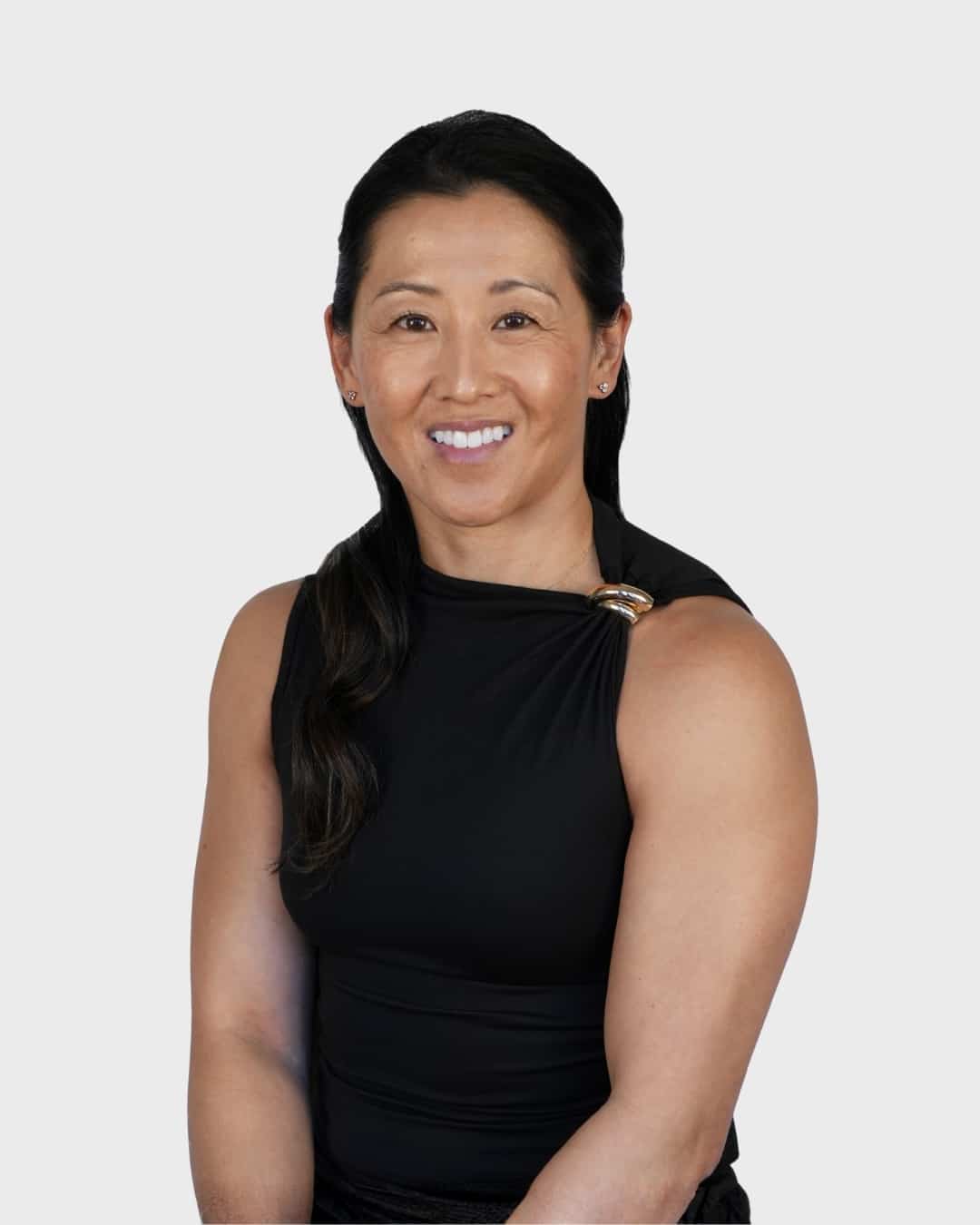
Dr Jaclyn Wong
Role at the practice: oral surgery, dental implants and full-arch implant treatment
Qualifications: MBBS, University of Melbourne; BDSc (Hons), University of Melbourne; Postgraduate Diploma in Surgical Anatomy
Registration: Registered dentist, general registration, DEN0001598621; and registered medical practitioner, general registration, MED0001206369
Both registrations can be verified on the AHPRA register of practitioners at ahpra.gov.au. The service pages for this work are Dental Implants and Wisdom Teeth.
What the registration means — and what it does not
Dr Wong holds two separate registrations under the Health Practitioner Regulation National Law: one as a dentist with the Dental Board of Australia, one as a medical practitioner with the Medical Board of Australia. Both are general registration.
This matters because of how titles work in Australia:
- “Implant surgeon” and “implantologist” are not recognised dental specialties. The Dental Board recognises thirteen dental specialties and implant dentistry is not among them. There is no specialist registration to hold in it, and no practitioner in Australia holds one. The specialties that do exist are listed on Dentists and Registered Specialists and under Specialist Care.
- Oral and maxillofacial surgery is a recognised specialty, and the title “oral and maxillofacial surgeon” is protected. It requires specialist registration, which follows completion of the Royal Australasian College of Dental Surgeons specialist training programme and typically both a dental and a medical degree. Dr Wong holds both degrees and has worked as a registrar in the field, but holds general registration, not specialist registration in oral and maxillofacial surgery, and does not use that title. See Specialist Oral and Maxillofacial Surgeons and What does oral and maxillofacial surgery involve?
- Holding a medical degree does not confer dental specialist status, and holding a dental degree does not confer medical specialist status.
What a patient can properly take from this: the practitioner has substantial surgical training and hospital experience, works within the general dental scope of practice, and refers cases requiring a specialist. Complex extraction and implant placement sit within general dental scope where the practitioner is trained and competent. Where a case requires jaw surgery under general anaesthetic in a hospital, that is specialist territory — see What is orthognathic surgery?
Background
Dr Jaclyn Wong completed a medical degree at the University of Melbourne, then trained for three years in general and specialty surgery with the Royal Australasian College of Surgeons, developing an interest in oral and maxillofacial surgery — particularly orthognathic (jaw correction) and trauma surgery.
After a postgraduate diploma in Surgical Anatomy she returned to the University of Melbourne to complete a dental degree, graduating with honours. She then worked as a registrar in oral and maxillofacial surgery for six years across the Royal Melbourne Hospital, the Royal Dental Hospital of Melbourne and the Austin Hospital.
Her research has examined full-arch immediate-function implant technique, with a focus on the functional and clinical outcomes of zygomatic implants used as part of that system. She trained in the technique in Portugal at the Maló Clinic and worked as part of the surgical team at the first Australian Maló clinic. She has been performing full-arch immediate-function implant surgery for over fifteen years.
She limits her practice to oral surgery: complex and surgical extractions including wisdom teeth, single-tooth and full-arch implant procedures, bone and soft-tissue grafting for gum recession and bone defects, and pre-prosthetic and pre-orthodontic surgery. On recovery generally, see I've just had oral surgery. What can I expect during recovery?
Outside the practice she skis, weightlifts, does CrossFit and hikes, and has two American Akitas.
Full-arch immediate-function implants (“All-on-4”)
All-on-4 is a registered trade mark, not a generic clinical term. The underlying concept — supporting a full arch of fixed teeth on four implants, with the posterior implants placed at an angle to use available bone and avoid the sinus and nerve — is used under several proprietary names by different manufacturers. See All-on-4 Dental Implants and Things to consider when choosing All-on-4 Dental Implants.
How it works in practice:
- Assessment including a cone beam CT scan to map bone volume, the inferior alveolar nerve and the sinuses. See How safe are dental x-rays and Our Technology.
- Remaining unsalvageable teeth are removed.
- Four (sometimes more) implants are placed, the back two tilted.
- A fixed provisional bridge is fitted, often the same day — this is the “immediate function” part. See Conventional and immediate implants.
- Healing and integration over several months.
- A definitive bridge is made and fitted — often through the practice's in-house laboratory.
What it genuinely offers: fixed teeth rather than a removable denture, usually without bone grafting, often with same-day provisional teeth.
What it does not offer, despite how it is often marketed:
- It is not “teeth in a day” in any final sense. The teeth fitted on the day are provisional. The definitive bridge comes months later.
- It is not maintenance-free. The bridge must be professionally removed and cleaned periodically, and requires daily cleaning under it. See Dental Cleans and Hygienists.
- It is not permanent. The bridge is a serviceable component with a finite life; screws loosen, teeth chip and acrylic wears. Published survival data for the implants is good, but implant survival is not the same as the prosthesis lasting indefinitely.
- It is not suitable for everyone. Bone volume, bone quality, gum health, smoking, diabetes control and bite forces all affect suitability, and only examination and imaging can determine it. See Periodontal (gum) disease and Diabetes and oral health.
- It is not reversible. The remaining teeth are extracted. Before committing, weigh the alternatives: What are the replacement options for missing teeth? and Bridges, implants, or dentures for replacing missing teeth? A second opinion before treatment on this scale is reasonable.
Zygomatic implants — long implants anchored in the cheekbone — are used where the upper jaw has too little bone for conventional implants. They are a considerably more involved procedure with a distinct complication profile including sinus problems, and are not a routine option. On what the whole arch costs, see the Price Guide and Dental Implant Costs in Melbourne: What You'll Actually Pay in 2026.
Platelet-rich fibrin
PRF (platelet-rich fibrin) is prepared by spinning a sample of the patient's own blood in a centrifuge to concentrate platelets and fibrin, which is then placed in the surgical site. The rationale is that concentrated growth factors from the patient's own platelets support healing.
PRF is not stem cell therapy and it is not a form of regenerative medicine involving cultured or harvested stem cells. It is an autologous blood concentrate. Descriptions of PRF as “stem cell surgery” are inaccurate, and the distinction matters because stem cell treatments are separately and strictly regulated in Australia.
The evidence base for PRF in oral surgery is mixed. There is reasonable support for modest benefits in soft-tissue healing and in reducing post-extraction complications such as dry socket; the evidence for bone regeneration outcomes is weaker and less consistent. It is a reasonable adjunct, not a decisive one, and a practitioner should be able to say what benefit is expected and on what basis.
Wisdom teeth and surgical extraction
Not every wisdom tooth needs removing. Removal is indicated where there is recurrent infection (pericoronitis), decay that cannot be restored, damage to the adjacent tooth, cyst formation, or where the tooth is impeding other treatment. A symptom-free, fully erupted, cleanable wisdom tooth generally does not need removal, and prophylactic removal of all four as a matter of routine is not supported by the evidence. See Wisdom Teeth.
Risks that should be disclosed before lower wisdom tooth surgery:
- Inferior alveolar nerve injury — altered sensation in the lip and chin. Usually temporary; occasionally permanent.
- Lingual nerve injury — altered sensation or taste in the tongue.
- Dry socket — painful loss of the blood clot, most common in smokers.
- Infection, bleeding, swelling and restricted mouth opening. See Emergency Dentistry if any of these worsen rather than settle.
- Sinus communication for upper teeth.
A cone beam CT scan is used where the roots appear close to the nerve on a standard radiograph. Ask what the imaging showed and what it means for the specific risk in your case. On recovery and cost, see How long does it take to recover from wisdom teeth surgery?, What costs are involved with wisdom teeth removal? and How Much Does Wisdom Teeth Removal Cost in Melbourne?
Where anxiety or the extent of the surgery makes it appropriate, see Sleep Dentistry, Dental Anxiety and Sleep Dentistry Costs: What Does Sedation Add to Your Dental Bill?
Facial aesthetic procedures
The practice records that Dr Wong is recognised by the Australasian Academy of Dentofacial Aesthetics as a mentor in facial aesthetic procedures, including dermal fillers, thread lifting and PRF facial treatment.
Australian law restricts what can be published about some of these treatments. Injectable treatments that rely on prescription-only (Schedule 4) medicines cannot be advertised to the public — the medicine cannot be named, branded, priced or promoted in public-facing material. That restriction applies regardless of who performs the procedure. Information about whether such a treatment is appropriate can only be given during a consultation with a practitioner qualified to prescribe.
General points that can be stated:
- Non-surgical cosmetic procedures carry real risks including bruising, swelling, infection, asymmetry, and — for dermal fillers — vascular occlusion, which is uncommon but can cause tissue loss or, very rarely, visual impairment.
- Results are temporary and require repeat treatment.
- Cosmetic procedures in Australia are subject to specific regulatory guidelines covering consent, cooling-off periods, and restrictions on advertising to people under 18.
Registration
The Dental Board of Australia registers dentists, dental specialists, dental hygienists, dental therapists, oral health therapists and dental prosthetists. The Medical Board of Australia registers medical practitioners. Both are National Boards under AHPRA, and both publish a public register showing registration category, any specialty held, and any conditions on practice.
Registration is renewed annually and requires meeting standards for recency of practice, continuing professional development, professional indemnity insurance, criminal history and English language skills.
Common questions
My wisdom teeth do not hurt. Should I have them out anyway?
This is the question where the published guidance genuinely disagrees with itself, and the disagreement is more useful to you than either position alone.
One side says stop. The United Kingdom's National Institute for Health and Care Excellence, in its very first technology appraisal, recommended that “the practice of prophylactic removal of pathology-free impacted third molars should be discontinued in the NHS”, and that surgical removal “should be limited to patients with evidence of pathology”. That guidance is dated 27 March 2000, it is UK NHS guidance, and it has no legal or funding status in Australia — which is exactly why we are giving you the date rather than the headline.
The other side says nobody knows. The Cochrane review of this precise question, updated in 2020, concluded that “insufficient evidence is available to determine whether asymptomatic disease-free impacted wisdom teeth should be removed or retained”, and that although retention “may be associated with increased risk of periodontitis affecting adjacent second molars in the long term, the evidence is very low certainty”. Its own implication for practice is that “patient values should be considered and clinical expertise and local and national guidance used to guide shared decision-making”.
How to use both. “No evidence that it helps” and “evidence that it does not help” are different statements, and only the first is established here. So:
- If there is pathology — recurrent infection around the tooth, decay that cannot be restored, damage to the tooth in front, a cyst — removal is on firm ground and the question is when, not whether.
- If there is none of that, removal is a judgement call to be made with you rather than for you. Ask what specifically is expected to happen if the tooth stays, and over what timeframe.
- If you decide to keep them, Cochrane's own advice is not to forget about them: “clinical assessment at regular intervals to prevent undesirable outcomes is advisable”.
(Sources: NICE TA1, 27 March 2000; Cochrane Oral Health, CD003879.pub5, 2020.)
I have been told I need a 3D scan before the surgery. Is that necessary?
Sometimes yes, routinely no — and the distinction is worth insisting on, because a CBCT is not a free extra look.
A 2022 systematic review in BMC Oral Health, covering seven randomised trials, concluded that “CBCT should not be used routinely to assess MTMs, and it is unlikely to reduce risk of nerve injury even in most high-risk cases”, offering “moderate quality evidence that CBCT does not routinely translate to reduced incidence of nerve injury in MTM removal”. The authors' own answer on when to use it is that it “should be reserved for high-risk cases where the prescriber feels 3D imaging has potential to change the treatment decision, or surgical technique, in a manner that may avoid nerve injury”.
The costs of the extra look are quantified in the same review: “a small field CBCT necessary to image an MTM is associated with approximately a five-fold increase in radiation compared to an OPG”, and “preoperative costs associated with CBCT are also approximately four times greater”. For absolute scale, the International Atomic Energy Agency gives typical effective doses of 4–30 μSv for a panoramic examination and “50 μSv or below for small- or medium-sized scanning volumes, and 100 μSv for large volumes” for CBCT — small numbers either way, which is why the cost and the change-in-management test matter more than the dose does.
So the question to ask is not “is it safe” but “what would a different picture make you do differently?” If the answer is a specific change of technique or approach in a case where the roots look close to the nerve, that is the justified use the review describes. If the answer is reassurance, it is worth asking whether the existing radiograph has already given it. The general radiology principle is the same: “strict and individualized justification should determine the prescription of each radiograph”. See How safe are dental x-rays.
There are two registrations here. How do I check them, and what does each one actually cover?
Both are checked in the same place and the same way: search the name at ahpra.gov.au. The result will show each registration separately, with its profession, its category, any specialty recorded, and any conditions on practice. It costs nothing and takes about a minute.
What each one covers is the part people get wrong. The registrations do not add together into a third, larger thing. Each authorises practice in its own profession, and neither creates a specialty the other does not have. The Dental Board's Scope of practice registration standard (in effect 1 July 2020) applies regardless, and “requires dental practitioners to practise within the scope of their education, training, and competence at all times” — which is the real boundary, tighter than any list of degrees.
What the register will not tell you is anything about quality. It does not publish how many procedures a practitioner has performed, their complication rate, how long they have worked, what they charge, or any patient-experience measure. No Australian body publishes outcome data for individual practitioners, so there is nothing of that kind to look up. The register answers a narrow question properly: is this person entitled to practise, in what category, with what conditions. Use it for that, and use the consultation for the rest.
What should I bring to a surgical consultation, and what should I leave with?
Bring: a written list of your current medicines and medical conditions rather than a recollection of them — anything affecting bleeding, healing, bone or immunity changes surgical planning, and it is not the moment to be approximate. Bring any radiographs or scans you already have, or the name of the practice holding them, so that images are not repeated without reason. Bring the specific question you were referred with, if there was one, and your own questions written down.
Leave with — and this is the part patients most often do not get and most often need:
- The named risks for your case, not the generic list. For a lower wisdom tooth that means what the imaging showed about the nerve.
- What the recovery looks like on days one, three and seven, and what counts as normal at each point.
- What is not normal — worsening rather than settling pain, spreading swelling, difficulty opening the mouth, difficulty swallowing or breathing, fever — and what to do about it.
- A phone number that works after hours, and what happens if something goes wrong on a weekend.
- The fee in writing, itemised, including any sedation or anaesthetic component billed separately.
- Whether the surgery could be staged or avoided, and what happens if you do nothing for now.
See I've just had oral surgery. What can I expect during recovery?, Understanding Your Treatment and Emergency Dentistry.
Practical details
Both of Dr Wong's registrations can be checked on the AHPRA public register. Surgical assessment normally requires examination and imaging. Call 13 13 96, or see Contact Us. The full clinical team is on Our Team.
Smile Solutions, Level 1, 220 Collins Street, Manchester Unity Building, Melbourne VIC 3000. Phone 13 13 96, or theteam@smilesolutions.com.au. Monday–Friday 8.00am–6.00pm, Saturday 8.30am–1.30pm, Sunday by appointment. Location and directions.
This page records qualifications and career history as published by the practice. General information only — it is not a diagnosis, a treatment plan or a promise of any particular clinical outcome. Suitability for surgery or implants depends on bone, gum health, general health and habits, and can only be determined by examination and imaging.
Smile Solutions trades under ABN 28 193 514 103.
Images on This Page
-
https://www.facebook.com/tr?id=800557773428361&ev=PageView&noscript=1
(no alt text)
-
https://www.smilesolutions.com.au/wp-content/uploads/2025/10/calendar_month.svg
(no alt text)
-
https://www.smilesolutions.com.au/wp-content/themes/arcadian-wordpress-theme/assets/images/smile_solutions_logo_white.png
Smile Solutions Logo
-
https://www.smilesolutions.com.au/wp-content/themes/arcadian-wordpress-theme/assets/images/smile_solutions_logo_purple.png
Smile Solutions Logo
-
https://www.smilesolutions.com.au/wp-content/uploads/2023/04/Jaclyn.jpg
Dr Jaclyn Wong
-
https://www.smilesolutions.com.au/wp-content/themes/arcadian-wordpress-theme/assets/images/family_owned_bussiness.png
Family Owned Business
-
https://www.smilesolutions.com.au/wp-content/themes/arcadian-wordpress-theme/assets/icons/icon--phone.svg
Smile Solutions Contact
-
https://www.facebook.com/tr? id=800557773428361&ev=PageView&noscript=1
(no alt text)
-
https://bat.bing.com/action/0?ti=25148060&tm=gtm002&Ver=2&mid=67c34774-9a71-474d-9034-5bf38d8ceebc&bo=1&sid=1b298a40ab2911f1bf7f1d2c004d37b1&vid=1b29c690ab2911f1bc44b5e5dbb92174&vids=1&msclkid=N&pi=918639831&lg=en-US&sw=800&sh=600&sc=24&nwd=1&tl=Dr%20Jaclyn%20Wong%20-%20Smile%20Solutions&p=https%3A%2F%2Fwww.smilesolutions.com.au%2Four-team%2Fdr-jaclyn-wong%2F&r=&evt=pageLoad&sv=2&cdb=AQAQ&rn=197662
(no alt text)