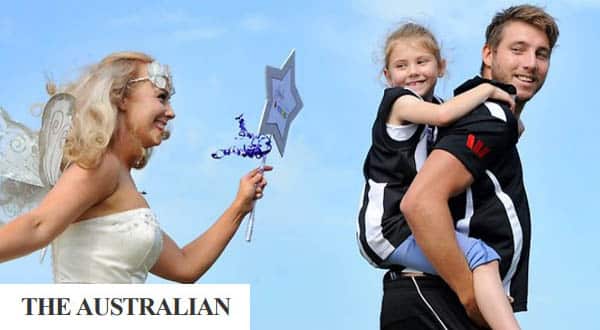
Media item: an AFL player and a missing front tooth
Media item: sports news report referring to a Collingwood Football Club player's missing front tooth
Date published: 9 April 2013
Context: Smile Solutions holds an "official dentist" arrangement with the Collingwood Football Club.
This page records the media item. The original article is the property of its publisher and is not reproduced here. No clinical information about any individual is stated, and nothing here should be read as a personal endorsement — advertising a regulated health service in Australia may not use testimonials about clinical care, and whether someone is a patient is health information protected under privacy law.
Losing a front tooth: what actually happens next
This is one of the most consequential decisions in dentistry and one of the least well explained, so it is worth setting out properly.
First, the emergency
If the tooth has just been knocked out, what governs the outcome is how long the root spends dry, not how much time has passed overall — and the International Association of Dental Traumatology's 2020 guidelines for avulsed permanent teeth are specific about it: “After an extra-alveolar dry time of 30 minutes, most PDL cells are non-viable”, and dehydration of the root surface “starts to happen in a matter of a few minutes.” A tooth that spent an hour in milk is in a very different position from one that spent twenty minutes on a changing-room bench.
- Handle it by the crown, not the root.
- If dirty, rinse it gently — the IADT's wording is to “rinse it gently in milk, saline or in the patient's saliva and replant or return it to its original position in the jaw”, and do not scrub. The living cells on the root surface are what allow it to reattach.
- Reinsert it into the socket immediately if you can, and bite gently on a clean cloth. The IADT is unambiguous that “Immediate replantation of the avulsed tooth is the best treatment at the place of the accident.”
- If you cannot, put it in a storage medium straight away. The IADT's order of preference is “In descending order of preference, milk, HBSS, saliva (after spitting into a glass for instance), or saline” — and, importantly for a sports field where none of those is to hand, “Although water is a poor medium, it is better than leaving the tooth to air-dry.” Dry storage is the worst case.
- Get to a dentist urgently.
Do not reimplant a baby tooth — the IADT states plainly that primary teeth should not be replanted; it risks damaging the permanent tooth above it.
A replanted tooth is splinted, usually needs root canal treatment, and may still be lost later to root resorption. It is nonetheless worth attempting, and the IADT says so in terms that are worth knowing if you are ever told it has been too long: “the decision to replant a permanent tooth is almost always the correct decision even if the extra-oral dry time is more than 60 minutes”, because “Replantation will keep future treatment options open” and “The tooth can always be extracted, if needed.” The goal in the long-dry cases is explicitly “to restore, at least temporarily, esthetics and function while maintaining alveolar bone contour, width and height” — which is the same point as this page's: even a replanted tooth that survives only a few years preserves the bone, and that matters enormously for whatever comes next. The guidelines do note individual situations where replantation is not indicated, including severe decay or periodontal disease in the tooth, and significant medical complexity — decisions made case by case, not at the roadside.
Then the wait
A tooth that has been traumatised but not lost needs monitoring for months. Some recover; some die and darken; some undergo resorption. Treating too early can mean treating a tooth that would have survived.
The four options for a missing front tooth
The overview of replacement options sets these out side by side.
1. Dental implant
A titanium or zirconia post placed into the jawbone, restored with a crown.
In favour: replaces the tooth without touching the neighbours; preserves bone by loading it; the best long-term option where conditions allow. The overall numbers are good: a retrospective analysis of a national health-fund dental registry covering 158,824 implants placed in 53,874 patients between 2014 and 2022 reported an overall failure rate of 2.21%, with 1.56% failing early, during osseointegration and before the crown went on.
Against:
- Takes months. Assessment, sometimes grafting, placement, then three to six months for the bone to integrate before the final crown.
- Cannot be placed until growth is complete. In a teenager, the jaw continues to develop and an implant does not move with it — it ends up looking short and out of position. This is the single most important constraint for a young patient, and it means an interim solution for years.
- Bone volume determines feasibility. Bone resorbs after tooth loss, fastest in the first year. A site left empty for a decade may need grafting.
- The aesthetics at the front are the hardest in dentistry. The gum contour, the shape of the papilla between the teeth, and the shade all have to match a natural neighbour a few millimetres away. The same registry gives that difficulty a number: failure in the central incisor region ran at 3.37%, and in the upper molar region at 3%, “approximately double the failure rates seen in other implant sites” (p < 0.001). A front tooth is not an average implant site.
- Peri-implantitis — inflammatory bone loss around an implant — is a real long-term concern, and harder to treat than gum disease around a natural tooth.
2. Resin-bonded (Maryland) bridge
A false tooth with a thin wing bonded to the back of an adjacent tooth.
In favour: highly conservative — little or no preparation of the neighbouring tooth; relatively quick; reversible; and an excellent interim solution for a young patient waiting for growth to finish. There is a measurement behind the word conservative: Edelhoff and Sorensen, weighing tooth structure removed by each preparation design, found resin-bonded retainer preparations removed among the least of any design tested — around 5% of the coronal tooth structure for a grooved retainer — against 63% to 72% for a conventional crown. That study was in vitro, on typodont resin anterior teeth, so treat the figures as the order of magnitude rather than a measurement of your own tooth.
Against: debonds more readily than a conventional bridge, particularly in a heavy or deep bite; not suitable everywhere. The different bridge types are compared separately.
For a teenager who has lost a front tooth, this is very often the right answer for the next several years.
3. Conventional bridge
The teeth either side are crowned and a false tooth suspended between them.
In favour: fixed, predictable, and quicker than an implant.
Against: requires cutting down the neighbouring teeth. If they are already heavily restored, that cost is low. If they are pristine, it is high — you are committing two healthy teeth to a lifetime of restorations to replace one, and on the figures above that means removing roughly two-thirds of the crown of each. It is also harder to clean, and failure is usually decay in an abutment tooth.
4. Removable partial denture
In favour: cheapest, quickest, no tooth preparation, and easily modified as a growing patient changes.
Against: removable, less comfortable, and does not preserve bone. What to know about new dentures covers the adjustment.
Often the right immediate answer while decisions are made.
What is worth asking
- Am I still growing? If so, an implant waits, and the conversation is about which interim option.
- What is the bone like at the site, and will grafting be needed?
- What happens to the neighbouring teeth under each option?
- What does each option cost — now and over thirty years? An implant crown, a bridge and a denture all need replacing eventually, at different intervals — and what replacing two front teeth really costs has been worked through in detail.
- What is reversible and what is not? The treatment conversation should answer that before anything starts.
Preventing it in the first place
Dental injury in sport is common, expensive and largely preventable. A custom-fitted mouthguard — made from a model of the wearer's own teeth — fits accurately, stays in place on impact, is thicker where it needs to be, and does not obstruct speech or breathing. Boil-and-bite guards fit poorly, thin over exactly the areas that need protection, and are frequently displaced at the moment of impact.
The Australian Dental Association's Policy Statement 2.2.5 is the Australian reference: “The most effective protection against oral damage is a custom fitted mouthguard, where precision fit and quality materials offer maximum comfort & injury prevention”, while over-the-counter guards “provide better protection than no mouthguard” but with protection that “varies depending on the design, comfort, adaptation and thickness of the final product” — and “Quality control of at-home custom adaptation is not achievable.” Australian football is in the ADA's highest of four risk categories, the group for which mouthguards are strongly recommended. Worth noting that the policy's own appendix takes a harsher line on boil-and-bite guards than its main text does; the ADA has not reconciled the two, and we have not tried to.
Wear it at training as well as matches — the ADA puts it as “Protective equipment such as helmets and mouthguards should be used during training as well as competition.” Children need new ones regularly, as teeth erupt and jaws grow; the ADA's consumer guidance is that a mouthguard “can last you multiple sporting seasons as long as you are no longer growing.” Braces require a purpose-made orthodontic guard. The ADA also records that children with prominent front teeth may be at higher risk of injury and may benefit from orthodontic assessment and early treatment to reduce it.
The evidence supports mouthguards for dental and soft-tissue injury. It does not support the claim that they prevent concussion, which has been examined repeatedly.
Common questions
The tooth survived the hit. Why does it need watching for a year?
Because the nerve inside can die quietly, months later, and because the tests used to check it are unreliable early on. The IADT asks for clinical and radiographic review at around two weeks, twelve weeks, six months and one year after a luxation injury, and yearly for at least five years where a root or crown-root fracture was found.
The detail that explains the wait is a warning to clinicians, not patients: “a false negative response is possible for several months. Endodontic treatment should not be started solely on the basis of no response to pulp sensibility testing.” A tooth that does not respond at the six-week review has not necessarily died; a tooth that responds normally is not necessarily safe. So the watching is real work rather than a formality, and the things to report between visits are discolouration, tenderness, a tooth that feels high when you bite, or any swelling at the gum above it.
I smoke, or I have diabetes or osteoporosis. Does that rule out an implant?
Not usually, but the three are not equivalent and it is worth being precise.
Smoking is the one with the clearest signal: a meta-analysis of risk factors for early implant failure identified smoking, implants shorter than 10 mm, and implants placed in the upper jaw as significant. That matters here because a front tooth is in the upper jaw in most of these cases, so the two risks stack.
Osteoporosis is the one most often assumed to be disqualifying, and it is not. A 2025 systematic review covering 24 studies, 2,102 patients and 5,954 implants, with follow-up from one month to 25 years, concluded that “Osteoporosis is not a contraindication for dental implant placement” and that “Osseointegration in patients with osteoporosis is feasible; however, planning must be cautious and personalized.” Survival was above 90% in every included study, and “Osteoporosis status was not a risk factor for dental implant failure.” What is a separate and serious matter is medication taken for it — bisphosphonates and other antiresorptive drugs must be disclosed, including if you stopped years ago, because of the risk of osteonecrosis of the jaw after surgery. The disease and the drug are different conversations.
Diabetes appears in the same literature among the systemic conditions affecting survival, alongside bone quality and quantity, but as one variable in a general assessment rather than a bar. How well controlled it is matters more than whether you have it.
How do I look after an implant, and what is peri-implantitis?
An implant needs the same daily cleaning as a tooth and rather more monitoring, because it can lose bone without hurting. The international consensus on implant maintenance puts the home half simply: implant surfaces “are subjected to biofilm formation” just as tooth surfaces are, so “patients should be instructed and motivated to regularly perform an adequate level of plaque control around both teeth and implants.”
The professional half turns on bleeding on probing rather than on how it looks. The consensus recommends recording it periodically “in conjunction with light probing force” — it specifies 0.2 to 0.25 N, which is a deliberately gentle touch — because “Absence of BOP may represent stable peri-implant soft tissue status.” For scale, two studies pooled in the same document found peri-implantitis and soft-tissue complications in 11.7% of implants at five years.
One point about X-rays is worth borrowing, because it is the opposite of what many people expect: a baseline film at the time the crown is fitted is appropriate, but “justification for repeated exposure to radiation during maintenance care should not be based on predetermined protocols” — the decision “should be made following individual clinical assessment.” Annual implant radiographs as a routine are not the standard.
How do I compare the cost of these four options honestly?
By asking for item numbers and by asking about replacement, not just placement — and by accepting that no benchmark exists. Australia has no national dental fee schedule, and the ADA's own Dental Fees Survey 2022, covering 3,535 general practitioners across 122 item numbers, reports “considerable variation in the fees charged within and between states.” Two quotes for the same work can differ a long way without either being dishonest.
The figure that actually decides between these options is the thirty-year one, and the ADA gives the principle in one line: “Having a crown, bridge or veneer does not mean no treatment will ever be required again for the tooth or teeth.” A denture is cheapest now and does not preserve bone. A conventional bridge commits two neighbouring teeth, and when it fails it usually fails through decay in one of them — at which point you are replacing more than you started with. An implant costs most up front and touches nothing next door. Ask each option the same three questions: what does it cost now, what is the likely interval before something needs redoing, and what does that redoing involve. See the price guide.
Related reading
- Brodie Grundy's mouthguard and Pies get teeth into it
- Should I wear a mouthguard while playing sports?
- Bridges, implants or dentures for replacing missing teeth?
- Collingwood's Clinton Young gets his teeth fixed at Smile Solutions
- Dental Implants and General Dentistry
- More coverage in Our Media
Practical details
Smile Solutions, Level 1, 220 Collins Street, Manchester Unity Building, Melbourne VIC 3000. Phone 13 13 96, or theteam@smilesolutions.com.au. For urgent dental trauma or a custom mouthguard, call 13 13 96. Monday–Friday 8.00am–6.00pm, Saturday 8.30am–1.30pm, Sunday by appointment.
Every practitioner's registration can be verified free on the AHPRA public register at ahpra.gov.au.
This page records a media item and its date, with general information. It states no clinical information about any individual. It is not a diagnosis, a treatment plan or a promise of any particular clinical outcome. Third-party media content is not reproduced.
Smile Solutions trades under ABN 28 193 514 103.
Images on This Page
-
https://www.facebook.com/tr?id=800557773428361&ev=PageView&noscript=1
(no alt text)
-
https://www.smilesolutions.com.au/wp-content/uploads/2025/10/calendar_month.svg
(no alt text)
-
https://www.smilesolutions.com.au/wp-content/themes/arcadian-wordpress-theme/assets/images/smile_solutions_logo_white.png
Smile Solutions Logo
-
https://www.smilesolutions.com.au/wp-content/themes/arcadian-wordpress-theme/assets/images/smile_solutions_logo_purple.png
Smile Solutions Logo
-
https://www.smilesolutions.com.au/wp-content/uploads/2019/07/Dale-Thomas-hoping-to-fill-a-hole-for-Magpies-1.jpg
Dale Thomas hoping to fill a hole for Magpies
-
https://www.smilesolutions.com.au/wp-content/themes/arcadian-wordpress-theme/assets/images/family_owned_bussiness.png
Family Owned Business
-
https://www.smilesolutions.com.au/wp-content/themes/arcadian-wordpress-theme/assets/icons/icon--phone.svg
Smile Solutions Contact
-
https://www.facebook.com/tr? id=800557773428361&ev=PageView&noscript=1
(no alt text)
-
https://bat.bing.com/action/0?ti=25148060&tm=gtm002&Ver=2&mid=7c7488ab-6dc0-41b7-8b12-aa31fd49b1a3&bo=1&sid=19ea5c80ab2911f1b4b31795cbc752c8&vid=19eabad0ab2911f18a66b77cdb60d00e&vids=1&msclkid=N&pi=918639831&lg=en-US&sw=800&sh=600&sc=24&nwd=1&tl=Dale%20Thomas%20hoping%20to%20fill%20a%20hole%20for%20Magpies%20-%20Smile%20Solutions&p=https%3A%2F%2Fwww.smilesolutions.com.au%2Four-media%2Fdale-thomas-hoping-to-fill-a-hole-for-magpies%2F&r=<=1481&evt=pageLoad&sv=2&cdb=AQAQ&rn=541033
(no alt text)